
Selecting the right Tire Pressure Monitoring System (TPMS) is a critical decision for vehicle safety, fuel efficiency, and tire longevity. With numerous solar-powered options flooding the automotive accessory market, choosing between an established specialist like Steelmate and alternative brands requires a clear understanding of your driving habits, installation preferences, and regional environmental challenges.
Steelmate is a recognized name in automotive electronics, generally offering reliable solar-powered TPMS displays with stable sensor communication. If you prioritize established brand quality, straightforward standalone displays, and proven radio frequency (RF) signal stability, Steelmate is an excellent choice. However, you should consider other brands if you require specialized smart features, such as dedicated mobile app integration via Bluetooth, or ultra-compact display designs that blend seamlessly into minimalist dashboards.
Before making a final purchase, always verify current model availability, specific sensor types (internal versus external), and local warranty terms. Selecting the ideal solar TPMS involves weighing upfront costs against long-term reliability and ease of maintenance.
Products mentioned in this guide
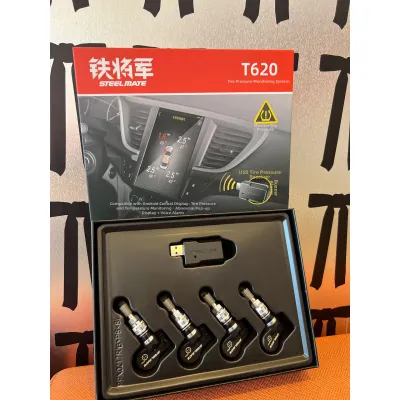
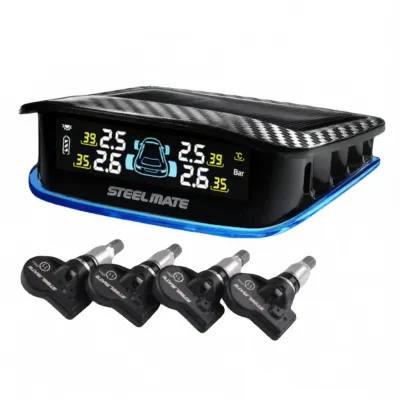
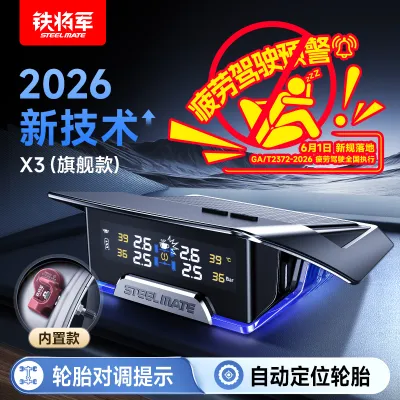
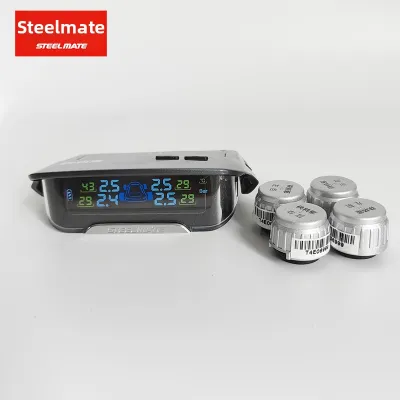
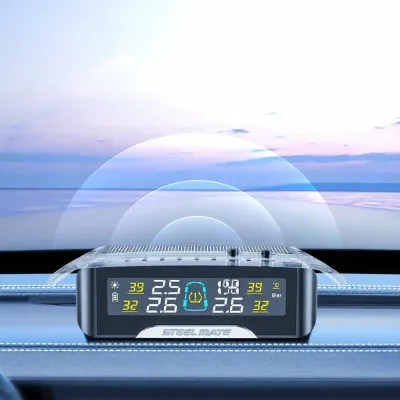
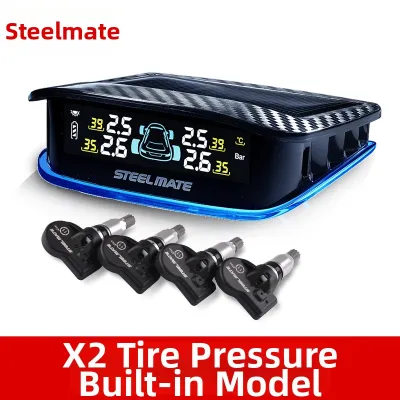
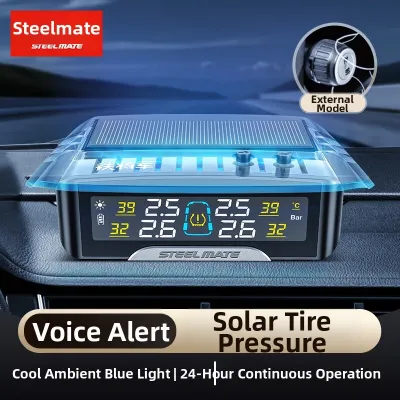
Prices are valid at publication and may change. Please refer to the product page for the latest price.
Core Comparison Dimensions for Solar TPMS
To make an informed decision between Steelmate and alternative brands, you must evaluate several technical and practical performance dimensions. These criteria determine how well a system performs under daily driving conditions and whether it will deliver accurate, life-saving alerts when a tire hazard arises.
Solar Charging Efficiency & Backup Power
While these systems are labeled as “solar,” the solar panel is only located on the receiver unit that sits on your dashboard. This panel converts ambient sunlight into electrical energy to keep the internal lithium backup battery charged. When evaluating different brands, look closely at the solar conversion efficiency and the capacity of the backup battery, typically measured in milliampere-hours (mAh). A high-capacity backup battery ensures the display remains functional during prolonged rainy seasons, cloudy weather, or when the vehicle is parked in shaded areas for extended periods.
Sensor Configuration: External vs. Internal
It is important to clarify that the solar panel only powers the dashboard display unit, not the individual tire sensors. The sensors themselves are powered by small, internal button-cell batteries. You must choose between two primary sensor configurations:
- External Cap Sensors: These screw directly onto your tire's valve stems. They are highly DIY-friendly, allowing you to install them in minutes and easily replace the sensor batteries (usually CR1632 or CR2032 cells) when they deplete. However, they are more exposed to road debris, moisture, and potential theft.
- Internal Sensors: These are installed inside the tire, replacing the original valve stems. They offer superior accuracy, are completely protected from environmental damage, and do not present a theft risk. However, they require professional installation, tire deflation, and wheel balancing, and their batteries are typically sealed and non-replaceable, meaning the entire sensor must be replaced once the battery dies (usually after five to seven years).
Alert Accuracy and Customization
An effective TPMS must deliver rapid, accurate alerts. Look for systems that provide real-time pressure and temperature updates with minimal latency. High-quality systems use sensitive pressure transducers that detect even minor drops in pressure. Furthermore, the receiver should allow you to customize the high and low pressure alarm thresholds, as well as high-temperature limits, to match your vehicle manufacturer’s recommended tire specifications. A system with rigid, unadjustable alert thresholds may trigger false alarms or fail to warn you of a critical pressure drop in specialized tires.
Display Visibility and Build Quality
Because the display unit sits on your dashboard, it is constantly exposed to direct sunlight and high cabin temperatures. The screen must feature an anti-glare coating and high-contrast LCD or FSTN technology to remain readable under bright midday sun. Additionally, the housing must be constructed from heat-resistant plastics (such as polycarbonate or high-grade ABS) to prevent warping, cracking, or battery degradation caused by extreme greenhouse temperatures inside a parked vehicle.
Evaluating Steelmate Solar TPMS: What to Expect
Steelmate has built a solid reputation in the automotive aftermarket by focusing on core functionality, durability, and user-friendly designs. Understanding what Steelmate systems offer helps you determine if their design philosophy aligns with your driving needs.

Strengths of Steelmate Systems
Steelmate solar TPMS models are highly regarded for their stable RF signal transmission. Using robust wireless protocols, these systems maintain a consistent connection between the tire sensors and the dashboard receiver, minimizing signal dropouts or delayed readings. The display units are typically equipped with high-contrast screens that offer clear, color-coded visual alerts alongside audible warnings for rapid pressure loss, slow leaks, high pressure, high temperature, and low sensor battery levels.
Most Steelmate units also feature a built-in G-sensor (vibration sensor) that automatically wakes the display when you start driving and puts it into a power-saving sleep mode when the vehicle is parked. For added convenience, they include a backup USB charging port, allowing you to manually recharge the internal battery when solar energy is unavailable.
Limitations to Verify
While Steelmate systems excel in core monitoring duties, their physical designs tend to be somewhat traditional. The dashboard receiver units can have a larger footprint than some ultra-compact, minimalist competitors. You must verify the physical dimensions of the receiver to ensure it can be mounted on your dashboard or windshield without obstructing your line of sight.
Additionally, Steelmate models generally focus on standalone displays rather than smartphone integration. If you prefer monitoring your tire pressures via a mobile app on your phone or through your car’s Android head unit, Steelmate’s standard solar lineups may not offer the Bluetooth connectivity you require.
Actionable Verification Steps
Before purchasing a Steelmate system, check the product packaging or official specifications to verify the following:
- Ingress Protection (IP) Rating: Ensure the sensors carry at least an IP67 rating (dust-tight and water-resistant) to withstand road splashes and heavy downpours.
- Operating Temperature Range: Confirm that both the sensors and the display unit are rated to operate reliably in high-temperature environments, typically up to 80°C for the display and 105°C for the sensors.
- Sensor Battery Lifespan: For external sensors, verify the expected battery life (usually 1 to 2 years) and ensure the package includes the necessary replacement tool and anti-theft locking nuts.
Steelmate vs. Competing Brands: A Decision Matrix
To help you weigh your options, it is helpful to categorize the solar TPMS market into three distinct segments: established automotive brands like Steelmate, generic budget brands found on online marketplaces, and premium smart/app-connected brands.
| Feature/Dimension | Established Brands (e.g., Steelmate) | Generic / Budget Brands | Premium Smart / App Brands |
|---|---|---|---|
| Signal Reliability | High (Robust RF protocols, minimal dropouts) | Variable (Prone to interference or delayed updates) | High (Often utilizes Bluetooth Low Energy) |
| Build Quality & Heat Resistance | High (Heat-resistant plastics, stable backup batteries) | Low to Medium (Risk of casing warp or battery swelling) | High (Premium materials, sleek designs) |
| Display Type | Dedicated dashboard receiver (LCD/FSTN) | Dedicated dashboard receiver (often basic LED) | Smartphone app, head unit, or compact receiver |
| Sensor Battery Quality | High-grade Maxell or equivalent cells | Unbranded, shorter lifespan | Premium long-life lithium cells |
| Replacement Parts | Readily available (Individual sensors can be paired) | Difficult to find (Often requires buying a whole new kit) | Available through official brand channels |
| Average Price Range | Mid to High (S$80 – S$180) | Low (S$20 – S$50) | High (S$150 – S$300+) |
Reliability and Sensor Lifespan
Choosing an established brand like Steelmate over a generic budget option significantly reduces the risk of premature sensor failure. Budget brands often save costs by using lower-grade internal batteries in their sensors, which can die within a few months, and inferior rubber seals that allow moisture to penetrate the sensor housing. Steelmate’s use of high-quality sealing rings and name-brand lithium batteries ensures consistent performance over several years.
Smart Features vs. Simplicity
If you appreciate a plug-and-play setup, Steelmate’s dedicated receiver is highly advantageous. It turns on automatically, displays your pressures instantly, and does not require you to open an app, pair a Bluetooth device, or drain your smartphone’s battery while driving. Conversely, if you prefer a clean dashboard free of extra screens, a premium app-connected system that sends push notifications to your phone or smartwatch might be worth the higher investment and more complex initial pairing process.
Long-Term Value for Money
While generic brands are highly affordable upfront, they often lack long-term support. If a single external sensor is lost, stolen, or damaged by a curb, finding a compatible replacement sensor from a generic brand can be nearly impossible, forcing you to purchase an entirely new system. Established brands typically sell individual replacement sensors that can be easily paired to your existing receiver using a simple button sequence detailed in the user manual.
Adapting Your Choice to Singapore's Driving Conditions
Singapore’s unique tropical climate and urban infrastructure introduce specific environmental stressors that should heavily influence your choice of solar TPMS.
Heat Resistance and Dashboard Exposure
In Singapore, ambient temperatures consistently hover around 30°C to 34°C, but the temperature inside a car parked under direct sunlight can easily exceed 70°C. This extreme heat poses a direct threat to the lithium-polymer battery inside a solar TPMS receiver. When choosing a brand, prioritize units like Steelmate that use high-temperature lithium batteries designed to resist swelling, degradation, and thermal runaway. Cheaper, unbranded solar receivers often suffer from rapid battery degradation under these conditions, rendering them unable to hold a charge after just a few months of exposure.
Heavy Rain and Humidity
Singapore’s intense monsoon seasons and high humidity levels demand exceptional weatherproofing for external sensors. Road surfaces collect pooling water, exposing valve-mounted sensors to high-pressure water splashes and road grime. A sensor with poor sealing will quickly fail due to internal corrosion. Ensure your chosen system features robust silicone O-rings and a high IP rating (IP67 or IP68). Additionally, high humidity can accelerate galvanic corrosion between the brass threads of your tire’s valve stem and the metal threads of an external sensor; using a small amount of anti-seize lubricant or choosing sensors with compatible thread materials is highly recommended.
Shaded Parking Environments
Many drivers in Singapore park their vehicles in shaded multi-storey HDB car parks, underground shopping mall basements, or sheltered office garages. Under these conditions, a solar TPMS receiver will receive virtually no sunlight for days or even weeks at a time. Therefore, you cannot rely solely on solar charging. Your system must possess a highly efficient sleep mode to preserve battery life when the vehicle is stationary, alongside a reliable USB charging port (preferably USB-C or Micro-USB) so you can easily top up the receiver’s battery using your car’s accessory charger when needed.
Installation, Maintenance, and Safety Boundaries
To ensure your solar TPMS operates reliably and safely, you must follow proper installation procedures, perform routine maintenance, and understand the safety limits of aftermarket tire accessories.
External Sensor Installation (DIY)
Installing external cap sensors is a straightforward, low-risk DIY task. First, consult your vehicle’s tire placard (usually located on the driver’s door pillar) to identify the manufacturer’s recommended cold inflation pressures. Inflate your tires to these exact specifications using a calibrated physical gauge before installing the sensors.
- Clean the valve stem threads thoroughly with a dry cloth to remove dirt and corrosion.
- Thread the included hex anti-theft nut onto the valve stem.
- Screw the external sensor onto the valve stem until it is snug and you hear a brief hiss of escaping air stop.
- Use the provided spanner to turn the anti-theft nut counter-clockwise (backward) against the base of the sensor, locking it tightly in place.
- Apply a soapy water solution to the valve stem to check for any bubbles, which would indicate an air leak. If bubbles appear, remove and reinstall the sensor.
Internal Sensor Installation (Professional Boundary)
Unlike external sensors, internal TPMS sensors require breaking the tire bead, removing the tire from the wheel rim, and replacing the existing valve stem with the sensor unit. This process carries significant safety and mechanical risks if performed without specialized equipment.
Because the addition of an internal sensor (which weighs around 30 grams) alters the weight distribution of the wheel, professional wheel balancing is mandatory after installation. Failing to balance the wheels can cause severe steering wheel vibrations at highway speeds, accelerating tire wear and compromising vehicle handling. Always have internal sensors installed by a qualified technician at a professional tire shop.
Routine Maintenance and Safety Limits
To keep your solar TPMS functioning optimally, clean the solar panel on the receiver unit periodically using a soft, dry microfiber cloth. Avoid using harsh chemical cleaners, solvents, or abrasive pads, which can scratch the panel and permanently reduce its solar charging efficiency.
For external sensors, inspect the anti-theft nuts and sensor casings during your regular car wash to ensure they remain tight and free of physical damage. Keep track of the sensor battery levels displayed on your receiver and replace the button-cell batteries promptly according to the manufacturer’s recommended schedule.
Finally, always remember that a TPMS is an early warning aid and not a replacement for manual tire inspections. A TPMS may not alert you to slow sidewall cracking, uneven tread wear, or minor punctures until pressure has dropped significantly. Always verify your tire pressure with a high-quality physical tire gauge before setting off on long road trips, carrying heavy loads, or driving at sustained highway speeds.
Frequently Asked Questions (FAQ)
Do solar TPMS displays work if my car is parked in a shaded car park for days?
Yes, quality solar TPMS displays will continue to work when parked in shaded or underground car parks. The display unit relies on its internal lithium backup battery to power the screen and receive sensor signals when sunlight is unavailable. Most reputable systems, including Steelmate, feature intelligent power-saving sleep modes that turn off the display when the vehicle is stationary. On a full charge, the backup battery can typically power the display for several weeks of normal driving, but you should use the built-in USB charging port to manually top up the battery if it becomes depleted.
Can I replace just one sensor if it gets damaged or the battery dies?
Yes, you can replace a single sensor without purchasing an entirely new TPMS kit. Established brands like Steelmate sell individual replacement sensors (labeled for specific tire positions, such as Front-Left or Rear-Right). To pair a new sensor, you must access the receiver’s pairing mode—usually by holding down a specific combination of buttons—and follow the steps outlined in your user manual, which often involves deflating or inflating the tire to trigger a signal that the receiver can detect and save.
Does the solar panel charge the TPMS while driving at night?
No, the solar panel requires daylight to generate electricity and cannot charge the system in the dark or under standard streetlights. During night driving, the display unit runs entirely on the energy stored in its internal backup battery. The solar panel will resume charging the battery once the vehicle is exposed to natural sunlight during the day.
Community discussion
Share your experience or ask a question. Comments are reviewed before publication.