
Choosing between SONAX Xtreme Leather Cleaner and SONAX Xtreme Fabric Cleaner depends entirely on the specific materials lining your car’s cabin. While both products are designed to lift dirt and refresh your vehicle’s interior, they use fundamentally different chemical approaches tailored to distinct surfaces. Applying the wrong formula can lead to disappointing results, sticky residues, or even permanent material damage. To make the right choice, you must evaluate your upholstery type, identify any mixed-material zones, and understand how each cleaner interacts with smooth surfaces versus woven fibers.
In tropical climates like Singapore, where high humidity and intense sunlight are constant, maintaining your car’s interior is especially critical. Sweat, body oils, and spilled drinks can quickly become breeding grounds for bacteria or cause materials to degrade prematurely. Selecting the correct product from the SONAX Xtreme lineup ensures that you address these issues effectively without compromising the integrity of your seats, dashboard, or carpets.
Identify Your Car's Upholstery Material
Before purchasing any interior care product, you must accurately identify the materials used throughout your vehicle. Modern car cabins are rarely uniform; they often feature a combination of different surfaces designed for comfort, durability, and aesthetics.
Products mentioned in this guide
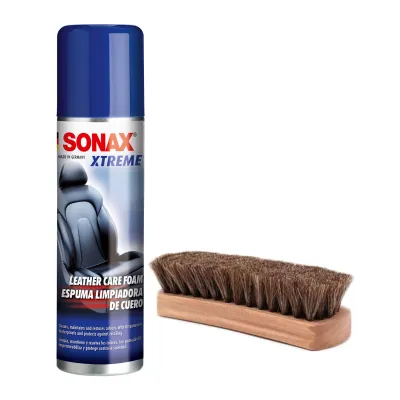
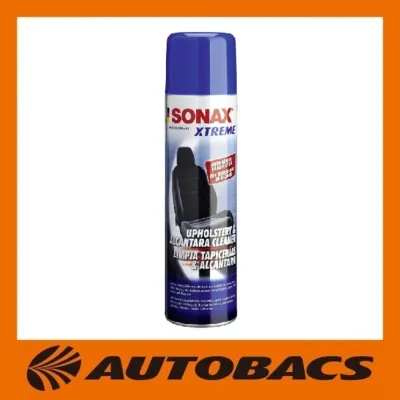
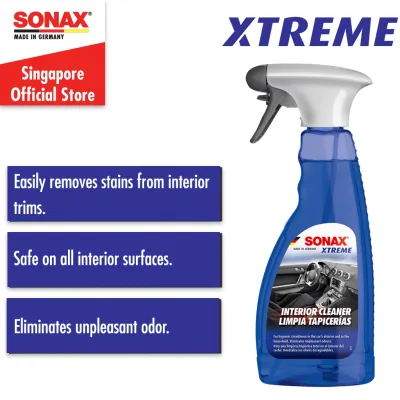
Prices are valid at publication and may change. Please refer to the product page for the latest price.
Genuine leather is a natural, porous material that requires careful maintenance to retain its suppleness. It is typically cool to the touch initially, exhibits unique grain patterns, and will slowly absorb moisture if it is unsealed. Most modern vehicles, however, use synthetic leather, often referred to as leatherette, vinyl, or vegan leather. Synthetic leather is non-porous, highly water-resistant, and has a more uniform texture. While it is more durable than genuine leather, it still requires specialized care to prevent its protective polyurethane coating from drying out or cracking under intense cabin heat.
Fabric upholstery consists of woven textile fibers, which are highly absorbent and prone to trapping dust, dirt, and liquids deep within their structure. This category also includes microfiber materials like Alcantara, which mimic the feel of suede but are made from synthetic polyesters. Alcantara requires extremely gentle, specialized cleaning to prevent the delicate pile from matting or pilling.
To confirm exactly what materials are in your car, consult your vehicle’s owner’s manual or the manufacturer’s original specification sheet. Many modern cars feature mixed-material interiors, such as leather seats with Alcantara center inserts, or fabric seats with synthetic leather bolsters. Identifying these distinct zones is the first step in planning your detailing routine, as a single product may not be suitable for the entire cabin.
SONAX Xtreme Leather Cleaner: Purpose and Best Use Cases
The SONAX Xtreme Leather Cleaner is formulated specifically to address the unique characteristics of smooth interior surfaces. Its primary purpose is to safely lift accumulated body oils, sweat, dust, and light grime from the surface without stripping away the essential moisture or protective coatings of the material.

This cleaner is highly suitable for genuine leather, perforated leather, and most high-quality synthetic leathers. Because perforated leather seats—often found in vehicles with ventilated cooling systems—have tiny holes, using a heavy liquid or foam can clog the perforations or saturate the underlying foam. The leather cleaner is designed to be applied sparingly, minimizing the risk of moisture pooling inside these delicate areas.
When applied correctly, the formula works by emulsifying oils and lifting dirt to the surface, where it can be easily wiped away. This prevents the leather from developing a shiny, greasy appearance, which is actually a sign of accumulated dirt and body oils rather than cleanliness. Instead, it helps restore the natural, clean matte finish that the vehicle had when it left the showroom.
However, there are several surfaces where this leather cleaner should not be used. You must avoid applying it to raw, unsealed leathers, suede, or nubuck, as these highly porous materials can absorb the liquid unevenly, leading to permanent staining or discoloration. It is also unsuitable for woven fabrics or carpets, as the conditioning agents and mild surfactants are not designed to penetrate or clean deep textile fibers. Always verify the specific product label instructions before application to ensure compatibility with your specific trim level.
SONAX Xtreme Fabric Cleaner: Purpose and Best Use Cases
In contrast, the SONAX Xtreme Fabric Cleaner is engineered to tackle the challenges associated with porous, woven materials. Its primary function is to penetrate deep into the textile fibers to break down, loosen, and lift stubborn stains, spilled liquids, and embedded dirt that have settled deep within the upholstery.
This product is highly effective for traditional cloth seats, carpeted floor mats, fixed cabin carpets, door panel fabric inserts, and fabric headliners. Because fabric fibers act like tiny hooks that trap dust and organic matter, a surface-level wipe is rarely sufficient. The fabric cleaner uses active penetrating agents that surround dirt particles, allowing them to be drawn out of the weave through agitation and wiping.
Additionally, fabric cleaners often contain odor-neutralizing properties. Woven materials easily absorb environmental odors, such as food smells, tobacco smoke, and dampness from frequent rainstorms. The fabric cleaner helps eliminate these trapped odors at the source rather than simply masking them with heavy perfumes.
You must avoid using this fabric cleaner on smooth leather, vinyl, or hard plastics. If applied to these non-porous surfaces, the deep-penetrating surfactants can dry out the material or leave behind a dull, white, or sticky residue that is difficult to buff away. For specialty microfibers like Alcantara, always check the specific product label carefully; while some fabric cleaners are safe for delicate synthetics, others may require a highly diluted application or a dedicated Alcantara-specific formula to prevent damage to the soft texture.
Key Differences: Formulation and Finish Expectations
Understanding the chemical and physical differences between these two products highlights why they cannot be used interchangeably without risking damage to your car’s interior.
The formulation of the leather cleaner focuses on gentle, surface-level action. It utilizes mild surfactants that break down oils without degrading the delicate polyurethane clear coat applied to modern automotive leather. It also typically contains conditioning elements designed to keep the leather supple and prevent it from drying out under UV exposure. The finish expectation for a leather cleaner is a clean, dry, matte surface that feels smooth but not slippery. A slippery leather seat is not only uncomfortable but can also be a safety hazard during sudden braking.
The fabric cleaner, on the other hand, relies on high-penetration chemistry. It is designed to wet the fibers thoroughly, break the bond between the dirt and the textile, and suspend the soil in a foam or liquid state so it can be vacuumed or wiped away. It does not contain moisturizing oils, as these would leave a greasy residue on fabric that would rapidly attract new dirt and dust. The finish expectation for fabric is a completely dry, soft, and residue-free fiber texture that smells fresh and feels clean to the touch.
Cross-using these products carries significant risks. If you apply the fabric cleaner to leather, its strong penetrating agents can strip away the leather’s protective topcoat, leaving it vulnerable to drying, cracking, and color fading. Conversely, if you apply the leather cleaner to fabric, the conditioning oils and mild surfactants will saturate the woven fibers, leaving a sticky, greasy residue that is incredibly difficult to extract and will cause the fabric to soil much faster than before.
How to Decide: A Step-by-Step Selection Guide
To determine which product you should purchase, follow this straightforward decision framework based on your vehicle’s specific interior configuration:
Choose the Leather Cleaner if your vehicle features full genuine leather or synthetic leather seats, a leather-wrapped steering wheel, and leather door armrests. This product will serve as your primary maintenance tool to keep these high-touch areas clean, matte, and protected from daily wear.
Choose the Fabric Cleaner if your car has standard cloth seats, woven fabric door inserts, and carpeted floors. This is the correct choice for deep-cleaning spills, removing mud from footwells, and refreshing the overall scent of a textile-heavy cabin.
Buy both products if you own a vehicle with a mixed interior. For example, many modern cars feature leather seats but have fabric carpets, a fabric headliner, and cloth door inserts. In this scenario, attempting to use a single product across all surfaces will inevitably lead to poor results or damage. Having both cleaners in your detailing kit allows you to target each material with its chemically correct counterpart, ensuring a professional-grade clean throughout the entire cabin.
Verify first if your vehicle contains specialty materials. If you have Alcantara inserts, vintage unsealed leather, or custom aftermarket upholstery, do not assume standard formulas are safe. Check the manufacturer’s care guidelines and the specific SONAX Xtreme product labels to confirm compatibility before making your purchase.
Safe Application and Pre-Use Testing Guidelines
Regardless of which product you choose, practicing safe application techniques is essential to prevent accidental damage to your car’s interior. Chemical reactions can vary based on the age of the material, previous detailing treatments, and exposure to sunlight.
Always perform a hidden spot test before applying any cleaner to a highly visible area. Select an inconspicuous location, such as the underside of a seat, a lower corner of a door panel, or a portion of the carpet hidden beneath the floor mats. Apply a small amount of the cleaner, work it in gently, and wipe it away. Wait for the area to dry completely, then inspect it under direct light to check for any signs of color transfer, fading, spotting, or texture changes. If the material looks unchanged, it is safe to proceed with the full application.
Before starting, read the specific product label carefully to understand the recommended dwell times, dilution ratios (if applicable), and required tools. Leather cleaners are best applied with a soft microfiber towel or a very soft horsehair brush to gently agitate dirt out of the grain. Fabric cleaners often require a slightly stiffer nylon brush to work the product into the fibers, followed by a clean, dry microfiber cloth or a wet-dry vacuum to extract the suspended dirt.
If you encounter severe stains, deep-set mold, persistent damp odors, or if you are entirely uncertain about the material composition of your interior, stop immediately. In these cases, attempting a DIY clean can worsen the damage. Consult a qualified professional detailer who has the specialized extraction equipment and chemical knowledge to safely restore your vehicle’s cabin.
Frequently Asked Questions (FAQ)
Can I use the fabric cleaner on my car's floor mats?
Yes, the fabric cleaner is highly suitable for carpeted and fabric floor mats. It is designed to penetrate the dense fibers of floor mats to lift embedded dirt, mud, and street grime. However, you must check the product label before applying it to rubber, TPE, or all-weather floor mats. Some fabric cleaners may leave a slippery or dull residue on non-porous rubber surfaces, which can be dangerous if it transfers to your pedals. For rubber mats, a simple wash with water and a mild, dedicated rubber cleaner is usually more appropriate.
Do I need a separate conditioner after using the leather cleaner?
To determine if you need a separate conditioner, you must check the specific label of your SONAX Xtreme Leather Cleaner. Some formulations in the range are designed as 2-in-1 products that clean and condition simultaneously, leaving behind a protective barrier. However, if the product you are using is strictly a deep cleaner or degreaser, it is highly recommended to follow up with a dedicated leather conditioner or care cream. This step restores essential moisture to the leather, keeping it supple and preventing it from cracking under intense cabin heat.
Community discussion
Share your experience or ask a question. Comments are reviewed before publication.