
Choosing the right wheel protection for your vehicle depends on your maintenance habits, the current state of your wheels, and how much time you want to spend on upkeep. Sonax offers a range of wheel care products, but they serve fundamentally different purposes. Polishes restore clarity by removing defects, waxes provide a classic sacrificial barrier, and ceramic coatings deliver long-term hydrophobic protection. Understanding these differences is key to selecting the right approach for your car.
Understanding How Sonax Polish, Wax, and Ceramic Coatings Work
To make an informed decision, you must first understand the fundamental differences in how these three product categories interact with your wheels. Confusing surface restoration with long-term protection is a common mistake that can lead to disappointing results or wasted effort.
A wheel polish is primarily a corrective agent rather than a protective one. It contains micro-abrasives or chemical cleaning agents designed to strip away oxidation, light scratches, water spots, and stubborn road grime. When you apply a polish, you are physically leveling the microscopic top layer of the wheel’s clear coat or metal surface to restore its original shine. Because polishing leaves the surface completely bare and unprotected, it must always be followed by a dedicated sealant, wax, or ceramic coating to prevent rapid re-oxidation.
Products mentioned in this guide
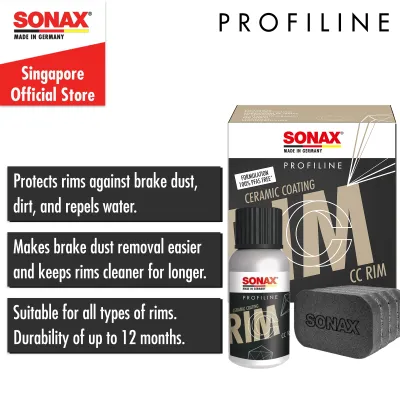
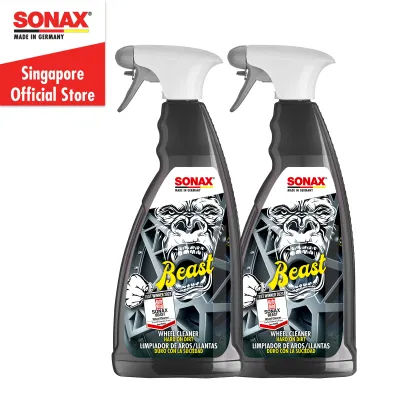
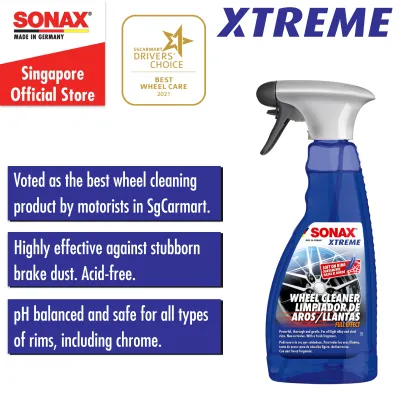
Prices are valid at publication and may change. Please refer to the product page for the latest price.
A wheel wax acts as a traditional sacrificial barrier. Waxes are typically formulated from natural carnauba, synthetic polymers, or a hybrid blend of both. When applied, the wax fills in the microscopic pores and imperfections of the wheel’s surface, creating a smooth, high-gloss finish. This layer takes the brunt of environmental exposure, preventing contaminants from bonding directly to the wheel. However, because wax sits on top of the surface rather than bonding chemically, it gradually wears away under the influence of heat, friction, and washing.
A ceramic coating represents an advanced chemical approach to wheel protection. These liquid polymers contain silicon dioxide (SiO2) or similar ceramic compounds that chemically bond with the wheel’s clear coat or bare metal. Once cured, they form a hard, semi-permanent glass-like layer. This barrier is highly hydrophobic, meaning water and liquid contaminants bead up and roll off easily, while also offering superior resistance to heat and harsh chemicals.
Evaluating Durability and Protection Against Brake Dust
Brake dust is one of the most aggressive contaminants your vehicle encounters. It consists of hot iron particles, carbon fibers, and adhesive residues shaved off the brake pads and rotors during deceleration. Because these particles are extremely hot when they fly off, they can easily melt into an unprotected wheel’s clear coat, causing permanent pitting and corrosion.

To evaluate how long each protection method will last, always check the specific Sonax product label, as durability timeframes vary significantly across product lines. Traditional wheel waxes generally offer temporary protection that is measured in weeks or a few months. They are highly susceptible to the high temperatures generated by braking systems, which can cause the wax to soften and degrade more rapidly than it would on body panels.
Ceramic coatings, by contrast, are engineered to withstand extreme temperatures and harsh environmental conditions. A properly applied and cured ceramic coating can provide protection that lasts for many months or even years, depending on the specific product formulation and how the vehicle is used. This long-term durability makes ceramic coatings highly effective at preventing brake dust from embedding into the wheel surface.
Environmental factors play a massive role in the lifespan of any protective layer. In hot, humid climates with frequent heavy downpours, such as Singapore, wheels are subjected to constant wet-and-dry cycles that accelerate the breakdown of traditional waxes. Furthermore, if you frequently use aggressive, highly acidic or highly alkaline wheel cleaners, you will quickly strip away any wax protection. Ceramic coatings offer much higher chemical resistance, allowing them to survive exposure to a wider pH range, though using pH-neutral maintenance cleaners is still recommended to maximize their lifespan. Your parking environment also matters; vehicles parked in enclosed garages will naturally retain their wheel protection longer than those parked in open-air lots exposed to constant sunlight and rain.
Comparing Application Effort and Ongoing Maintenance
The amount of time and effort you are willing to invest in both the initial application and ongoing maintenance should heavily influence your choice. Each method demands a different level of physical labor, skill, and precision.
Polishing is a labor-intensive process that requires consistent mechanical action. Whether you are working by hand with a microfiber applicator pad or using a dual-action machine polisher with specialized cone attachments, you must work the polish into the surface section by section. This process requires significant physical effort to break down the abrasives and buff away defects, making it the most physically demanding step of wheel care.
Waxing is relatively straightforward and highly forgiving, making it an excellent option for beginners. The application process involves spreading a thin, even layer of wax over the clean wheel, waiting for it to haze according to the product instructions, and then buffing it off with a clean microfiber towel. If you apply too much wax or leave it on too long, the mistake is easily corrected with a quick wipe of a detail spray or a mild clay bar.
Ceramic coatings require meticulous surface preparation and a controlled environment for proper curing. Before applying a ceramic coating, the wheel must be completely free of polishing oils, grease, and dust. This requires a dedicated wipe-down with an isopropyl alcohol (IPA) solution or a panel preparation spray. During application, you must carefully monitor the flashing time—the moment the liquid solvent begins to evaporate—and level the coating evenly. Failing to level the coating properly can result in “high spots,” which are cloudy, uneven patches that cure hard. Correcting cured high spots often requires abrasive machine polishing, leaving very little margin for error during DIY application.
Ongoing maintenance is where the trade-off becomes apparent. A ceramic-coated wheel is incredibly easy to clean because its hydrophobic surface repels water and dirt. In many cases, a simple rinse with a pressure washer or a gentle wipe with a pH-neutral shampoo is all that is needed to remove brake dust. Waxes require more delicate and frequent maintenance. Because the wax layer is easily degraded by friction and strong detergents, you must wash the wheels carefully and plan to reapply the wax every few weeks to maintain consistent protection.
Decision Framework: Which Sonax Wheel Protection Fits Your Routine?
To help you finalize your choice, consider how each protection method aligns with your current wheel condition, detailing goals, and available time.
- Choose Polish if: Your wheels currently look dull, hazy, or have visible water spots, light scratches, and oxidation. Polishing is a corrective step, not a protective one. If your wheels have lost their original luster, you must polish them first to restore the surface before applying any wax or ceramic coating.
- Choose Wax if: You enjoy the hands-on detailing process, prefer a warm, deep gloss, and do not mind reapplying the product every few weeks or months. Wax is an excellent, cost-effective choice for enthusiasts who wash their cars frequently and want an easy-to-apply barrier that can be refreshed during routine weekend washes.
- Choose Ceramic Coating if: You want to minimize the effort required for weekly washes and desire long-term, robust protection against brake dust. If you are willing to invest the necessary time for meticulous surface preparation—or budget for professional application—a ceramic coating offers the most durable defense against harsh road conditions.
Before applying any chemical product, always verify your wheel type. Specialized finishes such as matte paint, satin clear coats, raw forged aluminum, anodized metal, or carbon fiber require specific care. Standard polishes can ruin a matte finish by adding unwanted gloss, while certain chemicals can stain raw aluminum. Always consult your wheel manufacturer’s care guidelines and check the Sonax product label to ensure compatibility with your specific wheel material.
Essential Preparation and Safety Checks Before Application
Before starting any wheel detailing project, safety and proper preparation are paramount. Always work in a well-ventilated, shaded area, and ensure the wheels, brake calipers, and rotors are completely cool to the touch. Applying chemicals to hot wheels can cause the products to dry too quickly, leading to unsightly staining or chemical etching on the metal.
Thorough cleaning is a non-negotiable prerequisite for both wax and ceramic coating adhesion. Use a dedicated iron remover to dissolve embedded brake dust, followed by a thorough wash and a clay bar treatment to remove any remaining bonded contaminants. For wax or ceramic coatings to adhere properly, the surface must be completely degreased using a panel prep solution or isopropyl alcohol to remove all polishing oils and residues.
Establish a hard stop condition: If your wheels are heavily pitted, showing signs of clear coat failure, or have structural damage like cracks or severe curb rash, stop immediately. Do not attempt to apply DIY polishes or coatings over compromised surfaces. Instead, consult a qualified wheel repair specialist to assess whether the wheels need professional refinishing or replacement.
Frequently Asked Questions (FAQ)
Can I apply wax over a ceramic coating on my wheels?
While you can physically apply wax over a cured ceramic coating, it is generally not recommended. The wax will cover the ceramic layer, masking its superior hydrophobic and self-cleaning properties with the less efficient properties of the wax. Instead of traditional wax, use a dedicated ceramic maintenance spray or a pH-neutral detailer designed to bond with and top up the existing ceramic coating.
Do I need to polish my wheels before applying wax or ceramic coating?
Polishing is only necessary if your wheels have surface defects like oxidation, fine scratches, or stubborn water spots that you want to correct. If your wheels are brand new or already in pristine condition, polishing is not required. In those cases, a thorough wash, chemical decontamination (using an iron remover), and a proper degreasing step are entirely sufficient to prepare the surface for your chosen protective layer.

Community discussion
Share your experience or ask a question. Comments are reviewed before publication.