
Quick Answer: Which Sonax Product Should You Choose?
To select the right Sonax product, you must first distinguish between correcting your paintwork and protecting it. Sonax Polish is strictly a corrective treatment designed to remove surface defects, meaning it does not leave behind any lasting defensive barrier on your vehicle. If your paint is already clean, smooth, and defect-free, you must choose between a wax or a ceramic coating for ongoing protection.
Choose a Sonax Wax if you prioritize a deep, warm, wet-look gloss, prefer a straightforward and low-risk application process, and do not mind reapplying the product every few weeks or months. This is an excellent option for car enthusiasts who enjoy hands-on detailing on weekends and want an easily reversible finish.
Choose a Sonax Ceramic Coating if you want maximum durability, exceptional water-beading properties, and a simplified routine wash. This semi-permanent solution is ideal for daily-driven vehicles exposed to harsh environments, provided you are willing to invest the significant time and effort required for rigorous surface preparation.
Products mentioned in this guide
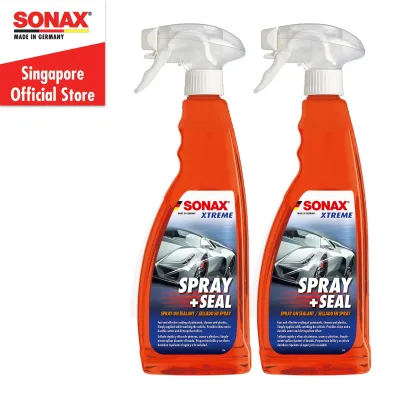
Prices are valid at publication and may change. Please refer to the product page for the latest price.
Clarifying the Roles: Correction vs. Protection
Understanding the chemical and mechanical differences between polish, wax, and ceramic coatings prevents costly detailing mistakes and ensures you achieve the desired finish.

Sonax Polish
Polishes are formulated with specialized abrasives or chemical cleaning agents designed to level the clear coat of your paintwork. When applied by hand or machine, these abrasives gently shave away a microscopic layer of damaged clear coat, effectively removing swirl marks, light scratches, oxidation, and water spots. By flattening the surface, a polish restores optical clarity, allowing light to reflect evenly and creating a mirror-like shine. However, once you wipe away the polishing residue, the paint is completely bare. It has no protection against UV rays, acid rain, or physical contaminants, making an immediate protective follow-up step mandatory.
Sonax Wax
Waxes serve as a traditional sacrificial barrier that sits directly on top of your clear coat. Sonax formulations typically utilize either natural carnauba wax, synthetic polymers, or a hybrid blend of both. Instead of correcting defects, a wax fills in microscopic imperfections, temporarily hiding very fine scratches while adding a layer of optical depth. Because waxes do not form a permanent chemical bond with the paint, they are highly susceptible to environmental degradation. High surface temperatures, friction from washing, and alkaline car wash detergents will gradually break down this layer, requiring regular reapplication to maintain protection.
Sonax Ceramic Coating
Ceramic coatings represent a significant technological shift, utilizing silicon dioxide (SiO2) formulations that chemically bond to the clear coat. Rather than sitting loosely on the surface like a wax, a ceramic coating cures to form a hard, semi-permanent, and highly hydrophobic glass-like layer. This microscopic barrier is exceptionally dense, offering superior resistance to environmental hazards, chemical etching, and UV radiation. Because it forms a covalent bond with the paint, it cannot be washed away by standard detergents or rain, providing protection that outlasts traditional waxes by a wide margin.
Head-to-Head Comparison: Durability, Shine, and Effort
To make an informed decision, you must evaluate how these three product categories perform across the primary metrics of durability, visual appearance, and application complexity.
Durability and Environmental Resistance
The longevity of your paint protection is directly tied to how the product interacts with the surface of your vehicle.
Polish: A polish offers zero durability. Its sole purpose is to correct the paint surface, leaving the clear coat exposed to the elements immediately after use.
Wax: Traditional waxes provide short-to-medium-term protection. In tropical climates like Singapore—characterized by intense UV radiation, high humidity, and sudden torrential downpours—a standard carnauba wax may only last four to six weeks. Synthetic liquid waxes or sealants may extend this protection to a few months, but they remain vulnerable to degradation from harsh road grime and alkaline car wash shampoos.
Ceramic: Ceramic coatings offer long-term environmental resistance. They excel at shielding your paint from UV damage, bird droppings, tree sap, and acidic rain. The exact lifespan depends heavily on the specific Sonax product tier you select. For instance, a consumer-grade spray-on ceramic sealant may offer several months of protection, while a professional-grade multi-year liquid coating can last for years under proper maintenance. Always check the manufacturer’s label on your specific Sonax product to verify the expected durability range.
Visual Finish and Gloss Characteristics
Each product category alters or enhances the appearance of your vehicle’s paintwork in distinct ways.
Polish: A polish does not add its own visual characteristics or artificial gloss. Instead, it restores the paint’s natural clarity by physically removing the light-scattering defects that make the surface look dull. The gloss achieved from polishing is the pure reflection of a perfectly flat clear coat.
Wax: Waxes are celebrated for producing a warm, deep, and “wet” look. Carnauba-based formulas excel at enriching dark paint colors, such as deep blacks, blues, and reds, by adding a thick, reflective layer that softens harsh light reflections. This aesthetic is highly favored for show cars and garage-kept classics.
Ceramic: Ceramic coatings deliver a highly reflective, “glassy,” or “candy-like” shine. Because the cured SiO2 layer is incredibly flat and optically clear, it acts like an extra layer of glass over your paint, sharpening reflections and maximizing the paint’s natural metallic flake. Additionally, its extreme hydrophobic properties cause water to bead into tight spheres and roll off, keeping the surface cleaner for longer.
Application Effort and Maintenance Requirements
The work required to apply and maintain these products varies significantly, impacting your detailing schedule.
Polish: Polishing demands high physical effort and a higher level of skill. While minor areas can be polished by hand, achieving consistent results across an entire vehicle typically requires a dual-action or rotary polishing machine. Inexperienced users face a real risk of burning through the clear coat or creating unsightly holograms if improper techniques or overly aggressive pads are used.
Wax: Waxing requires moderate effort and carries a very low risk of damage. Most Sonax waxes are designed for easy application by hand or machine, requiring you to spread a thin layer, wait for it to haze or flash, and then buff it off with a clean microfiber towel. If you make a mistake, the wax can be easily stripped off with a dedicated prep spray or clay bar.
Ceramic: Applying a ceramic coating requires high initial effort and meticulous preparation. The paint must be completely decontaminated and polished before application, as any remaining defects or oils will be locked beneath the cured ceramic layer. Precise application is critical; failing to level the coating properly during the flashing window results in “high spots”—dark, cloudy streaks that can only be removed by physically polishing the area again. However, once successfully cured, a ceramic coating drastically reduces ongoing maintenance effort, making routine washes quick and simple.
| Product Category | Primary Function | Durability Expectation | Visual Character | Application Skill Level | Maintenance Effort |
|---|---|---|---|---|---|
| Sonax Polish | Paint Correction & Defect Removal | None (0 days) | Restores Natural Paint Clarity | High (Machine work recommended) | N/A (Must be sealed immediately) |
| Sonax Wax | Sacrificial Protection & Filling | Weeks to Months | Warm, Deep, "Wet" Gloss | Low to Moderate | Moderate (Requires frequent reapplication) |
| Sonax Ceramic Coating | Long-Term Protective Barrier | Months to Years | Glassy, Highly Reflective, Hydrophobic | High (Requires precise prep & leveling) | Low (Easy "wash-and-go" maintenance) |
Decision Framework: Matching the Product to Your Car's Condition
Choosing the correct path requires a realistic assessment of your vehicle’s current paint condition, your lifestyle, and your local environment.
Choose Polish first if: Your vehicle’s paintwork exhibits visible swirl marks, oxidation, water spots, or holograms under direct sunlight. Applying any form of protection over damaged paint will simply lock in those defects, preventing you from achieving a true high-gloss finish. Polishing is a mandatory preparation step before applying a ceramic coating to ensure the SiO2 molecules can bond directly to clean, bare clear coat. It is also highly recommended before waxing to maximize the visual impact of the wax.
Choose Wax if: You enjoy the hands-on, therapeutic process of detailing your car on weekends and prefer a low-risk application. Wax is ideal if your vehicle is garage-kept, driven primarily in favorable weather, or if you prefer a warm, traditional glow over a glassy shine. Because wax is easily stripped and reapplied, it is a forgiving option for beginners who want to maintain their car’s paint without committing to the permanent nature of a ceramic coating.
Choose Ceramic Coating if: You drive your vehicle daily and park outdoors, exposing it to harsh tropical elements like the intense sun, heavy rain, and high humidity typical of Singapore. Ceramic coatings are perfect for those who want a “wash-and-go” lifestyle, where dirt and road grime rinse off easily with minimal scrubbing. However, you must be prepared to execute a thorough decontamination and preparation process beforehand, or be willing to pay a professional to do so.
Verify first if: Before undertaking any detailing work, you must verify your vehicle’s paint type and condition. If you are unsure about the thickness of your clear coat (especially on older or previously polished vehicles), have severe paint defects that penetrate deep into the paint layers, or are working with a matte or satin finish, stop immediately. Consult your vehicle manufacturer’s guidelines or a qualified professional detailing shop. Standard polishes and gloss-enhancing waxes can permanently ruin matte finishes by adding unwanted shine or altering the texture.
Essential Preparation and Safety Boundaries
To prevent irreversible paint damage and ensure your chosen protective product performs as designed, you must adhere to strict preparation and safety protocols.
Non-Negotiable Prep Steps
Applying wax or ceramic coating over contaminated paint traps road grime, industrial fallout, and iron particles, preventing the protective layer from bonding correctly. To prepare the surface, follow these steps:
- Perform a thorough wash using the two-bucket method to remove loose dirt.
- Apply an iron decontamination spray to dissolve embedded brake dust and metallic particles.
- Use a clay bar treatment with a dedicated lubricant to pull out remaining bonded contaminants, leaving the paint feeling smooth as glass.
- For ceramic coatings, perform a final wipe-down using an isopropyl alcohol (IPA) solution or a dedicated panel prep spray to remove all polishing oils, ensuring a completely bare surface for bonding.
Polishing Risks and Safety Boundaries
Polishing physically removes a microscopic layer of your vehicle’s clear coat. Because clear coat is thin and finite, aggressive compounding, high-speed rotary buffers, or improper techniques can easily burn through to the base paint, requiring an expensive respray. If you are a beginner, stick to a dual-action (DA) polisher, which is far safer because the pad stops spinning if too much pressure is applied. Always check the paint type and vehicle manufacturer instructions before starting. Always test your pad and polish combination on a small, inconspicuous area first to verify compatibility and results.
Ceramic Curing and Safety Protocols
Ceramic coatings are highly sensitive to temperature and humidity during application. In humid, tropical climates like Singapore, the “flash time” (the window of time you have to wipe away excess coating before it cures) can be significantly shortened. If you miss this window, the coating will cure unevenly, leaving unsightly “high spots” that can only be removed by physically polishing the area again. Always read the specific Sonax product label for exact curing times, flashing windows, and safety requirements. Wear nitrile gloves and a protective mask to avoid inhaling chemical vapors, and ensure you work in a well-ventilated, shaded environment away from direct sunlight.
Frequently Asked Questions (FAQ)
Can I apply Sonax Ceramic Coating directly over Sonax Wax?
No, you cannot apply a ceramic coating directly over a wax. Waxes and sealants create a physical barrier on top of the clear coat that prevents the silicon dioxide (SiO2) in the ceramic coating from forming a chemical bond with the paint. If applied over wax, the ceramic coating will fail to adhere and will wash off almost immediately. You must completely strip any existing wax, grease, or polishing oils using a dedicated panel preparation spray or an isopropyl alcohol (IPA) wipe before applying a ceramic coating.
Do I still need to wash my car if it has a ceramic coating?
Yes, regular washing remains essential even if your vehicle has a ceramic coating. While the coating’s extreme hydrophobic properties make the surface self-cleaning to some degree—allowing rain to wash away loose dust—it does not make the car immune to road film, brake dust, and traffic grime. Over time, these contaminants will accumulate on top of the coating, clogging its microscopic structure and reducing its water-beading performance. To maintain the coating, perform a gentle hand wash using a pH-neutral car shampoo at regular intervals.
Community discussion
Share your experience or ask a question. Comments are reviewed before publication.