
Quick Answer: Which Paint Protection Fits Your Routine?
Choosing between SONAX Extreme (often stylized as XTREME) products and a ceramic coating depends on your budget, available time, and detailing experience. If you enjoy spending a weekend afternoon working on your car, prefer a straightforward application process, and want to minimize your upfront costs, the SONAX Extreme range is highly suitable. These polymer-based sealants and hybrid waxes offer excellent gloss and water-beading properties with a very forgiving application method.
Conversely, if you want long-term protection that minimizes the need for frequent reapplication, a ceramic coating is the more appropriate choice. This option is ideal for car owners who prioritize high-level hydrophobic performance and are prepared to invest either the significant time required for meticulous paint preparation or the financial capital for professional installation. Because formulations within the SONAX Extreme line and various ceramic brands differ, always consult the specific product labels and technical data sheets to verify compatibility and instructions.
Understanding the Contenders: Polymer Sealants vs SiO2 Coatings
To make an informed decision, it is essential to understand how these two protective options interact with your vehicle’s paintwork. The SONAX Extreme product category primarily consists of synthetic polymer sealants and hybrid formulations. These products are designed to bond physically and chemically to the clear coat of your vehicle. Once applied, they fill microscopic imperfections in the paint surface, creating a smooth barrier that enhances gloss and provides a sacrificial layer against environmental contaminants like bird droppings, road grime, and ultraviolet rays.
Products mentioned in this guide
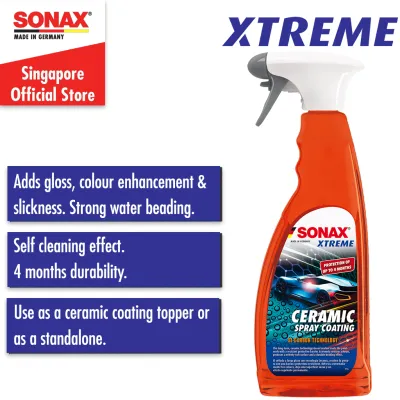
Prices are valid at publication and may change. Please refer to the product page for the latest price.

Ceramic coatings represent a different chemical approach to paint protection. These liquid formulations typically rely on Silicon Dioxide (SiO2) or similar inorganic compounds. When applied to the paint, the carrier solvents evaporate, leaving the SiO2 to undergo a chemical curing process. This reaction allows the coating to cross-link with the clear coat, forming a semi-permanent, glass-like barrier. This cured layer is significantly harder and more durable than traditional waxes or polymer sealants, offering superior resistance to chemical etching and environmental degradation.
The visual and tactile results of these two technologies also differ. Polymer sealants like those in the SONAX Extreme line generally produce a deep, warm, and wet-look gloss that is highly favored by classic car enthusiasts. Ceramic coatings, on the other hand, tend to produce a sharp, highly reflective, glass-like shine. Tactilely, a cured ceramic coating feels incredibly slick, which contributes directly to its self-cleaning properties, as dirt and water struggle to cling to the ultra-smooth surface.
Core Comparison: Durability, Effort, and Cost
Application Effort and Preparation Requirements
Before applying any protective layer, proper paint preparation is mandatory to ensure the product bonds correctly to the clear coat. For both SONAX Extreme and ceramic coatings, you must perform a thorough wash, chemical decontamination using an iron remover, and mechanical claying to remove embedded contaminants. Any dirt or oil left on the surface will prevent the protective layer from adhering, leading to premature failure.
The application processes themselves, however, require very different levels of skill and precision:
- SONAX Extreme Application: These products are highly forgiving. Whether you are using a liquid wax, a spray sealant, or a paste, the application typically involves wiping the product onto a clean panel, allowing it to haze slightly, and buffing it off with a clean microfiber towel. If you make a mistake or leave a high spot, it is easily corrected by buffing the area again or applying a small amount of fresh product to reactivate and level the layer.
- Ceramic Coating Application: Applying a ceramic coating is a meticulous, time-sensitive process. The coating is applied using an applicator block in small, overlapping cross-hatch sections. You must monitor the product closely for "flashing"—the moment the solvents evaporate, often indicated by a rainbow-like appearance on the paint. You must level and buff the coating within a specific window; failing to do so results in permanent high spots, which can only be removed by mechanical polishing.
- Environmental Constraints: Curing environments play a critical role. While polymer sealants can be applied in a wide range of temperatures and humidities, ceramic coatings are highly sensitive to moisture and dust during the initial curing phase. In humid climates like Singapore, applying a ceramic coating outdoors or in an open carport can be highly challenging, as unexpected rain or high humidity can ruin the curing process.
Longevity and Maintenance Demands
To evaluate the lifespan of your chosen protection, always verify the manufacturer’s technical data sheets rather than relying on generalized marketing claims. The longevity of any paint protection is highly dependent on environmental exposure, driving habits, and maintenance routines.
- Verifying Longevity: Polymer sealants typically provide protection for several months, requiring reapplication three to four times a year to maintain optimal performance. Ceramic coatings are designed for long-term durability, often lasting several years when properly maintained. However, these timelines assume the vehicle is washed correctly and not subjected to harsh chemical strip washes.
- Washing Techniques: Both options require careful maintenance to prevent marring and scratching. You should always use pH-neutral car shampoos and employ safe washing techniques, such as the two-bucket method or a foam cannon paired with a high-quality microfiber wash mitt. Avoid automated drive-through car washes, as the abrasive brushes will quickly degrade polymer sealants and micro-scratch ceramic coatings.
- Maintenance Products: To extend the life of your protection, use compatible maintenance products. For ceramic coatings, this involves applying SiO2-infused booster sprays every few months to replenish the hydrophobic top layer. For SONAX Extreme, you can use compatible quick detailers or spray waxes from the same product line to boost gloss and slickness between major applications.
Cost and Value Considerations
Evaluating the financial investment requires looking beyond the initial purchase price of the bottle, as hidden preparation costs and labor can significantly alter the total expenditure.
- Upfront Material Costs: A retail bottle of SONAX Extreme sealant or wax typically costs between S$20 and S$50, making it a highly accessible entry point. In contrast, a high-quality consumer-grade ceramic coating kit generally ranges from S$80 to S$200 or more, as it often includes specialized applicators, prep sprays, and protective gloves.
- Hidden Preparation Costs: Because ceramic coatings lock in the paint's current condition, paint correction (polishing to remove swirls and scratches) is highly recommended, if not strictly mandatory, before application. If you do not already own a dual-action polisher, compounding pads, and polishing compounds, purchasing this equipment can add several hundred dollars to your DIY budget.
- Professional Labor: If you choose to have a professional detailer apply a ceramic coating, the cost can range from S$500 to well over S$1,500. This premium price reflects the intensive labor involved in multi-stage paint correction, chemical decontamination, and the controlled, dust-free environment required for the coating to cure perfectly.
Side-by-Side Specification Checklist
Use this checklist to compare the fundamental attributes of polymer sealants and ceramic coatings before making your purchase. Matching these requirements to your available workspace and skill level will help ensure a successful application.
| Feature | SONAX Extreme (Polymer/Hybrid Wax) | Ceramic Coating (SiO2) |
|---|---|---|
| Primary Active Ingredient | Synthetic polymers / Hybrid Carnauba | Silicon Dioxide (SiO2) |
| Mandatory Paint Prep Level | Basic decontamination (wash & clay) | Deep decontamination & paint correction |
| Application Method | Wipe-on, wipe-off or spray-and-buff | Cross-hatch block application & precise leveling |
| Curing Time Before Exposure | Minimal (typically 1 to 2 hours) | 12 to 24 hours dry; up to 7 days before washing |
| Maintenance Wash Type | pH-neutral car shampoo | pH-neutral car shampoo (avoid high-pH washes) |
| Where to Verify Exact Specs | Product label, official technical data sheets | Manufacturer website, warranty documents |
How to Decide: Matching Protection to Your Detailing Habits
To finalize your choice, evaluate your personal detailing habits, your budget, and the current condition of your vehicle’s paintwork.
Choose SONAX Extreme if:
- You enjoy washing and detailing your car yourself on a regular basis.
- You prefer a low-risk application process where mistakes are easily corrected.
- You want to keep your upfront costs low and do not want to invest in expensive polishing machinery.
- You do not have access to a fully enclosed, climate-controlled garage for application.
Choose Ceramic Coating if:
- You want to minimize the time spent applying protection over the course of the year.
- You prioritize maximum water-beading performance and a self-cleaning effect that makes weekly washing faster.
- You are willing to invest the time and money required for thorough paint correction beforehand.
- You have a suitable indoor workspace or the budget to pay for professional installation.
Before applying any product, inspect your vehicle’s clear coat. If the paint is heavily oxidized, peeling, or has deep scratches that penetrate the clear coat, neither product will deliver satisfactory results. In these situations, consult a professional detailer to assess whether the paint requires professional correction or respraying before any protective layer is applied.
Frequently Asked Questions (FAQ)
Can I apply SONAX Extreme over a ceramic coating?
Applying a traditional polymer wax or sealant over a ceramic coating is generally not recommended. Doing so can mask the superior hydrophobic and self-cleaning properties of the underlying ceramic layer with the less hydrophobic properties of the polymer. Additionally, the polymer sealant may struggle to bond properly to the highly slick ceramic surface, leading to premature washing away of the top layer. To maintain and boost a ceramic coating, always use SiO2-infused ceramic booster sprays or maintenance products specifically approved by the coating manufacturer to preserve your warranty.
How do I know when it is time to reapply the protection?
You can determine if your paint protection has degraded by performing a few simple visual and physical checks during your regular wash routine. First, observe the water behavior on a clean, rinsed panel; if the water no longer forms tight, round beads and instead pools into flat, slow-moving sheets, the protective layer is depleted. Second, pay attention to surface slickness; if a clean microfiber towel or your wash mitt experiences noticeable friction when gliding across the paint, the sacrificial barrier has worn away. Finally, if environmental contaminants like water spots or bird droppings begin to etch into the paint more quickly, it is time to prepare the surface and reapply your chosen protection.

Community discussion
Share your experience or ask a question. Comments are reviewed before publication.