
Maintaining a pristine car interior requires balancing convenience with material preservation. When cleaning car seats, you are often faced with a choice between a versatile multi-surface spray like Sonax CleanStar and a suite of dedicated, material-specific cleaners. There is no single superior option for every scenario; the ideal choice depends entirely on your vehicle’s upholstery materials, the level of soil accumulation, and your overall detailing goals.
Multi-surface cleaners like Sonax CleanStar are excellent for routine maintenance, light soil removal, and cleaning non-porous hard surfaces such as plastics, vinyl, and synthetic leather. They offer a fast, single-step solution that keeps everyday dust and light grime at bay. However, for deep stain extraction, preserving delicate factory leather coatings, or treating heavily soiled textiles, dedicated leather and fabric cleaners are necessary. Using a product with the wrong chemical aggressiveness or pH level can permanently degrade specialized automotive upholstery, making it crucial to select your cleaning agents carefully.
Multi-Surface vs. Material-Specific: How They Work
To make an informed decision, it is helpful to understand the chemical differences between multi-surface formulas and specialized detailing products. Multi-surface cleaners are engineered with a balanced, typically neutral to slightly alkaline pH and moderate surfactants. These surfactants reduce the surface tension of water, allowing the solution to lift general dust, light oils, and superficial grime from a wide variety of non-porous and semi-porous materials without causing immediate chemical burns or discoloration. They are designed to be safe on everything from dashboard plastics to synthetic seat covers, prioritizing broad compatibility over aggressive, targeted stain removal.
Products mentioned in this guide
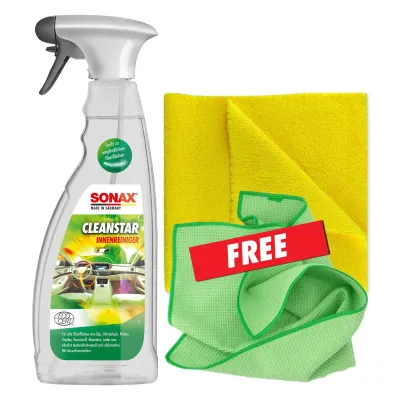
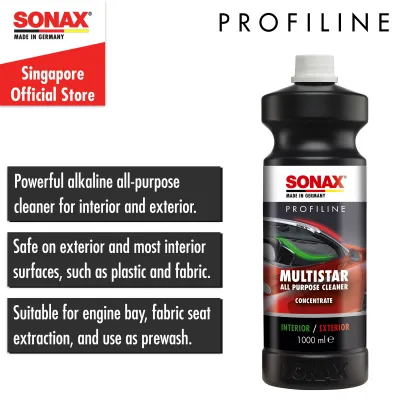
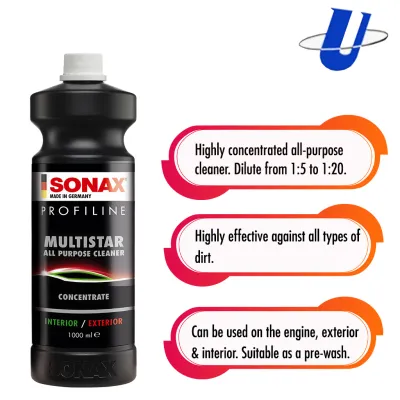
Prices are valid at publication and may change. Please refer to the product page for the latest price.
In contrast, dedicated cleaners are formulated to address the unique physical and chemical characteristics of a single material type. Dedicated fabric cleaners often utilize targeted enzymes, oxygen bleach, or specialized low-foaming solvents. These ingredients are specifically selected to break down organic stains, food spills, and tannins deep within textile fibers, lifting them to the surface for extraction. Dedicated leather cleaners, on the other hand, are formulated with a highly controlled pH to match the acidic nature of treated hide. They use mild surfactants designed to dissolve stubborn sebum and body oils without stripping the essential moisture or protective topcoats of the leather.
The behavior of residues after cleaning also differs significantly between these two categories. Multi-surface cleaners, when sprayed broadly, can leave behind a microscopic, uniform film if they are not thoroughly wiped or rinsed away. On hard plastics, this film might go unnoticed, but on soft fabrics or leather, it can create a sticky surface that actually attracts dust and grime faster. Dedicated products are formulated with the end-material’s post-clean state in mind. Dedicated fabric cleaners are designed to dry crisp and non-sticky, allowing any remaining residue to be easily vacuumed away, while dedicated leather cleaners often prepare the surface perfectly for subsequent conditioning without leaving a greasy barrier.
Core Comparison Dimensions for Car Interiors
Evaluating these cleaning options requires looking at how they perform under real-world conditions, particularly in demanding environments like Singapore, where high humidity and intense UV exposure accelerate the aging of interior materials.

Cleaning Power and Stain Removal
Multi-surface cleaners perform exceptionally well against daily environmental dust, light fingerprints, and minor surface spills on non-porous surfaces. If your car seats are upholstered in durable vinyl or modern synthetic leatherette, a quick spray and wipe with Sonax CleanStar will easily restore a clean, matte appearance. It effectively lifts loose surface grime and light sweat residues that accumulate during daily commutes, making it highly efficient for weekly upkeep.
However, when faced with deep-set liquid stains, coffee spills, or ground-in mud on cloth seats, multi-surface cleaners often fall short. Fabric upholstery features deep pores and woven fibers that trap liquids. Dedicated fabric cleaners are designed to penetrate these fibers, chemically breaking down the stain molecules and suspending them in a foam that can be agitated and extracted. Without these specialized lifting agents, a general cleaner may only spread the stain outward, creating a larger, faint ring on the fabric.
Leather seats present a different challenge, primarily due to the accumulation of body oils, sunscreen, and denim dye transfer. General cleaners often lack the specific chemistry needed to dissolve bonded oils without excessive scrubbing, which can damage the surface. Dedicated leather cleaners are formulated to emulsify sebum and lift dye transfer gently, allowing you to wipe away the oil build-up without spreading a greasy film across the seat bolster.
Material Safety and Long-Term Care
The long-term health of your vehicle’s upholstery is heavily influenced by the chemical properties of the products you apply. Modern automotive leather is finished at the factory with a thin, protective polyurethane clear coat. This coating shields the organic hide from friction, moisture, and UV damage. Using a strong multi-surface cleaner repeatedly on genuine leather can gradually strip this delicate factory clear coat. Once this protective barrier is compromised, the underlying leather is exposed to rapid drying, fading, and premature cracking, especially under intense tropical sunlight.
Fabric seats also face specific risks when treated with general-purpose cleaners. Because multi-surface sprays are not optimized for rapid drying or clean extraction from woven textiles, they can easily lead to over-wetting of the seat fabric. In humid climates, excess moisture trapped within the seat foam underneath the fabric can become a breeding ground for mold, mildew, and persistent musty odors. Furthermore, any sticky surfactant residue left behind by a multi-surface cleaner will act like a magnet for dirt, causing the seats to look soiled again shortly after cleaning.
To prevent irreversible damage, you must always verify the compatibility of any cleaning product. Check your vehicle manufacturer’s care instructions in the owner’s manual alongside the chemical manufacturer’s product label before application. If the instructions conflict, or if you are dealing with highly sensitive materials, prioritize the vehicle manufacturer’s guidelines.
Ease of Use and Application Process
The physical effort and time required for detailing are major practical considerations. The workflow for a multi-surface cleaner like Sonax CleanStar is straightforward and fast. You simply spray the product onto a microfiber cloth or directly onto the hard surface, wipe the area to lift the dirt, and use a dry section of the towel to buff it dry. There is rarely a need for intense scrubbing, rinsing, or secondary product applications, making it an ideal choice for quick touch-ups when time is limited.
Dedicated detailing workflows demand a more structured, multi-step approach. Cleaning fabric seats with a dedicated product typically involves spraying the cleaner, agitating the fibers with a soft-bristled upholstery brush to loosen embedded dirt, and then using a clean, damp microfiber towel or a wet extraction vacuum to pull the suspended grime out of the fabric.
For leather, the process is equally involved. You must first apply the dedicated leather cleaner, gently agitate it with a horsehair brush to clean out the grain, wipe away the residue, and then wait for the surface to dry. Once dry, you must apply a dedicated leather conditioner or barrier cream to restore lost moisture and replenish the UV protection. This multi-step process requires significantly more time, physical effort, and a larger selection of specialized detailing tools.
Cost, Value, and Purchasing Strategy
When building your car care kit, the financial investment involves more than just the initial price of a single bottle. Buying a single multi-surface cleaner is undeniably the most cost-effective upfront option. A single bottle of a high-quality product like Sonax CleanStar replaces the need to purchase three or four separate specialized bottles, saving you shelf space in your garage and reducing initial detailing costs. For a driver who performs basic maintenance, this single-bottle approach offers excellent economic value.
However, for detailing enthusiasts or owners of high-end vehicles, the value proposition shifts toward specialized products. While purchasing a dedicated fabric cleaner, a leather cleaner, and a leather conditioner requires a higher initial outlay, these products are formulated to preserve the resale value of your vehicle by preventing premature wear, cracking, and staining. Over several years of ownership, preventing the degradation of leather seats can save you thousands of dollars in professional upholstery repairs or interior replacement costs.
Additionally, when evaluating the long-term cost-per-milliliter, it is essential to check the product labels for dilution instructions. Many multi-surface cleaners and dedicated fabric cleaners are sold as highly concentrated formulas. A single bottle of concentrate that can be diluted with water often yields multiple liters of usable product, significantly lowering the long-term cost compared to ready-to-use spray bottles. Always read the packaging carefully to determine whether a product is pre-diluted or requires mixing before use.
Decision Framework: Which Cleaner Should You Buy?
To determine the best purchasing strategy for your garage, consider your vehicle’s specific interior materials, your cleaning habits, and your aesthetic expectations.
Choose a multi-surface cleaner (like Sonax CleanStar) if:
- Synthetic materials dominate your cabin: Your vehicle features predominantly hard plastics, vinyl trim, or modern synthetic leatherette seats that do not require deep organic conditioning.
- You prefer a streamlined maintenance routine: You want a fast, straightforward cleaning process that allows you to wipe down the entire interior—from the dashboard to the seat bolsters—using a single product and a few microfiber towels.
- Storage space is limited: You prefer to keep your detailing supplies minimal, avoiding a garage shelf crowded with highly specific chemical bottles.
- You perform frequent, light maintenance: Your car rarely accumulates heavy mud, deep grease stains, or severe spills, requiring only a quick weekly wipe-down to remove light dust and fingerprints.
Choose dedicated leather and fabric cleaners if:
- Your vehicle features premium leather: Your seats are upholstered in genuine, aniline, semi-aniline, or Nappa leather, which require precise pH-balanced cleaning and regular conditioning to prevent drying and cracking.
- You are dealing with stubborn, deep-set stains: Your fabric seats have accumulated food spills, beverage stains, or ground-in dirt that a gentle multi-surface spray cannot dissolve or lift.
- You want to maximize long-term resale value: You are committed to a meticulous detailing regimen that includes applying specialized UV protectants and fabric guards to shield your interior from wear.
- You are preparing a vehicle for sale: You need to perform deep extraction cleaning to restore a stained, neglected interior back to a showroom-ready state.
Verify your materials first:
Before applying any product, confirm the exact nature of your seat materials. Modern automotive interiors frequently blend different textiles, such as genuine leather bolsters with synthetic leather inserts, or Alcantara and microsuede accents on sporty seats. Using a standard multi-surface cleaner or a heavy-duty fabric cleaner on sensitive suedes like Alcantara can permanently mat the delicate fibers, ruining their soft texture. If you are unsure of the material composition, consult your vehicle’s original specification sheet or contact your local dealership before proceeding.
Safe Application and Pre-Use Verification
Regardless of the product you choose, safe application practices are essential to prevent accidental damage to your car’s interior. Always begin by reading your vehicle owner’s manual for specific warnings regarding interior cleaning agents. Some manufacturers explicitly forbid the use of alcohol, solvents, or highly alkaline chemicals on their screens, dashboards, or treated leather surfaces. Next, read the chemical manufacturer’s label on the cleaning bottle to check for dilution ratios, recommended dwell times, and any material restrictions.
Before applying any cleaner to a highly visible section of your seat, perform a mandatory spot test in an inconspicuous area, such as the lower rear bolster or the underside of the seat cushion. Apply a small amount of the product to a clean microfiber towel, gently wipe the test spot, and let it dry completely. Inspect the area under good lighting to check for any signs of color transfer onto the towel, discoloration of the material, stripping of the surface gloss, or changes in texture. If you observe any adverse reactions, stop immediately.
When cleaning fabric upholstery, avoid over-saturating the material. Excess liquid can easily soak through the fabric and penetrate the thick foam cushion underneath. Because car interiors are enclosed spaces, this trapped moisture dries very slowly, creating an ideal environment for mold and mildew growth. Work in small sections, use foam rather than heavy liquid spray where possible, and use a dry microfiber towel or a wet vacuum to extract as much moisture as possible immediately after cleaning.
Similarly, avoid excessive mechanical scrubbing on delicate areas. Perforated leather seats, decorative stitching, and embroidered logos are highly susceptible to physical wear. Using a stiff brush or applying too much pressure can fray the stitching, tear the perforations, or rub away the thin protective coating on the leather. Use soft-bristled brushes, apply light circular pressure, and let the chemical formulation do the lifting rather than relying on physical force. If you encounter a stain that does not respond to safe cleaning methods, or if the product label conflicts with your vehicle manual, stop and consult a professional automotive detailer.
Frequently Asked Questions (FAQ)
Can I use multi-surface cleaners on dashboards and dedicated ones on seats?
Yes, combining a multi-surface cleaner with dedicated upholstery products is an exceptionally effective and common detailing strategy. You can use a versatile multi-surface spray like Sonax CleanStar to quickly clean and de-grease hard plastics, vinyl door panels, and the center console, while reserving specialized, pH-balanced cleaners for your leather or fabric seats.
When employing this hybrid approach, always use separate microfiber towels for the different areas. Using the same towel to wipe down a greasy dashboard and then a leather seat can transfer dissolved oils, silicone dressings, or plastic plasticizers onto your seats, leaving an undesirable residue that can interfere with leather conditioners.
Do dedicated fabric cleaners require a separate protective spray afterward?
Most dedicated fabric cleaners are designed solely to break down stains and lift dirt out of the textile fibers; they do not leave behind any long-term protective barrier. Once the cleaning process is complete and the fibers are clean, the fabric is highly vulnerable to absorbing future liquid spills and attracting new dirt.
To maintain your results, it is highly recommended to apply a dedicated fabric protector or hydrophobic guard after the seats have dried completely. This secondary step coats the individual fibers, creating a barrier that causes liquids to bead up on the surface rather than soaking into the cushion, while also providing valuable protection against UV-induced fading.
Community discussion
Share your experience or ask a question. Comments are reviewed before publication.