
Selecting the correct car shampoo is a critical decision for maintaining your vehicle’s paint protection. If your car is protected by a traditional carnauba wax or synthetic sealant, you need a shampoo that preserves or replenishes that sacrificial layer. Conversely, if your vehicle features a professional or do-it-yourself ceramic coating, your primary goal is deep, residue-free cleaning that prevents the microscopic pores of the coating from becoming clogged. Using the wrong formula can lead to premature stripping of wax or a temporary loss of the ceramic coating’s hydrophobic self-cleaning properties.
In Singapore’s tropical climate, vehicles are constantly exposed to intense ultraviolet radiation, high humidity, and sudden heavy downpours. These environmental factors accelerate the breakdown of paint protection, making regular maintenance washes essential. Sonax offers distinct formulations tailored to these different paint protection types, allowing you to match the shampoo’s chemistry to your specific protective layer.
Quick Decision Guide: Wax vs Ceramic Sonax Shampoos
To quickly identify the right Sonax shampoo for your vehicle, you can follow a straightforward, condition-based framework. Choose a wax-enhancing or gloss-depositing Sonax shampoo if your car is protected by traditional carnauba wax, synthetic liquid sealants, or quick spray waxes. These formulas are specifically engineered to gently lift dirt while leaving behind a microscopic layer of wax or gloss agents that reinforce the existing protection, boost shine, and prolong water-beading performance.
Products mentioned in this guide
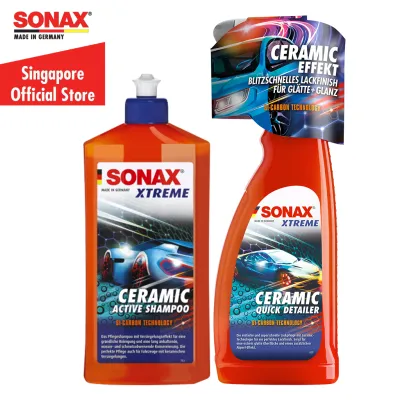
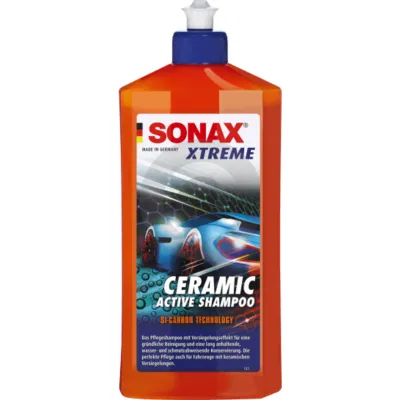
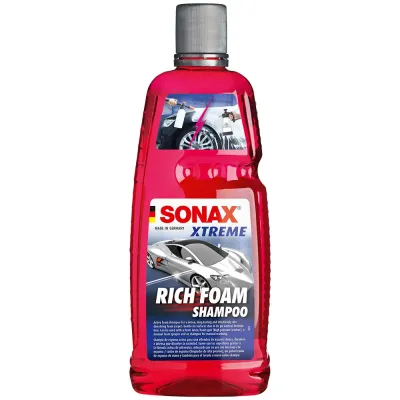
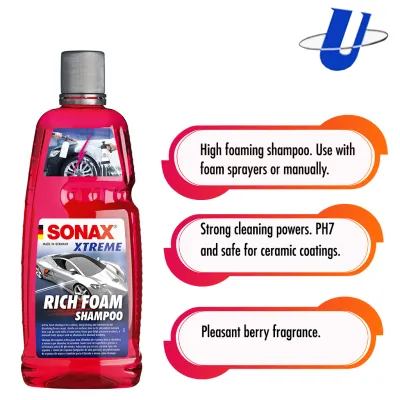
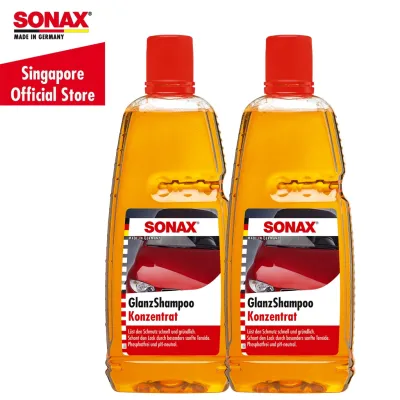
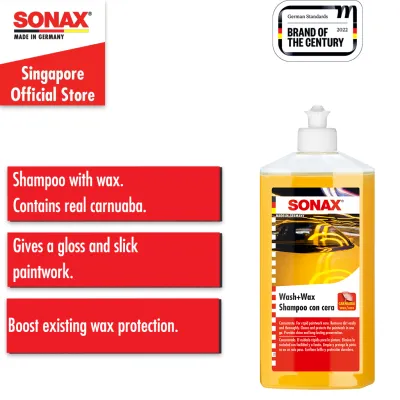
Prices are valid at publication and may change. Please refer to the product page for the latest price.
Choose an SiO2-infused or strictly pH-neutral, residue-free Sonax shampoo if your vehicle has a professional-grade ceramic coating, a DIY ceramic spray, or a graphene coating. These formulations focus on high lubricity and deep cleaning without leaving behind organic wax residues. This prevents the ceramic surface from being masked, ensuring that the coating’s native self-cleaning, dirt-repellent, and extreme water-beading properties remain fully functional.
The core difference between these two categories lies in how they interact with the surface. Wax-focused shampoos are designed to deposit a temporary, gloss-enhancing sacrificial film that bonds to organic paint protection. Ceramic-safe shampoos, on the other hand, either rinse away completely clean to expose the bare coating or deposit inorganic silicon dioxide (SiO2) polymers that chemically align with the existing ceramic structure. For car owners in Singapore looking to maintain their vehicle’s finish, matching the shampoo to the underlying protection is the most effective way to prevent accidental degradation during routine washes.
Why Paint Protection Type Dictates Your Shampoo Choice
Understanding the chemical and physical differences between wax and ceramic coatings reveals why using the wrong shampoo can compromise your vehicle’s finish. Traditional waxes rely on a physical layer of natural carnauba or synthetic polymers that sit on top of the clear coat. This layer is relatively soft, sensitive to high temperatures, and naturally degrades over a period of weeks or months. Because wax does not form a covalent bond with the paint, it requires exceptionally gentle surfactants to clean away road grime without stripping the thin protective barrier.

Ceramic coatings operate on a completely different chemical principle. They utilize silicon dioxide (SiO2) or silicon carbide (SiC) to form a semi-permanent, covalent bond with the vehicle’s clear coat. This creates an extremely hard, glass-like barrier that is highly resistant to chemicals, UV rays, and environmental fallout. The remarkable hydrophobic properties of a ceramic coating—where water beads up and rolls off, carrying dirt with it—are due to the high contact angle of the cured SiO2 surface. However, this performance depends entirely on the coating remaining clean at a microscopic level.
The risk of mismatching these chemistries is significant. If you use a wax-infused shampoo on a ceramic-coated car, the organic wax molecules in the soap will settle on top of the ultra-smooth ceramic layer. Because wax has a lower surface energy and different physical properties than SiO2, it masks the ceramic coating. Instead of enhancing the surface, this mismatch creates a temporary, sticky layer that actually attracts dust, reduces water-beading performance, and neutralizes the coating’s self-cleaning ability.
Conversely, using a strong, highly alkaline, or non-wax-safe shampoo on a waxed vehicle can be equally damaging. These formulas are designed to strip away oils and heavy road film, which means they will quickly dissolve and wash away a fresh layer of carnauba wax or synthetic sealant. This leaves your clear coat completely unprotected against Singapore’s harsh environmental elements, such as acidic rainfall and industrial fallout, forcing you to reapply the wax much sooner than necessary.
Choosing Sonax Shampoos for Waxed Cars
When selecting a Sonax shampoo for a waxed vehicle, the primary goal is to find a product that supports and extends the life of organic or synthetic sacrificial layers. To do this, you must carefully inspect the product packaging for specific key label indicators. Look for terms such as “Wax Shampoo,” “Gloss Shampoo,” “Carnauba,” “Protective Film,” or “Water Beading Effect.” These terms indicate that the formula contains active gloss-enhancing agents or wax emulsions designed to remain on the paint after rinsing.
The manufacturer’s intended benefit for these shampoos is twofold: safe cleaning and immediate replenishment. As you wash the vehicle, the specialized surfactants encapsulate dirt and dust particles, lifting them safely away from the paint to prevent wash-induced scratches. Simultaneously, the shampoo deposits a thin, protective layer of wax or gloss polymers. This microscopic film fills in minor imperfections in the existing wax layer, restoring the deep, warm shine characteristic of carnauba and maintaining the surface’s hydrophobic water-sheeting behavior.
These shampoos are ideal for routine maintenance washes on vehicles protected by traditional paste waxes, liquid waxes, or standard synthetic polymer sealants. They are particularly beneficial for car owners who enjoy the classic, deep wet-look shine of wax and want to minimize the frequency of full wax applications. By reinforcing the sacrificial barrier during every wash, you ensure the paint remains protected against minor environmental hazards.
However, these wax-infused formulas have clear limitations that you must note before purchase. Because they leave a gloss-enhancing residue behind, they should never be used on vehicles with matte paint finishes or matte vinyl wraps, as the wax will create uneven, permanent shiny patches. They are also unsuitable for deep decontamination washes prior to polishing or applying a new ceramic coating, where the paint must be completely bare and free of any gloss-enhancing films.
Choosing Sonax Shampoos for Ceramic Coated Cars
Selecting a Sonax shampoo for a ceramic-coated vehicle requires a focus on chemical compatibility, surface preservation, and residue-free rinsing. When reviewing Sonax product options, you should look for specific key label indicators that signal compatibility with modern coatings. Search for terms like “Ceramic,” “SiO2,” “Coating Safe,” “Graphene,” or formulas explicitly described as “pH Neutral” with no added traditional waxes, silicones, or organic gloss enhancers.
The expected benefits of a ceramic-safe Sonax shampoo center on extreme lubricity and clean rinsability. Because ceramic coatings are highly hydrophobic, they tend to shed water quickly, but they still require a high-foaming, slick shampoo to prevent dirt from scratching the surface during the contact wash. A proper ceramic maintenance wash will dissolve road film, oil, and environmental contaminants, lifting them away while rinsing completely clean. This ensures that the microscopic pores of the SiO2 coating remain open and free of any film that could compromise its water-beading and self-cleaning performance. Some advanced Sonax formulas in this category may also contain active SiO2 chemistry, which actively bonds to the existing coating to refresh its hydrophobic properties and fill in microscopic wear.
The ideal use cases for these shampoos include vehicles protected by professional-grade ceramic coatings, DIY ceramic sprays, graphene coatings, or advanced long-term synthetic sealants. These formulas are designed to respect the high surface energy of modern coatings, ensuring that you do not accidentally degrade the expensive protection you have applied to your vehicle.
Before using any shampoo on a ceramic-coated vehicle, always perform a quick verification step. Check the product’s back label or refer to the manufacturer’s Technical Data Sheet (TDS) to confirm that the formulation does not contain traditional carnauba waxes or heavy organic gloss polymers. If the label indicates the presence of traditional wax additives, avoid using it on your ceramic coating, as it will inevitably mask the performance of the SiO2 layer.
Comparing Wax vs Ceramic Sonax Shampoos: What to Check on the Label
To help you make an informed decision at the shelf or when shopping online, it is helpful to compare the two main categories of Sonax shampoos across several key dimensions. By evaluating these physical and chemical attributes, you can ensure that the bottle you select matches your vehicle’s specific paint protection needs.
| Feature / Dimension | Wax-Focused Sonax Shampoos | Ceramic-Focused Sonax Shampoos |
|---|---|---|
| Primary Active Ingredient | Carnauba wax emulsions or synthetic gloss polymers | Silicon dioxide (SiO2) polymers or pure residue-free surfactants |
| pH Level | Strictly pH-neutral to prevent stripping organic wax layers | pH-neutral to mildly alkaline (always verify the specific product label) |
| Intended Surface | Clear coats protected by carnauba, liquid, or spray waxes | Professional ceramic coatings, DIY SiO2 sprays, or graphene coatings |
| Rinsability and Residue | Leaves a micro-thin, gloss-enhancing protective wax film | Rinses completely clean or leaves a pure, inorganic SiO2 protective layer |
| Water Behavior | Promotes water sheeting and temporary organic water beading | Restores and maintains high-angle, rapid ceramic water beading |
When reading the label on a Sonax shampoo bottle, pay close attention to the manufacturer’s instructions regarding dilution ratios. Dilution is not a matter of guesswork; using too much shampoo can leave heavy, unsightly streaks on your paint and make rinsing incredibly difficult, while using too little will reduce the lubricity of the wash water, increasing the risk of swirl marks. Always check the label for safety warnings, such as recommendations for eye protection or skin sensitivity precautions, and ensure you store the product in a cool, dry place away from direct sunlight.
Local environmental factors in Singapore make these label checks even more critical. The high humidity and intense tropical heat mean that wash water can evaporate rapidly on your vehicle’s paint during a wash. If you use a shampoo with high wax content on a ceramic-coated car under these conditions, the soap residue and wax can bake into the surface almost instantly, creating stubborn water spots and cloudy patches that are difficult to remove. Ensuring your shampoo matches your paint protection and is mixed to the exact recommended dilution ratio is the best defense against these climate-specific detailing challenges.
Safe Washing Practices and Maintenance Boundaries
Even the highest-quality Sonax car shampoo cannot perform effectively if it is applied using improper washing techniques. To safeguard your vehicle’s paint protection, you must follow safe washing practices and establish clear maintenance boundaries. Always begin by mixing the shampoo to the exact dilution ratio specified on the bottle, using clean water. To minimize the risk of scratching, utilize the two-bucket wash method: one bucket filled with your soapy Sonax solution, and a second bucket filled with clean rinse water, with both buckets equipped with grit guards to trap dirt at the bottom.
Before you touch the vehicle with a wash mitt, a thorough pre-wash step is absolutely essential. Use a pressure washer or a dedicated pre-wash foam to rinse away loose dirt, sand, and abrasive road grime. Skipping this step means you will drag these abrasive particles across the paint with your wash mitt, creating micro-scratches and swirl marks that dull the finish over time. This pre-wash routine is critical regardless of whether your car is waxed or ceramic coated.
Once the contact wash is complete and the shampoo has been thoroughly rinsed off, proper drying techniques must be employed to prevent water spots. In Singapore, tap water contains dissolved minerals that can quickly bake onto the paint under the hot sun, leaving unsightly hard water spots. To prevent this, dry the vehicle immediately using clean, high-quality, plush microfiber drying towels or a filtered air blower, working in sections and avoiding direct sunlight whenever possible.
Finally, it is important to recognize when a shampoo wash is no longer sufficient and you must stop and reassess your paint protection. If water fails to bead or sheet after a proper wash, if the surface feels rough like sandpaper, or if stubborn road grime remains bonded to the paint, your underlying protection has likely degraded or become heavily contaminated. Car shampoo is designed for routine maintenance; it cannot repair a completely failed ceramic coating or restore a wax layer that has reached the end of its lifespan. In these situations, the vehicle requires a dedicated chemical decontamination process (such as iron and tar removal), followed by claying, polishing, and the reapplication of your chosen wax or ceramic protection.

Community discussion
Share your experience or ask a question. Comments are reviewed before publication.