
Deciding between a budget-friendly option like Singer motor oil and highly advertised premium brands can leave vehicle owners feeling conflicted during routine servicing. You want to save on maintenance costs without risking accelerated engine wear or voiding your vehicle’s warranty. The choice between Singer motor oil and premium brands depends entirely on whether the oil meets your vehicle manufacturer’s exact viscosity and performance specifications, as a compliant budget oil changed at the correct interval provides sufficient protection for standard driving, while premium synthetics offer longer drain intervals and better stability under extreme thermal stress.
Understanding the actual differences between these oil categories requires looking past marketing slogans and focusing on standardized technical specifications. Many drivers assume that a higher price tag automatically translates to better protection, but modern engine lubrication is governed by strict international standards. By evaluating base oil types, additive packages, and the total cost of ownership, you can make an informed decision that keeps your engine running smoothly without overspending.
What vehicle specifications must you verify before comparing motor oil brands?
Before comparing Singer motor oil to any premium brand, you must verify your vehicle’s required viscosity grade and performance certifications in your owner’s manual, as using an incompatible oil can lead to immediate engine damage and voided warranties. The vehicle manufacturer designs the engine with specific clearances between moving parts, and the oil must flow correctly within those precise tolerances. Brand preference should always be secondary to these mandatory technical requirements.
Products mentioned in this guide
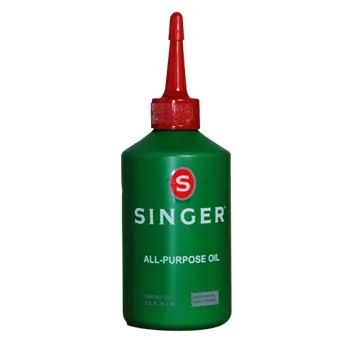
9 Lazada user ratings
Received the product without any damage or leakage. Thanks for sending this product quickly in well packed condition. Hope that this all pur…Read full reviewShow less
Received the product without any damage or leakage. Thanks for sending this product quickly in well packed condition. Hope that this all purpose oil will help my bike to get better life.
Minimal packaging waste. Product delivered in good condition. Value for money. Can use it to lubricate other metal joints in the house.
Excellent just as advertised
1 Lazada user ratings
Quality: Appearance: Performance:
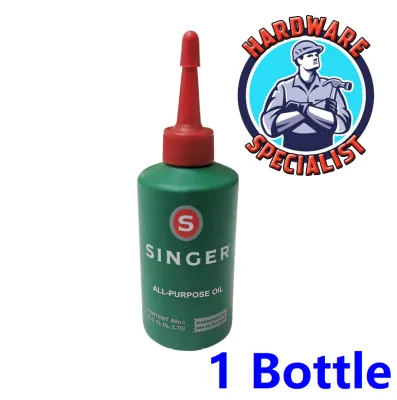
44 Lazada user ratings
Delivery: Super fast! I was really impressed by how quickly the package arrived. Packaging: Decent and secure. As seen in the image, the ite…Read full reviewShow less
Delivery: Super fast! I was really impressed by how quickly the package arrived. Packaging: Decent and secure. As seen in the image, the items were neatly bundled, and the applicator bottles were individually plastic-wrapped to prevent any leaks during transit. Items: Received the Scotch Super Glue gel/liquid dispensers and the fine-tip applicator bottles in perfect, brand-new condition.
oil made from indonesia and has expiry date. fyi, using so long, this oil no expiry and keep away from sunlight.
Comes in 3 small bottles. Cheap and useful to apply onto any squeaking rusty hinges, wheels.
Item has been received in good condition. Should be good as this is an old brand.
received as described. haven't try yet. hopefully works. thanks seller
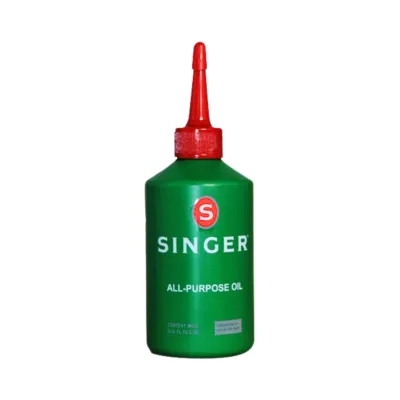
146 Lazada user ratings
Always keep a few spares at home, useful product!
fiund the product good & meet my specs
ABSOLUTELY MARVELOUS AND FANTASTICO 🌹🌹
it's gd in any ways
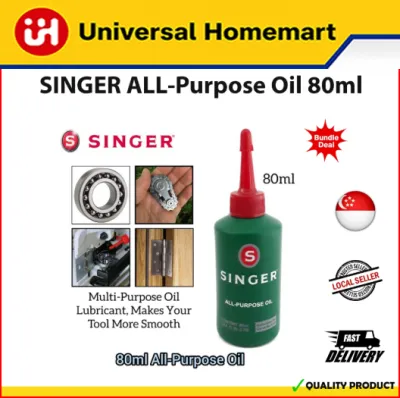
9 Lazada user ratings
Fast delivery within few days. Received in good condition.
item received in good condition👍👍👍👍❤️🩹❤️🩹
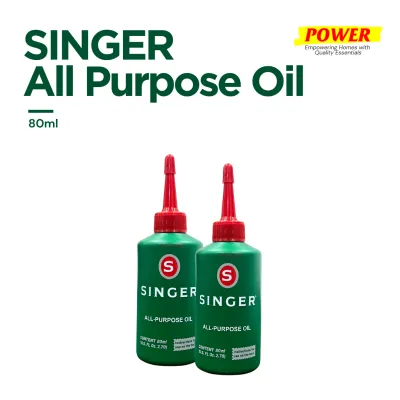
12 Lazada user ratings
multi purpose oil for multiple purposes such as lubricating window, door hinges, bicycle chain. fast delivery and well wrapped. Fun fact is …Read full reviewShow less
multi purpose oil for multiple purposes such as lubricating window, door hinges, bicycle chain. fast delivery and well wrapped. Fun fact is each bottle weights exactly 80grams.
Versatile household lubricant, Mineral-based lubricant oil, Safe for various metal parts, Long-lasting lubrication,
Lubricates bicycles and motors, Multipurpose lubricant for sewing machines,
1 Lazada user ratings
I haven't used the product yet but I arrived in good condition. Thank you seller and Lazada.
Prices are valid at publication and may change. Please refer to the product page for the latest price.
Your first step is to locate the required viscosity grade, which is typically represented by a code such as 5W-30, 10W-40, or 0W-20. The first number, followed by the letter “W” (which stands for winter), indicates the oil’s flow characteristics at low temperatures. The second number indicates the oil’s viscosity, or thickness, at the engine’s operating temperature of 100 degrees Celsius. Using an oil that is too thick can prevent proper lubrication during cold starts, while an oil that is too thin may fail to maintain a protective barrier under high heat.
Beyond viscosity, you must identify the required performance certifications established by international bodies like the American Petroleum Institute (API), the International Lubricant Standardization and Approval Committee (ILSAC), or the European Automobile Manufacturers’ Association (ACEA). For modern gasoline engines, you will often see requirements for API SP or ILSAC GF-6 standards. These certifications ensure the oil has passed rigorous testing for deposit control, wear protection, and resistance to low-speed pre-ignition.
Matching these exact specifications is the non-negotiable baseline for both Singer and premium options. If a budget-friendly oil carries the exact API or ACEA certification required by your vehicle, it is chemically and mechanically qualified to protect your engine under normal operating conditions. Conversely, even the most expensive premium oil can cause performance issues if its viscosity or certification profile does not align with your engine’s design.
How do Singer motor oil benefits compare to premium brands regarding engine protection?
Singer motor oil benefits compare to premium brands primarily through their shared adherence to standardized industry certifications, though premium brands often utilize advanced synthetic base oils and proprietary additive packages that offer superior thermal stability under severe driving conditions. To understand how they protect your engine, you must look closely at the product label to identify whether the oil is formulated as a mineral, semi-synthetic, or fully synthetic lubricant.

Mineral oils are refined directly from crude oil and offer basic protection suitable for older, less demanding engines. Semi-synthetic oils blend mineral and synthetic bases to improve performance, while fully synthetic oils are chemically engineered to provide uniform molecular structures. Premium brands typically focus heavily on fully synthetic formulations, which resist breakdown under extreme heat and maintain their viscosity much longer than mineral-based alternatives.
When evaluating engine protection, you should check the bottle for explicit, verifiable certification marks rather than relying on vague marketing terms like “maximum protection” or “active cleansing.” An official API “Donut” or “Starburst” symbol on the label indicates that the oil has been independently tested and approved. If both a Singer oil and a premium oil carry the same API SP certification, both have met the same baseline standards for oxidation resistance and wear control.
However, premium brands often distinguish themselves by exceeding these baseline standards through proprietary additive packages. These additives include detergents to prevent sludge, dispersants to keep contaminants suspended, and anti-wear agents like zinc and phosphorus. While a budget-friendly oil provides sufficient protection for standard daily commuting, premium synthetics are designed to offer an extra margin of safety during high-load situations, such as towing or driving in heavy stop-and-go traffic under high ambient temperatures.
Without independent laboratory oil analysis of your specific engine, protection claims must be evaluated strictly against these stated industry standards and the manufacturer’s base oil type. If you choose a budget-friendly oil, you are relying on its compliance with standard certifications; if you choose a premium oil, you are paying for advanced chemical engineering that offers enhanced durability under stress.
How does the upfront cost of Singer motor oil affect your long-term servicing expenses?
While Singer motor oil offers a lower upfront purchase price per liter, its impact on your long-term servicing expenses depends on the oil’s formulation and the resulting drain intervals, as more frequent oil changes can quickly offset initial savings through recurring labor and filter costs. To evaluate the true cost-effectiveness of any motor oil, you must look at the total cost of maintenance over a specific distance or time frame rather than just the price of the bottle.
To calculate the total cost per service interval, you must factor in the price per liter, the required volume for your engine, the cost of a high-quality oil filter, and the workshop labor fee. For example, if you purchase a budget-friendly mineral or semi-synthetic oil for S$15 per liter, your initial product cost is low. However, because mineral and semi-synthetic oils degrade faster than full synthetics, they typically require shorter drain intervals, often around 5,000 kilometers.
In contrast, a premium fully synthetic oil might cost S$30 per liter but can safely maintain its protective properties for 10,000 kilometers or more, depending on your vehicle manufacturer’s guidelines. When you extend the service interval safely, you halve the frequency of your workshop visits. This means you only purchase one oil filter and pay for workshop labor once, compared to twice for the shorter interval oil.
Consider the following comparison of servicing costs over a 10,000-kilometer period:
| Cost Component | Budget Oil (Two 5,000-km Changes) | Premium Synthetic (One 10,000-km Change) |
|---|---|---|
| Oil Cost (4 Liters) | S$60 (S$30 x 2) | S$120 (S$120 x 1) |
| Oil Filter | S$40 (S$20 x 2) | S$20 (S$20 x 1) |
| Workshop Labor | S$80 (S$40 x 2) | S$40 (S$40 x 1) |
| Total Expense | S$180 | S$180 |
As this comparison demonstrates, the upfront savings of a cheaper oil can be completely neutralized by the recurring costs of filters and labor. If you perform the oil changes yourself, the labor savings disappear, making the budget oil more financially attractive. However, for drivers who rely on professional workshops for servicing, choosing a high-quality synthetic oil with a longer service life is often the more economical and convenient choice over the course of a year.
When should you choose Singer motor oil over a premium brand for routine maintenance?
You should choose Singer motor oil when your vehicle’s manufacturer specifications match the oil’s certified ratings and your driving patterns consist of standard daily commuting with strict adherence to shorter, regular service intervals. A budget-friendly, spec-compliant oil is highly practical for older vehicles that naturally consume or leak small amounts of oil, as topping up with expensive premium synthetics can become prohibitively costly.
If your daily driving consists of moderate distances on highways or uncongested roads, your engine experiences less thermal stress and fuel dilution. Under these mild operating conditions, a certified semi-synthetic or mineral oil from a brand like Singer will perform reliably. The key to success with this approach is discipline; you must change the oil and filter strictly according to the shorter recommended intervals to prevent the buildup of harmful deposits.
On the other hand, you should opt for premium fully synthetic brands if you drive a modern turbocharged vehicle, operate under severe conditions such as constant stop-and-go city traffic, or wish to utilize extended drain intervals. Turbochargers expose motor oil to extreme temperatures that can quickly oxidize and degrade lower-grade oils, making the advanced thermal stability of premium synthetics essential for component longevity.
Before making your final purchase, use this practical checklist to ensure your engine remains protected:
- Verify the Manual: Confirm the exact viscosity grade (e.g., 5W-30) and performance standard (e.g., API SP) required for your vehicle.
- Inspect the Label: Look for official certification seals on the oil bottle to confirm it meets or exceeds those requirements.
- Assess Your Driving: Choose a premium synthetic if your daily commute involves heavy traffic, short trips where the engine rarely reaches operating temperature, or high-load driving.
- Calculate the Math: Compare the cost of more frequent budget oil changes against fewer premium synthetic changes, factoring in labor and filter costs.
- Consult a Professional: If your vehicle is still under a manufacturer's warranty, consult a qualified technician to ensure your chosen oil and service interval comply with warranty retention policies.
Community discussion
Share your experience or ask a question. Comments are reviewed before publication.