
Choosing the right mirror for car setups depends on whether you are replacing a damaged factory component or seeking to expand your field of view on busy roads. Every vehicle relies on a coordinated system of three distinct mirror types—rearview mirrors, side mirrors, and blind spot mirrors—to provide a comprehensive picture of surrounding traffic. While they all serve the primary goal of keeping you safe, they differ fundamentally in their mounting locations, glass curvature, and optical purposes. Understanding these differences is essential when shopping for replacements or upgrades on online marketplaces or specialty automotive shops.
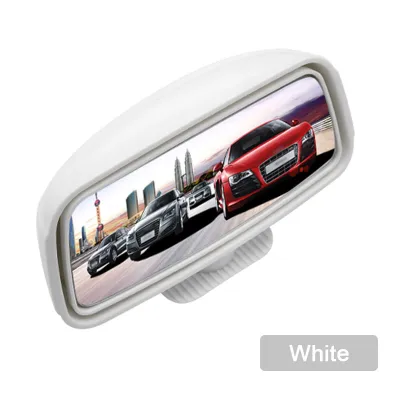
Rearview mirrors are mounted inside the cabin, typically on the upper windshield or headliner. They feature flat glass designed to provide a true-to-life representation of the distance and speed of vehicles directly behind you. Because flat glass does not distort images, it serves as your primary reference point for gauging how close a trailing vehicle is before you brake or change lanes.
Side mirrors, also known as wing mirrors, are mounted externally on the driver and passenger doors. These mirrors use a combination of flat and slightly convex glass depending on the side of the vehicle and regional safety regulations. They are designed to cover the lanes immediately adjacent to your car, bridging the visual gap between your peripheral vision and the area covered by your interior rearview mirror.
Products mentioned in this guide
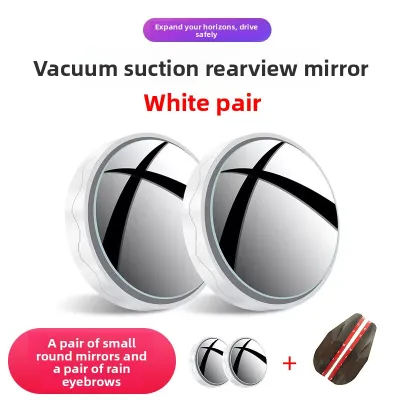
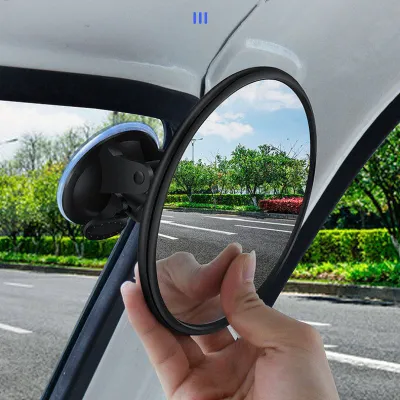
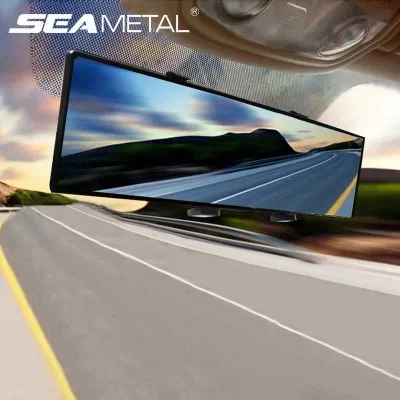
Prices are valid at publication and may change. Please refer to the product page for the latest price.
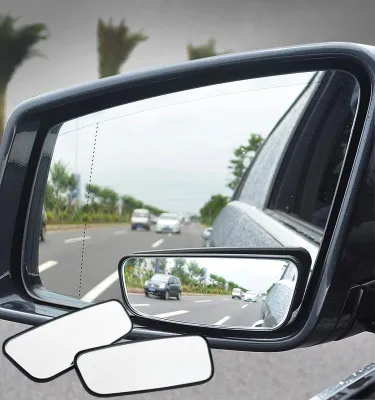
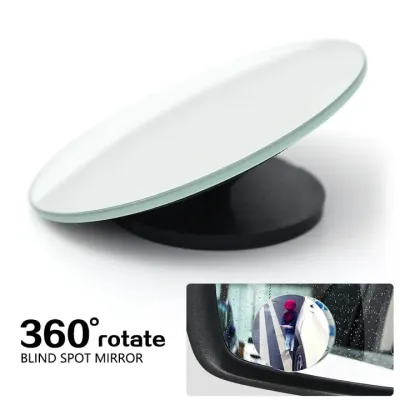
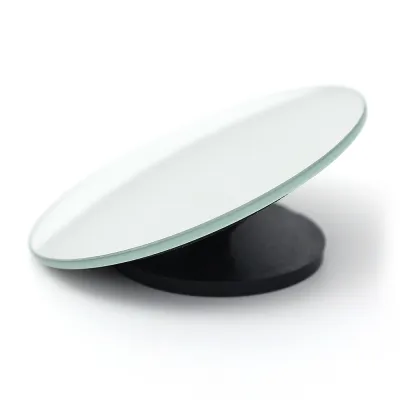
Blind spot mirrors are specialized, compact add-on mirrors that feature highly convex glass. Usually attached directly to the outer corners of your existing side mirrors, these small accessories are engineered to reveal the hidden zones that standard factory mirrors cannot capture. They trade distance accuracy for an extremely wide viewing angle, helping drivers spot low-profile vehicles, motorcycles, or cyclists lingering in adjacent lanes.
Key Differences in Field of View and Distance Perception
The fundamental difference between these three mirror types lies in how they manipulate light to alter your field of view and distance perception. Standard flat glass, found in most interior rearview mirrors, reflects light at a one-to-one ratio. This means the size of the vehicle behind you in the mirror corresponds directly to its actual distance, allowing your brain to make instant, accurate calculations about stopping distances and closing speeds.
In contrast, convex glass—which curves slightly outward—is used in passenger-side wing mirrors and add-on blind spot mirrors to capture a wider angle of the road. This curvature bends incoming light, allowing the mirror to show a much larger area than a flat mirror of the same size could manage. However, this optical expansion comes with a distinct trade-off: it compresses the reflected image, making objects appear smaller and significantly further away than they actually are. This is the origin of the standard safety warning etched onto passenger-side mirrors, reminding drivers to verify actual distances before executing maneuvers.
Blind spot mirrors take this convex design to an extreme degree. Because their radius of curvature is much tighter, they provide a panoramic view of the lanes directly beside your rear bumper. While this is incredibly useful for detecting the presence of a vehicle, the extreme distortion makes it nearly impossible to judge that vehicle’s speed or exact distance. Consequently, blind spot mirrors must always be used as a secondary verification tool rather than a primary guide for lane changes.
Even when factory side and rearview mirrors are adjusted perfectly, physical blind spots remain. The typical visual field of a standard side mirror extends outward at an angle that leaves a gap of several meters alongside the rear doors of a sedan or SUV. This gap is large enough to completely hide a compact car or motorcycle. Understanding how these zones overlap allows you to position your mirrors to minimize blind spots, using the interior rearview mirror for direct rear tracking, the side mirrors for adjacent lanes, and blind spot mirrors to cover the remaining critical gaps.
Decision Guide: Which Mirror for Car Should You Buy?
When deciding which mirror for car upgrades or replacements to purchase, your choice should be guided by your vehicle’s current condition, your daily driving environment, and existing onboard technology. If your vehicle has suffered physical damage, such as a cracked housing, shattered glass, or a malfunctioning adjustment motor, a direct-fit replacement side mirror is your immediate priority. Driving with a damaged side mirror is not only a safety hazard but also a common cause for failing vehicle inspections in highly regulated driving environments like Singapore.

If your factory mirrors are fully intact but you struggle with visibility during lane changes—particularly in heavy, fast-moving highway traffic—an add-on blind spot mirror is the most practical and cost-effective solution. These compact, stick-on mirrors are ideal for older vehicles or base-model trims that lack modern electronic driver aids. They provide immediate visual reassurance when navigating tight merges or changing lanes on multi-lane expressways.
Upgrading your interior rearview mirror is highly recommended if you frequently drive at night or require enhanced rear visibility. Many aftermarket rearview mirrors offer advanced features such as automatic dimming to prevent glare from high beams, wider panoramic glass profiles, or integrated front-and-rear dashcams. These high-tech replacements clip over or replace your factory mirror, providing a clearer view of the road behind while adding valuable recording capabilities for insurance purposes.
Before purchasing any physical blind spot mirrors, check if your vehicle is already equipped with an active electronic Blind Spot Monitoring (BSM) system. These systems use radar sensors or cameras in the rear bumper to illuminate warning lights on your side mirrors or A-pillars when a vehicle enters your blind spot. If your car has a fully functional BSM system, adding physical blind spot mirrors may be redundant and could clutter your side mirror glass, potentially blocking the very warning lights designed to keep you safe.
Installation Requirements and Safety Boundaries
Replacing or upgrading a mirror for car use involves distinct physical and electrical considerations that vary by mirror type. Standard add-on blind spot mirrors require no tools, relying instead on high-strength double-sided adhesive. When installing these, the primary safety concern is placement; you must position the small convex mirror on the outer, upper, or lower corner of your side mirror glass so that it does not obstruct your view of the horizon or the side of your own vehicle in the main mirror.
Replacing a complete side mirror assembly is a much more complex task that requires matching the replacement part to your vehicle’s exact specifications. Modern side mirrors are highly integrated components that may feature manual cable adjustments, power-folding motors, heated glass elements, integrated turn signals, or even surround-view cameras. You must verify your vehicle’s make, model, year, and trim level to ensure the replacement wiring harness matches your car’s factory plug. Installing a mirror with the wrong pin configuration can cause electrical shorts or disable critical safety features.
Because side mirror replacement often requires removing the interior door panel to access mounting bolts and electrical connectors, it carries a risk of damaging delicate plastic clips, window regulators, or door-mounted side airbags. If your vehicle features advanced driver assistance systems (ADAS) where cameras are integrated into the side mirrors, these cameras must be precisely calibrated after installation to ensure lane-keep assist and 360-degree view systems function correctly. If your replacement involves complex wiring, airbag proximity, or camera calibration, stop immediately and consult a qualified automotive technician to perform the installation.
Frequently Asked Questions (FAQ)
Can I replace just the mirror glass instead of the whole side mirror assembly?
Yes, you can often replace just the mirror glass if the outer plastic housing, mounting bracket, and internal adjustment motors are completely undamaged. Many manufacturers and aftermarket suppliers offer pre-cut glass panels designed to snap or adhere directly onto the existing backing plate. Before purchasing, you must verify that the backing plate is fully intact and that any heating elements or auto-dimming connections can be safely transferred to the new glass. Always check the exact shape, dimensions, and clip pattern against your vehicle’s specific model year, as even minor mid-generation design updates can alter the mirror’s mounting interface.
How do I clean and maintain add-on blind spot mirrors?
To maintain optimal visibility and preserve the adhesive bond of add-on blind spot mirrors, clean them using only mild automotive glass cleaners and soft microfiber towels. Avoid using harsh chemical solvents, abrasive scrubbing pads, or ammonia-based cleaners, which can degrade the reflective coating on the glass or break down the acrylic adhesive backing. When washing your vehicle, avoid directing high-pressure water sprays directly at the edges of the blind spot mirror, as the intense pressure can force water under the adhesive pad and cause it to peel off over time. Periodically check the physical bond by gently wiggling the mirror to ensure it remains securely attached, especially after exposure to extreme tropical heat or heavy rainstorms.
Community discussion
Share your experience or ask a question. Comments are reviewed before publication.