
Choosing a premium open-face helmet involves balancing the convenience of an open-face design with the safety, comfort, and acoustic performance typically expected from high-end headgear. The Shoei J-Cruise 3 is a prominent contender in this category, designed for riders who seek the expansive field of vision and ease of use that an open-face helmet provides, without sacrificing the build quality and technological refinements of a premium touring helmet. When compared to other premium open-face alternatives, the J-Cruise 3 stands out for its integrated sun shield, sophisticated ventilation, and aerodynamic shell design. However, determining whether it is the right choice for your daily commute or long-distance touring requires a close look at how its features, fit, and long-term usability stack up against other top-tier options in the market.
The decision ultimately hinges on several practical factors, including your specific head shape, your preference for chin strap mechanisms, and how you plan to integrate communication systems. While some riders prioritize the absolute quietness and coverage of a full-face helmet, others find that a premium open-face helmet offers the perfect balance of airflow and convenience, especially in warm, humid climates where low-speed urban riding is common. By comparing the core design elements, fit characteristics, and maintenance requirements of the J-Cruise 3 against its main competitors, you can make an informed decision that aligns with your riding habits and comfort expectations.
Defining the Premium Open-Face Helmet Segment
To understand how the Shoei J-Cruise 3 compares to its competitors, it is first necessary to establish what defines a premium open-face helmet. Unlike entry-level open-face models, which often prioritize low cost and basic coverage, premium helmets are engineered to meet stringent safety standards while offering superior materials, refined aerodynamics, and long-lasting comfort. These helmets are designed for riders who spend significant time on the road and demand gear that can withstand daily wear and tear while providing reliable protection in the event of an impact.
Products mentioned in this guide
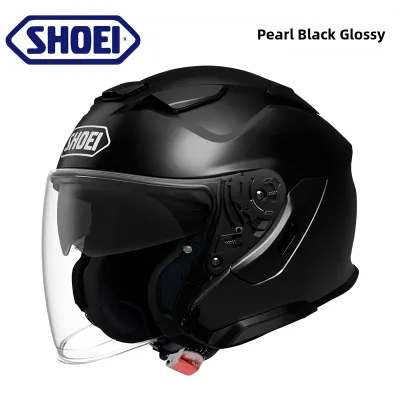
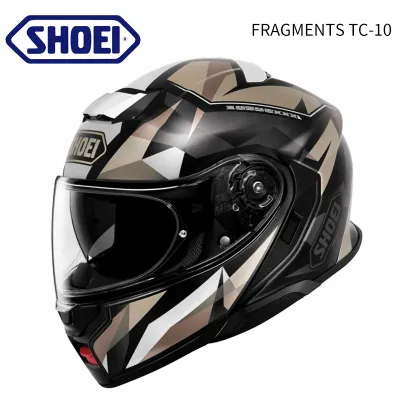
Prices are valid at publication and may change. Please refer to the product page for the latest price.
Safety certifications are the most critical baseline for any helmet, and premium models are no exception. When evaluating helmets in this segment, buyers should look for physical certification labels such as ECE 22.06, DOT, or JIS, which are typically sewn into the chin strap or affixed to the rear of the helmet shell. The ECE 22.06 standard, in particular, introduces rigorous testing requirements, including oblique impact testing and rotational acceleration measurements, which are highly relevant for open-face designs. Rather than relying on marketing materials or retail descriptions, riders must verify these certifications on the physical helmet label to ensure compliance with local road safety regulations.
The construction of the helmet shell is another key differentiator in the premium segment. While budget helmets often utilize simple polycarbonate shells, premium models typically employ advanced fiberglass composites or proprietary multi-fiber organic matrices. These materials allow manufacturers to create shells that are both incredibly strong and relatively lightweight. A lighter shell reduces neck fatigue during long rides and improves weight distribution, while the composite structure is designed to flex and disperse impact energy more effectively than rigid plastics. Additionally, premium helmets often feature multiple shell sizes across their fit range, ensuring that riders do not end up wearing an oversized, overly heavy helmet just to get the correct interior padding size.
Interior comfort is where the premium segment truly distinguishes itself. High-end open-face helmets feature sophisticated interior liners made from moisture-wicking, quick-drying fabrics that help regulate temperature and manage sweat in hot riding conditions. These liners are fully removable and washable, allowing riders to maintain hygiene over years of use. Furthermore, the interior padding is often anatomically shaped to contour to the rider’s face, reducing pressure points and providing a secure, snug fit that prevents the helmet from lifting or shifting at higher speeds.
Core Feature Comparison: Shoei J-Cruise 3 vs Competitors
When comparing the Shoei J-Cruise 3 to other premium open-face helmets, several core functional features come to the forefront. Ventilation is a primary consideration for open-face riders, who often choose this style specifically for its cooling properties. The J-Cruise 3 features a redesigned ventilation system with multiple intake vents on the forehead and exhaust vents at the rear, designed to draw warm air out of the helmet shell. While open-face helmets naturally allow significant airflow from the bottom, a well-designed top ventilation system is crucial for preventing heat buildup on the crown of the head. Competitors may offer different vent configurations, with some prioritizing larger, easier-to-operate sliders, while others focus on low-profile designs that minimize wind resistance.

The integration of a drop-down internal sun shield is another defining feature of the J-Cruise 3. This mechanism allows riders to quickly adapt to changing light conditions without needing to swap face shields or wear sunglasses underneath the helmet. The optical clarity of the internal shield is paramount; premium helmets use high-quality, distortion-free plastics that meet optical standards similar to prescription eyewear. Some competing premium helmets omit the internal sun shield entirely to reduce weight and maintain a thinner EPS liner, relying instead on external sun visors or photochromic main shields that darken automatically in sunlight. Riders must weigh the convenience of an integrated slider against the potential weight savings of a simpler shell design.
Aerodynamics and noise reduction are areas where open-face helmets face inherent design challenges. Because the bottom of the helmet is open, wind noise is naturally higher than in full-face designs. However, premium manufacturers use wind-tunnel testing to shape the shell and face shield in ways that minimize turbulence. The J-Cruise 3 incorporates specialized edge shapes on its main shield to deflect wind away from the rider’s ears, reducing the low-frequency booming noise often associated with open-face riding. When comparing models, riders should look at how the face shield seals against the helmet gasket; a tight, flush seal not only reduces wind noise but also prevents rainwater from seeping down the inside of the shield during sudden downpours.
To help visualize these differences, the following table outlines the key verifiable specifications of the Shoei J-Cruise 3 alongside general premium competitor profiles. Because specifications can vary by region and production batch, riders should always check the physical manufacturer label or official documentation for the most accurate metrics.
| Feature / Specification | Shoei J-Cruise 3 | Premium Competitor Profile A (Touring Focused) | Premium Competitor Profile B (Sport Focused) |
|---|---|---|---|
| Shell Material | AIM (Advanced Integrated Matrix) | Composite Fiber / Carbon | Fiberglass Composite |
| Internal Sun Shield | Yes (Integrated Slider) | Yes (Integrated Slider) | No (External Visor Option) |
| Shield Mechanism Type | Tool-less Quick Release | Tool-less Quick Release | Screw-on / Tool Required |
| Glasses Grooves | Yes (Integrated) | Yes (Integrated) | Check Manufacturer Label |
| Retention System | Micro-Ratchet (Metal) | Micro-Ratchet or Double D-Ring | Double D-Ring |
| Ventilation Controls | Multi-stage Top Sliders | Single-stage Sliders | Fixed or Minimal Adjustment |
| Communication Ready | Integrated System Ready | Universal Pocket Design | Check Manufacturer Label |
Fit, Comfort, and Helmet Shape Profiles
No matter how advanced a helmet’s features are, the most critical factor in safety and comfort is how well it fits your specific head shape. Human heads generally fall into three main categories: round oval, intermediate oval, and long oval. The Shoei J-Cruise 3 is typically designed around an intermediate oval head shape, which is slightly longer from front to back than it is from side to side. This shape accommodates a wide range of riders, but those with distinctly rounder or narrower heads may experience pressure points or excessive movement if they do not choose a helmet designed specifically for their shape.
When trying on a premium helmet, pay close attention to potential pressure points, particularly on the forehead and the temples. A helmet that is too round for an intermediate oval head will often feel tight at the front and back while leaving gaps at the sides, which can cause hot spots and headaches after less than an hour of riding. Conversely, a helmet that is too oval for a round head will pinch the sides of the skull. Premium manufacturers often offer interchangeable cheek pads and crown liners in varying thicknesses, allowing riders to customize the interior fit. For example, if the overall shell size is correct but the cheeks feel too tight, you can often purchase thinner cheek pads to achieve a perfect fit.
For riders who wear prescription glasses or sunglasses, the design of the interior padding is especially important. The J-Cruise 3 features dedicated glasses grooves built into the cheek pads, which prevent the frames of your glasses from being pressed painfully against your temples. When comparing premium models, look for this feature, as helmets without dedicated grooves can make wearing glasses highly uncomfortable or even bend the frames over time. It is always recommended to bring your daily riding glasses with you when trying on helmets to verify that they slide in easily and sit naturally on your nose without being pushed upward by the cheek pads.
Evaluating Value and Long-Term Usability
Investing in a premium open-face helmet is a long-term commitment, and evaluating its value goes beyond the initial purchase price. The total cost of ownership includes the availability and cost of replacement parts, which are essential for maintaining the helmet over its typical five-year lifespan. Components like the main face shield and the internal sun shield are prone to scratching over time, which can compromise visibility and safety. Before purchasing, verify the local availability of replacement shields and visor mechanisms. In some markets, sourcing replacement parts for niche or imported brands can be difficult and expensive, whereas established brands like Shoei typically have a robust distribution network that makes finding replacement parts straightforward.
The ease of maintenance is another daily convenience factor to consider. The J-Cruise 3 utilizes a tool-less shield base system, allowing you to remove the main face shield in seconds for cleaning or replacement. This is particularly useful for riders who commute daily and need to regularly clean off road grime, bugs, and dust. Some competing premium helmets require tools or complex latch systems to remove the shield, which can increase the risk of breaking plastic tabs during routine maintenance. A simple, robust shield mechanism is a hallmark of thoughtful helmet engineering.
The choice of chin strap retention system also plays a significant role in daily usability and long-term wear. The J-Cruise 3 features a high-quality micro-ratchet retention system made from stainless steel, which allows for quick fastening and unfastening even while wearing gloves. This system is highly convenient for urban riders who make frequent stops. However, some riders and safety purists prefer the traditional double D-ring system, which is mechanically simple, has no moving parts to fail, and must be adjusted every time the helmet is put on. While both systems are safe when used correctly, you should choose the one that best matches your personal preference and comfort requirements, keeping in mind that some track days or advanced riding courses may mandate double D-ring fasteners.
Decision Framework: Which Helmet Matches Your Riding Style?
To help you decide whether the Shoei J-Cruise 3 or an alternative premium open-face helmet is the right choice for your riding needs, consider the following decision framework based on your specific riding environment and physical requirements.
You should choose the Shoei J-Cruise 3 if:
- You have an intermediate oval head shape and appreciate a plush, highly refined interior fit right out of the box.
- Your daily riding involves transitioning through varying light conditions, making a high-quality, optically clear internal sun shield a necessity.
- You value the convenience of a quick-release micro-ratchet chin strap and a tool-less face shield removal system for easy daily maintenance.
- You plan to use a dedicated, integrated communication system designed specifically to fit seamlessly within the helmet's shell profile.
You should choose an alternative premium open-face helmet if:
- Your head shape is distinctly round oval or long oval, requiring a different interior shell geometry to avoid painful pressure points.
- You prefer the absolute simplicity and traditional feel of a double D-ring retention system over a micro-ratchet mechanism.
- You require a highly aggressive, sport-oriented ventilation setup with larger external scoops, or you prefer a helmet that omits the internal sun shield to minimize overall weight.
Neither option may fit your needs if:
- You frequently ride at sustained high speeds on expressways or in heavy rain, where the open bottom of any open-face helmet will inevitably let in more wind noise, turbulence, and water than a dedicated full-face or modular helmet.
- You prioritize maximum chin and facial protection, which can only be provided by a solid, one-piece full-face helmet shell.
Before making your final purchase, always verify the compatibility of any aftermarket accessories you plan to use. If you intend to install a standard Bluetooth communication system, check the specific EPS liner cutouts and speaker pocket dimensions of the exact helmet model and size you are considering. Some premium helmets are optimized for proprietary, integrated communication units, which can make installing third-party systems more challenging or require minor modifications to the interior padding.
Frequently Asked Questions (FAQ)
How do I verify the manufacturing date and safety standard compliance before purchasing?
To verify the manufacturing date of a premium helmet, look for a small sticker or stamp located inside the helmet shell. This is typically found by lifting the comfort liner or looking directly at the black EPS (expanded polystyrene) impact-absorbing liner. The date is usually formatted as MM/YY or YYYY/MM/DD. To check safety compliance, look for the official certification label—such as ECE 22.06 or DOT—which is legally required to be permanently attached to the helmet. This label is most commonly sewn into the chin strap webbing or printed clearly on the lower rear exterior of the helmet shell. Never purchase a helmet that lacks these physical markings.
Can I easily replace the interior padding if it compresses over time?
Yes, one of the primary benefits of investing in a premium helmet like the Shoei J-Cruise 3 is the ability to replace the interior padding. Over months or years of regular use, the foam inside the cheek pads and crown liner will naturally compress, which can cause the helmet to fit more loosely than it did when new. Authorized dealers and specialized motorcycle gear shops stock replacement cheek pads and center pads in various thicknesses. Replacing these components not only restores the original snug, safe fit of the helmet but also refreshes the interior hygiene, effectively extending the overall usable lifespan of your gear.
Community discussion
Share your experience or ask a question. Comments are reviewed before publication.