
Choosing between Shell and Castrol motorcycle oils is not a matter of finding a single, universally superior brand. Instead, the correct choice depends entirely on matching the specific oil formulation to your motorcycle manufacturer’s exact viscosity, performance standards, and your unique riding conditions. Both brands produce high-quality lubricants, but their products serve different engine designs and operational demands.
Before comparing these two lubricant giants, it is crucial to resolve a common point of confusion regarding the term “ZX1.” In the motorcycling community, “ZX1” can refer to two entirely different things: a specialized friction-eliminator additive (often marketed as Extralube ZX1) or a high-performance Kawasaki ZX-series motorcycle (such as the ZX-10R or ZX-6R). If you are looking for oil for a Kawasaki ZX motorcycle, you must select a high-performance lubricant that meets the exact viscosity and JASO standards specified in your owner’s manual.
Conversely, if you are considering adding a standalone ZX1 friction-modifier treatment to your Shell or Castrol oil, you must exercise extreme caution. Most motorcycles utilize a wet-clutch system where the engine oil also lubricates the clutch plates. Introducing aftermarket friction modifiers can cause the clutch to slip, leading to accelerated wear and transmission issues. Always verify your motorcycle’s clutch configuration and consult the manufacturer’s guidelines before introducing any aftermarket additives to your engine oil.
Products mentioned in this guide
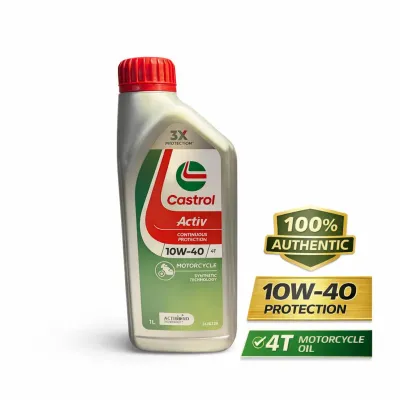
Prices are valid at publication and may change. Please refer to the product page for the latest price.
Key Specifications to Check on the Oil Label
To make an informed comparison between Shell and Castrol, you must look past the front label branding and examine the technical specifications printed on the back of the bottle. The most critical metric is the SAE (Society of Automotive Engineers) viscosity grade, such as 10W-40 or 15W-50. The first number, followed by a “W,” indicates the oil’s flow characteristics at cold temperatures, while the second number represents its viscosity at operating temperature. In a tropical climate like Singapore, where ambient temperatures remain consistently high and stop-and-go traffic is common, a stable high-temperature viscosity rating is essential to prevent the oil film from thinning out under extreme heat.
Next, you must verify the JASO (Japanese Automotive Standards Organization) certification, which is the definitive standard for motorcycle-specific oils. Look for the JASO MA, MA1, or MA2 ratings on the label if your motorcycle has a manual transmission with a wet clutch. JASO MA2 indicates the highest friction performance, ensuring that the clutch plates grip effectively under high torque. If you ride an automatic scooter with a dry clutch and a separate gearbox, look for a JASO MB rating, which is formulated for lower friction and improved fuel efficiency. Never use a JASO MB oil in a wet-clutch motorcycle, as this will cause severe clutch slippage.
Finally, check the API (American Petroleum Institute) performance classification, which is represented by a two-letter code such as SN, SM, or SP. Higher letters in the alphabet generally indicate more modern formulations with improved oxidation resistance, deposit control, and wear protection. Additionally, identify the base oil composition: mineral, semi-synthetic, or fully synthetic. Mineral oils are refined directly from crude oil and are suitable for older, low-displacement engines with shorter service intervals. Semi-synthetic oils blend mineral and synthetic bases for balanced protection, while fully synthetic oils are chemically engineered to offer maximum thermal stability and extended drain intervals in high-performance engines.
Evaluating Engine Protection and Riding Style Claims
Both Shell and Castrol employ distinct proprietary technologies to market their engine protection capabilities. Shell often highlights its PurePlus Technology, a process that converts natural gas into a crystal-clear base oil with virtually none of the impurities found in crude oil. This is combined with Active Cleansing Technology, which aims to prevent dirt particles from coalescing into harmful engine deposits. These formulations are designed to keep the engine clean and maintain consistent performance over long commuting distances.

Castrol, on the other hand, frequently promotes its Power1 range featuring Power Release Technology or Actibond molecules. These formulations are designed to cling to critical engine parts even when the engine is turned off, providing a continuous layer of protection during the critical start-up phase. Castrol markets these products toward riders seeking immediate throttle response and rapid oil flow under high-stress acceleration.
To evaluate these claims objectively, you should consult the technical data sheets (TDS) available on each manufacturer’s website rather than relying on promotional slogans. Compare the kinematic viscosity at 100°C and the viscosity index of equivalent products from both brands. A higher viscosity index indicates that the oil maintains a more stable thickness across a wide temperature range, which is highly beneficial for riders who transition from slow, congested city streets to high-speed expressways. Additionally, look for specific original equipment manufacturer (OEM) approvals listed on the product sheets, as some motorcycle brands explicitly recommend or partner with one of these lubricant manufacturers.
Assessing Value and Ensuring Product Authenticity
When comparing the value of Shell and Castrol oils, you must evaluate the price per liter against the expected service life of the oil. In Singapore, fully synthetic motorcycle oils from both brands typically range from S$20 to S$35 per liter, while semi-synthetic options generally cost between S$12 and S$18 per liter. While a fully synthetic oil carries a higher upfront cost, it often provides better long-term value by maintaining its protective properties over a longer mileage interval, reducing the frequency of oil changes.
However, the value of any high-quality oil is entirely compromised if you accidentally purchase a counterfeit product. The market for motorcycle lubricants faces ongoing challenges with counterfeit oils, which are often packaged in recycled bottles but filled with low-grade industrial lubricants. To ensure you are buying authentic Shell or Castrol oil, use the following verification checklist:
- Inspect the Security Seals: Check that the tamper-evident cap ring is unbroken and that the foil seal under the cap is firmly adhered to the bottle neck.
- Verify Batch Codes: Look for clearly printed, non-smudged batch numbers and production dates on the lower half or back of the bottle.
- Utilize QR Verification: Many modern oil bottles feature a unique QR code on the cap or label that can be scanned to verify authenticity through the manufacturer's official portal.
- Purchase from Authorized Sources: Buy your oil from official brand flagship stores on reputable online marketplaces, authorized local distributors, or established, licensed motorcycle workshops.
Using counterfeit or expired motorcycle oil can lead to rapid thermal breakdown, severe engine sludge, accelerated component wear, and eventual catastrophic engine failure. Saving a few dollars on an unverified online listing is not worth the risk of a costly engine rebuild.
Final Decision Framework: Shell vs Castrol
To make your final selection between these two reputable brands, apply this structured decision framework based on your specific motorcycle, riding habits, and local availability.
Choose Shell if:
- Your motorcycle manufacturer's manual specifies a viscosity and performance standard that aligns with the Shell Advance range.
- You prioritize engine cleanliness, active deposit control, and long-term viscosity stability during extended daily commutes in heavy traffic.
- You prefer lubricants formulated from gas-to-liquid base oils (PurePlus Technology) for a highly consistent molecular structure.
Choose Castrol if:
- Your motorcycle manufacturer explicitly recommends Castrol or partners with them for factory-fill lubricants.
- Your riding style involves frequent cold starts, short trips, or high-revving performance riding where immediate start-up protection and throttle responsiveness are priorities.
- The specific Castrol Power1 formulation matching your required viscosity is more readily accessible at your preferred local workshop.
Verify first if:
- You ride an older vintage motorcycle or a highly modified engine, as these may require specialized high-zinc mineral formulations or specific viscosity grades that fall outside the standard product lines of both brands.
- Your motorcycle features a dry clutch or a separate transmission reservoir, which requires separate verification of gear oil and engine oil specifications.
Ultimately, brand loyalty should always remain secondary to the exact technical requirements detailed in your motorcycle’s owner’s manual. Adhering to the manufacturer’s specified viscosity grade and JASO rating is the single most effective way to ensure long-term engine protection and optimal clutch performance.
Frequently Asked Questions (FAQ)
Can I mix Shell and Castrol motorcycle oils if I need to top up?
In an emergency situation where your oil level is dangerously low, you can mix Shell and Castrol motorcycle oils, provided they share the exact same viscosity grade (such as 10W-40) and performance specifications (such as JASO MA2). However, this should only be a temporary measure. Different lubricant manufacturers use proprietary additive packages to prevent wear, control deposits, and manage friction. Mixing different brands can cause these additive packages to interact, potentially reducing the overall effectiveness of the oil and altering the friction characteristics required for your wet clutch. For optimal protection and clutch performance, perform a complete oil and filter change as soon as possible after mixing brands.
How often should I change my motorcycle oil regardless of the brand?
You should always consult your motorcycle’s owner’s manual to establish the baseline oil change interval, which is typically defined by both mileage (e.g., every 5,000 to 10,000 kilometers) and time (e.g., every 6 to 12 months), whichever comes first. However, these intervals assume normal operating conditions. If you frequently ride in severe conditions—such as short trips under 15 kilometers, prolonged idling in heavy city traffic, or highly humid environments—the oil will degrade more rapidly due to fuel dilution and moisture accumulation. Under these conditions, you should shorten your oil change interval. Additionally, always replace the oil filter during every oil service to prevent accumulated contaminants from polluting your fresh lubricant.
Community discussion
Share your experience or ask a question. Comments are reviewed before publication.