
Choosing between Shell and Castrol scooter engine oils is not about finding a single, universally superior brand. Instead, the decision rests on how closely a specific oil’s technical specifications—such as its JASO classification, API rating, and viscosity grade—align with your scooter manufacturer’s requirements and your daily riding conditions. Both manufacturers produce high-quality lubricants, but their formulations serve different engine designs and operating environments. To make the correct choice, riders must look past brand marketing and evaluate the physical and chemical properties detailed on the product labels.
Understanding Scooter Engine Requirements
Scooters operate under significantly different mechanical conditions compared to standard motorcycles. The most critical distinction lies in the transmission design. While most motorcycles utilize a wet clutch system where the engine oil also lubricates the gearbox and clutch plates, modern automatic scooters typically employ a continuously variable transmission (CVT) with a dry clutch. Because the engine oil in a scooter does not come into contact with the clutch, it does not require the high-friction additives needed to prevent clutch slippage. This mechanical independence allows scooter-specific oils to focus entirely on reducing internal engine friction, maximizing fuel efficiency, and managing heat.
This distinction is formalized by the Japanese Automotive Standards Organization (JASO). Scooters with dry clutches require oils certified under the JASO MB standard. JASO MB lubricants are formulated with friction modifiers that lower hydrodynamic drag within the engine. Using a JASO MA oil—which is designed for wet clutches and has higher friction characteristics—in a dry-clutch scooter can lead to unnecessary drag, reduced fuel economy, and sluggish throttle response.
Products mentioned in this guide
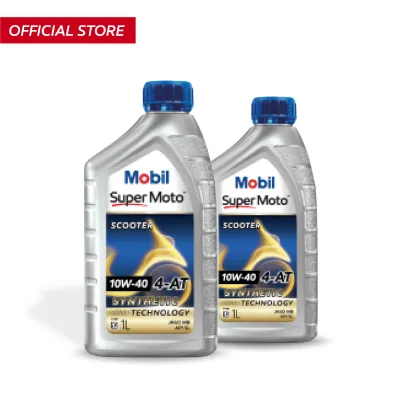
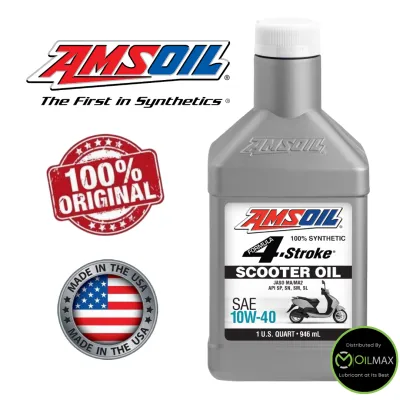
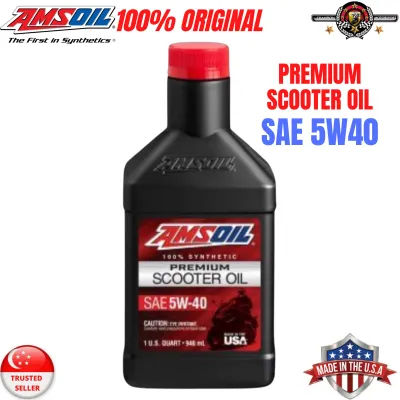
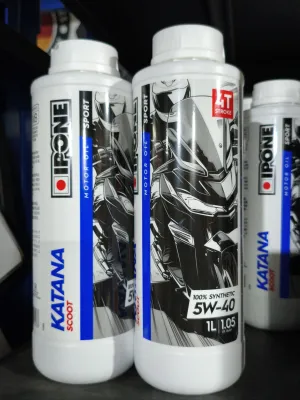
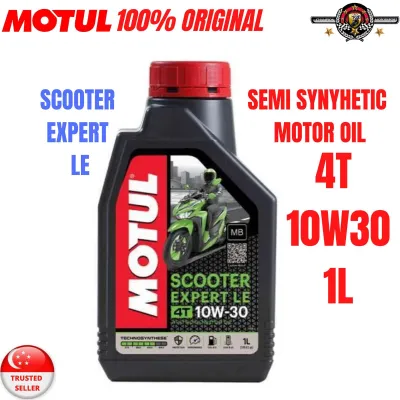
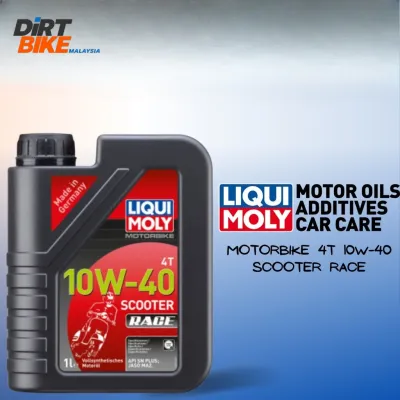
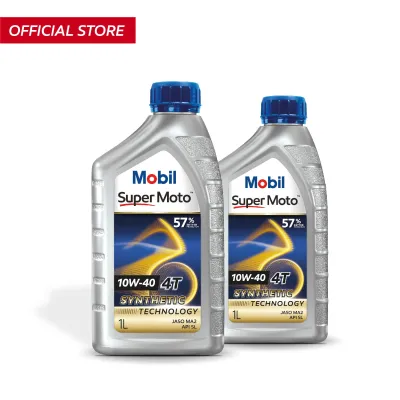
Prices are valid at publication and may change. Please refer to the product page for the latest price.
Viscosity grades, represented by ratings such as 10W-30 or 10W-40, dictate how the oil behaves at different temperatures. The number preceding the “W” (which stands for winter) indicates the oil’s flow characteristics at low temperatures, while the second number represents its viscosity at operating temperature (100 degrees Celsius). In tropical urban environments, where ambient temperatures remain consistently high, the high-temperature rating is particularly vital. Air-cooled scooter engines, which rely on ambient air flow rather than a radiator system to dissipate heat, experience extreme thermal stress during prolonged idling in traffic. Liquid-cooled engines manage heat more consistently but still require the correct viscosity to maintain a stable protective film over moving parts.
Ultimately, the owner’s manual serves as the definitive authority for any oil selection. It specifies the exact viscosity grade, JASO standard, and minimum API service classification required to maintain engine health and preserve warranty coverage. Deviating from these original equipment manufacturer (OEM) guidelines can lead to accelerated component wear or voided warranties, making manual verification the essential first step before purchasing any lubricant.
Evaluating Shell and Castrol Scooter Lineups
When comparing the product offerings of Shell and Castrol, riders must carefully distinguish between general motorcycle lubricants and dedicated scooter formulations. Both brands manufacture extensive lines of two-wheel lubricants, but only bottles explicitly labeled with “Scooter” or “JASO MB” should be considered for automatic CVT scooters. Shell’s scooter range typically features its proprietary gas-to-liquid (GTL) base oil technology in its premium synthetic products, which aims to provide high resistance to thermal breakdown. Castrol’s scooter lineup often emphasizes specialized additive packages designed to protect engines from thermal stress and wear during frequent stop-and-start cycles.

The choice between fully synthetic, semi-synthetic, and mineral base oils depends largely on the scooter’s engine age, mileage, and usage patterns. Fully synthetic oils offer the highest level of thermal stability, shear resistance, and oxidation resistance. They are highly suitable for modern, high-performance scooters or those subjected to demanding daily commutes. Semi-synthetic oils blend synthetic and mineral base stocks, offering a balanced level of protection and cost-effectiveness for standard daily commuting. Mineral oils are generally reserved for older engine designs or during the initial break-in period of a new engine, where a certain level of controlled friction is necessary for piston rings to seat properly.
Beyond the base oil type, riders must verify the American Petroleum Institute (API) service classification printed on the back of the bottle. The API rating consists of two letters, starting with “S” (for spark-ignition engines) followed by a letter that indicates the performance level (e.g., SJ, SL, SM, SN, or SP). Each successive letter represents a more stringent standard with improved oxidation control, deposit prevention, and wear protection. When evaluating Shell and Castrol options, ensure the selected oil meets or exceeds the minimum API rating specified in your owner’s manual. For instance, if your manual requires an API SJ oil, you can safely use an API SN or SP oil, as these newer standards are backward-compatible and offer enhanced engine protection.
Matching Oil Characteristics to Riding Conditions
Riding conditions play a decisive role in how an engine oil performs over its service life. In highly congested urban areas, scooters frequently experience stop-and-go traffic, which subjects the engine to prolonged idling and rapid acceleration cycles. This pattern prevents the engine from maintaining a stable operating temperature, leading to increased fuel dilution of the oil and accelerated deposit formation. For these demanding urban environments, a fully synthetic oil from either Shell or Castrol with robust shear stability is highly recommended. A stable viscosity index ensures the oil maintains its protective film even when subjected to the high shear forces of rapid acceleration.
Ambient temperature and climate also dictate viscosity requirements. In tropical regions, cold starts do not involve sub-zero temperatures, but the initial startup phase remains the period of highest engine wear. An oil with a lower cold-viscosity rating, such as 10W, flows quickly to lubricate critical overhead camshafts and cylinder walls immediately upon ignition. Once the engine reaches operating temperature, the high-temperature viscosity rating (such as 30 or 40) becomes critical. If the oil is too thin (e.g., using a 10W-30 where a 10W-40 is specified), the protective film may shear under extreme heat, leading to metal-on-metal contact. Conversely, if the oil is too thick, it can cause excessive internal drag, increasing fuel consumption and operating temperatures.
High-mileage or older scooter engines present unique challenges. Over time, internal engine clearances can widen due to gradual wear, and rubber seals can become brittle, leading to minor oil consumption or leaks. For these vehicles, selecting an oil with a slightly higher high-temperature viscosity within the manufacturer’s approved range can help seal clearances and maintain compression. Additionally, specific formulations containing seal conditioners can help restore flexibility to aging gaskets, reducing the risk of external leaks and internal oil burning.
Ensuring Product Authenticity and Proper Handling
The performance advantages of premium lubricants from Shell or Castrol are completely lost if the product is counterfeit or degraded. Counterfeit engine oils, often made from recycled or low-grade industrial oils, lack the necessary additive packages and shear stability, posing a severe risk of catastrophic engine failure. To protect your vehicle, carefully inspect the packaging before purchase. Genuine bottles typically feature high-quality label printing, intact tamper-evident plastic rings on the caps, and holographic security seals or QR codes that can be verified on the manufacturer’s official website. Batch codes and production dates should be clearly laser-etched on the bottle.
To minimize the risk of purchasing counterfeit products, source your engine oil exclusively from authorized distributors, official brand stores on reputable online marketplaces, or established, reputable workshops. Avoid purchasing from unverified third-party sellers offering prices that seem unusually low.
Proper storage is equally important for maintaining oil quality. If you purchase oil in bulk or have leftover oil from a previous service, store the tightly sealed container in a cool, dry place away from direct sunlight. Extreme temperature fluctuations and exposure to moisture can cause condensation inside the bottle, leading to oil emulsification and additive precipitation. Always check the oil’s appearance before pouring; it should be clear and free of any cloudiness, sediment, or water droplets. When performing an oil change, always follow the safety instructions in your vehicle’s manual, use appropriate protective gear, and ensure used engine oil is disposed of responsibly at an authorized recycling center.
Decision Framework: Choosing Between Shell and Castrol
To finalize your choice between Shell and Castrol, apply a structured decision framework based on your scooter’s specific requirements and available product lines.
Choose Shell if:
- Your scooter manufacturer specifies a viscosity grade (such as 10W-40) that aligns with Shell's gas-to-liquid synthetic formulations, which offer excellent resistance to thermal degradation in high-temperature urban environments.
- You prefer a product line with highly accessible digital authenticity verification systems, such as QR codes linked directly to official verification databases.
- Your trusted local workshop is an authorized Shell partner, ensuring professional handling and guaranteed product authenticity during routine servicing.
Choose Castrol if:
- Your scooter has high mileage or operates under severe stop-and-go conditions, and you prefer Castrol's specialized additive formulations designed to cling to engine components during frequent startup cycles.
- You require a specific viscosity grade or semi-synthetic option that is more readily available in Castrol's local product lineup to match your owner's manual specifications.
- Your riding patterns involve frequent short trips where the engine rarely reaches full operating temperature, benefiting from Castrol's focus on low-temperature flow and rapid lubrication.
Verify first if:
- Your scooter's owner's manual mandates a highly specific proprietary OEM lubricant or an uncommon viscosity grade (such as 5W-40) that may not be standard in either brand's general scooter range.
- Your vehicle is still under a manufacturer's warranty that requires documented use of specific certified lubricants to maintain coverage. In such cases, prioritize the exact OEM-approved product regardless of brand preference.
Frequently Asked Questions (FAQ)
Can I use standard motorcycle oil (JASO MA) in my scooter?
Standard motorcycle oils certified under the JASO MA standard are formulated specifically for wet-clutch systems, containing friction modifiers that ensure the clutch plates grip effectively. Automatic scooters, however, utilize a dry clutch and a continuously variable transmission (CVT), meaning the engine oil only lubricates the engine itself. Using a JASO MA oil in a dry-clutch scooter introduces unnecessary friction, which can lead to reduced fuel efficiency, sluggish acceleration, and increased operating temperatures. To ensure optimal performance and protection, always use an oil certified to the JASO MB standard, which is engineered with low-friction characteristics tailored specifically for scooter engines.
How do I know when it is time to change my scooter engine oil?
The primary guide for oil changes is the mileage and time intervals specified in your scooter’s owner’s manual. However, physical indicators can also signal the need for an early change. Regularly check the oil level and condition using the dipstick; oil that appears dark black, gritty, or has a strong burnt smell should be replaced immediately. Additionally, if you notice increased engine noise, rough idling, or a drop in fuel efficiency, the oil may have sheared or degraded. Scooters operated in severe conditions—such as daily stop-and-go traffic in hot climates, short trips under five kilometers, or carrying heavy loads—require more frequent oil changes than the standard service intervals to prevent premature engine wear.
Community discussion
Share your experience or ask a question. Comments are reviewed before publication.