
Quick Answer: Which Phone Mount Suits Your Audi?
Choosing the right phone holder for the rear seat of your Audi depends on your vehicle’s specific seat architecture and your passengers’ viewing requirements. There is no single universal option that fits every model. Instead, the choice is dictated by whether your car is equipped with standard adjustable headrests or integrated sports seats, which are common in Audi’s S, RS, and S-line trim levels.
For Audi models with standard seats featuring exposed, adjustable metal poles, a headrest mount is generally the most stable and highly adjustable option. It positions the screen at a convenient eye-level height for adult passengers and offers extensive tilt and rotation angles. However, if your Audi features integrated sports seats where the headrest and backrest are a single, continuous piece of leather or Alcantara, a traditional headrest clamp cannot be installed. In these vehicles, or when mounting screens for younger children who require a lower viewing angle, a seat back mount is the necessary and more practical choice.
Before purchasing any mounting accessory, you must identify your specific seat style and check your vehicle’s documentation regarding safety systems, such as active head restraints, to ensure the accessory does not interfere with passenger safety.
Products mentioned in this guide

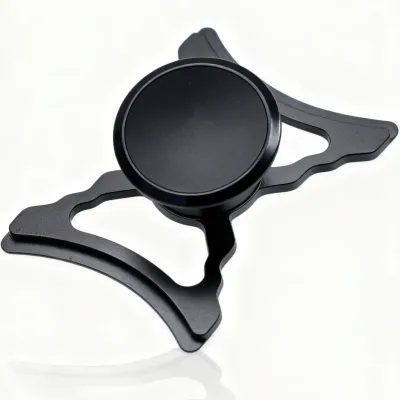
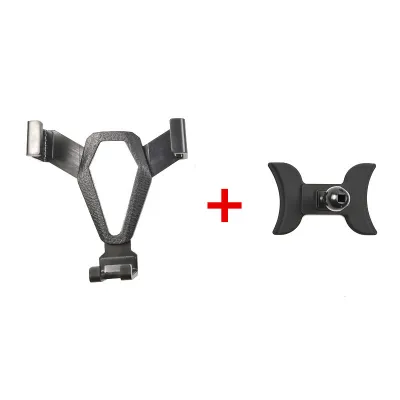

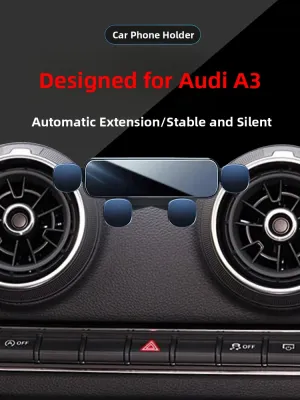
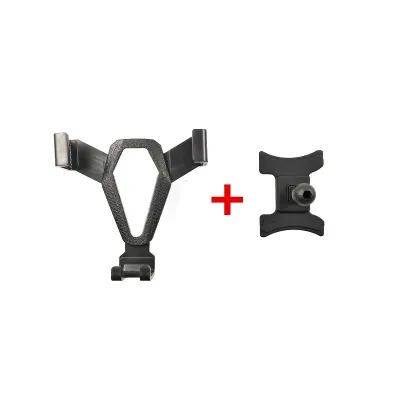
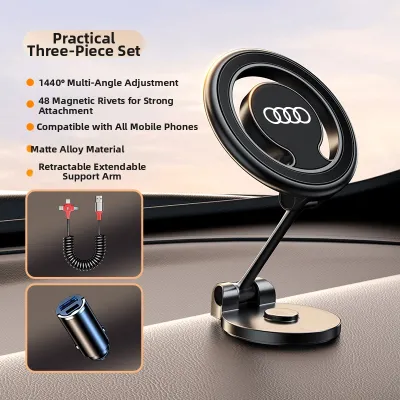
Prices are valid at publication and may change. Please refer to the product page for the latest price.
How Seat Back and Headrest Mounts Actually Work
Understanding the mechanical differences between these two mounting styles is essential for evaluating how they will perform on the road and how they will interact with your Audi’s premium cabin materials.

Headrest Mount Mechanics
Headrest mounts rely on a mechanical clamping system that attaches directly to the exposed metal support poles of the front seats. These mounts typically feature a rigid horizontal bar or a spring-loaded bracket that compresses tightly between the two metal poles. From this base, an adjustable arm extends outward, ending in a cradle or a magnetic mount for the phone. Because the metal poles are anchored directly into the internal steel frame of the seat, this mounting style provides a highly secure, load-bearing foundation that easily supports the weight of modern smartphones and larger mobile devices.
Seat Back Mount Mechanics
Seat back mounts use alternative anchoring points because they cannot utilize metal poles. These holders typically attach to the rear shell or fabric of the front seat using adjustable elastic straps, rigid plastic clips that hook into the seat back panel seams, or heavy-duty adhesive pads. Some advanced designs are engineered to clip directly into the storage nets or the integrated accessory slots found on the back of certain Audi seat models. Because they distribute their weight across the padded backrest rather than a rigid metal frame, their stability depends heavily on the tension of the straps and the structural rigidity of the seat back panel itself.
How Each Mount Performs Inside an Audi
Audi vehicles are celebrated for their refined driving dynamics and premium interior craftsmanship. Evaluating how each mount type performs within this specific environment requires looking closely at stability, material preservation, and passenger ergonomics.
Stability and Vibration on the Road
While Singapore’s expressways are generally well-maintained, daily driving still involves navigating speed humps in residential areas, expansion joints on flyovers, and occasional road construction zones. These surface changes transmit vibrations through the vehicle’s suspension and directly into the cabin seating.
Headrest mounts benefit from being anchored to the rigid steel poles of the seat frame. This solid connection minimizes low-frequency swaying when cornering or braking suddenly. However, many headrest mounts feature long, telescoping extension arms designed to bring the phone closer to the passenger. These extended arms can act as a lever, amplifying minor road vibrations into high-frequency screen shake. To prevent this, look for mounts with short, heavy-duty extension joints and robust locking collars that can be tightened securely.
Seat back mounts, particularly those utilizing elastic straps, handle vibrations differently. While they are less prone to high-frequency screen shake because they sit flush against the dampening foam of the seat back, they can suffer from lateral swaying during sharp turns or sudden lane changes. Rigid clip-on seat back mounts offer a much more stable experience by anchoring directly to the plastic or leather backing panel, keeping the device closer to the seat’s center of mass and reducing movement.
Protecting Audi Leather and Alcantara Surfaces
Audi interiors frequently feature delicate, high-end materials such as Fine Nappa leather, Valcona leather, and Alcantara or Dinamica microfibres. Protecting these surfaces from permanent wear, indentation, and discoloration is a primary concern when installing aftermarket accessories.
Headrest mounts pose a risk to the area immediately surrounding the headrest poles. Hard plastic or metal clamps without adequate padding can scratch the chrome-plated poles or pinch the leather stitching where the poles enter the seat back. Over time, heavy devices can cause the clamp to press downward, leaving deep indentations in the leather at the top of the backrest. To mitigate this risk, select headrest mounts equipped with thick silicone or rubber protective sleeves, and avoid over-tightening the clamps.
Seat back mounts present a different set of material risks. Strap-based mounts require high tension to remain stable, which can compress the seat foam and leave permanent creases or shiny wear marks on premium leather and Alcantara surfaces. In Singapore’s hot and humid tropical climate, cabin temperatures can rise significantly when parked outdoors. This intense heat softens leather topcoats and adhesives, making the materials highly vulnerable to friction wear and chemical transfer from cheap plastic or rubber straps. If you choose a seat back mount, prioritize models with soft microfiber backings, avoid adhesive-based options entirely, and always remove the mount when it is not in use to allow the seat materials to recover.
Passenger Viewing Angles and Adjustability
Ergonomics and passenger comfort vary widely depending on who is riding in the rear seat and how the mount is positioned.
Headrest mounts excel in adjustability. Most designs incorporate a ball-and-socket joint that allows for full 360-degree rotation, enabling passengers to switch easily between portrait mode for browsing and landscape mode for watching videos. They also offer a wide range of tilt adjustment, which is crucial for eliminating glare from the side windows or sunroof. The primary limitation is height: because the mount is fixed to the headrest poles, the screen sits relatively high. While this is ideal for adults and taller teenagers, it can force younger children sitting in lower child safety seats to look upward at an awkward, uncomfortable angle for extended periods.
Seat back mounts offer a more versatile height range because they can often be positioned lower down on the backrest panel. This lower placement provides a more natural, downward viewing angle for children. However, seat back mounts generally offer less tilt and rotation adjustability because they sit closer to the flat surface of the backrest. Furthermore, if your Audi features sports seats with deep, aggressive side bolsters, a seat back mount may sit recessed between these bolsters, which can restrict lateral viewing angles and make it difficult for passengers sitting on the opposite side of the cabin to see the screen clearly.
Installation and Audi Seat Feature Integration
Before purchasing any phone holder, you must perform a physical compatibility check of your Audi’s front seats to ensure a safe and secure fit without blocking factory features.
The Integrated Headrest Compatibility Barrier
Many performance-oriented Audi models—including S and RS variants, as well as A3, A4, A5, Q3, and Q5 models equipped with the optional S-line interior package—feature one-piece sports seats. These seats are designed with integrated headrests that do not have exposed metal support poles. If your vehicle has these seats, standard headrest pole-clamp mounts are completely incompatible. For these configurations, a specialized seat back mount, a console-mounted arm, or a custom-fit bracket designed specifically for Audi sports seats is required.
Interfacing with Factory Features
Audi front seats are often equipped with built-in convenience and storage features that aftermarket mounts can obstruct.
- Seat Back Storage Pockets: Many Audi models feature expandable mesh nets or solid plastic pockets on the rear of the front seats. Strap-based seat back mounts can block access to these pockets or put excessive tension on the mesh, causing it to stretch out permanently.
- Folding Tables and Entertainment Prep: Some family-focused Audi SUVs are equipped with folding picnic tables or factory preparation ports for rear-seat entertainment systems. Ensure that any aftermarket mount you select does not block these ports or prevent the tables from folding flush.
- Active Safety Systems: Many modern Audi seats are equipped with Active Head Restraints (AHR) designed to move forward instantly in a rear-end collision to reduce the risk of whiplash. Clamping heavy, rigid accessories to these headrest poles can interfere with the deployment mechanism. Always consult your Audi owner's manual to verify if your vehicle is equipped with active headrests and to check for any manufacturer warnings regarding aftermarket attachments.
Pre-Purchase Checklist
To ensure a seamless installation, complete these verification steps before buying:
- Inspect the Headrest: Confirm whether your front seats have adjustable headrests with exposed metal poles or integrated, one-piece sport backrests.
- Measure Pole Spacing: If you have adjustable headrests, measure the distance between the inner edges of the metal poles. Most standard headrest mounts support a spacing range of 120mm to 180mm, but verifying your specific vehicle measurements is essential.
- Check Seat Back Materials: Note whether your seat backs are hard plastic shells or fully upholstered in leather or Alcantara, as this will dictate which mounting materials are safest to use.
Quick Comparison: Seat Back vs Headrest Mounts
| Feature / Dimension | Headrest Pole Mount | Seat Back Mount |
|---|---|---|
| Best Use Case | Eye-level viewing for adults and teenagers on standard seats | Lower viewing angles for children; mandatory for integrated sports seats |
| Sports Seat Compatibility | Incompatible (no exposed metal poles available) | Compatible (utilizes straps, clips, or dedicated seat-back brackets) |
| Adjustability | High (360-degree rotation, wide tilt range, telescoping arms) | Moderate to Low (limited tilt; often fixed in a single position) |
| Stability Profile | Highly resistant to swaying; prone to high-frequency arm vibration | Resistant to high-frequency shake; prone to lateral swaying if loose |
| Primary Material Risk | Scratching of metal poles; pressure marks on top leather stitching | Creasing, stretching, or heat-induced indentation of leather/Alcantara |
Final Verdict: How to Choose Based on Your Audi Model
To make the final decision for your Audi, apply this straightforward selection framework based on your vehicle’s interior layout and your passengers’ needs.
Choose a Headrest Mount If:
- Your Audi (such as a standard A4, A6, Q5, or Q7) is equipped with standard adjustable headrests featuring exposed metal poles.
- Your primary rear-seat passengers are adults or older children who prefer an eye-level screen height.
- You require maximum adjustability to rotate the phone between portrait and landscape modes or to tilt the screen to avoid glare.
- You want to keep the leather or Alcantara surface of the backrest completely free of straps and contact pressure.
Choose a Seat Back Mount If:
- Your Audi features S-line, S, or RS sports seats with integrated headrests and no exposed metal poles.
- You need to mount a phone or small tablet at a lower height for toddlers or younger children riding in child safety seats.
- You prefer a low-profile mounting solution that keeps the device tucked close to the seat back, reducing the risk of passengers bumping into it while entering or exiting the vehicle.
Before finalizing your purchase, prioritize passenger safety by checking your Audi owner’s manual for any restrictions regarding headrest attachments or active safety systems. Always select high-quality mounts featuring soft silicone or microfiber protective padding, and develop the habit of removing the mount during hot weather when your vehicle is parked outdoors to preserve the pristine condition of your Audi’s cabin materials.

Community discussion
Share your experience or ask a question. Comments are reviewed before publication.