
Quick Answer: Which Method Actually Removes Scratches?
When you notice a scratch on your vehicle’s paintwork, finding the right corrective method depends entirely on how the product interacts with your car’s clear coat. Only car polish physically removes scratches by leveling the surrounding paint. This process relies on micro-abrasives to shave down the clear coat until it is flush with the bottom of the defect, permanently eliminating the scratch.
In contrast, scratch wax does not remove scratches. Instead, it temporarily fills and masks light scuffs, swirl marks, and micro-defects using a blend of waxes, polymers, and mild fillers. Once these fillers wash away after a few rounds of vehicle cleaning, the underlying scratches will reappear.
Similarly, ceramic coating is not designed to remove or repair existing scratches. It is a protective liquid polymer that cures into a hard, glass-like barrier over the paintwork. While it can offer minor optical masking by altering how light reflects off micro-marring, its primary purpose is to seal and protect a flawless finish from future environmental damage.
Products mentioned in this guide
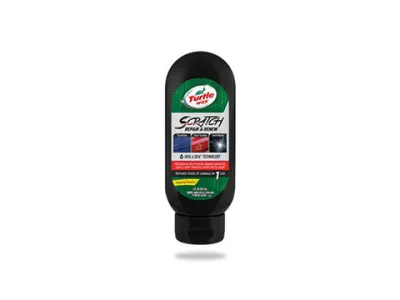
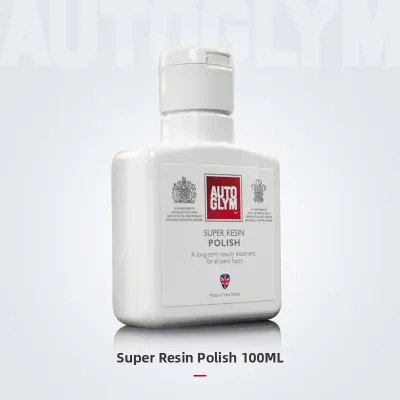
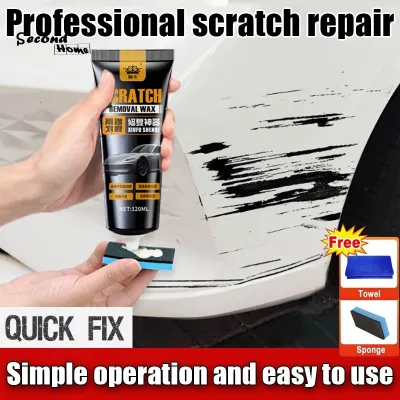
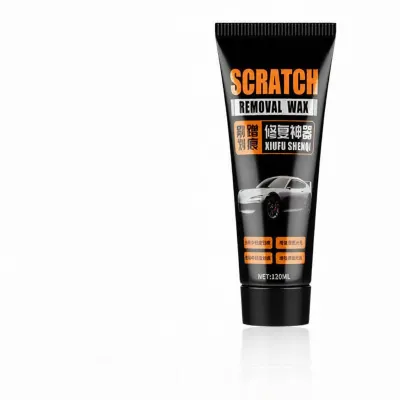
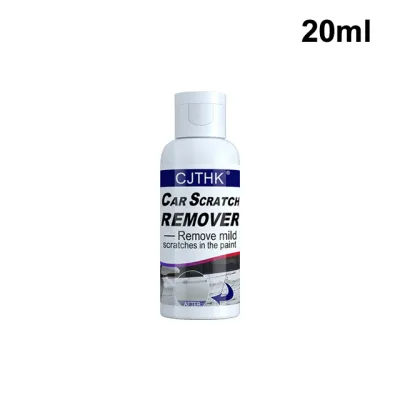
![[SG SELLER]EELHOE Car Scratch Repair Polishing Wax Anti Scratch Cream Paint Auto Scratch Remover Car Cleaning Retreading Tools Car Styling Wax Scratch Repair Polishing Kit Auto Body Grinding Compound Anti Scratch Cream Paint Care Car Polish Cleaning Tools](https://img.lazcdn.com/g/p/c2095d5590478ee25af4ea43ccff1d69.jpg_400x400q80.jpg_.webp)
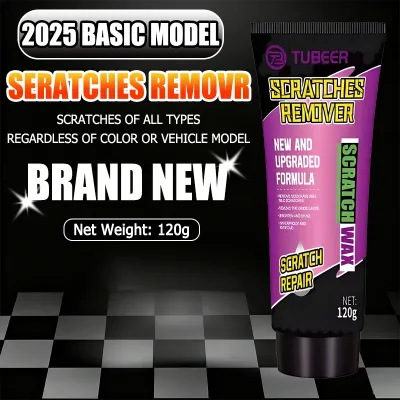
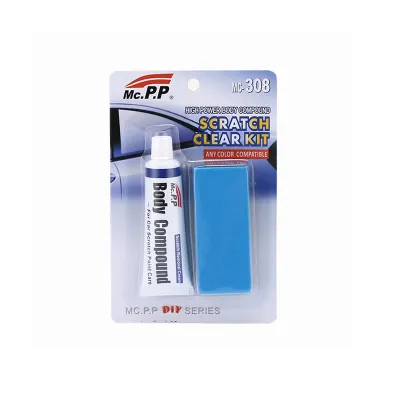
Prices are valid at publication and may change. Please refer to the product page for the latest price.
As a general rule of thumb, use scratch wax if you need a quick, temporary cosmetic mask for superficial scuffs. Choose car polish if you want to permanently eliminate moderate clear coat defects. Apply a ceramic coating only after the paint is completely polished and defect-free to lock in that flawless finish and guard against future wear.
Diagnosing Your Car Scratches: The Fingernail Test
Before purchasing any paint care product, you must accurately diagnose the severity of the damage. Applying the wrong treatment can waste your time, cost unnecessary money, or even cause permanent damage to your vehicle’s paint system. Modern automotive paint typically consists of three distinct layers applied over the metal or plastic body panel: a primer coat for corrosion resistance, a base coat that provides the color, and a top clear coat that protects the color and provides gloss.

The standard diagnostic tool for evaluating these layers is the simple “fingernail test.” Gently drag your fingernail across the scratch at a 90-degree angle. How your fingernail interacts with the groove determines the depth of the damage and dictates the correct repair path.
- Clear Coat Scratches: If your fingernail slides smoothly over the scratch without catching, the defect is confined entirely to the upper clear coat. This category includes light wash swirls, spider-webbing from automatic car washes, and superficial scuffs. These defects are excellent candidates for scratch wax masking or physical polishing.
- Base Coat Scratches: If your fingernail catches or snags slightly in the groove, but you do not see any underlying white, grey, or black primer, the scratch has penetrated deep into the clear coat and may have touched the base coat. While polishing can improve the appearance of these scratches, completely removing them may require removing too much clear coat, making a professional touch-up more appropriate.
- Deep Scratches: If your fingernail catches deeply and you can clearly see a contrasting color like white, grey, or black, or if bare metal or plastic substrate is exposed, the scratch has penetrated through all paint layers. Neither scratch wax, car polish, nor ceramic coating can repair this level of damage. Attempting to polish a deep scratch will only thin the surrounding clear coat further, leaving the panel vulnerable to rust and paint peeling. These deep defects require touch-up paint, wet sanding, or professional body shop repainting.
Always consult your vehicle’s manufacturer care guidelines or a professional detailer before attempting to correct deep defects, especially on modern vehicles with thin factory clear coats.
Scratch Wax: Masking Light Scuffs and Swirl Marks
Scratch wax is a popular consumer product designed for quick, user-friendly paint maintenance. To understand its role, you must look at its chemical composition. These formulations typically combine natural carnauba or synthetic waxes with specialized oils, polymer fillers, and sometimes ultra-fine micro-abrasives. Instead of removing paint, scratch wax is engineered to flow into the microscopic valleys created by light scratches. By filling these voids and curing to a flat surface, the wax restores a uniform plane that reflects light evenly, making the scratch virtually invisible to the naked eye.
This product is highly effective for specific, low-severity scenarios. It is ideal for masking spider-webbing, light wash swirls, and superficial scuffs caused by light contact with soft objects. Because it does not rely on aggressive cutting action, it carries a very low risk of damaging your clear coat, making it an excellent starting point for DIY enthusiasts who want to improve their vehicle’s appearance without using power tools.
However, scratch wax has significant limitations that you must consider. Because it relies on fillers rather than paint removal, it offers only a temporary cosmetic fix. Over time, exposure to rain, road grime, UV radiation, and alkaline car wash detergents will degrade the wax and wash out the fillers. Depending on the climate and wash frequency, the masked scratches will typically reappear within a few weeks to a couple of months.
To achieve the best results with scratch wax, proper preparation is essential. Always wash and dry the vehicle thoroughly before application. Applying wax over dirty paint can trap abrasive road grit beneath the applicator pad, creating new scratches as you rub the product into the paintwork. Work in a shaded area on a cool panel, applying the product with a clean, high-quality microfiber applicator pad using light, circular motions, and buff away the residue promptly with a clean microfiber towel.
Car Polish: The True Paint Correction Method
Unlike cosmetic fillers, car polish is a true paint correction product designed to permanently eliminate scratches. Polish contains engineered abrasives suspended in a liquid medium. When applied to the paintwork—either by hand or with a dual-action machine polisher—these abrasives act like liquid sandpaper. They physically shave down the surrounding clear coat until the entire surface is level with the bottom of the scratch. Once the surrounding paint is brought down to the same depth, the scratch ceases to exist because there is no longer a physical groove to catch light and cast a shadow.
Polishing is the correct choice for addressing moderate clear coat scratches, oxidation, stubborn water spots, and heavy swirl marks that cannot be masked by wax. Because it physically corrects the surface, the results are permanent; the scratches will not reappear after washing because the damaged paint has been physically removed.
However, this permanent correction comes with a critical safety boundary. Modern automotive clear coats are extremely thin, often measuring between 35 to 50 microns. Every time you polish your vehicle, you remove a small fraction of this protective layer. If you polish too aggressively, use a compound that is too abrasive, or apply excessive pressure, you risk burning through the clear coat. Once the clear coat is depleted, the base coat is exposed to the elements, leading to rapid oxidation, fading, and peeling that can only be repaired by a professional repaint.
To mitigate this risk, professional detailers recommend using a digital paint depth gauge to measure the total paint thickness before performing any machine polishing. If you are a DIYer, always follow the golden rule of paint correction: start with the least aggressive pad and compound combination first. If a mild finishing polish removes the scratch, there is no need to use a heavy cutting compound. Additionally, keep in mind that polishing strips away all existing waxes and sealants, leaving the freshly corrected clear coat completely bare and unprotected. You must apply a dedicated wax, sealant, or ceramic coating immediately after polishing to shield the raw paint from UV damage and environmental contamination.
Ceramic Coating: Protection and Optical Masking
Ceramic coating represents a significant advancement in paint protection technology, but it is frequently misunderstood by vehicle owners. A ceramic coating is a liquid polymer, typically formulated with silicon dioxide (SiO2) or silicon carbide (SiC), that chemically bonds with your vehicle’s factory clear coat on a molecular level. As it cures, it transforms into a semi-permanent, glass-like barrier that is significantly harder and more durable than traditional waxes or sealants. It is crucial to understand that ceramic coating does not contain abrasives and cannot cut or level paint; therefore, it does not remove scratches.
The connection between ceramic coatings and scratch mitigation lies in two areas: optical masking and future prevention. Because the liquid coating fills the microscopic pores of the clear coat, it can slightly alter how light reflects off the surface. This optical effect can make very fine micro-marring or faint wash swirls less noticeable, giving the illusion of a flatter, glossier surface. Furthermore, the cured ceramic layer is highly hydrophobic and chemically resistant, making the vehicle much easier to wash. This reduces the friction required during maintenance washes, which directly prevents the introduction of new wash-induced swirl marks.
In tropical environments like Singapore, where vehicles are constantly exposed to intense UV radiation, high humidity, and acidic rain, a ceramic coating is highly beneficial for preventing environmental etching. However, applying a ceramic coating carries a major warning. Because the coating cures into a semi-permanent, highly durable shell, it will lock in any underlying paint defects. If you apply a ceramic coating over deep scratches, heavy swirl marks, or water spots, those defects will be sealed beneath the glass-like layer. If you decide you want to polish those scratches out later, you will first have to mechanically polish away the cured ceramic coating—wasting both your time and the expensive coating product.
For this reason, professional application always requires a thorough paint correction process first. The paint must be washed, clayed, polished to a flawless finish, and wiped down with an isopropyl alcohol (IPA) solution to remove all polishing oils before the ceramic coating is applied. This ensures the coating bonds directly to bare, perfect paint, maximizing both its visual depth and its long-term durability.
Scratch Wax vs Polish vs Ceramic Coating: Feature Comparison
To help you quickly evaluate which method matches your specific needs, the table below compares scratch wax, car polish, and ceramic coating across key decision dimensions.
| Method | Primary Mechanism | Best Scratch Type | Durability of Fix | DIY Friendliness | Risk to Clear Coat |
|---|---|---|---|---|---|
| Scratch Wax | Fills and masks microscopic valleys | Superficial scuffs, light wash swirls, spider-webbing | Temporary (weeks to months; washes out) | High (very easy to apply by hand) | Extremely Low (non-abrasive or ultra-fine) |
| Car Polish | Shaves down surrounding clear coat | Moderate clear coat scratches, oxidation, water spots | Permanent (until new scratches are introduced) | Moderate to Low (requires care, patience, or machine) | Moderate to High (risk of burning through paint) |
| Ceramic Coating | Bonds to paint to form a hard protective shell | None (does not remove scratches; only prevents them) | Long-term (years of durable paint protection) | Low to Moderate (requires extensive prep work) | Low (but locks in existing defects permanently) |
Decision Framework: How to Choose the Right Fix
Choosing the correct paint restoration method requires balancing the severity of your car’s scratches, your budget, your detailing experience, and your long-term goals. Use the following structured guidelines to make an informed decision for your vehicle.
Choose Scratch Wax if:
- The scratches are highly superficial, such as faint swirl marks visible only under direct sunlight or light scuffs from soft foliage.
- You are looking for a quick, low-cost, and low-risk DIY project that can be completed in your driveway without specialized power tools.
- You accept that the fix is temporary and are willing to reapply the product every few months as part of your regular vehicle maintenance routine.
- You do not own a paint depth gauge and want to avoid any risk of thinning your vehicle's clear coat.
Choose Polish if:
- The scratches are moderate clear coat defects that catch your fingernail slightly but do not expose the underlying primer or bare metal.
- You want a permanent correction that physically eliminates the scratches rather than temporarily hiding them.
- You are prepared to invest the time and effort required for proper paint correction, which includes washing, claying, polishing, and applying a protective sealant afterward.
- You have access to a dual-action polisher (or are prepared to polish carefully by hand) and understand how to work safely within your clear coat's thickness limits.
Choose Ceramic Coating if:
- Your vehicle's paint is already in excellent condition, or you have just completed a thorough multi-stage paint polishing process to remove all scratches.
- Your primary goal is long-term protection against environmental hazards such as intense UV rays, acidic bird droppings, tree sap, and industrial fallout.
- You want to make future maintenance washes much easier and reduce the risk of creating new swirl marks during cleaning.
- You are willing to perform the meticulous preparation work required—including a full panel wipe-down—to ensure the coating bonds correctly.
Verify First / Seek Professional Help if:
- The scratch is deep enough to expose the grey, white, or black primer, or if you can see bare metal or plastic substrate.
- The scratch is located on a sharp body line or contour, where the factory clear coat is naturally thinner and highly susceptible to burn-through during polishing.
- You are unsure about the remaining thickness of your vehicle's clear coat, particularly if the car has been polished multiple times in the past.
- You lack the confidence, tools, or clean environment required to perform machine polishing or apply a semi-permanent ceramic coating safely.
Frequently Asked Questions (FAQ)
Can I apply ceramic coating over unpolished scratches?
No, you should avoid applying a ceramic coating over unpolished scratches. Because ceramic coatings cure into a highly durable, transparent glass-like layer, they will seal any existing paint defects beneath them. This acts like a magnifying glass, making the scratches, swirl marks, and water spots even more visible. If you decide to remove those scratches later, you will have to use an abrasive compound to physically polish away the cured ceramic coating first, which wastes both the product and your effort. Always perform a thorough paint correction to remove scratches before applying a ceramic coating.
Will scratch wax damage my car's clear coat?
Generally, high-quality consumer scratch waxes will not damage your car’s clear coat when used according to the manufacturer’s instructions. These products are formulated with very mild fillers, oils, or ultra-fine abrasives designed to be safe for hand application. However, damage can occur if you apply the product incorrectly. If you rub the scratch wax aggressively into the paint using a dirty, coarse, or low-quality microfiber towel, or if the paint surface has not been thoroughly washed, you can trap abrasive dirt particles under the applicator. This will grind the dirt into the clear coat, creating new swirl marks and scratches. Always use clean, high-quality microfiber applicators and towels on a freshly washed surface.

Community discussion
Share your experience or ask a question. Comments are reviewed before publication.