
Choosing between budget-friendly riding shoes, such as those from Scoyco, and premium alternatives, like Alpinestars, involves balancing upfront costs against specific protective standards, material durability, and long-term comfort. While entry-level options often provide basic structural reinforcement suitable for low-speed urban commuting, premium brands typically invest in advanced material research, rigorous impact-absorption testing, and specialized weatherproofing. Deciding which category fits your riding style requires looking past brand aesthetics to evaluate certified safety labels, physical construction details, and your primary riding environment.
Understanding the Core Differences in Riding Shoe Design
Motorcycle footwear is engineered to address two primary forces during an accident: abrasion from sliding along the asphalt and impact from striking hard objects or being pinned under the motorcycle. Budget-friendly riding shoes are generally designed for short-distance urban commuters who require a blend of on-bike protection and off-bike walkability. These shoes often resemble casual high-top sneakers but incorporate basic protective elements. In contrast, premium brands design their footwear with a focus on high-speed track riding, long-distance touring, or aggressive off-road use, where the risk of high-velocity impacts and prolonged slides is significantly greater.
The choice of materials highlights this philosophical divide. Entry-level footwear frequently utilizes synthetic leather, standard microfiber, or heavy-duty canvas. While these materials offer decent flexibility and basic wear resistance, they may not withstand the intense friction of a high-speed slide. Premium manufacturers, on the other hand, often employ full-grain leather, highly specialized abrasion-resistant synthetics, and advanced thermo-plastic polyurethane (TPU) structures. These premium materials are selected for their ability to resist tearing and dissipate heat under extreme friction.
Products mentioned in this guide
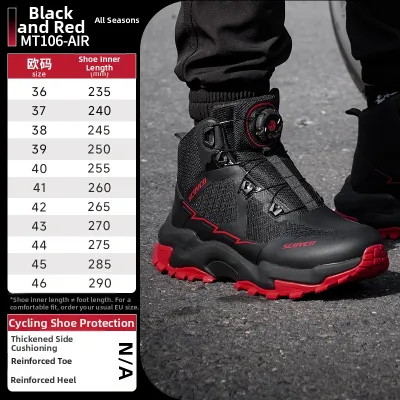
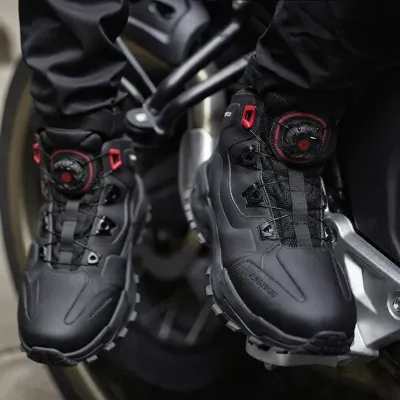
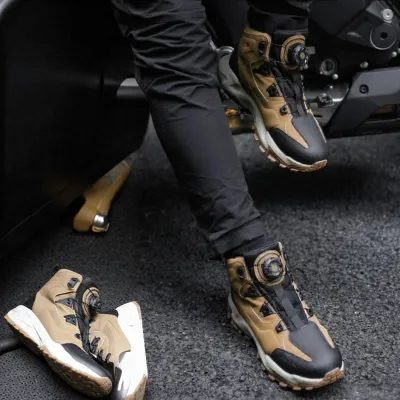
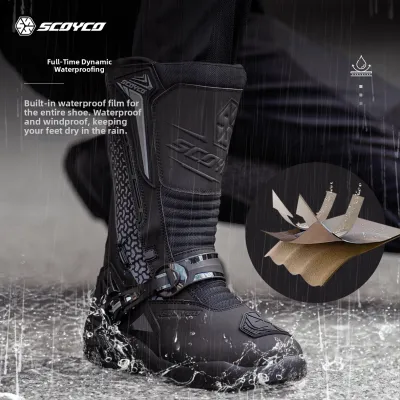
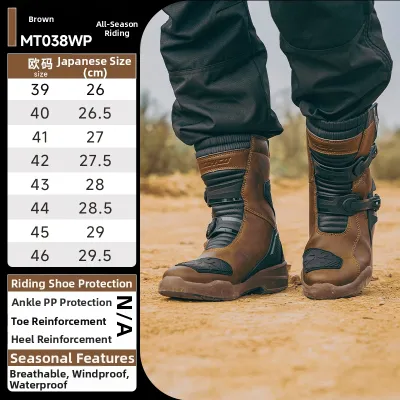
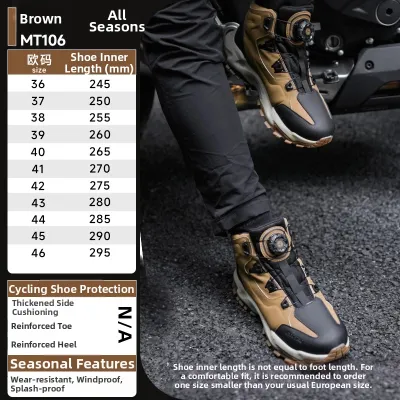
Prices are valid at publication and may change. Please refer to the product page for the latest price.
Before comparing specific models, riders must check the manufacturer’s documentation to identify the intended use case of the shoe. A lightweight, breathable shoe designed for hot-weather city commuting will naturally offer less structural support than a full-height touring boot. Expecting a budget-friendly urban shoe to perform like a track-certified boot in a high-speed scenario is an unfair comparison that compromises rider safety. Understanding these design boundaries ensures you select footwear aligned with your actual riding habits.
How to Verify Protection and Safety Certifications
The most reliable way to assess the protective capability of any riding shoe is to look for official safety certifications rather than relying on marketing descriptions. In the motorcycle gear industry, the European standard CE EN 13634 is the benchmark for protective footwear. This certification involves testing the shoe for height, abrasion resistance, impact cut resistance, and transverse rigidity (the shoe’s ability to resist being crushed side-to-side).

To verify this certification, locate the white label stitched inside the tongue or inner lining of the shoe. This label features a motorcycle rider icon alongside the standard code “EN 13634” and a series of four numbers arranged in a row, typically consisting of 1s or 2s. The first digit indicates the height of the boot (Level 1 for short shoes, Level 2 for taller boots). The second digit represents abrasion resistance, the third represents impact cut resistance, and the fourth represents transverse rigidity. A rating of “2” in any category indicates a higher level of performance under test conditions than a “1”.
Beyond the label, riders should physically inspect the key protection zones of the shoe. Press firmly on the ankle areas to check for the presence of molded ankle cups, which protect the delicate malleolus bones from impact. Squeeze the toe box and the heel counter; these areas should feel rigid and resist collapsing under hand pressure. Additionally, look for a dedicated shift pad over the toe area, which prevents the gear shifter from wearing through the upper material over time.
It is crucial to distinguish between basic structural reinforcement and certified impact-absorbing armor. Some budget shoes use simple plastic inserts that prevent the shoe from losing its shape but offer minimal energy absorption during a hard impact. Premium boots often integrate advanced viscoelastic armor or external bracing systems designed to prevent hyperextension of the ankle joint. If a riding shoe lacks a clear, verifiable CE certification label, or if the seller’s claims cannot be backed up by physical labels on the product, it is safest to halt the purchase and look for a fully certified alternative.
Evaluating Comfort, Fit, and Build Quality
Comfort and build quality directly influence how often a rider wears their gear, as poorly fitting or fragile shoes quickly become a distraction. The closure system is a critical starting point for evaluating both fit and safety. Traditional laces are common on casual-style riding shoes, but they present a snag hazard if they catch on footpegs or gear shifters. To mitigate this, look for shoes that feature a secure hook-and-loop strap to cover the tied laces. Premium shoes often utilize quick-lace systems, zipper closures with protective flaps, or micro-adjustable dial systems that distribute pressure evenly across the foot and eliminate loose laces entirely.
Sole rigidity is another area where budget and premium shoes diverge. A proper riding shoe must have a stiff sole to support the foot on the narrow footpegs, preventing foot fatigue during long rides and protecting the foot from crushing forces. However, the sole must retain enough flexibility at the ball of the foot to allow for natural walking. When evaluating a shoe, try to bend the sole; if it folds easily like a standard running shoe, it lacks the necessary transverse rigidity for motorcycle safety. The tread pattern should also be inspected to ensure it offers reliable grip on wet asphalt and oily surfaces, which is particularly important when stopping at intersections in unpredictable weather.
Examining the physical construction of the shoe reveals the manufacturer’s attention to detail. Inspect the stitching along high-stress areas, such as the heel and the outer edge of the foot. Double or triple stitching with heavy-duty nylon thread is standard for quality gear, whereas single or uneven stitching suggests a higher risk of seam failure during a slide. Check for excess glue residue around the sole joint, which can indicate rushed manufacturing, and feel the inner lining to ensure there are no rough seams or pressure points that could cause blisters.
Because foot shapes vary widely, comfort remains highly subjective. A shoe that fits one rider well may cause hot spots or pinching for another. When trying on riding shoes, always wear the specific socks you plan to use while riding, whether they are thin moisture-wicking socks for hot climates or thicker thermal socks for cooler weather. Walk around, sit in a riding position if possible, and ensure there is no heel slippage, which can compromise control of the bike’s foot levers.
Assessing the Price-to-Value Ratio for Your Riding Needs
Determining whether to invest in a premium brand like Alpinestars or opt for a budget-friendly alternative like Scoyco depends on your riding environment, budget, and risk tolerance. Budget-friendly riding shoes, which often cost under S$150, represent an excellent value proposition for daily urban commuters. If your typical ride involves navigating city traffic at moderate speeds, prioritizing walking comfort at your destination, and you have verified that the shoe carries a basic CE safety certification, a budget option can provide adequate protection without breaking the bank.
Conversely, premium riding boots, which frequently exceed S$300, are highly recommended for riders engaging in high-speed highway travel, track days, or long-distance touring. The higher price tag reflects advanced engineering, such as integrated ankle torsion control systems, premium waterproof membranes, and advanced impact-absorbing materials. If you ride in challenging weather conditions or at sustained high speeds, the enhanced protection and durability of a premium boot are well worth the investment.
Neither option is suitable if the shoe compromises on essential safety features. A cheap shoe that lacks certified ankle protection, heel reinforcement, or a crush-resistant sole is not a bargain; it is a safety hazard. Similarly, a premium boot that does not fit your foot shape correctly will cause discomfort, distracting you from the road and potentially leading to riding errors.
If you are purchasing riding shoes online through an ecommerce platform or online marketplace without the opportunity to try them on first, prioritize sellers with flexible return policies. Verify the sizing charts carefully, as European and Asian sizing standards can differ significantly. Before your first ride, inspect the physical shoe to confirm the presence of the CE certification label and check that all seams, closures, and protective inserts are intact and functioning as intended.
Frequently Asked Questions (FAQ)
Can I use regular sneakers instead of dedicated riding shoes?
Standard casual sneakers are not designed to withstand the unique forces of a motorcycle accident. They lack the necessary abrasion resistance, meaning the canvas or thin leather can wear through in a fraction of a second during a slide. Furthermore, regular sneakers offer no structural support to prevent the ankle from twisting or the foot from being crushed under the weight of the motorcycle. Dedicated riding shoes, even budget-friendly certified options, feature reinforced soles, ankle cups, and abrasion-resistant materials specifically engineered to protect your feet in a crash.
How should riding shoes fit compared to regular casual shoes?
Riding shoes should fit snugly but comfortably, with less internal movement than you might expect from a standard running shoe. A snug fit ensures that your foot does not slide around inside the shoe, which is critical for maintaining precise control over the gear shifter and rear brake pedal. When trying them on, ensure your toes have enough room to wiggle slightly, but your heel should not lift when walking. Always account for the thickness of your riding socks, and avoid shoes that pinch or restrict blood circulation, as this can lead to numbness during longer rides.
Community discussion
Share your experience or ask a question. Comments are reviewed before publication.