
Choosing the right bicycle rack for your car depends on your vehicle’s physical structure, the weight of your bicycles, and how often you need to access your boot. While roof-mounted racks offer excellent stability and keep your rear view clear, trunk-mounted racks provide a budget-friendly, removable option that does not require overhead lifting. Finding the ideal match requires evaluating your car’s specific mounting points, your physical comfort when loading heavy gear, and the typical driving environments you encounter.
Vehicle Compatibility and Installation Requirements
Before purchasing any bicycle rack, you must verify what your vehicle’s structure can physically support. Roof-mounted systems require a solid foundation, which typically means your car must have factory-installed roof rails, fixed mounting points, or compatible bare-roof door clip systems. You also need to check for potential interference with panoramic sunroofs, shark-fin antennas, and the natural curvature of your roofline, as these features can obstruct the installation of crossbars. Some panoramic glass roofs cannot support any weight or clamp pressure, making a roof rack completely unsuitable.
Trunk-mounted racks, on the other hand, rely on a system of adjustable straps, padded hooks, and tension to secure themselves to the edges of your boot lid or tailgate. This design means they are highly sensitive to the shape and materials of your vehicle’s rear end. Plastic spoilers, fragile glass edges, and rear windscreen wipers often present significant compatibility challenges, as the weight of the rack and bikes can crack glass or deform plastic trim. Additionally, the metal hooks can scratch your car’s paintwork if the mounting surfaces are not perfectly clean before installation.
Products mentioned in this guide
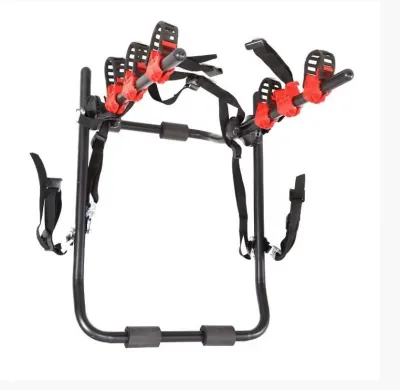

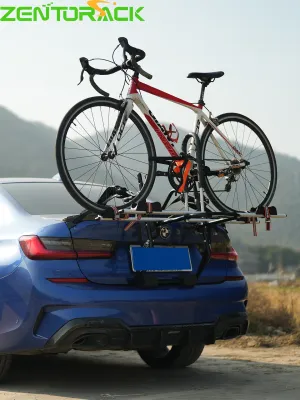
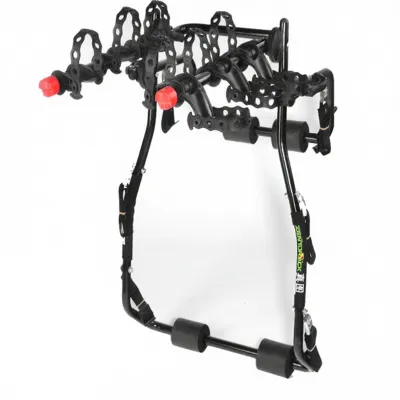
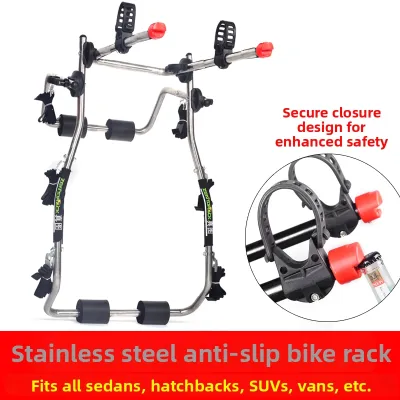
Prices are valid at publication and may change. Please refer to the product page for the latest price.
To prevent costly structural damage to your vehicle, never assume a rack is compatible based on vehicle category alone. Always consult your vehicle owner’s manual to verify the maximum roof load limit or boot lid weight capacity. Additionally, cross-reference your exact vehicle make, model, and year with the rack manufacturer’s official fit guide before making a purchase. This step is crucial because even minor trim differences between model years can affect how a rack fits.
Loading Ease and Daily Accessibility
The physical effort required to load and unload your bicycles is a major factor in how often you will actually use your rack. Roof racks require you to lift the entire weight of your bicycle overhead to secure it into the mounting tray. This task can be highly challenging for shorter users or when handling heavy bicycles, such as modern electric bikes, which often exceed the safe lifting capacity for a single person at that height. Repeatedly lifting a heavy bike overhead also increases the risk of accidentally dropping it onto your car’s roof or side panels.

In contrast, trunk-mounted racks hold your bicycles at chest or waist height, making the loading process much more manageable. However, this rear-mounting position introduces a different convenience trade-off by blocking access to your boot. Opening the tailgate with a trunk rack installed is usually difficult or entirely restricted, often requiring you to remove the bicycles completely just to retrieve items from your luggage compartment. This can be highly inconvenient during road trips or quick stops where you need fast access to your gear.
For drivers in Singapore, overhead clearance is another critical daily consideration. Mounting bicycles on your roof significantly increases the overall height of your vehicle, which can pose a severe risk when entering multi-storey car parks (MSCPs), basement parking lots, or drive-through lanes. If you frequently park in these restricted-height environments, a rear-mounted option may save you from accidental overhead collisions that can damage both your bicycles and the building’s infrastructure.
Bike Capacity, Security, and Transport Safety
When planning to transport multiple bicycles, the structural limits of each rack style dictate your carrying capacity. Roof-mounted systems are highly modular, allowing you to install multiple individual bike trays across the width of your crossbars, provided you stay within the vehicle’s roof weight limit. Trunk-mounted racks are generally limited to carrying two or three bicycles, as the entire load is supported by the tension of the straps and the sheet metal of your boot lid. Exceeding these limits can lead to bent boot panels or warped hinges.
Security is another area where these two styles diverge significantly. Many roof racks feature integrated locking cylinders that lock the rack to your crossbars and the bicycle frame to the rack itself, offering robust theft deterrence. Trunk racks are inherently more vulnerable because their mounting straps can be easily cut with basic tools; protecting your gear on a trunk rack usually requires threading supplementary cable locks through your vehicle’s tow eye or chassis points, which adds extra steps to your routine.
Transit stability also requires different maintenance habits depending on your choice. Trunk-mounted racks rely on strap tension, which can stretch or loosen during a journey, requiring you to stop and tighten them periodically. Roof racks utilize rigid metal clamps, wheel straps, or fork-mount skewers that provide a highly stable connection, though you must still regularly inspect the mounting hardware to ensure no bolts have vibrated loose over time.
Aerodynamics, Fuel Efficiency, and Noise
How a rack interacts with the airflow around your vehicle affects both your driving comfort and your running costs. Roof-mounted racks and upright bicycles stand directly in the path of oncoming wind, which significantly increases the frontal surface area and aerodynamic drag of your car. This added resistance can noticeably lower your fuel efficiency, especially during highway driving. Over long distances, this extra fuel consumption can add up to a substantial cost.
This increased wind resistance also translates directly into cabin noise. Even when empty, roof bars and bike trays can generate a persistent whistling or humming sound at higher speeds, which some drivers find distracting. Trunk-mounted racks position your bicycles in the aerodynamic slipstream behind your vehicle, resulting in less wind resistance and a quieter cabin experience. This makes rear racks a more appealing option for those who value a quiet ride.
However, placing bicycles at the rear of your vehicle introduces visibility challenges. A fully loaded trunk rack will partially or completely obstruct your rearview mirror and backup camera, making parking and reversing more difficult. When using a rear rack, you must rely heavily on your side mirrors and remain highly aware of the extended length of your vehicle, particularly when maneuvering in tight spaces.
Decision Framework: Choose Roof or Trunk?
To make the right choice for your vehicle and lifestyle, consider how your specific driving habits and physical needs align with each system’s strengths.
Choose a roof-mounted rack if:
- Your vehicle is already equipped with sturdy roof rails or fixed mounting points.
- You require frequent, unobstructed access to your boot space during trips.
- You transport lightweight road or cross-country bicycles.
- You want a semi-permanent installation that you can leave on the car.
Choose a trunk-mounted rack if:
- Your vehicle lacks roof rails and you prefer not to install permanent crossbars.
- You want a highly portable, removable rack that can be stored in your home when not in use.
- You drive a sedan or hatchback without a plastic rear spoiler or fragile glass edges.
- You prefer lifting bicycles to waist height rather than overhead.
Before finalizing your decision, always verify your specific equipment limits. If you own a heavy e-bike, check the manufacturer’s weight specifications, as many standard racks cannot support them. If your vehicle features a panoramic sunroof or an active rear spoiler, consult your vehicle manufacturer to ensure these components will not be damaged by the installation of your chosen rack style.
Frequently Asked Questions (FAQ)
Can I use a trunk-mounted rack on a car with a rear spoiler?
Most rack manufacturers strongly advise against installing trunk-mounted racks on vehicles equipped with plastic or glass rear spoilers. The straps and hooks of a trunk rack exert significant downward and inward pressure, which can easily crack, deform, or detach fragile cosmetic spoilers. If your vehicle has a spoiler, you should consult the rack’s specific vehicle fit guide or consider alternative options like roof-mounted racks or towbar-mounted systems.
Do I need to remove the front wheel for a roof-mounted rack?
Whether you need to remove the front wheel depends entirely on the style of roof rack you select. Fork-mount roof racks require you to remove the front wheel and secure the front fork directly into a locking skewer, which offers excellent stability and a lower profile but requires you to store the dirty wheel inside your boot. Wheel-on roof racks allow you to keep both wheels attached by securing the bicycle via the frame or front wheel hook, offering faster loading at the expense of a slightly taller profile and wider footprint on your crossbars.
Community discussion
Share your experience or ask a question. Comments are reviewed before publication.