
When upgrading your car audio system, navigating the technical specifications on product boxes can feel overwhelming. Among the various numbers displayed, RMS (Root Mean Square) is the single most critical metric for evaluating performance, safety, and sound quality. Unlike peak power, which only indicates short-term limits, RMS represents the actual continuous power your components can handle or deliver during daily use. Whether you are planning a modest S$300 speaker replacement or a complete multi-amplifier overhaul, understanding how to read these ratings allows you to pair amplifiers and speakers correctly, ensuring your investment delivers clean, reliable audio on every drive.
Choosing car audio gear based on the wrong power specifications often leads to disappointing sound quality, distorted music, or even permanent hardware damage. By focusing on continuous power rather than maximum burst ratings, you can build a balanced system that performs consistently without straining your vehicle’s electrical system.
Understanding RMS Power: The True Measure of Continuous Performance
RMS, or Root Mean Square, is a mathematical term used to express the continuous power output of an amplifier or the continuous power handling capability of a speaker. In practical terms, RMS measures the average power an audio component can sustain over extended periods without overheating or distorting. Because music is dynamic, with constant shifts in volume and frequency, your system needs a stable foundation of continuous power to reproduce these sounds accurately.
Products mentioned in this guide
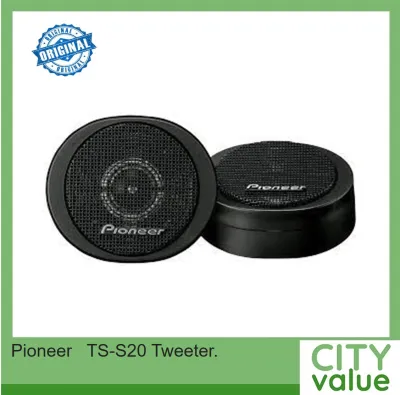

Prices are valid at publication and may change. Please refer to the product page for the latest price.
Continuous power ratings directly reflect real-world listening conditions. When you are driving and playing your favorite playlist for an hour, your speakers are constantly drawing power. The RMS rating tells you exactly how much power the speaker can safely manage during this sustained playback. For amplifiers, the RMS rating indicates the clean, continuous electrical wattage the unit can deliver to your speakers without clipping the audio signal.
To find reliable RMS ratings, look past the bold, colorful text on the front of product packaging and turn to the detailed specification sheet. Reputable manufacturers list the RMS power clearly, often referencing industry standards such as CTA-2006. This standard ensures that the power ratings are verified through consistent, independent testing methods, allowing you to make accurate comparisons between different brands.
Why Peak Power Ratings Can Be Misleading
Peak power, sometimes labeled as “maximum power,” refers to the absolute maximum amount of energy a speaker or amplifier can handle or produce in an extremely short burst, often lasting only a fraction of a second. This metric does not represent sustained performance. Instead, it indicates a threshold of physical survival under sudden, extreme electrical spikes before catastrophic thermal or mechanical failure occurs.

Relying on peak power ratings for your system design is a common marketing trap. Because peak numbers are mathematically much higher than RMS numbers, manufacturers often print them in large, prominent fonts on product boxes to attract buyers. However, these inflated figures do not reflect actual listening experiences. A speaker rated at “1000 Watts Peak” might only have an RMS rating of 50 Watts, meaning it cannot run safely at high volumes for more than a brief moment.
Designing a car audio upgrade around peak power ratings almost always leads to mismatched system expectations. If you pair a high-peak amplifier with low-RMS speakers, you risk sending too much continuous energy to the speakers, causing the voice coils to overheat and burn out. To build a reliable system, ignore the peak power numbers entirely and focus solely on matching the continuous RMS capabilities of your components.
How to Match RMS Ratings Between Amplifiers and Speakers
Safely pairing your car audio components requires matching the RMS output of your amplifier to the RMS power handling of your speakers. As a general guideline, your amplifier should be capable of delivering an RMS output that closely matches or slightly exceeds the speaker’s recommended RMS power range. This ensures the amplifier has enough headroom to deliver clean, undistorted signals during dynamic musical peaks.
Underpowering a speaker is just as dangerous as overpowering it. When an amplifier is too weak to drive a speaker to the desired volume, users often turn up the gain control too high. This forces the amplifier into a state called clipping, where the tops and bottoms of the audio waveforms are cut off, creating a highly distorted square wave. Clipping generates excessive heat that can rapidly destroy speaker voice coils, particularly delicate tweeters. Overpowering, on the other hand, can cause physical damage if the speaker cone is forced to move beyond its mechanical limits.
Alongside RMS ratings, you must check the electrical impedance, measured in ohms, because an amplifier’s power output changes depending on the resistance load. For example, an amplifier might output 100 Watts RMS at 4 ohms, but 150 Watts RMS at 2 ohms. Always verify that your speakers’ impedance matches the specific impedance load at which your amplifier produces its target RMS power. Because electrical modifications can impact your vehicle’s alternator and battery, always consult your vehicle’s original manual and the audio equipment documentation to ensure your electrical system can support the upgrade.
Practical Evaluation Checklist for Your Car Audio Upgrade
To ensure a successful and safe installation, use this structured checklist when comparing and selecting your new car audio equipment:
- Verify Standardized Ratings: Prioritize products that display CTA-2006 or CEA-2006 compliance labels on their specification sheets. Avoid any products that only list "Max" or "Peak" power without clearly stating the continuous RMS wattage.
- Check Impedance Compatibility: Ensure the nominal impedance of your speakers (typically 2 ohms or 4 ohms) matches the supported output impedance of your amplifier at your desired RMS power level.
- Review Installation Requirements: Read the manufacturer manuals for both the amplifier and speakers to identify specific wiring gauge requirements, fuse sizes, and cooling space recommendations. Amplifiers generate heat and require adequate ventilation to prevent thermal shutdown.
- Assess Vehicle Electrical Limits: Determine if your vehicle's factory alternator and battery can handle the additional current draw of a high-power amplifier. High-RMS systems may require upgraded power cables or a dedicated capacitor.
- Consult a Professional: If you encounter conflicting specifications, complex multi-channel wiring configurations, or are unsure about modifying your vehicle's factory electrical system, stop and consult a qualified car audio professional. Professional installation ensures your system is wired safely, complies with local vehicle regulations, and preserves your vehicle's warranty.
Frequently Asked Questions (FAQ)
Does a higher RMS rating always mean louder sound?
No, a higher RMS rating does not automatically guarantee a louder audio system. While RMS power indicates how much energy a speaker can handle, the actual volume output is heavily influenced by speaker sensitivity, which is measured in decibels (dB). Sensitivity represents how efficiently a speaker converts electrical energy into acoustic sound.
For example, a highly efficient speaker with a sensitivity rating of 92 dB requires much less power to reach a specific volume than an inefficient speaker rated at 86 dB. A high-sensitivity speaker paired with a modest RMS amplifier can easily play louder and cleaner than a low-sensitivity speaker paired with a high-RMS amplifier. When shopping, always consider both the RMS rating and the sensitivity specification to achieve your desired volume levels.
Can I use an amplifier with a higher RMS output than my speakers' rating?
Yes, you can safely use an amplifier with an RMS output that is higher than your speakers’ RMS rating, provided the system is tuned correctly. Having extra amplifier power, often referred to as headroom, allows the amplifier to run effortlessly without straining or distorting. To prevent damage to your speakers, you must carefully adjust the amplifier’s gain control so that the output signal does not clip or exceed the physical limits of the speakers.
However, pushing an underpowered amplifier to its limits is far more dangerous, as the resulting signal clipping is the primary cause of speaker failure. If you are unfamiliar with using a multimeter or an oscilloscope to set amplifier gains safely, you should halt any DIY tuning. Seeking professional installation and calibration is the best way to protect your vehicle’s electronics and ensure your audio hardware performs reliably for years to come.
Community discussion
Share your experience or ask a question. Comments are reviewed before publication.