
Choosing the right water repellent for your windshield depends on how much time you want to spend on application, your budget, and how often you drive through heavy downpours. While Rain-X, traditional car wax, and glass-specific ceramic coatings all make water bead up and roll off, they do so using completely different chemical structures, preparation requirements, and lifespans. Selecting the wrong option can lead to frustrating wiper chatter, night-time glare, or a coating that fails after the first storm.
To maintain clear visibility during sudden tropical downpours or highway drives, you must understand how these surface treatments interact with your glass. Windshields are subjected to constant friction from wiper blades, road grit, and harsh washer fluids, meaning a treatment’s durability and bonding method are just as important as its initial water-beading performance.
Understanding How Each Water Repellent Works
To choose the best solution, it helps to look at how these products interact with glass on a microscopic level. Although glass feels perfectly smooth to the touch, its surface is actually full of microscopic peaks and valleys. When rainwater hits these imperfections, it flattens out and clings to the surface, creating a sheet of water that distorts your vision. Hydrophobic treatments work by filling in these microscopic valleys to create an ultra-smooth, low-energy surface that forces water to bead up and roll away.
Products mentioned in this guide
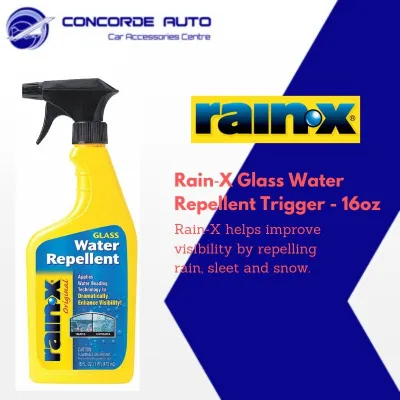
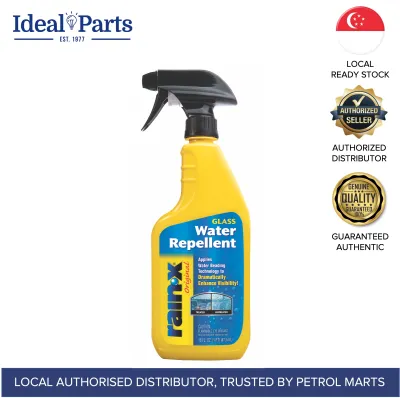
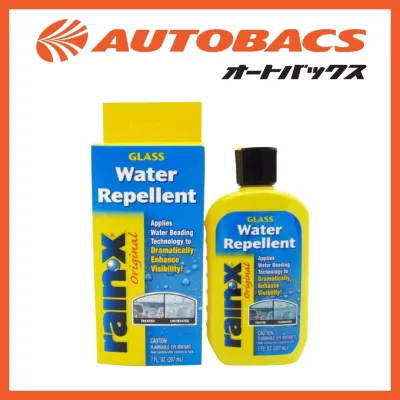
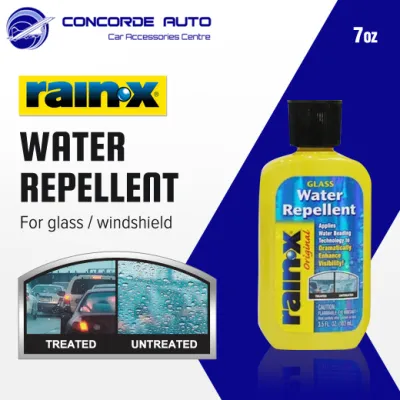
Prices are valid at publication and may change. Please refer to the product page for the latest price.
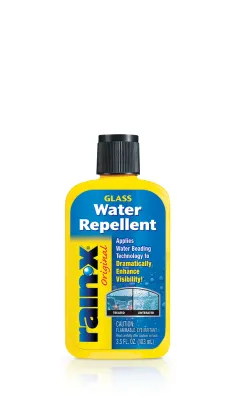
Rain-X and similar temporary water repellents are typically formulated with silicone polymers or fluoropolymers. When applied to clean glass, these polymers spread across the surface and physically adhere to it, forming a temporary hydrophobic barrier. Because these molecules do not form a permanent chemical bond with the glass, they are highly susceptible to being rubbed off by wiper blades, degraded by UV rays, or stripped away by strong windshield washer fluids.
Traditional car wax, whether made from natural carnauba or synthetic polymers, is primarily engineered to protect automotive paint clear coats. Paint is highly porous compared to glass, and car wax is formulated to fill those paint pores and bond with the painted surface. When applied to glass, wax sits on top of the surface as a physical layer rather than bonding with it. While it will successfully bead water for a short period, the wax layer is easily smeared by the mechanical action of wiper blades, which can lead to a hazy film.
Glass-specific ceramic coatings utilize silicon dioxide (SiO2) or metal oxide chemistry to create a semi-permanent barrier. Unlike wax or temporary silicone sprays, these coatings are engineered to form a covalent bond directly with the silica in the glass. This chemical reaction creates a cross-linked, ultra-thin glass layer that becomes an actual extension of the windshield itself. This covalent bond is highly resistant to abrasion, chemical cleaners, and environmental heat, allowing the treatment to remain effective for a much longer duration.
Comparing Water Beading, Clarity, and Labeled Durability
Water-beading performance is measured by the contact angle of water droplets on the treated surface. A higher contact angle means the water droplet forms a tighter, rounder bead, which requires less wind resistance to slide off the windshield. Glass-specific ceramic coatings generally deliver the highest contact angles, often allowing rain to sheet off the windshield at speeds as low as 50 to 60 km/h without requiring the wipers. Temporary silicone treatments also offer excellent initial contact angles, while car wax provides a lower contact angle, meaning you will need to drive at much higher speeds before wind resistance clears the water.

Optical clarity is a critical safety factor, especially during night driving under bright streetlights or in heavy traffic. Because ceramic coatings bond at a molecular level and cure into an optically clear, hard layer, they offer the best clarity and are the least likely to cause glare. Temporary silicone treatments provide good clarity when applied correctly, but if applied too thickly or unevenly, they can create a greasy film that catches headlight glare. Car wax is the most problematic for optical clarity; the oils and soft waxes can easily smear under the pressure of wiper blades, creating a temporary white haze or “ghosting” effect every time the wipers sweep across the glass.
Expected durability varies significantly across these three categories and is heavily influenced by your driving habits and local climate. Temporary silicone-based repellents typically state on their product labels that they last anywhere from a few weeks to a couple of months, requiring frequent reapplication to maintain peak performance. Car wax on glass rarely lasts longer than one or two heavy rainstorms or a few car washes before the friction of the wipers strips it away. Glass-specific ceramic coatings offer the longest labeled durability, with many manufacturers specifying performance lifespans ranging from six months to over a year, depending on the specific product formulation and how well the glass was prepared.
Application Effort and Ongoing Maintenance
Achieving a successful, long-lasting hydrophobic barrier requires proper surface preparation, which varies depending on the product you choose. For temporary treatments like Rain-X, a thorough wash with a dedicated glass cleaner is often sufficient, though using a clay bar beforehand will improve adhesion. Car wax requires similar basic cleaning. Ceramic coatings, however, demand meticulous preparation; any dirt, water spots, or old wax trapped under a ceramic coating will be sealed in and can prevent the chemical bonding process entirely. Preparing for a ceramic coating usually involves washing, claying, polishing the glass with a cerium oxide compound to strip old residues, and performing a final wipe with an isopropyl alcohol (IPA) solution.
Curing conditions also play a major role in how well these treatments perform. Temporary silicone sprays and car waxes require virtually no cure time; you simply apply the product, let it haze over for a few minutes, and buff it off with a clean microfiber towel. Ceramic coatings are highly sensitive to environmental conditions during application. They require a dry, dust-free environment and must cure undisturbed—often for 12 to 24 hours—before being exposed to rain, moisture, or windshield washer fluid. High humidity can cause ceramic coatings to flash or dry too quickly during application, making them difficult to buff off smoothly.
Ongoing maintenance is essential to prevent your chosen repellent from degrading prematurely. To protect the hydrophobic layer, avoid using aggressive ammonia-based glass cleaners or highly acidic washer fluids, which can strip away temporary silicone treatments and degrade waxes. For ceramic coatings, washing the windshield with a pH-neutral car shampoo is usually sufficient to restore its hydrophobic properties. Additionally, keeping your wiper blades clean by wiping the rubber edges with a damp microfiber cloth will prevent dirt buildup from scratching or wearing down the protective barrier.
Evaluating Upfront Costs and Long-Term Value
When comparing costs, you must weigh the initial purchase price against the long-term value and the time you are willing to invest in maintenance. Temporary silicone-based kits are highly budget-friendly, with bottles typically retailing for under S$15 to S$25 at local automotive shops. Because a single bottle contains enough product for dozens of applications, the cost per application is incredibly low. However, you must factor in the value of your time, as you will need to reapply the product every few weeks to maintain consistent water-beading performance.
Car wax represents a virtually zero-cost option if you already own a tub of synthetic wax or paint sealant for your vehicle’s bodywork. However, because wax degrades so quickly on glass and can cause safety issues like night-time glare and wiper smearing, using it on your windshield is rarely a good long-term value. The frequent need to strip and reapply the wax, combined with the potential cost of replacing prematurely worn wiper blades, quickly outweighs any initial savings.
Glass-specific ceramic coatings carry the highest upfront cost, with DIY application kits ranging from S$30 to S$80, and professional detailing services costing significantly more. Despite the higher initial investment, ceramic coatings often provide the best long-term value for drivers who want a “set-and-forget” solution. By lasting up to a year or more, a ceramic coating saves you the time and effort of bi-weekly applications, while also reducing wear on your wiper blades and maintaining superior optical clarity throughout its lifespan.
Decision Guide: Which Repellent Fits Your Driving Needs?
To determine which water repellent is right for your vehicle, consider your budget, your willingness to perform regular maintenance, and your typical driving environment.
- Choose Rain-X or Temporary Repellents if you want an affordable, quick, and easy DIY solution. This option is ideal for drivers who enjoy detailing their own cars on weekends and do not mind spending fifteen minutes every few weeks to reapply the treatment to keep their windshield shedding water effectively.
- Choose Car Wax only as a temporary, short-term measure on side or rear windows where wiper friction is not an issue. It is generally best to avoid applying traditional car wax to your front windshield due to the high risk of wiper smearing, hazing, and reduced visibility under night-time driving conditions.
- Choose a Glass Ceramic Coating if you want maximum durability, superior optical clarity, and are willing to invest the time or money into thorough surface preparation. This is the best choice for high-mileage drivers, those who frequently drive in heavy tropical rain, and anyone who wants a long-lasting solution that requires minimal upkeep.
Before applying any chemical treatment to your windshield, always consult your vehicle’s owner’s manual. Many modern vehicles feature advanced driver assistance systems (ADAS) with cameras and rain sensors mounted directly behind the upper windshield. Some manufacturers explicitly warn against applying hydrophobic coatings or glass sealants in front of these sensor zones, as any alteration to the glass’s optical properties or water-beading behavior can interfere with camera calibration and safety system performance.
Frequently Asked Questions (FAQ)
Can I apply a new repellent over an existing layer of wax or Rain-X?
No, you should not apply a new hydrophobic treatment directly over an old layer of wax, silicone, or sealant. For any water repellent to perform as intended, it must bond directly with the clean glass surface. Applying a new product over an old, degrading layer will prevent proper adhesion, leading to premature failure of the new coating. Before application, always strip the glass completely using a dedicated glass polish, clay bar, or an isopropyl alcohol wipe to ensure a bare, contaminant-free surface.
Do hydrophobic coatings cause wiper blade chatter or streaking?
Hydrophobic coatings can sometimes cause wiper blade chatter or streaking if the product is applied unevenly, if the glass was not thoroughly cleaned beforehand, or if your wiper blades are worn out. The hydrophobic barrier increases surface tension, which can cause dry wiper rubber to skip or drag across the glass. To prevent this, ensure the coating is buffed completely flat during application, clean your wiper blades regularly, and replace old, hardened wiper blades with high-quality silicone or graphite-coated blades that glide smoothly over treated glass.
Are these water repellents safe for use on side mirrors and rear glass?
Yes, most hydrophobic glass treatments are safe and highly effective for use on side windows, rear glass, and side mirrors. In fact, because side mirrors and side windows do not benefit from the direct wind flow that clears a windshield, highly hydrophobic coatings are excellent for preventing water droplets from pooling and blocking your view of traffic. However, always check the product label to ensure compatibility, and avoid applying coatings over integrated blind-spot camera lenses or specialized exterior sensors unless the manufacturer explicitly states it is safe to do so.

Community discussion
Share your experience or ask a question. Comments are reviewed before publication.