
Pristine car perfume longevity in Singapore’s hot and humid weather is highly variable, depending directly on where you park, how often you drive, and the specific product format you choose. While manufacturer packaging often suggests a standard lifespan under controlled conditions, the intense tropical heat of Singapore—where cabin temperatures can easily exceed 60°C when parked in the open—significantly accelerates the evaporation of volatile fragrance oils.
To make an informed purchase, you must evaluate how these environmental factors interact with the perfume’s design. Understanding the mechanics of heat-driven evaporation allows you to set realistic expectations and implement simple adjustments to maximize your investment. By analyzing the physical format, placement, and exposure of your car freshener, you can maintain a pleasant cabin atmosphere without premature depletion.
Factors Affecting Fragrance Longevity in Tropical Climates
Singapore’s equatorial climate presents a unique challenge for any automotive air freshener. When a vehicle is parked under direct sunlight, the greenhouse effect rapidly raises the interior temperature. This extreme heat increases the kinetic energy of the fragrance molecules, causing the volatile essential oils or synthetic compounds in Pristine car perfumes to evaporate at an accelerated rate compared to temperate climates.
Products mentioned in this guide

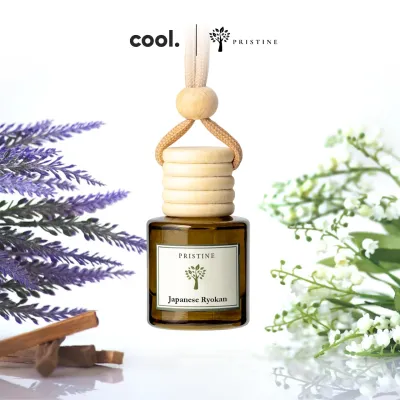



Prices are valid at publication and may change. Please refer to the product page for the latest price.
The physical format of the perfume plays a critical role in how it responds to these temperature spikes. Liquid-based diffusers and vent clips rely on steady evaporation, which can turn into rapid boiling or excessive vapor release when exposed to high heat. Gel and solid formats, while generally more stable, can experience surface hardening or accelerated sublimation, which initially spikes scent intensity but rapidly depletes the remaining fragrance reservoir.
Humidity levels also influence how we perceive and experience these scents. High relative humidity in the air can slow down the evaporation of water-based carriers, but it can also alter the diffusion of oil-based fragrances. When the air is saturated with moisture, the scent molecules may struggle to disperse evenly, leading to a heavy, concentrated aroma near the source rather than a well-distributed cabin fragrance.
Furthermore, the frequent transition between a hot, parked cabin and an air-conditioned environment creates rapid temperature fluctuations. When you turn on the air conditioning, the sudden drop in temperature and humidity temporarily slows down evaporation. However, the high airflow from the vents forces more air across the perfume medium, mechanically stripping away the scent molecules and shortening the overall lifespan of vent-mounted options.
How to Estimate the Lifespan Before Purchasing
Before purchasing a Pristine car perfume, it is essential to look beyond the headline longevity claims on the packaging. Manufacturers typically test their products under standardized laboratory conditions, often around 20°C to 25°C with moderate humidity. In Singapore’s climate, you should treat these printed estimates as a maximum potential lifespan under ideal conditions, such as parking exclusively in sheltered basement carparks.

To estimate a more realistic duration, examine the structural design of the specific Pristine product. Look for adjustable diffusion mechanisms, such as vents, sliders, or rotatable caps, which allow you to restrict airflow and control the release rate. A closed or partially closed setting during peak heat hours can significantly preserve the fragrance oil, preventing it from evaporating uselessly while the vehicle is unoccupied.
Additionally, verify the ingredient base and carrier material specified on the product label. High-quality synthetic oils and natural extracts behave differently under heat; some formulations include stabilizing agents designed to resist thermal breakdown. Checking the manufacturer’s documentation or product packaging for temperature tolerance ratings can help you identify formats engineered to withstand tropical conditions without leaking or degrading.
Signs It Is Time to Replace Your Car Perfume
Recognizing when your car perfume has reached the end of its functional life involves both sensory and physical checks. The most obvious indicator is a significant drop in scent throw. If you no longer notice the fragrance when first entering the vehicle after it has been parked, or if the scent fails to disperse even with the air conditioning running, the volatile compounds have likely fully evaporated.
Physical degradation is another clear sign that replacement is necessary. For liquid diffusers, look for extreme discoloration, cloudiness, or a thick, viscous residue at the bottom of the container, which indicates that the lighter fragrance carriers have evaporated, leaving behind heavy, non-volatile base elements. For gel-based or solid air fresheners, severe shrinkage, cracking, or a dried-out, shriveled appearance means the active medium can no longer release scent.
In some cases, extreme heat can cause chemical degradation of the fragrance oils, leading to the development of unpleasant off-odors or sour notes. If the perfume begins to smell rancid, metallic, or distinctly different from its original profile, it is crucial to remove it immediately. Continuing to use a degraded perfume can irritate the respiratory tract and leave a persistent, undesirable odor embedded in your car’s fabric upholstery.
Practical Tips to Extend Fragrance Longevity
Strategic placement is the most effective way to protect your Pristine car perfume from premature depletion. Avoid mounting diffusers or placing gel pads directly on the dashboard or near the windshield, where solar radiation and heat buildup are most intense. Instead, consider placing them in lower, shaded areas of the cabin, such as under the seats, in door pockets, or inside the center console, where temperatures remain slightly lower.
If you use a vent-clip format, manage your air-conditioning settings to control the rate of diffusion. Directing the vent slats away from the perfume clip when the system is running at high speeds can prevent the airflow from stripping the fragrance too quickly. Additionally, closing the vehicle’s air vents entirely when parking in open-air carparks can help contain the scent and reduce evaporation while the car sits in the sun.
For multi-pack purchases or refills, proper storage is vital to preserving chemical integrity before use. Keep unused refills in their original, sealed packaging inside a cool, dark place, such as a household drawer or cabinet, away from direct sunlight and household appliances that generate heat. Never store spare car perfumes in the glove compartment or boot of your vehicle, as these enclosed spaces can reach extreme temperatures that degrade the oils before they are even opened.
Finally, always observe the safety boundaries associated with liquid and gel air fresheners. If a product leaks or melts due to extreme heat, the concentrated oils can cause permanent damage, bubbling, or discoloration to dashboard plastics, leather trim, and sensitive electronic sensors. Ensure all liquid diffusers are mounted securely in an upright position, and regularly inspect the mounting brackets or clips to verify they remain stable and leak-free.
Frequently Asked Questions (FAQ)
Does leaving the car parked in the sun ruin the perfume?
Yes, prolonged exposure to extreme heat in a sun-drenched, parked car can significantly degrade and shorten the lifespan of your perfume. The intense thermal energy accelerates the evaporation of the fragrance oils, sometimes causing the liquid to expand and leak from its container. If you must park in an open-air lot for extended periods, consider temporarily moving the perfume to a shaded glove box or placing a sunshade over your windshield to lower the cabin’s peak temperature.
Are solid car perfumes better than liquid ones for hot weather?
Solid and gel-based car perfumes generally offer better spill resistance and more controlled evaporation in hot climates compared to liquid diffusers, which are highly prone to rapid boiling and leakage under extreme heat. However, some solids and gels can melt or dry out quickly if exposed to direct sunlight on the dashboard. To ensure compatibility, check the manufacturer’s temperature guidelines and opt for solid formats placed in shaded, low-heat zones of your vehicle.
Community discussion
Share your experience or ask a question. Comments are reviewed before publication.