
For a new rider, choosing between premium and budget motorcycle shoes comes down to balancing certified safety, long-term durability, and your immediate gear budget. While premium brands often integrate advanced impact-absorption technologies and high-grade materials, budget alternatives can offer sufficient baseline protection provided they carry verified safety certifications. Investing more upfront typically yields better weatherproofing, superior comfort during long rides, and a longer overall lifespan, but a certified budget shoe is always infinitely safer than riding in standard casual footwear.
When starting your riding journey, your gear budget must stretch across a helmet, jacket, gloves, and pants, alongside footwear. Understanding where premium brands justify their higher price tags—and where budget options can safely fill the gap—allows you to make an informed decision that protects your feet without overextending your finances.
Core Differences Between Premium and Budget Motorcycle Shoes
The primary distinction between premium and budget motorcycle shoes lies in the quality of materials and the complexity of their construction. Premium manufacturers typically utilize full-grain leather, highly advanced synthetic microfibers, and proprietary wear-resistant textiles. These materials are selected for their natural abrasion resistance and ability to conform to the rider’s foot over time, offering a customized fit that maintains its structural integrity through years of exposure to heat, rain, and road grime.
Products mentioned in this guide
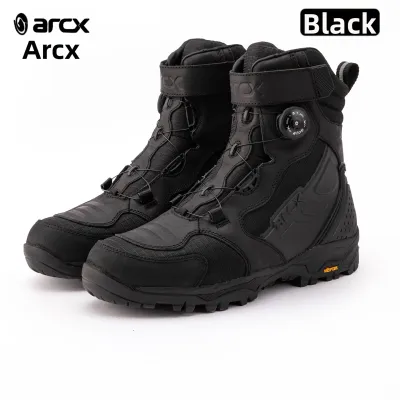
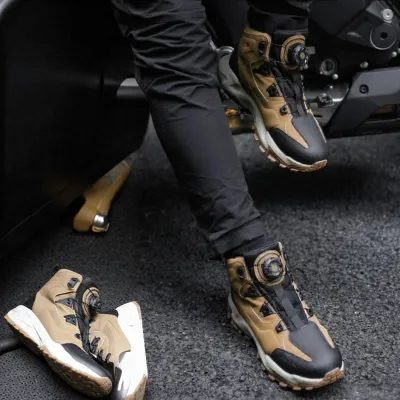
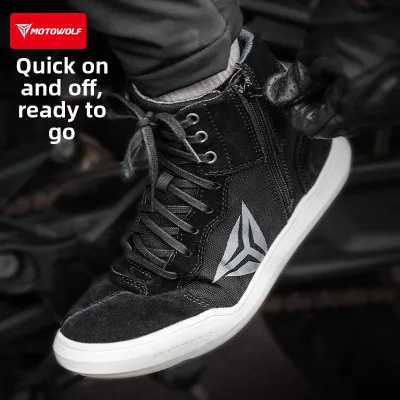
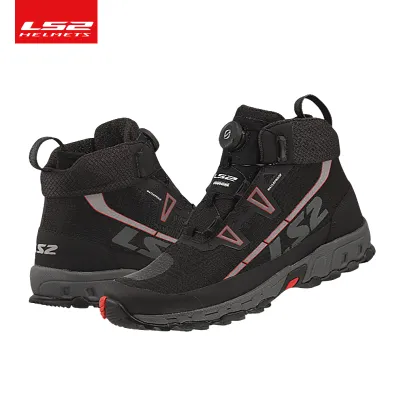
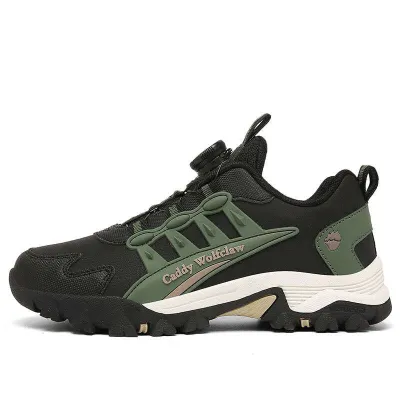
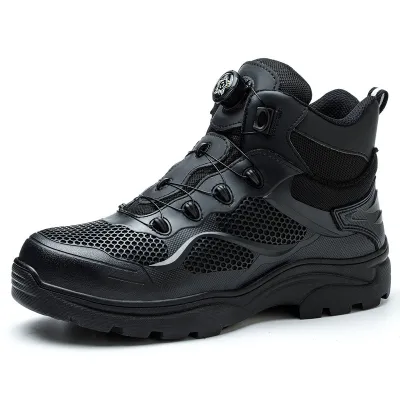
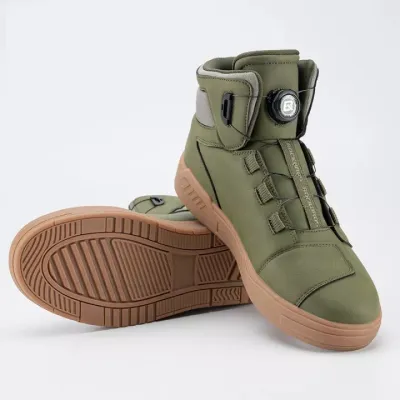
Prices are valid at publication and may change. Please refer to the product page for the latest price.
In contrast, budget motorcycle shoes often rely on synthetic leather blends, basic split leather, or standard nylon textiles. While these materials can be engineered to resist abrasion, they generally lack the breathability, flexibility, and long-term durability of high-end alternatives. Over months of regular use, lower-grade synthetics may crack, stretch excessively, or lose their shape, which can compromise both comfort and the precise fit required for safe bike control.
Stitching and construction methods also differ significantly across price points. Premium footwear frequently employs double or triple stitching with heavy-duty, abrasion-resistant threads, and the seams are often recessed to prevent them from tearing open during a slide. The soles of premium shoes are typically vulcanized or bonded using high-strength industrial adhesives and reinforced with internal shanks. Budget shoes may feature simpler single-stitch patterns and less robust sole bonding, which can lead to premature delamination under the stress of constant flexing and exposure to wet weather.
However, it is crucial to remember that brand reputation alone does not guarantee superior protection. A high price tag can sometimes reflect marketing costs or aesthetic styling rather than structural safety. New riders should always look past the brand logo and carefully inspect the product specification sheet to verify the exact materials used and the specific protective reinforcements integrated into the shoe’s design.
Safety and Protection Features to Verify
Regardless of whether you choose a premium or budget option, verifying the shoe’s safety credentials is the most critical step before making a purchase. The most reliable method to assess a motorcycle shoe’s protective capability is by checking for official CE (Conformité Européenne) certification. Under the European standard EN 13634, motorcycle footwear is subjected to rigorous testing for height, abrasion resistance, impact cut, and transverse rigidity.

To verify this certification, locate the official CE label, which is typically stitched onto the inside of the shoe’s tongue, printed on the inner lining, or included in the original packaging. This label features a pictogram of a motorcyclist alongside a series of four numbers, usually rated as either Level 1 (baseline protection) or Level 2 (enhanced protection). Understanding these ratings allows you to see exactly how well the shoe performed under standardized testing, independent of any marketing claims made by the manufacturer.
When physically inspecting any motorcycle shoe, there are several key protective elements you must look for. First, check for a reinforced toe box and a rigid heel counter; these areas should feel solid and resist collapsing when compressed firmly with your hands. Second, ensure there is dedicated ankle protection, often referred to as malleolus coverage, which consists of impact-absorbing inserts positioned over the bony protrusions on both sides of the ankle.
Finally, the sole must possess adequate transverse rigidity to prevent your foot from being crushed laterally if the motorcycle falls on top of it. You can test this by attempting to twist or bend the sole of the shoe; a proper motorcycle shoe should resist lateral twisting and remain stiff across its width, even if it allows some longitudinal flex for walking. Never assume a shoe is safe simply because it features a sporty, racing-inspired design or a rugged outdoor aesthetic. Without verified internal reinforcements and CE certification, a shoe cannot provide the necessary protection during an accident.
Comfort, Fit, and Daily Usability
Balancing on-bike protection with off-bike usability is a common challenge for new riders, especially those who plan to use their motorcycle for daily commuting or running errands. Highly protective riding boots often feature stiff soles and rigid ankle bracing, which are excellent for stabilizing your feet on the pegs and preventing hyperextension, but can make walking long distances highly uncomfortable. Conversely, casual-style motorcycle shoes offer greater flexibility and walking comfort, but naturally sacrifice some degree of ankle support and lateral rigidity.
Weather-specific features are another critical consideration, particularly in tropical climates like Singapore, where sudden downpours and high humidity are common. When evaluating shoes, check the product labels for specialized waterproof membranes or high-airflow ventilation panels. Waterproof linings are highly effective at keeping your feet dry during heavy rain, but they can trap heat and sweat on hot afternoons. If you prioritize breathability, look for shoes featuring perforated leather or mesh panels, keeping in mind that these will let water in quickly during a storm but will also dry out much faster.
Achieving the correct fit is essential for both safety and comfort. When trying on motorcycle shoes, always wear the specific socks you plan to use while riding, as thick athletic or thermal socks can significantly alter how the shoe fits. Ensure your toes have enough room to wiggle and do not press against the front of the toe box, especially when leaning forward into a riding stance.
Additionally, pay close attention to how the shoe interacts with your motorcycle’s controls. The toe box must be slim enough to slip easily under your gear shifter pad, and the shoe should feature a dedicated, wear-resistant shifter pad on the upper toe area to prevent the lever from wearing through the material. Walk around the store and simulate the foot movements required for shifting and braking to ensure the shoe does not pinch your instep or restrict your ankle movement excessively.
Cost vs. Value: Evaluating Your Investment
When planning your gear budget, understanding the typical price brackets helps put your investment into perspective. In the local market, budget-friendly motorcycle shoes generally range from S$100 to S$200. These options usually provide basic CE-certified protection and casual styling, making them highly accessible for beginners. Premium motorcycle shoes, on the other hand, typically start around S$250 and can exceed S$500, offering advanced materials, superior ergonomics, and specialized weatherproofing systems.
To evaluate the true value of your purchase, consider the expected longevity and cost-per-wear of the footwear. Premium shoes constructed from high-grade leather or advanced microfibers tend to withstand daily wear, gear shifter friction, and weather exposure much better than budget synthetics. If you ride daily, a premium pair of shoes that lasts for several years can ultimately prove more cost-effective than replacing a budget pair every twelve to eighteen months due to worn-out soles or torn seams.
Your typical riding scenarios should dictate where you position yourself on the price spectrum. If your riding consists primarily of high-speed highway commuting along major expressways, investing in premium shoes with robust ankle bracing and high-level CE ratings is highly justified due to the increased forces involved in high-speed incidents. However, if you are a casual weekend rider sticking to low-speed urban streets, a well-constructed, certified budget shoe can easily provide adequate protection while keeping your initial entry costs manageable.
Decision Framework: Which Type Should You Choose?
To help finalize your decision, use this structured framework to match your riding profile to the appropriate category of motorcycle footwear:
Choose Premium if:
- You commute daily or ride long distances frequently, requiring footwear that can withstand constant wear and tear.
- Your typical routes involve high-speed highway riding where maximum impact absorption and abrasion resistance are paramount.
- You require advanced, reliable weatherproofing to keep your feet dry during heavy tropical downpours without sacrificing breathability.
- You prioritize long-term durability and are willing to invest more upfront to avoid frequent replacements.
Choose Budget if:
- You are a casual or weekend rider who primarily covers short distances at moderate urban speeds.
- You have a strict initial budget and need to allocate more funds toward other essential gear, such as a high-quality helmet.
- You require a highly flexible shoe that allows you to walk comfortably around offices, campuses, or shopping centers without changing footwear.
- You prefer casual, sneaker-style aesthetics that blend in easily with everyday clothing.
Verify First if:
- The shoe does not display a clear, verifiable CE certification label on the tongue or inner lining.
- The sole feels soft enough to twist easily or lacks a slip-resistant tread pattern, which could cause your foot to slip on wet tarmac or oil spills.
- The fit feels overly restrictive, pinches your foot, or prevents you from operating your motorcycle's gear shifter and rear brake pedal smoothly.
Frequently Asked Questions (FAQ)
Can I use regular sneakers instead of budget motorcycle shoes?
No, regular sneakers should never be used as a substitute for motorcycle footwear. Standard athletic shoes lack the necessary abrasion resistance to withstand sliding on asphalt, and they offer zero protection against crushing forces if the motorcycle falls on your foot. Furthermore, standard sneakers do not feature ankle inserts to protect the malleolus, and their laces can easily untie or catch on the gear shifter or footpegs, creating a severe safety hazard while riding.
How do I clean and maintain my motorcycle shoes?
To prolong the lifespan of your motorcycle shoes, always refer to the manufacturer’s care label for specific instructions. For leather shoes, gently wipe away dirt with a damp cloth and apply a dedicated leather cleaner and conditioner to prevent cracking; never use harsh household detergents which can strip natural oils. For textile or mesh shoes, use a soft brush and mild soapy water to clean the surface. Always allow your shoes to dry naturally in a well-ventilated indoor area away from direct heat sources, as excessive heat can degrade the adhesives holding the sole together.
Community discussion
Share your experience or ask a question. Comments are reviewed before publication.