
Finding the right portable air compressor for your vehicle comes down to matching its technical capabilities with your tires’ physical requirements. To choose the most effective unit, you must look at two primary specifications: Pounds per Square Inch (PSI), which determines the maximum pressure the unit can deliver, and Cubic Feet per Minute (CFM), which dictates how quickly it can fill a tire. For most passenger cars, motorcycles, and bicycles, a compressor capable of delivering 30 to 40 PSI is sufficient, but the compressor’s maximum rating must be higher to overcome backpressure. Meanwhile, a CFM rating of 1.0 to 2.0 at 90 PSI ensures you are not left waiting in a hot multi-storey carpark for an hour just to top off a single flat tire.
Understanding PSI: Matching Compressor Output to Tire Requirements
Pounds per Square Inch, commonly abbreviated as PSI, is the standard unit of measurement for pressure in your tires. When shopping for a portable air compressor, you will frequently see a “Max PSI” rating prominently displayed on the packaging, often ranging from 100 to 150 PSI. However, this maximum rating is not the pressure you will actually pump into your tires; rather, it represents the absolute limit of pressure the compressor’s pump can generate before it can no longer push air.
To find your tire’s actual pressure requirements, you must consult your vehicle’s official documentation. For passenger cars, this is typically found on a placard pasted inside the driver’s side door jamb, or within the owner’s manual. For motorcycles and bicycles, the recommended cold inflation pressure is often printed directly on the tire sidewall. Most standard passenger cars require between 30 and 35 PSI, while heavy-duty vehicles or high-performance bicycles may require 80 to over 100 PSI.
Products mentioned in this guide
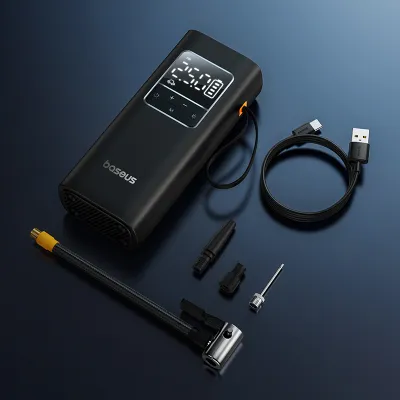
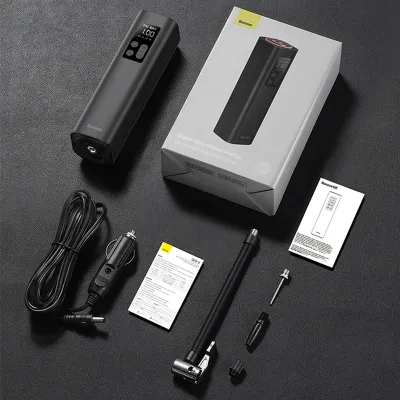
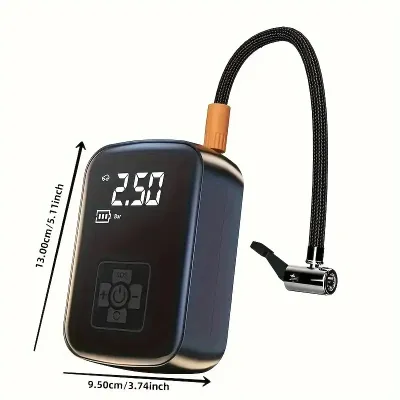
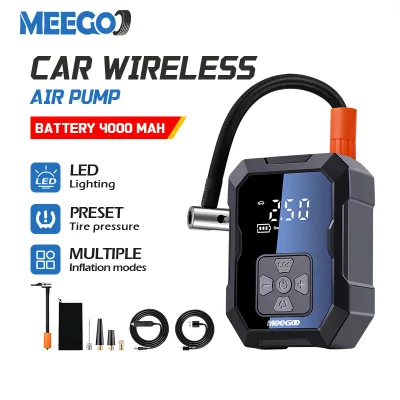
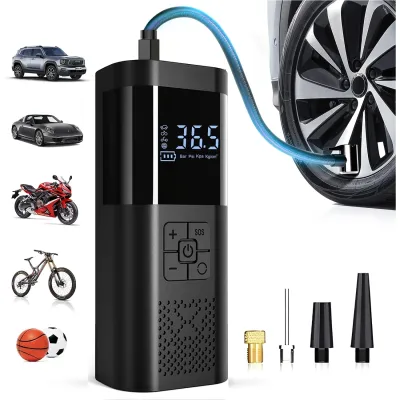
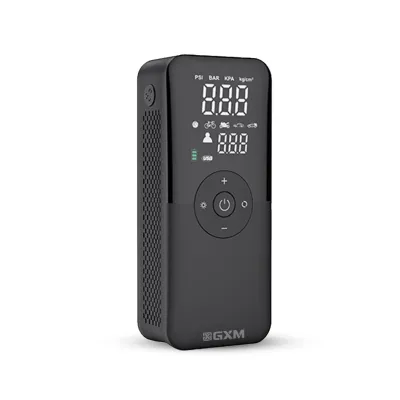
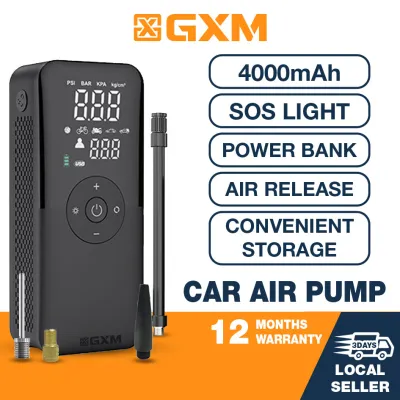
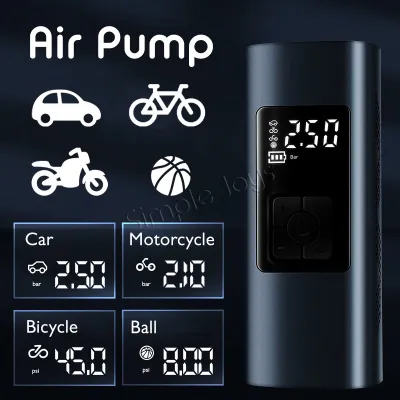
Prices are valid at publication and may change. Please refer to the product page for the latest price.
Always refer to your vehicle’s original manufacturer placard or the owner’s manual to find the exact recommended cold inflation pressure before operating any compressor. Operating a vehicle with over-inflated or under-inflated tires can severely impact handling, braking distance, and tire wear. Never exceed the maximum inflation pressure stamped on the tire sidewall itself, as this is not the recommended running pressure.
Your portable air compressor’s Max PSI must comfortably exceed your tire’s target pressure to overcome what is known as backpressure. As a tire fills, the air inside pushes back against the incoming flow from the compressor. If you attempt to inflate a tire to 40 PSI using a compressor rated for a maximum of exactly 40 PSI, the inflation process will stall completely as the pressures equalize. Selecting a unit with a Max PSI of at least 100 PSI ensures there is always enough force to overcome this resistance and complete the inflation safely.
Decoding CFM: How Airflow Determines Inflation Speed
While PSI determines whether a compressor can physically inflate a tire, Cubic Feet per Minute (CFM) determines how fast that inflation will happen. CFM measures the volume of air the compressor delivers to the tire every minute. In some regions, this may also be represented in Litres per minute (L/min). A higher CFM rating means more air is pushed into the tire per second, translating directly to shorter wait times.

The volume of your tires dictates how much CFM you actually need. For example, a bicycle tire holds a very small volume of air at high pressure, meaning a low-CFM compressor can fill it in seconds. Conversely, a large SUV or family sedan tire holds a massive volume of air at moderate pressure. If you use a low-airflow compressor on a large car tire, the process can take fifteen to twenty minutes per tire, which can cause the compressor’s motor to run hot.
When comparing CFM ratings on product labels, always look for the pressure at which the CFM is measured. Airflow is not constant; as pressure builds inside the tire, the compressor has to work harder, which causes the CFM to drop. A compressor might boast a high CFM “at 0 PSI” (free flow), but its performance “at 90 PSI” will be significantly lower. For efficient car tire inflation, look for a compressor that maintains a CFM rating of at least 1.0 to 1.5 at 90 PSI.
Tank Capacity vs. Tankless Designs: Choosing the Right Form Factor
Portable air compressors generally fall into two design categories: tankless (direct-drive) models and units equipped with a small air storage tank. Choosing between them depends on where you plan to store the unit and how frequently you expect to use it.
Tankless 12V compressors are highly popular for emergency roadside kits because of their compact size and lightweight design. These units do not store air; instead, the motor runs continuously to pump air directly into the tire hose. While highly portable and easy to tuck away in a car boot, they rely entirely on the continuous operation of their small electric motors, which can lead to rapid heat buildup during extended use.
Compressors with a small built-in tank (often ranging from 1 to 3 litres for portable models) store pressurized air before releasing it. This design provides a highly stable, high-volume burst of air, which reduces the frequency of the motor cycling on and off. If you perform regular maintenance on multiple family vehicles in a residential garage, a small tanked unit offers smoother operation and can even support light pneumatic tools, though it is significantly bulkier to transport.
Duty Cycle and Thermal Protection: Preventing Overheating
Because portable air compressors generate a substantial amount of friction and heat, understanding the “duty cycle” is critical to preventing permanent motor damage. The duty cycle is expressed as a percentage representing the amount of time a compressor can run continuously within a 10-minute window before it must be switched off to cool down.
For example, a compressor with a 30% duty cycle can run continuously for 3 minutes but must then rest for 7 minutes. A 100% duty cycle means the unit can run continuously without a cooling period, which is common in heavy-duty, professional-grade compressors. Always consult your specific product manual to verify these exact run-time limits, as running a low-duty-cycle compressor continuously to inflate multiple tires can melt internal seals.
To safeguard your investment, look for a portable compressor equipped with integrated thermal overload protection. This safety feature automatically shuts down the motor if internal temperatures exceed safe operating limits. This is especially important when working in warm tropical climates, where ambient temperatures can accelerate motor heating during sequential tire top-offs.
Quick Checklist for Selecting Your Portable Air Compressor
Before purchasing a portable air compressor from an online marketplace or local automotive retailer, use this checklist to verify that the specifications align with your vehicle’s needs:
- Verify Maximum PSI: Ensure the compressor's rated Max PSI is at least 20 to 30 PSI higher than the maximum cold inflation pressure listed on your vehicle's tire placard.
- Check CFM at Working Pressure: Look for a minimum of 1.0 CFM at 90 PSI for standard passenger cars, or higher if you are inflating large SUV tires.
- Confirm Power Source Compatibility: Decide between a 12V cigarette lighter plug (convenient but limited in power draw) and direct battery clamps (which draw more current and support higher CFM motors).
- Assess Hose and Cable Length: Ensure the combined length of the power cord and air hose can comfortably reach from the power source to all four wheels of your vehicle.
- Look for Safety Features: Prioritise units with automatic shutoff (which stops inflating when the target PSI is reached) and thermal overload protection.
Frequently Asked Questions (FAQ)
Can a low-CFM portable compressor inflate a completely flat car tire?
Yes, a low-CFM compressor can technically inflate a completely flat car tire, but it will take a significant amount of time to do so. Because a flat tire requires a large volume of air to reach its recommended pressure, a low-airflow unit must run continuously for an extended period. This poses a high risk of exceeding the compressor’s duty cycle, which can trigger the thermal shutdown feature or cause the motor to overheat and fail. If you must use a low-CFM unit in an emergency, monitor the run time closely and allow the unit to cool down every few minutes.
Do I need a compressor with a higher Max PSI than my tire's recommended pressure?
Yes, you should always choose a compressor with a Max PSI rating that is comfortably higher than your tire’s recommended cold inflation pressure. As the pressure inside your tire rises, it creates backpressure that resists the incoming air. If your compressor’s maximum capability is too close to your target pressure, the airflow will slow to a crawl, making the final few PSI extremely difficult to reach. A compressor with a higher Max PSI rating ensures efficient, steady airflow throughout the entire inflation process.
Community discussion
Share your experience or ask a question. Comments are reviewed before publication.