
When dealing with unsightly hard water stains on your car’s paintwork, understanding the fundamental difference between paint correction and paint protection is the key to restoring a flawless finish. Among the three common treatments—polishing, waxing, and ceramic coating—only car polish actually removes existing hard water stains. This is because polish contains fine abrasives that physically level the surrounding clear coat to erase the etched mineral patterns. In stark contrast, car wax and ceramic coatings are strictly protective barriers; they lack the abrasive properties required to eliminate defects and will permanently seal the mineral deposits beneath their cured layers if applied prematurely.
Diagnosing Hard Water Stains on Car Paint
To determine the correct restoration path, you must first assess the severity of the water spots on your vehicle’s paint. Run a clean, dry finger over the affected area to perform a basic tactile inspection. If you feel a raised ridge, the spot is likely a surface mineral deposit left behind by evaporated tap water or rain. If the surface feels completely smooth or slightly recessed, the minerals have already reacted with heat and sunlight, etching directly into the clear coat layer.
Before making a final evaluation, always perform a thorough decontamination wash. Wash the vehicle thoroughly to remove loose dirt, then apply dedicated iron and tar removers to clear away bonded road grime. This step ensures you are inspecting the actual water stains rather than superficial surface contaminants.
Products mentioned in this guide
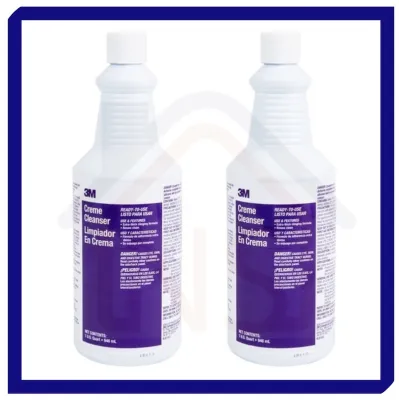
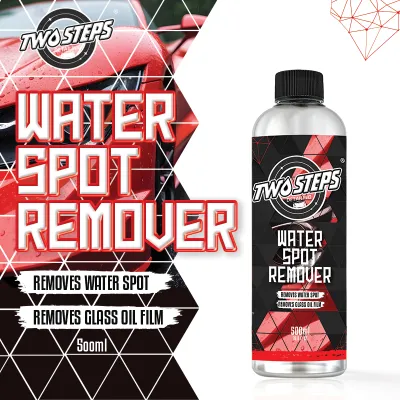
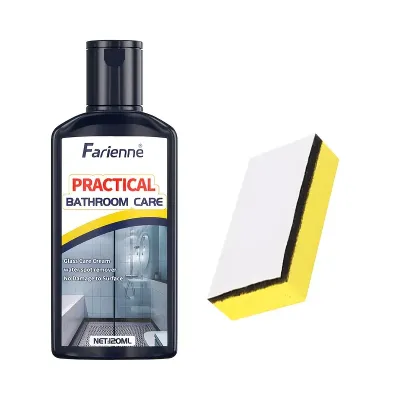
Prices are valid at publication and may change. Please refer to the product page for the latest price.
In tropical climates with intense sunlight and high humidity, such as Singapore, water spots can etch into the clear coat within a matter of hours. If the etching has penetrated deeply, creating visible craters that do not catch a fingernail but remain highly visible under direct lighting, standard hand polishing may not be sufficient to restore the finish.
Comparing Polish, Wax, and Ceramic Coating for Stain Removal
The golden rule of professional automotive detailing is to correct the paint first and protect it second. Attempting to bypass this sequence leads to disappointing results and wasted products. Understanding how each method interacts with mineral deposits and etched clear coats will help you avoid common detailing mistakes.

Car Polish: The Mechanical Remover
Car polish functions as a mechanical abrasive designed to level the paint surface. It contains microscopic particles suspended in a liquid base that, when worked over the paint with a microfiber applicator or a dual-action polishing machine, gently shave away a microscopic layer of the clear coat. By leveling the surrounding paint to the depth of the shallow etching, the polish physically erases the water stain.
To achieve safe and effective results, you must match the aggressiveness of the polish and the polishing pad to the severity of the etching. Always refer to the product label instructions to determine the cutting level of your chosen compound. It is best practice to start with the least aggressive combination—such as an ultra-fine finishing polish and a soft foam finishing pad—before stepping up to a medium-cut compound if the stains persist.
Keep in mind that your vehicle’s factory clear coat is extremely thin, often comparable to the thickness of a post-it note. Over-polishing or using highly aggressive compounds repeatedly can thin the clear coat to a dangerous level, leaving the underlying color coat vulnerable to UV damage and peeling.
Car Wax: The Temporary Cover-Up
Car wax, whether formulated from natural carnauba or synthetic polymers, is designed to fill microscopic imperfections and seal the paint surface. It provides a temporary, sacrificial barrier that enhances gloss and sheds water, but it possesses absolutely no abrasive qualities.
If you apply wax directly over hard water stains, the wax will simply fill the microscopic craters and seal the mineral deposits against the paint. This traps the minerals underneath a water-resistant layer, making them significantly harder to remove later and causing the paint to look cloudy or dull.
Wax must only be introduced at the very end of your detailing workflow. Once the paint has been thoroughly washed, decontaminated, and polished to a defect-free state, you can safely apply wax to lock in the gloss and protect the freshly leveled clear coat.
Ceramic Coating: The Long-Term Protector
Ceramic coatings utilize liquid silicon dioxide (SiO2) or similar chemical compounds that cure into a semi-permanent, glass-like layer over the paint. Because these coatings are highly transparent and cure to a hard finish, they act like a magnifying glass. Applying a ceramic coating over existing water spots will amplify the defects, making the stains look even more prominent and locking them in for years.
Consequently, a rigorous paint correction phase is a mandatory prerequisite before applying any ceramic coating. The paint must be completely free of water spots, swirls, and light scratches, followed by a thorough isopropyl alcohol (IPA) wipe-down to remove any polishing oils.
Once properly cured, the extreme hydrophobic nature of a ceramic coating helps prevent new hard water stains from forming. Water beads up and rolls off the surface easily, reducing the chance of standing water evaporating on the hot panels under the sun.
Decision Framework: Choosing the Right Approach
To safely restore your vehicle’s paint without causing unnecessary wear, follow a structured, condition-based decision framework.
Condition A (Light Surface Deposits): If the water spots are fresh and sit entirely on top of the clear coat, start with a dedicated chemical water spot remover. These products use mild acids to dissolve the mineral bonds without abrading the paint. If a chemical remover does not fully clear the spots, use an ultra-fine finishing polish on a soft foam pad to gently clean the surface.
Condition B (Moderate to Severe Etching): If the minerals have etched into the clear coat, creating physical depressions, chemical removers will not work. You must step up to a machine-applied medium-cut compound followed by a finishing polish. This two-step process cuts away the damaged clear coat and then restores the high-gloss clarity.
| Product Type | Primary Function | Removes Existing Stains? | Correct Application Order |
|---|---|---|---|
| Car Polish | Paint correction and defect removal | Yes (mechanically levels clear coat) | Step 2: After decontamination, before protection |
| Car Wax | Temporary gloss and sacrificial protection | No (fills and traps minerals) | Step 3: Final step after polishing (alternative to coating) |
| Ceramic Coating | Long-term hydrophobic protection | No (amplifies and seals defects) | Step 3: Final step after polishing and panel wipe |
The absolute rule of car detailing is to verify that the paint is completely defect-free before applying any protective layer. Inspect the panels under strong, direct lighting or a dedicated detailing light from multiple angles to ensure all water spots are gone before laying down your wax or coating.
Safety Limits and When to Stop DIY Correction
While DIY paint correction can be highly rewarding, it carries inherent risks. The most critical danger is burning through the clear coat, especially on sharp body lines, panel edges, and raised ridges where the paint is naturally thinner and the polishing pad exerts higher concentrated pressure. Keep your polishing machine moving constantly and avoid lingering on these sensitive areas.
Many DIY enthusiasts purchase inexpensive paint thickness gauges, but these entry-level tools typically measure the total thickness of the metal, primer, base coat, and clear coat combined. They cannot isolate the thickness of the clear coat alone, meaning you are still guessing how much clear coat you have left to work with.
Establish clear stop-conditions for your DIY project. If you encounter deep etching that remains visible after two moderate polishing passes, or if you are dealing with extensive water damage across the entire vehicle, stop immediately. Consulting a professional detailer who possesses professional-grade ultrasonic thickness gauges and rotary correction experience is the safest way to prevent irreversible paint damage.
Frequently Asked Questions (FAQ)
Can I use household vinegar to remove hard water stains from car paint?
While household white vinegar contains acetic acid which can dissolve mineral deposits, using it on automotive paint carries notable risks. Uncontrolled concentrations of household acids can degrade sensitive clear coats over time, dry out rubber window seals, and stain plastic trim pieces. Instead of relying on household pantry items, it is highly recommended to use automotive-specific, pH-balanced water spot removers. These commercial formulas are specifically engineered with surfactants and lubricants to safely dissolve mineral bonds on automotive surfaces without damaging adjacent trim or stripping underlying paint layers.
Will a clay bar remove hard water stains?
A detailing clay bar is designed for mechanical surface decontamination, meaning it pulls bonded contaminants like industrial fallout, tree sap, and overspray off the top of the paint. However, a clay bar cannot remove hard water stains that have etched into the clear coat, as it does not possess the abrasive leveling capabilities of a polish. Furthermore, using a clay bar can sometimes cause minor surface marring or micro-scratching. Therefore, you must always follow a clay bar treatment with a dedicated polish to refine the paint finish and level any remaining mineral etching before applying your final protective wax or coating.
Community discussion
Share your experience or ask a question. Comments are reviewed before publication.