
Water spots are a constant headache for vehicle owners, especially in tropical climates like Singapore, where sudden afternoon downpours are immediately followed by intense equatorial sunlight. This cycle creates the perfect environment for water spots to form. When rainwater or tap water evaporates rapidly on a hot car bonnet, it leaves behind stubborn mineral deposits. To address this issue, you must understand that car polish, wax, and ceramic coatings are not interchangeable; they represent entirely different stages of paint care.
Car polish acts as a corrective measure—a physical or chemical water spot remover designed to eliminate existing minerals and light damage. Conversely, car wax and ceramic coatings are strictly preventative shields. They do not remove existing spots; instead, they alter the paint’s surface energy to stop water from pooling and drying in place. To restore and protect your car, you must use a restorative product first to clear the surface, followed by a preventative barrier to secure the results.
Understanding Water Spots: Mineral Deposits vs. Paint Etching
To tackle these blemishes effectively, you must first diagnose the type of water spot on your vehicle’s paintwork. Type I water spots are superficial mineral deposits. When rain, tap water, or condensation evaporates from your car’s surface, it leaves behind dissolved calcium, magnesium, and silica. These minerals form a chalky, white ring on top of the clear coat. These deposits are highly visible on dark-coloured vehicles and can accumulate quickly if you regularly wash your car under direct sunlight or park near overhead concrete runoffs.
Products mentioned in this guide
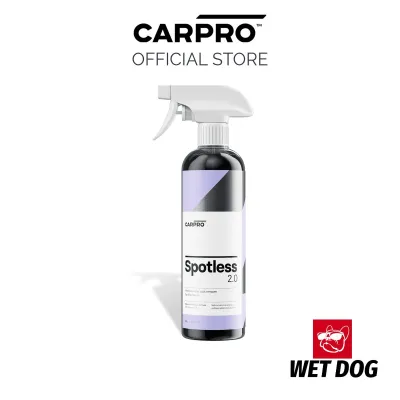
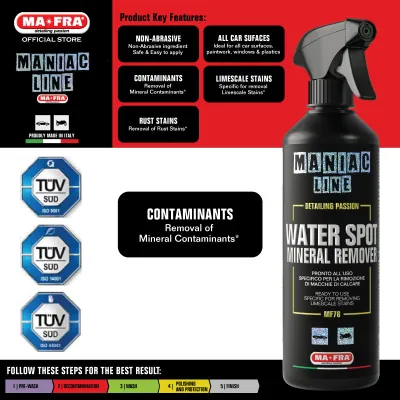
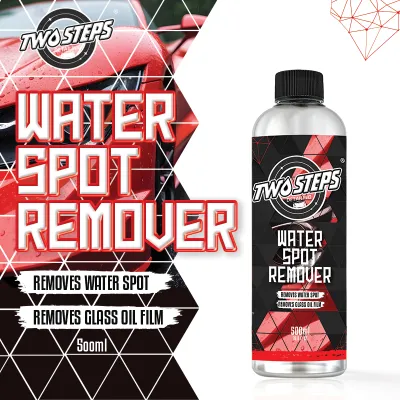
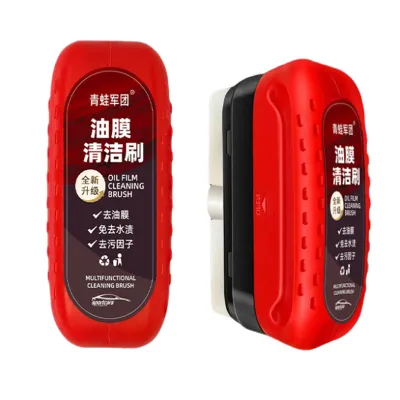
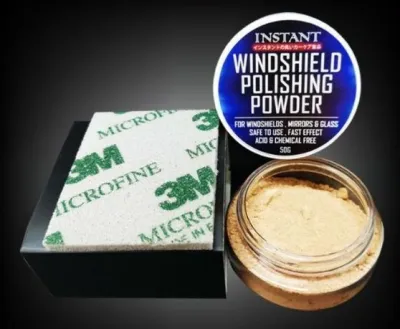
Prices are valid at publication and may change. Please refer to the product page for the latest price.
Type II water spots represent actual physical damage, commonly referred to as paint etching. This occurs when highly acidic rain, industrial fallout, or concentrated mineral deposits sit on the paint under intense heat. The chemical compounds eat into the clear coat, creating microscopic craters that cannot be washed away. In Singapore’s humid and warm climate, this chemical reaction is accelerated, meaning surface minerals can transition into permanent etchings if left untreated for even a few days.
Identifying whether you are dealing with surface deposits or physical etching dictates your treatment plan. Surface-level minerals can often be dissolved with a specialized chemical water spot remover or a light finishing polish. In contrast, paint etching requires mechanical leveling of the clear coat through abrasive polishing to smooth out the craters.
Safety boundaries are critical when addressing paint defects. If the etching has penetrated through the clear coat and reached the base paint layer, DIY polishing will not fix the issue and runs the risk of burning through the remaining clear coat. In such cases, stop immediately and seek a professional paint correction specialist to evaluate the panel.
Car Polish: The Effective Water Spot Remover
Car polish is designed to correct paint defects by using microscopic abrasives suspended in a liquid medium. When applied with a dual-action polisher or a hand applicator pad, these abrasives gently level the surrounding clear coat down to the depth of the defect. This mechanical action physically shaves away mineral deposits and smooths out the shallow craters caused by Type II etching, restoring a flat, highly reflective surface.

Because polish relies on abrasion to level the paint, it is inherently a subtractive process. It strips away any pre-existing wax, sealant, or weak coatings, leaving the bare clear coat completely exposed to the elements. Applying a polish without following up with a protective layer leaves your paint highly vulnerable to immediate re-spotting and environmental contamination.
Using polish requires careful verification of your vehicle’s paint condition. Over-polishing or using an overly aggressive compound can thin the clear coat prematurely, leading to clear coat failure over time. Before beginning, check your vehicle manufacturer’s paint care guidelines and test the least aggressive polish and pad combination first on an inconspicuous area. Always read the specific polish or compound label for recommended application speeds, pressure, and wipe-off instructions.
For stubborn surface minerals that have not yet etched the paint, using a dedicated chemical water spot remover before polishing is highly effective. These chemical removers use mild acids to dissolve the mineral bonds, allowing you to wipe them away without relying solely on abrasive friction, thereby preserving your clear coat’s thickness. Ensure any chemical remover you select is explicitly authorized on the product label for use on your specific paint type, glass, or plastic trim, and always follow the manufacturer’s exact application instructions.
Car Wax: Affordable Prevention with Regular Upkeep
Once your paint is clean and free of spots, car wax serves as an accessible, cost-effective preventative barrier. Whether derived from natural carnauba or formulated as a synthetic polymer sealant, wax fills the microscopic pores of your clear coat and creates a hydrophobic surface. This hydrophobic effect causes water to bead into tight droplets with a high contact angle, allowing wind or gravity to roll them off the panels before they can evaporate and leave minerals behind.
However, traditional waxes have distinct physical limitations that affect their performance in harsh climates. In regions with high temperatures, intense UV exposure, and frequent tropical rain, wax degrades rapidly. The heat from the sun can soften natural carnauba wax, accelerating its breakdown, while harsh alkaline detergents used in standard car washes can strip the wax layer entirely in just a few washes.
Consequently, maintaining effective water spot prevention with wax requires a commitment to regular upkeep. You will need to reapply the wax or sealant frequently, typically every few weeks to a few months, depending on your vehicle’s exposure to the elements and your washing habits. This makes wax an excellent choice for automotive enthusiasts who enjoy hands-on car maintenance and prefer the deep, warm gloss that a fresh coat of wax provides, without the high upfront cost of advanced coatings.
Ceramic Coating: Long-Term Prevention and Superior Hydrophobicity
Ceramic coatings represent a significant technological step up in paint protection, utilizing silicon dioxide (SiO2) or silicon carbide (SiC) formulations. Unlike wax, which sits loosely on top of the paint, a ceramic coating chemically bonds with the clear coat to form a semi-permanent, glass-like sacrificial layer. This bond creates an ultra-hydrophobic surface where water beads slide off effortlessly, drastically reducing the chances of water pooling and drying on the hot paintwork.
The application of a ceramic coating demands meticulous preparation. Because the coating is highly transparent and semi-permanent, any existing water spots, scratches, or oxidation left on the paint will be locked beneath the ceramic layer, visible and impossible to remove without polishing off the coating itself. The paint must undergo a thorough decontamination wash, clay bar treatment, complete polish, and an isopropyl alcohol (IPA) panel wipe to remove all polishing oils before application.
While DIY ceramic coating kits are widely available, they require a controlled environment, precise leveling, and adequate curing time away from moisture and dust. Applying a coating incorrectly can lead to “high spots”—dark, uneven patches where the coating cured too thickly—which must be polished off to correct. For many car owners, professional installation is the preferred route to ensure proper surface preparation, optimal leveling, and warranty coverage.
It is also vital to dispel a common misconception: ceramic coatings do not make your vehicle completely spot-proof. While they provide exceptional chemical resistance that prevents acidic minerals from etching into your clear coat, standing hard water left to dry under direct sunlight can still leave mineral rings on top of the coating. The key difference is that these minerals cannot easily bond to the slick ceramic surface, making them simple to wash away during your regular maintenance wash.
Feature Comparison: Polish vs. Wax vs. Ceramic Coating
| Product Type | Primary Function | Water Spot Removal Ability | Water Spot Prevention Ability | Expected Durability | Application Difficulty |
|---|---|---|---|---|---|
| Car Polish | Corrective Paint Leveling | High (Removes minerals & light etching) | None (Leaves paint bare) | None (Immediate removal) | Moderate to High (Requires machine or careful hand technique) |
| Chemical Water Spot Remover | Mineral Dissolution | High (Dissolves surface minerals) | None | None (Immediate removal) | Low to Moderate (Requires strict timing and safety steps) |
| Car Wax / Sealant | Sacrificial Protection | None (Do not apply over spots) | Moderate (Hydrophobic water beading) | Weeks to Months | Low (Easy wipe-on, wipe-off process) |
| Ceramic Coating | Semi-Permanent Protection | None (Locks in existing spots) | High (Extreme hydrophobicity & chemical resistance) | Years | High (Requires intensive paint prep and precise curing) |
Decision Framework: Choosing the Right Water Spot Solution
To select the correct approach for your vehicle, evaluate your paint’s current condition, your budget, and how much time you can dedicate to maintenance. Use this conditional framework to guide your decision:
- Choose Polish (or a chemical water spot remover) if: Your vehicle currently has visible mineral rings or shallow etching. You must restore the paint to a clean, flat state before applying any form of protection.
- Choose Car Wax if: You are looking for an affordable, straightforward DIY solution, enjoy detailing your car regularly, and want a warm, classic gloss without a complex application process.
- Choose Ceramic Coating if: You want the highest level of long-term protection, superior water-beading performance, and easier weekly washes, and are prepared to invest the time or money into professional-grade paint preparation.
- Stop and consult a professional if: Your vehicle's clear coat is peeling, showing signs of severe oxidation, or if the water spots have etched deeply into the paint. Attempting to polish compromised paint can lead to permanent damage.
Always refer to your car manufacturer’s paint care manual and the product label instructions before applying any chemical or abrasive. If instructions conflict or if you are unsure of your paint’s compatibility, consult a professional detailer.
Frequently Asked Questions (FAQ)
Can I apply wax or ceramic coating directly over existing water spots?
No, you should never apply a protective coating or wax directly over existing water spots. Doing so traps the mineral deposits between the clear coat and the protective layer, sealing the blemishes in place and potentially accelerating paint etching underneath. Furthermore, the presence of minerals prevents waxes and ceramic coatings from bonding properly to the clear coat, leading to premature failure of the protective barrier. Always use a dedicated chemical water spot remover or a polish to completely clean the surface before applying protection.
Does a ceramic coating make my car completely immune to water spots?
A ceramic coating does not make your car completely immune to water spots. While its extreme hydrophobicity helps water slide off the panels, any standing water left to evaporate—such as rain mixed with atmospheric dust or mineral-heavy tap water—will still leave mineral deposits behind. However, the coating acts as a highly chemically resistant barrier, preventing those minerals from etching into your clear coat. These surface spots sit on top of the slick ceramic layer and can be washed off easily during a standard maintenance wash, unlike on unprotected paint.
Is vinegar a safe DIY water spot remover for car paint?
Using household white vinegar as a DIY water spot remover is highly discouraged for modern automotive clear coats. Vinegar contains uncalibrated acetic acid, which can dull the paint finish, degrade plastic trim, and dry out rubber seals if left on the surface too long or used in direct sunlight. Instead, use a pH-balanced, professionally formulated automotive water spot remover. These products are specifically engineered with safe chelating agents and mild acids designed to dissolve mineral bonds on automotive surfaces without compromising your vehicle’s delicate clear coat or adjacent trim materials. Always check the product label for compatibility with your specific paint and trim before use.
Community discussion
Share your experience or ask a question. Comments are reviewed before publication.