
Deciding whether to fit PMA tyres or invest in premium motorcycle tyres comes down to your specific riding habits and how you weigh initial savings against long-term performance. While budget-friendly options offer significant upfront cost reductions, premium brands typically invest heavily in advanced rubber compounds and structural engineering. For daily commuters navigating predictable urban routes, a budget tyre may offer a practical solution, whereas riders demanding high-speed stability, wet-weather confidence, and aggressive cornering will find that premium tyres provide critical performance margins. Ultimately, the right choice depends on your specific riding profile, your motorcycle’s technical requirements, and how you calculate the long-term cost of ownership.
Understanding the Core Differences in Tire Construction
To make an informed decision, you must look beyond the black rubber and understand how a tyre is engineered. The primary differentiator between budget options like PMA tyres and premium alternatives lies in the complexity of their rubber compounds and structural design. Premium manufacturers invest heavily in research and development to create multi-compound tyres. These designs typically feature a harder, wear-resistant rubber compound along the center of the tread to prolong tyre life during straight-line riding, paired with softer, high-grip compounds on the shoulders to enhance traction during cornering.
In contrast, budget-friendly tyres often utilize a single-compound tread design. While a single compound simplifies the manufacturing process and lowers the retail price, it requires a compromise. The manufacturer must choose a middle-ground compound that is either hard enough to last but offers less cornering grip, or soft enough to grip well but wears down rapidly. Additionally, single-compound tyres may require longer warm-up times to reach their optimal operating temperature, which can affect initial grip during short trips.
Products mentioned in this guide
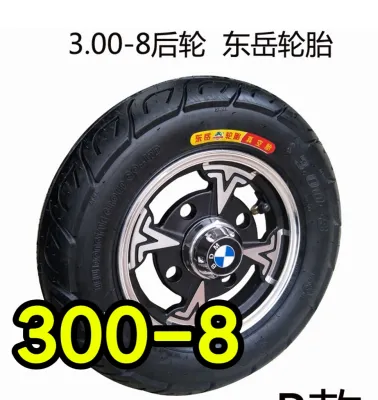
Prices are valid at publication and may change. Please refer to the product page for the latest price.
Beyond the rubber compound, the internal carcass construction dictates how the tyre behaves under load. You should check the manufacturer’s specifications to determine whether a tyre uses bias-ply or radial construction. Radial tyres, common on modern high-performance motorcycles, feature steel or synthetic belts running at 90 degrees to the centerline, allowing the sidewalls to flex independently of the tread. This design keeps the contact patch stable and dissipates heat more effectively. Bias-ply tyres, often found on heavier cruisers or smaller-displacement commuters, use overlapping nylon plies that create a stiffer overall structure but generate more heat at high speeds.
Sidewall stiffness is another critical factor to verify. A stiffer sidewall provides stability under heavy loads but can result in a harsher ride, whereas a more flexible sidewall improves comfort but may feel vague during high-speed cornering. When browsing product pages, be cautious of elaborate material names or proprietary marketing terms. These descriptions do not guarantee specific performance outcomes. Instead, look for standardized structural specifications and independent testing data to verify how the tyre performs under real-world stress.
Key Specifications to Verify on the Tire Sidewall
Before purchasing any tyre, you must verify that its physical limits and safety ratings align with your motorcycle’s requirements. Every road-legal motorcycle tyre features standardized markings molded into its sidewall. The most critical of these are the Speed Rating and the Load Index, which are typically located right after the tyre size dimensions.

The Load Index is a numerical code that represents the maximum weight the tyre can safely carry at its maximum inflation pressure. The Speed Rating is a letter code indicating the maximum speed at which the tyre can safely carry that load. You must consult your motorcycle’s owner manual to find the original equipment manufacturer specifications. Fitting a tyre with a lower load index or speed rating than recommended is highly dangerous, as it can lead to structural failure, excessive heat buildup, and unpredictable handling.
Another vital piece of information on the sidewall is the Department of Transportation (DOT) code. This code consists of a series of letters and numbers, ending in a four-digit sequence that indicates the week and year of manufacture. For example, a code ending in “3425” means the tyre was manufactured in the 34th week of 2025. Rubber compounds naturally degrade and harden over time, even when stored on a shelf. To ensure maximum safety and grip, avoid purchasing old stock, regardless of whether you are buying a budget PMA tyre or a premium brand.
Finally, you must locate the recommended inflation pressure molded on the sidewall, usually expressed in PSI or kPa. However, keep in mind that the pressure listed on the tyre is the maximum allowable pressure, not necessarily the ideal operating pressure for your specific bike. Always cross-reference this with the tyre pressure placard on your motorcycle’s swingarm or in the owner’s manual. Proper inflation is the single most important factor in ensuring even tread wear, optimal fuel economy, and consistent grip.
Matching Your Tire Choice to Your Riding Profile
Choosing between budget and premium tyres should not be a matter of finding a universal winner, but rather matching the tyre’s capabilities to your actual riding environment and style. By evaluating your daily routes, typical speeds, and local weather patterns, you can make a practical decision that does not compromise your safety.
A budget-friendly option like PMA tyres can be entirely sufficient under specific, low-stress conditions. If your riding consists primarily of low-speed urban commuting, short-distance trips, or navigating congested city streets where speeds rarely exceed 60 km/h, the advanced engineering of a premium racing or touring tyre is rarely fully utilized. For lightweight scooters or small-displacement underbone motorcycles operating under strict budget constraints, a well-maintained budget tyre provides a highly cost-effective way to keep your vehicle roadworthy.
Conversely, premium tyres are strongly recommended if your riding profile involves high-speed highway touring, aggressive weekend cornering on winding roads, or carrying heavy pillion passengers and luggage. Premium compounds are specifically engineered to handle the extreme thermal and mechanical stresses of high-speed travel. Furthermore, if you frequently ride in unpredictable wet conditions—such as sudden tropical downpours that create standing water on the asphalt—the superior silica-rich compounds and advanced tread sipes of premium tyres are essential for maintaining traction and preventing hydroplaning.
To simplify your decision, consider this framework:
- Choose a budget-friendly tyre if: Your daily ride is a low-speed urban commute, you cover short distances, your motorcycle is a small-displacement model, and you operate on a strict maintenance budget where upfront savings are a priority.
- Choose a premium tyre if: You frequently travel at highway speeds, enjoy spirited or aggressive riding, regularly carry heavy loads, ride in wet or unpredictable weather, and require the maximum possible safety margin during emergency braking and cornering.
Evaluating the True Cost of Ownership
While the initial purchase price of a tyre is the most visible expense, evaluating the true cost of ownership requires looking at the long-term financial and practical implications. A cheaper tyre is only a bargain if it does not require premature replacement or significantly increase your operating costs.
To estimate the true value, you should calculate the cost per kilometer. This is done by dividing the total cost of the tyre (including installation) by its expected tread life. For example, if a budget tyre costs S$80 and lasts for 8,000 kilometers, its cost is S$0.01 per kilometer. If a premium tyre costs S$160 but lasts for 20,000 kilometers due to advanced wear-resistant compounds, its cost is S$0.008 per kilometer. In this scenario, the premium tyre is actually the more economical choice over time, despite the higher initial outlay.
Additionally, the physical characteristics of the tyre can impact your motorcycle’s fuel efficiency. Heavier tyres or those with higher rolling resistance require more engine power to rotate, which can theoretically increase fuel consumption. While these differences may seem minor on a single trip, they can accumulate over thousands of kilometers. You should check independent user reviews and professional tyre tests to gather real-world data on how different models affect fuel economy.
It is also crucial to factor in the fixed costs of tyre maintenance. Professional mounting, balancing, and disposal fees remain constant regardless of the brand you purchase. If a budget tyre wears out twice as fast as a premium alternative, you will have to pay for professional installation twice as often. This recurring labor cost can quickly erase any initial savings you gained at the cash register.
Safety Boundaries and Installation Requirements
Regardless of the brand or price point you choose, certain non-negotiable safety rules and professional installation standards must be followed to ensure your motorcycle remains stable and controllable. Your tyres are the only contact points between your bike and the road, making proper installation a matter of personal safety.
The most critical rule is to never mix different tyre constructions, tread patterns, or significantly different wear levels on the same motorcycle. For example, running a radial tyre on the front and a bias-ply tyre on the rear (or vice versa, unless explicitly specified by the motorcycle manufacturer) can cause severe handling instability, especially at high speeds or during cornering. Similarly, pairing a highly worn rear tyre with a brand-new front tyre can disrupt the bike’s handling balance and compromise braking performance.
If you are considering changing your tyre sizes or aspect ratios from the original equipment specifications, you must proceed with extreme caution. Altering the tyre width or profile height can change the motorcycle’s steering geometry, affect speedometer accuracy, and potentially cause the tyre to rub against the swingarm, fender, or suspension components. Always consult your motorcycle’s owner manual or a qualified mechanic before deviating from the OEM sizes.
Finally, if a tyre’s intended use, speed rating, or load capacity is unclear, or if it conflicts with your motorcycle’s specifications, do not attempt to install it. Operating a motorcycle with incorrect or unverified tyre specifications poses an immediate safety risk. Stop the installation process and seek professional guidance from an authorized dealer or a certified motorcycle technician to ensure your setup is completely road-legal and safe.
Frequently Asked Questions (FAQ)
Can I mix a PMA tire on the front and a premium brand on the rear?
No, mixing different tyre brands, models, or constructions on the same motorcycle is generally not recommended. Doing so can lead to unpredictable handling characteristics, as different tyres have unique profile shapes, carcass stiffness, and rubber compounds that may not work in harmony. Always consult your motorcycle manufacturer’s guidelines or a professional mechanic before making any decisions regarding a mixed-tyre setup.
How do I know if a budget tire is safe for wet weather riding?
To assess the wet-weather capability of a budget tyre, look for standardized wet-grip ratings or regional labeling certifications if they are available. Additionally, you should research independent, verified user reviews and professional tests that specifically evaluate wet braking distances and cornering stability. Remember that maintaining proper tread depth and correct inflation pressure is critical for dispersing water and preventing hydroplaning, regardless of the tyre’s brand or price.
Community discussion
Share your experience or ask a question. Comments are reviewed before publication.