
Riding a motorcycle in wet weather requires more than simply throwing on a waterproof jacket and a pair of rain pants. If these two garments do not work in tandem, you will quickly find yourself soaked, shivering, and distracted. This is especially true in tropical climates like Singapore, where sudden, intense monsoonal downpours can catch riders on the expressway, subjecting them to high-velocity rain. To stay dry, you must understand how your rain pants and riding jacket function together as a unified, full-body protective system.
When properly integrated, rain pants and a riding jacket form a continuous, overlapping shield that deflects wind-driven rain, seals critical entry points, and manages internal moisture. Achieving this level of protection requires a clear understanding of wet-weather physics, correct layering techniques, and precise adjustments at your body’s joints and extremities. By treating your gear as a single, coordinated system rather than isolated pieces, you can maintain comfort and concentration even during the heaviest storms.
Understanding Water Ingress: Why the Waist and Joints Fail
To defeat water ingress, you must first understand how the physics of riding works against your gear. When you sit on a motorcycle, you do not remain in a static, upright position. Your standard riding posture—characterized by a forward lean, bent knees, and tucked elbows—completely changes how water interacts with your clothing. This crouched position naturally directs wind-driven rain straight toward your waist, knees, inner arms, and collar, turning these areas into primary collection zones.
Products mentioned in this guide
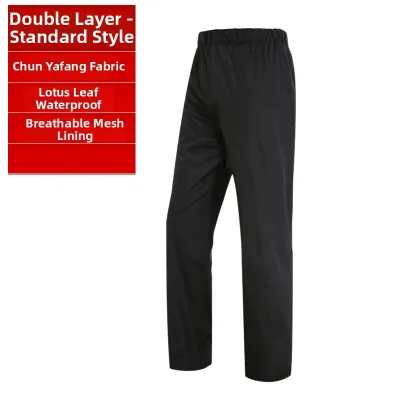
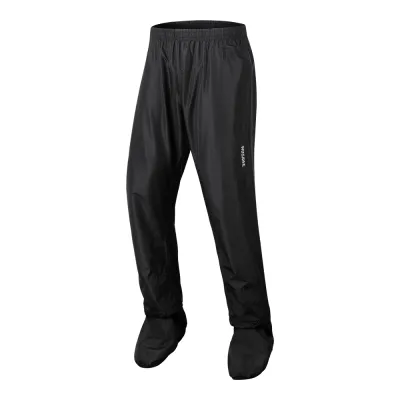
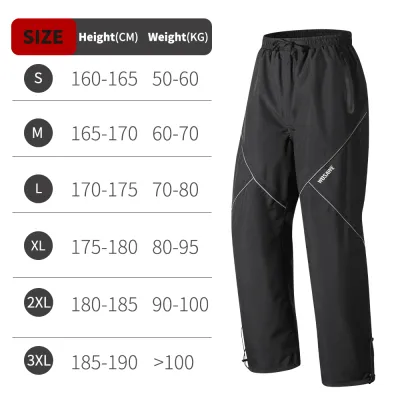
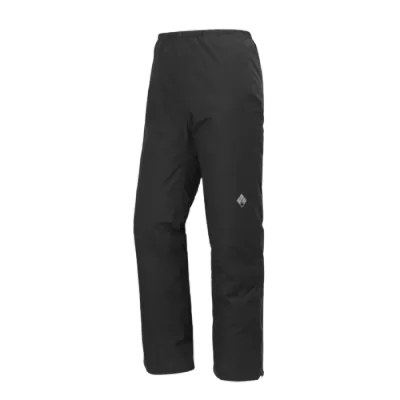
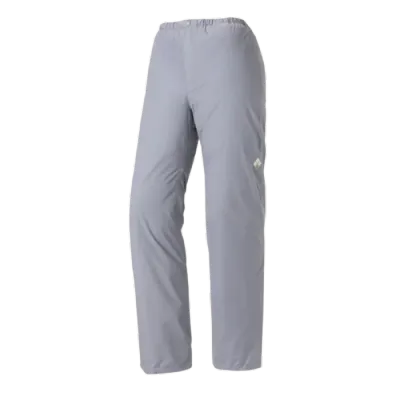
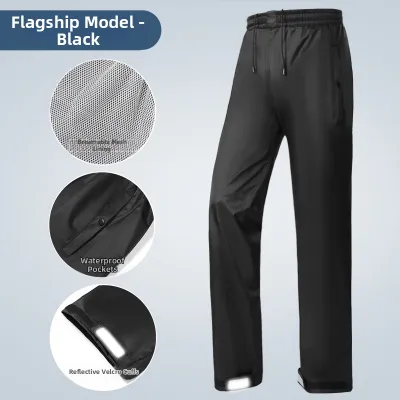
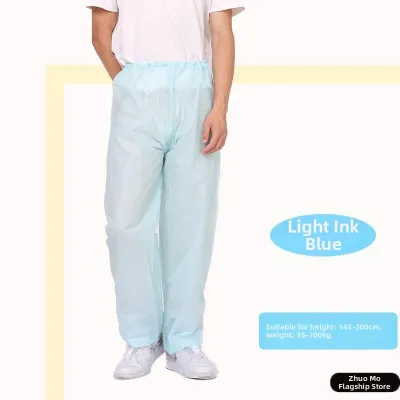
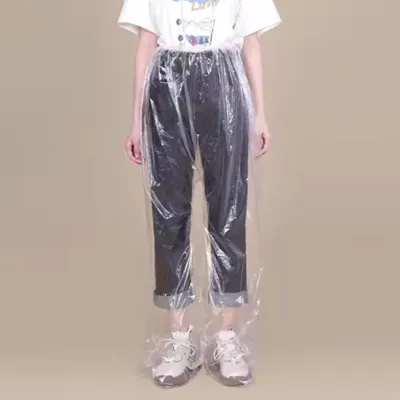
Prices are valid at publication and may change. Please refer to the product page for the latest price.
As rain hits your chest, gravity and wind pressure force the water downward along your torso. If your jacket and pants do not interface correctly, this downward flow collects directly at your waistline. Meanwhile, your bent knees stretch the fabric of your pants, pulling the material taut and exposing the seams to maximum tension. This tension can open up microscopic gaps in the stitching, while your tucked elbows funnel water down your forearms directly toward your wrists.
Once water pools in these areas, capillary action takes over. Capillary action is the physical phenomenon where water is drawn into narrow spaces, defying gravity. When wet fabrics press tightly against each other—such as your riding jacket overlapping your pants—water is sucked upward and inward through seams, zippers, and raw fabric edges. If your garments are not properly integrated, this moisture will quickly bypass your outer defenses and saturate your base layers.
Furthermore, there is a vast difference between static water resistance and dynamic waterproofing. A garment that keeps you dry while you are standing still in a light shower (static resistance) will often fail miserably when you are riding at speed (dynamic waterproofing). At 80 km/h, the wind acts as a pressure washer, forcing water droplets through tiny gaps in storm flaps, zippers, and seams. This is why the connection points between your jacket and rain pants are the most critical failure zones; they must be engineered to withstand continuous, high-pressure water impact.
The Correct Layering Order: Securing the Waist Overlap
Preventing water from entering your waistline requires strict adherence to the “shingling” principle. Just like the shingles on a roof, every upper layer of your riding gear must overlap the layer beneath it. In almost all riding scenarios, this means your outer riding jacket must drape over the waistband of your rain pants. This configuration ensures that water running down your torso naturally flows over the outside of your pants and down to the ground, rather than being channeled into your waistband.

While “jacket over pants” is the golden rule for external rain gear, there are rare exceptions. For instance, if you are using a highly specialized, tightly cinched outer rain jacket designed specifically to fit under a harness or air bag system, or if your riding jacket features an internal waterproof liner, the layering order may adjust. However, for standard two-piece rain suits worn over your protective armor, the jacket must always remain on the outside to prevent the waistband of your pants from acting as a funnel.
To maintain this critical overlap while moving on the motorcycle, high-waisted rain pants are highly recommended. Standard-cut pants tend to slide down when you transition into a forward-leaning riding position, exposing your lower back. High-waisted designs, especially those equipped with suspenders or braces, stay securely in place. Suspenders prevent the pants from sagging under the weight of absorbed water, ensuring that the protective overlap remains intact even when you stretch, lean, or stand on the footpegs.
Additionally, you must utilize the adjustable waist cinches found on both your jacket and your rain pants. Cinching the waistband of your rain pants tightly creates a secondary barrier against any water that manages to blow upward under your jacket hem. If your riding jacket features a built-in drop-tail (an extended rear panel) or an internal kidney belt, ensure these elements are properly deployed. The drop-tail should lie flat and smooth over the back of your rain pants, while the kidney belt should be secured firmly underneath to stabilize your core and prevent the jacket from riding up.
Sealing the Extremities: Cuffs, Ankles, and Collar Connections
Once your waistline is secure, you must turn your attention to the entry and exit points of your gear: your ankles, wrists, and neck. These extremities are highly vulnerable to water intrusion because they are constantly in motion. To seal your lower half, your rain pants must always be worn over your riding boots. Tucking your pants into your boots creates a direct path for water to run down your leg and pool inside your footwear, quickly soaking your feet.
To facilitate this, high-quality rain pants feature wide ankle openings with rugged zippers, gussets, and adjustable Velcro straps. This design allows you to easily pull the pant legs over bulky touring or adventure boots. Once the pant leg is in place, zip it closed and use the Velcro straps to cinch the hem tightly around the ankle of the boot. Many premium rain pants also include under-foot stirrups or elastic loops; always utilize these to prevent the pant legs from riding up your calves at highway speeds.
Managing the glove-to-sleeve interface requires assessing the intensity of the rain and your riding speed. In heavy, driving rain, the most effective method is to tuck your glove cuffs inside your riding jacket sleeves, then pull the outer rain jacket cuffs over the gloves. This prevents water running down your arms from entering the glove openings. For moderate rain or slower urban commuting, you may choose to pull your glove gauntlets over your jacket sleeves, provided the gloves have a reliable drawcord system to seal the opening.
At your neck, water can easily bypass your helmet and run down your chest. To prevent this, ensure your riding jacket’s collar is fully zipped and the storm flap is snapped shut. If your jacket is equipped with an integrated storm collar or hood, wear it under your helmet to create a continuous seal. Always verify that the inner cuffs and liners of your riding jacket do not extend past the outer sleeves of your rain gear, as these exposed fabrics will act as wicks, drawing moisture straight up your arms.
Fit and Mobility: Maintaining Control in a Two-Piece System
While waterproofing is essential, safety must never be compromised. Wearing multiple layers of heavy gear can restrict your range of motion, making it difficult to operate your motorcycle safely. Before setting off into a storm, you must verify that your two-piece rain system allows for complete freedom of movement. Sit on your motorcycle in your actual riding position and check for any binding or tightness at your knees, elbows, and shoulders.
Excessive bulk is a serious safety hazard. If your rain gear is too tight or too baggy, it can interfere with your ability to reach the handlebars, operate the clutch and brake levers, or perform quick head checks to monitor your blind spots. Furthermore, overly tight rain pants can compress the protective armor in your knees and hips, causing discomfort and potentially displacing the armor so that it fails to protect you in a crash. Look for rain gear that features articulated joints, pre-curved sleeves, and stretch panels designed to accommodate the extra volume of your underlying protective jacket.
To ensure your gear is ready for the road, perform a quick fit test before every wet ride. Use this checklist to verify your mobility and safety:
- Leg Extension: Sit on your bike and extend your legs fully to the ground. Ensure your rain pants do not pull tight across your thighs or ride up above your boot tops.
- Arm Reach: Reach forward to grab the handlebars. Your jacket sleeves should remain long enough to cover your wrists, and the fabric across your upper back should not feel taut.
- Head Rotation: Turn your head fully to the left and right. The collar of your jacket should not pinch your neck or restrict the rotation of your helmet.
- Control Access: Confirm that you can easily operate your foot controls and handlebar switches without catching excess fabric on the levers or footpegs.
Common Pairing Mistakes That Compromise Waterproofing
Even the most expensive rain pants and jackets will fail if they are used incorrectly. One of the most common mistakes riders make is tucking damp or sweat-soaked base layers directly into their rain pants. In highly humid environments like Singapore, riding causes rapid perspiration. If your base layers are wet with sweat, tucking them into your rain pants creates a moisture bridge that transfers wetness directly to your skin, making you feel cold and damp even if the outer shell is completely waterproof.
Another critical error is neglecting the Durable Water Repellent (DWR) coating on your outer riding jacket. Over time, dirt, UV exposure, and friction degrade this chemical treatment, causing the outer fabric to “wet out” and absorb water. When your jacket wets out, it becomes heavy, cold, and loses its breathability. This cold, saturated fabric pressing against your rain pants can cause rapid condensation to form on the inside of your gear, mimicking a leak. To prevent this, consult the manufacturer instructions for your specific gear to wash and reapply DWR treatments regularly.
Additionally, avoid wearing overly loose or oversized rain gear. While it may seem easier to slip on, baggy fabric will flap violently at highway speeds. This constant flapping not only causes physical fatigue and noise distraction, but the mechanical stress can also damage the waterproof membrane over time. Furthermore, high-speed airflow against loose fabric creates localized high-pressure zones that can force water under storm flaps and directly through zipper teeth.
Finally, always perform a pre-ride inspection of your underlying protective gear. Before pulling your rain pants and rain jacket over your riding clothes, make sure all ventilation zippers on your main riding jacket and pants are fully closed. Leaving chest, back, or thigh vents open underneath your rain gear creates an easy entry point for any water that manages to seep through the outer seams, defeating your entire waterproofing system.
Frequently Asked Questions (FAQ)
Can I wear my rain pants over my riding boots?
Yes, you should always wear your rain pants over your riding boots. Wearing them over the boots creates a downward-facing overlap that prevents rain from running down your legs and pooling inside your footwear. To ensure a secure seal, use the ankle zippers and Velcro adjustment straps on your rain pants to cinch the cuffs tightly around the ankles of your boots, and utilize under-foot stirrups to prevent the pant legs from riding up while you ride.
Do I need a one-piece rain suit instead of a two-piece set?
Whether you choose a one-piece or a two-piece system depends on your riding style and priorities. A one-piece rain suit offers a guaranteed, seamless seal at the waist, making it highly effective for extreme, prolonged downpours or track use. However, a two-piece system consisting of separate rain pants and a jacket provides much greater convenience, easier donning and doffing, and the flexibility to wear only the jacket or only the pants as weather conditions change, making it the ideal choice for daily commuting and variable weather.
Community discussion
Share your experience or ask a question. Comments are reviewed before publication.