
Choosing between an Original Equipment Manufacturer (OEM) and an aftermarket oil filter depends on your vehicle’s warranty status, how closely the aftermarket part matches original specifications, and your typical maintenance schedule. For a car still under factory warranty, an OEM filter provides guaranteed compatibility and seamless warranty protection. For older, out-of-warranty vehicles, a high-quality aftermarket filter from a reputable manufacturer offers a cost-effective alternative without sacrificing engine protection, provided you verify its specifications.
An OEM oil filter is the exact part installed on your vehicle when it left the assembly line, or an official replacement part sold through authorized dealerships. These parts are designed by or directly for the vehicle manufacturer to meet precise engine requirements, including flow rates, bypass valve pressures, and filtration efficiency. Because they are built for a specific engine family, they eliminate the guesswork associated with part selection.
In contrast, aftermarket oil filters are produced by third-party companies. These alternatives range from premium options that meet or exceed original specifications to budget-focused options. While some aftermarket manufacturers use advanced synthetic media that outperforms standard factory filters, others may use cheaper materials to lower costs. Evaluating these options requires looking closely at filtration standards, warranty compliance, and long-term cost.
Products mentioned in this guide
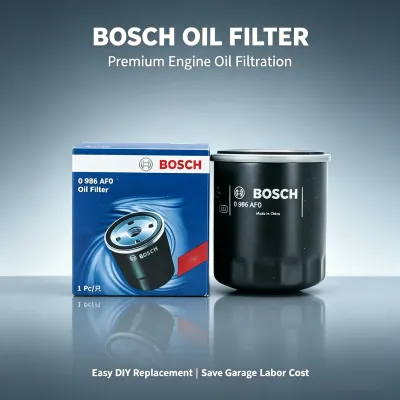
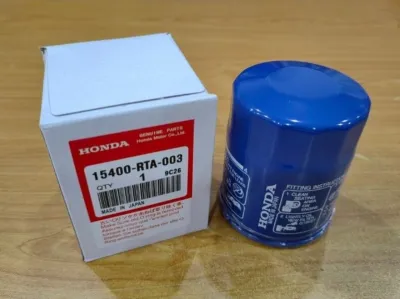
31 Lazada user ratings
Yet to install, fast delivery. Protection can be better as it is shipped using just regular plastic shipping bag. Item is ok with its own bo…Read full reviewShow less
Yet to install, fast delivery. Protection can be better as it is shipped using just regular plastic shipping bag. Item is ok with its own box and internal transparent wrap. It says made by Mahle Tennex Corporation. Will update if any issues encountered after installation.
looka genuine, and the product came very fast in 3 days. local seller. hope it works on my honda jazz!
v fast delivery. have no tried installing yet. box abit dented but contents ok.
delivery fast with good packing, reasonable promotion price.
repeat purchase, original product. good.
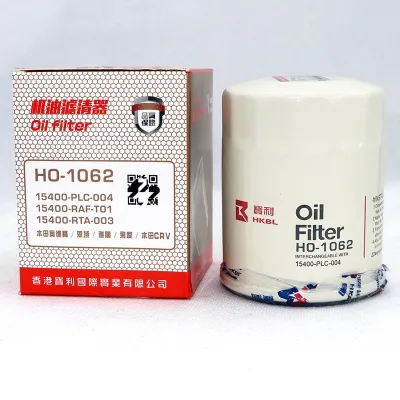
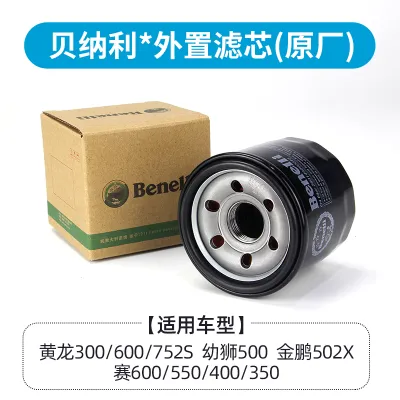
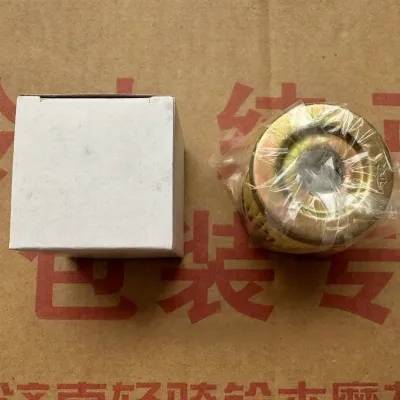
Prices are valid at publication and may change. Please refer to the product page for the latest price.
Comparing Build Quality and Filtration Standards
To understand the differences between oil filters, you must look at their internal components. The primary job of the filter is to trap contaminants like dirt, carbon, and metal particles before they can cause wear on engine bearings and cylinder walls. This process relies on several critical internal parts, including the filter media, the bypass valve, the anti-drain back valve, and the sealing gasket.
The filter media is the material inside the canister that traps debris. Standard OEM filters typically use a high-quality cellulose or cellulose-synthetic blend media designed to last for the manufacturer’s recommended service interval. Premium aftermarket filters often feature fully synthetic media, which has smaller, more uniform fibers. This design allows the filter to trap smaller particles while maintaining a high flow rate, making it highly efficient over longer periods.
The construction of the filter’s end caps also plays a major role in its structural integrity. High-quality filters use metal or durable synthetic end caps to seal the ends of the pleats, ensuring that oil cannot bypass the media. Some low-cost aftermarket filters use cardboard end caps glued to the media. Over time, exposure to hot engine oil can degrade the glue and cardboard, causing the filter to collapse internally and allowing unfiltered oil to circulate freely.
The bypass valve is a safety mechanism designed to prevent engine starvation. If the filter media becomes completely clogged with debris, or if the oil is too thick during a cold start, the bypass valve opens to allow unfiltered oil to flow directly to the engine. OEM filters are calibrated to open at a very specific pressure differential determined by the vehicle’s engineers. When choosing an aftermarket filter, you must verify that its bypass valve pressure rating matches the OEM specification exactly, as an incorrect rating can lead to either premature bypass of unfiltered oil or oil starvation.
Another critical component is the anti-drain back valve, which prevents oil from draining out of the filter and back into the oil pan when the engine is turned off. This valve keeps the filter full of oil so that pressure is established immediately upon starting the engine, preventing dry starts that cause significant engine wear. OEM filters typically use high-grade silicone anti-drain back valves that remain flexible in extreme temperatures, whereas cheap, unbranded aftermarket filters may use nitrile rubber, which can harden and degrade over time.
Before purchasing any oil filter, you should instructively verify the manufacturer specifications and product labels for filtration efficiency ratings and micron counts. Do not assume material superiority based on branding alone. Reputable aftermarket brands must meet or exceed OEM specifications to be safe, while cheap, unbranded alternatives may lack critical internal valves or use inferior media. Always visually inspect the filter’s build quality, check for robust sealing gaskets, and verify part number cross-references before installation.
From a safety perspective, incorrect oil filter installation or using an incompatible part can lead to catastrophic oil pressure loss, oil leaks, and severe engine damage. Always consult your vehicle’s owner’s manual to verify the exact part number, thread size, and mounting position. If you are performing the replacement yourself, ensure the old sealing gasket is removed from the engine block before installing the new filter, as a “double gasket” will cause a rapid, severe oil leak. If you lack the proper tools or experience, have the filter installed by a qualified professional.
Warranty Implications and Service Records
A common concern among car owners is whether using an aftermarket oil filter will void their vehicle’s factory warranty. As a general rule, using aftermarket parts that meet or exceed OEM specifications does not automatically void a vehicle’s warranty. However, the practical application of this rule requires caution and meticulous record-keeping.

If your engine experiences a mechanical failure and you have been using an aftermarket oil filter, the vehicle manufacturer cannot simply deny your warranty claim without cause. They must prove that the aftermarket part was directly responsible for the failure. For example, if an aftermarket filter collapses internally and blocks oil flow, causing the engine to seize, the manufacturer is within their rights to deny coverage for that specific repair. In this scenario, the burden of proof regarding part quality and correct installation may fall on you, and you would need to seek recourse from the aftermarket filter manufacturer.
To protect yourself, you must consult your specific vehicle owner’s manual and warranty booklet for exact oil filter requirements and approved specifications. Some manufacturers specify that only filters meeting certain certification standards may be used. Keeping detailed service records is essential. Save every receipt for parts and labor, and ensure the specific part number of the aftermarket filter is clearly printed on the invoice if the service is performed by an independent workshop.
Authorized dealerships almost exclusively use OEM filters during official service intervals. This practice ensures seamless warranty compliance and maintains a clean service history on the manufacturer’s database. If your vehicle is still under its factory warranty period, using OEM filters at the recommended intervals is the most straightforward way to avoid potential warranty disputes.
Furthermore, if you choose to have your vehicle serviced at an independent workshop, verify that they source high-quality parts that match your vehicle’s specifications. Some workshops may use generic, bulk-purchased filters to keep their service packages cheap. Always ask the technician which brand and part number they plan to install, and confirm that it is a certified match for your specific vehicle model and year.
Evaluating Cost and Replacement Intervals
When comparing the financial aspect of OEM versus aftermarket oil filters, the price difference is often the first thing owners notice. OEM filters generally carry a premium, often costing around S$15 to S$30 at authorized dealerships in Singapore. In contrast, reputable aftermarket filters typically range from S$8 to S$20 on online marketplaces or at local spare parts shops. While saving S$10 to S$15 per oil change may seem minor, the savings can add up over several years of vehicle ownership.
However, the true cost of ownership must be evaluated alongside your specific oil change schedule and driving habits. The type of engine oil you use dictates the required lifespan and capacity of the filter. If you follow standard conventional oil change intervals (typically every 5,000 to 10,000 kilometers), a standard OEM or basic aftermarket cellulose filter is perfectly adequate. These filters are designed to hold a specific volume of contaminants before reaching capacity.
If you use high-quality synthetic motor oil and follow extended drain intervals (such as 15,000 kilometers or more), you must pair it with a filter rated for that extended duration. Many standard aftermarket filters are not designed to last beyond 10,000 kilometers, even if the synthetic oil itself is rated for longer. If a filter is left in service past its rated capacity, it will become saturated, forcing the bypass valve open. This allows unfiltered oil to circulate through your engine, accelerating wear and defeating the purpose of using premium synthetic oil.
Additionally, the physical design of the filter can affect your choice. Modern vehicles use either a traditional spin-on metal canister filter or a cartridge-style filter where only the internal paper element is replaced. Cartridge filters require careful handling, as the rubber O-rings on the filter housing must be replaced and lubricated during every oil change to prevent leaks. OEM cartridge kits always include the correct O-rings, whereas some cheap aftermarket options may omit them or include poorly fitting seals.
Therefore, you should never extend oil change intervals beyond the filter’s rated capacity. If you prefer longer intervals between services, you must invest in a premium aftermarket filter specifically rated for extended synthetic use, or stick to the OEM filter and follow the manufacturer’s recommended service schedule.
Which Oil Filter Should You Choose?
To make the right decision for your vehicle, you should evaluate your specific warranty status, driving conditions, and maintenance preferences using a structured framework.
Choose OEM if:
- Your vehicle is under an active factory warranty: Using OEM filters eliminates any risk of warranty disputes with the dealership or manufacturer.
- You prefer zero-risk fitment: OEM filters guarantee perfect physical dimensions, thread pitch, and bypass valve calibration without requiring you to cross-reference part numbers.
- You follow the manufacturer's standard service schedule: OEM filters are engineered to perform optimally within the exact service intervals specified in your owner's manual.
Choose Aftermarket if:
- Your vehicle is out of warranty: For older cars, high-quality aftermarket filters from reputable brands offer excellent filtration performance at a lower cost.
- You want to customize performance: If you use high-end synthetic oil and prefer extended drain intervals, premium aftermarket filters with synthetic media often provide higher dirt-holding capacity than standard OEM filters.
- You have a reliable independent mechanic: If you service your car outside the dealership network, reputable aftermarket brands offer a reliable, cost-effective alternative.
Verify first if:
- You drive in severe conditions: Frequent stop-and-go driving in hot, humid climates, towing heavy loads, or short trips where the engine does not reach full operating temperature puts extra stress on the oil. In these cases, you must verify that the aftermarket filter is rated for severe service.
- You own a specialized high-performance vehicle: High-revving or turbocharged engines have precise oil flow and pressure requirements. You must ensure the aftermarket filter's bypass valve pressure matches the OEM specification exactly.
- The brand is unfamiliar: Avoid extremely cheap, unbranded filters sold on online marketplaces. If you cannot independently confirm the manufacturer's specifications, certifications, and compatibility, do not risk your engine's health.
Ultimately, matching the exact OEM specification is far more critical than the brand name printed on the canister. By verifying the physical dimensions, bypass valve pressure, and filtration efficiency of any filter you buy, you can keep your engine running smoothly while managing your maintenance budget effectively.
Community discussion
Share your experience or ask a question. Comments are reviewed before publication.