
The Short Answer: Which Car Wash Sponge Material Is Safest?
Selecting the correct carwash sponge is one of the most critical decisions you will make for your vehicle’s exterior maintenance. The wrong material can turn a routine weekend wash into a source of permanent paint damage, leaving behind a web of fine scratches and unsightly swirl marks. While there is no single absolute winner for every scenario, microfiber is widely considered the safest choice for modern clear coats due to its deep-pile, dirt-trapping fibers.
Foam sponges excel at generating thick, lubricating suds that help soften dirt before wiping, but they require frequent, careful rinsing to avoid trapping large debris against the paint surface. Natural sea sponges offer excellent water absorption and a soft feel when fully saturated, but they carry the highest risk of scratching if they are not meticulously pre-soaked and inspected for hidden grit or marine debris.
Ultimately, the best choice depends on your specific washing environment, your vehicle’s paint condition, and your willingness to maintain your wash tools. Understanding the physical differences between these materials will help you preserve your car’s finish and maintain its resale value.
Products mentioned in this guide
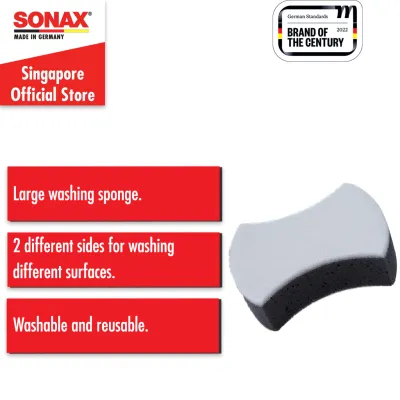
![[ONLY PURCHASE AS ADD ON] 3M Car Wash Sponge - Durable and Effective with Wave Design Texture](https://img.lazcdn.com/g/p/2048fec0614bd2abffa51d61d94074b4.png_400x400q80.png_.webp)
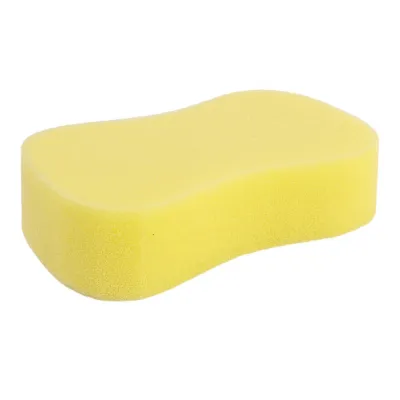
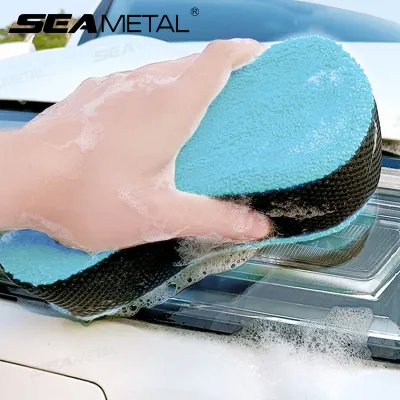
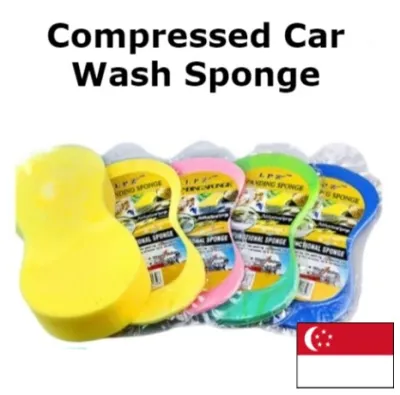
![[SG] Car Wash Sponge/ Vacuum Compressed Multipurpose Car Washing Sponge](https://img.lazcdn.com/g/p/12a58288a4878e211c4ab5ee4fc0f1ae.jpg_400x400q80.jpg_.webp)
Prices are valid at publication and may change. Please refer to the product page for the latest price.
Material Breakdown: How Each Sponge Affects Your Car Paint
Microfiber Sponges and Wash Mitts
Microfiber has become the modern standard in professional automotive detailing, and for good reason. It is typically constructed from a blend of polyester and polyamide, where the fibers are split to create microscopic hooks. This deep-pile structure does not merely push dirt across the surface; instead, it lifts and traps abrasive dirt particles deep within the fibers, keeping them suspended away from the delicate clear coat.

Beyond dirt suspension, microfiber offers exceptional water retention and softness. This allows the sponge or mitt to glide smoothly over complex body lines, contours, and emblems without catching or dragging. The lubrication provided by the held soapy water further minimizes friction, which is the primary cause of clear coat marring.
However, microfiber requires strict maintenance to preserve these safety characteristics. Low-quality microfiber products often shed fibers rapidly, reducing their effectiveness. Furthermore, improper washing can permanently ruin the material. Washing microfiber with standard household fabric softeners or drying them on high heat can melt or coat the microscopic fibers, causing them to harden and lose their dirt-trapping abilities. To maintain safety, always wash them with a dedicated microfiber detergent and air dry them.
Foam Sponges and Wash Pads
Synthetic foam sponges are popular due to their excellent lather generation. They are generally categorized into open-cell and closed-cell structures. Open-cell foam is highly porous, allowing it to absorb large volumes of water and car wash shampoo. This high absorption rate helps generate thick, lubricating suds that soften and encapsulate surface dirt before you wipe it away.
Despite their excellent lubrication, foam sponges carry a distinct physical risk. The pores on a foam sponge’s surface can be relatively rigid. Unlike microfiber, which pulls dirt deep into its core, a foam sponge tends to hold larger, hard debris—such as sand, brake dust, or road grit—right at the contact interface. If the sponge is not rinsed frequently and thoroughly during the wash process, these trapped particles will act like sandpaper, dragging across the paint and causing micro-scratches or swirl marks.
Because of this risk, foam sponges require a disciplined washing technique. They are highly effective for heavily soiled lower panels, textured plastic trim, or dedicated wheel washing, where the surface is less prone to showing fine scratches or where a separate, dedicated tool is used to prevent cross-contamination with the main body paint.
Natural Sea Sponges
Natural organic sea sponges have long been favored by traditionalists who appreciate their biodegradable nature and unique physical properties. When fully saturated with water, a natural sea sponge becomes incredibly soft and pliable, conforming easily to the shape of the vehicle. Its organic chamber structure allows it to hold an immense volume of water, providing excellent lubrication during the wash.
However, natural sea sponges present significant drawbacks for modern automotive clear coats. Because they are harvested from the ocean floor, they naturally possess a rigid internal skeleton made of calcium carbonate. This irregular organic structure can easily harbor sharp marine grit, tiny shell fragments, or sand that is extremely difficult to flush out completely. If any of this hidden debris remains inside the sponge, it can severely scratch your car’s paint during use.
Durability is another major concern. Natural sponges tend to tear, crumble, or degrade quickly when exposed to modern, highly concentrated automotive shampoos or wheel cleaners. Furthermore, their organic composition makes them highly susceptible to harboring bacteria, mold, and mildew if they are not dried perfectly after use, making them a high-maintenance and risky choice compared to synthetic alternatives.
Head-to-Head Comparison: Dirt Trapping, Lather, and Durability
Let’s compare these materials across key performance dimensions:
| Material | Dirt Trapping Ability | Lather Generation | Paint Safety Risk | Maintenance Requirement |
|---|---|---|---|---|
| Microfiber Sponges | Excellent (traps dirt deep in fibers) | Moderate to High | Low (safest for clear coats) | High (requires dedicated washing/no softeners) |
| Foam Sponges | Poor to Moderate (holds dirt on surface) | Excellent (thick, rich suds) | Moderate to High | Low to Moderate (easy to rinse, air dry) |
| Natural Sea Sponges | Poor (grit can hide in organic pores) | Excellent (high water capacity) | High (risk of hidden marine debris) | Very High (must dry thoroughly to prevent mold) |
In Singapore’s tropical climate, vehicles are subjected to intense UV exposure, sudden heavy downpours, and a persistent layer of road film mixed with industrial dust. This environment creates unique challenges for car care tools. The high ambient humidity means natural sea sponges take a long time to dry completely, making them highly prone to mildew and bacterial rot if stored in a damp garage or car boot.
Furthermore, the heavy road film that accumulates on local roads requires a wash tool that offers superior lubrication to slide safely over the paint. While foam sponges excel at producing this necessary lather, the high level of abrasive road dust in Singapore means a foam sponge must be rinsed with extreme frequency to prevent scratching. Microfiber offers the most balanced performance for this climate, combining deep dirt-trapping safety with excellent durability under humid conditions. No material is entirely scratch-proof without proper washing technique, but microfiber provides the largest margin of safety.
Decision Framework: Match the Sponge to Your Washing Routine
To choose the right tool, match the material to your specific washing habits, vehicle condition, and storage environment.
Choose Microfiber if:
- You prioritize maximum paint safety and want to minimize swirl marks on dark, soft, or freshly polished clear coats.
- You wash your vehicle frequently and use the two-bucket method to keep the wash tool clean.
- You want a durable tool that can be machine-washed and reused hundreds of times without losing its shape or safety properties.
Choose Foam if:
- You struggle with soap drying too quickly under direct sunlight—a common issue when washing cars in outdoor HDB washing bays or open driveways in Singapore.
- You need thick lubrication for heavily soiled vehicles or are washing textured plastic surfaces, glass, and dedicated wheel setups.
- You want an affordable, easy-to-rinse tool that dries quickly and does not require special machine-washing protocols.
Neither may fit if:
- You are looking for a single tool to wash both your heavily soiled wheels and your delicate roof. Using the same sponge for both areas guarantees cross-contamination. Brake dust is highly abrasive and metallic; transferring it from your wheels to your hood or roof will cause severe scratching. Always use separate wash tools for upper paintwork and lower wheels.
Verify first if (Natural Sponge):
- You are washing a daily driver exposed to heavy road grime, or if you cannot commit to meticulous pre-rinsing, thorough squeezing, and debris inspection before every single pass over the paint. For most modern car owners, the high maintenance and risk of hidden grit make natural sea sponges impractical.
Essential Paint Safety Rules for Any Car Wash Sponge
The best carwash sponge cannot prevent scratches if your washing technique is flawed. To protect your paint, always establish a safe, systematic routine.
First, always check your vehicle manufacturer’s paint care instructions, especially if your car has a matte finish, a vinyl wrap, or a professional ceramic coating. Certain finishes require specific pH-neutral shampoos and non-abrasive tools. You should also check the label of your chosen car wash shampoo for proper dilution ratios and surface compatibility before application.
Always perform a thorough pre-wash. Use a pressure rinse or apply a layer of snow foam to loosen and carry away larger surface abrasives before your sponge ever touches the paint. This simple step removes the majority of heavy grit, drastically reducing the risk of dragging dirt across the clear coat.
Implement the two-bucket wash method. Fill one bucket with clean water for rinsing your sponge, and a second bucket with your car wash shampoo solution. Ensure both buckets are fitted with grit guards at the bottom. These plastic grates isolate trapped dirt at the bottom of the bucket, preventing your sponge from picking it back up during a rinse.
After washing, care for your tools immediately. Thoroughly rinse your sponge or mitt in clean water, squeeze out all excess moisture (do not wring microfiber aggressively, as this can stretch the backing), and hang or place it in a clean, dry, well-ventilated area away from direct sunlight. Never store a damp wash tool in a sealed plastic container or a humid car boot, as this encourages bacterial growth and material degradation.
Frequently Asked Questions (FAQ)
Can I use a regular household kitchen sponge to wash my car?
No. You should strongly advise against using household kitchen sponges on automotive paint. The abrasive scouring pads (often green or blue) on kitchen sponges will instantly scratch and ruin automotive clear coats, leaving behind deep micro-scratches that require professional paint correction to remove. Furthermore, the synthetic foam used in kitchen sponges is designed to hold grease-stripping dish soap and scrub hard surfaces; it does not have the cell structure required to safely trap and lift abrasive road grit away from delicate car paint.
How often should I replace my car wash sponge or mitt?
Replacement depends on the physical condition of the tool, not just a set number of months. Inspect your wash tools regularly for clear signs of failure. Replace them immediately if you notice matted or flattened microfiber fibers that no longer lift dirt, lingering sour or musty odors (indicating bacterial or mold growth), embedded debris or grit that will not wash out, or visible tearing, crumbling, or hardening of foam or natural materials. Using a degraded tool significantly increases the risk of scratching your paint.
Community discussion
Share your experience or ask a question. Comments are reviewed before publication.