
Quick Answer: Which Paint Protection Fits Your Routine?
Choosing the right paint protection for your vehicle depends on your lifestyle, your available detailing time, and the specific environment your car faces daily. In a tropical climate like Singapore, where intense UV rays and sudden downpours are the norm, keeping your car’s paintwork shielded is essential.
A nano coating spray offers durable protection, strong hydrophobic (water-beading) properties, and easier ongoing maintenance, making it ideal for busy drivers. Traditional car wax, on the other hand, provides a classic, deep, warm gloss that appeals to hands-on detailing enthusiasts who enjoy regular maintenance. Crucially, car polish is not a protectant at all; it is a corrective step designed to smooth out paint imperfections before you apply a protective layer.
- Choose a nano coating spray if you want long-lasting protection against rain and UV rays with a quick, spray-and-wipe application.
- Choose traditional wax if you prefer a deep, warm shine and enjoy spending time detailing your car by hand.
- Use polish only if your paint has visible swirls, scratches, or oxidation that need to be corrected before sealing.
Clarifying the Roles: Polish vs Protective Coatings
Many car owners confuse polishing with protecting, often using the terms interchangeably. However, these two steps serve entirely opposite functions in the car care process. Understanding this distinction is vital to avoiding accidental damage to your vehicle’s clear coat.
Products mentioned in this guide
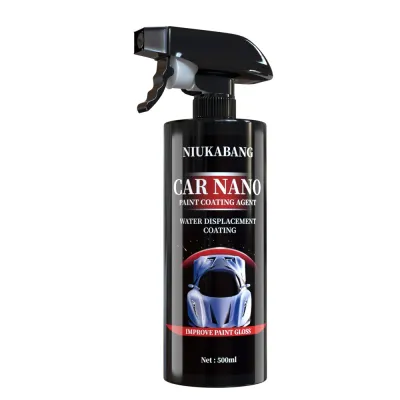
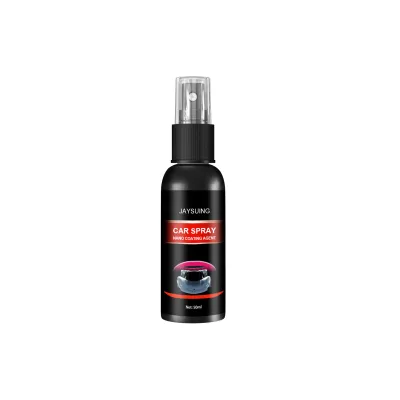
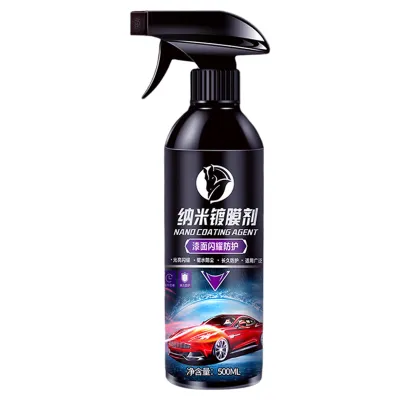
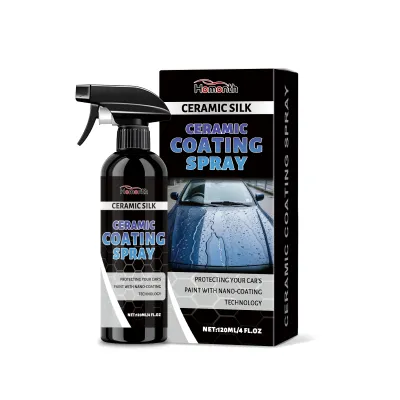
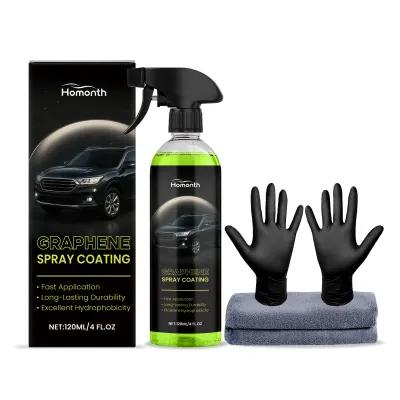
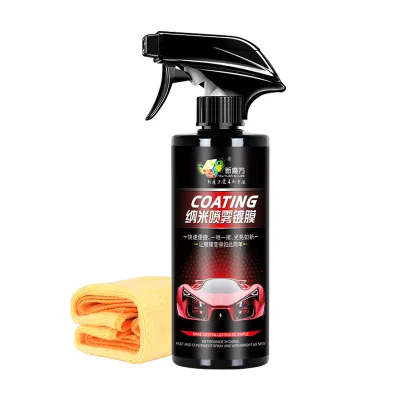
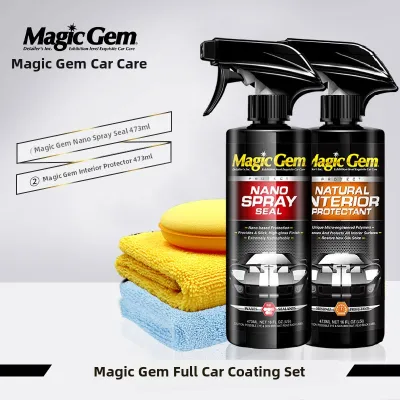
Prices are valid at publication and may change. Please refer to the product page for the latest price.

Car polish is an abrasive treatment. It contains microscopic particles designed to gently level the top layer of your car’s clear coat. By removing a tiny fraction of this clear coat, polishing eliminates fine scratches, swirl marks, oxidation, and stubborn water spots. This process restores the flat, smooth surface of the paint, allowing light to reflect evenly and creating a high-gloss appearance.
Because polish is abrasive, it leaves the paint completely bare and exposed to environmental hazards. It does not contain protective ingredients like wax or silicon dioxide. If you polish your car and do not apply a protective sealant afterward, the bare paintwork will quickly degrade under sun exposure and road grime.
To achieve the best results, always follow the correct detailing sequence:
- Wash and Decontaminate: Thoroughly clean the vehicle and use a clay bar to remove embedded grit.
- Polish: Use a polishing compound only if the paint has visible defects or dullness that require correction.
- Protect: Apply your chosen nano coating spray or traditional wax to seal and shield the restored paint.
Nano Coating Spray vs Traditional Wax: Key Differences
When deciding how to protect your paintwork, the choice usually comes down to a modern nano coating spray versus traditional car wax. Both options create a sacrificial barrier over your clear coat, but they rely on very different chemical technologies.
Protection Level & Hydrophobics
Nano coating sprays typically utilize silicon dioxide (SiO2) or ceramic chemical structures. These compounds form a tight, covalent bond with the clear coat, creating a highly hydrophobic surface. This hydrophobic effect causes water to bead up into tight droplets and slide off the panels easily, taking dirt and road grime with it.
Traditional waxes, often formulated with natural carnauba or synthetic polymers, sit on top of the paint rather than bonding chemically. While they offer good water-beading initially, their organic structure is more susceptible to heat and environmental degradation. They provide a physical barrier against bird droppings and tree sap, but they do not repel water and dirt as efficiently as ceramic-based sprays.
Longevity
Traditional waxes generally degrade faster under high ambient temperatures and frequent washing. In tropical regions, the combination of intense afternoon heat and heavy rain can break down a standard wax layer relatively quickly.
Nano coating sprays are engineered to withstand higher temperatures and harsher environmental exposure. However, exact longevity varies significantly by formulation and environmental exposure. Car owners should always check the specific manufacturer claims on the product label for exact durability guidelines.
Visual Finish
The aesthetic outcome of these two methods differs noticeably. Nano sprays deliver a sharp, glassy, almost mirror-like reflection that highlights the sharp lines of modern vehicles. Carnauba-based traditional waxes produce a warm, deep, and wet-look glow that enhances the depth of darker paint colors, making it a favorite for classic cars.
Comparison Summary
| Feature | Nano Coating Spray | Traditional Wax | Polish |
|---|---|---|---|
| Primary Purpose | Chemical protection & water repellency | Sacrificial protective barrier & gloss | Paint correction & defect removal |
| Active Ingredients | Silicon dioxide (SiO2) / Ceramic polymers | Carnauba wax / Synthetic polymers | Micro-abrasives |
| Hydrophobic Behavior | High (tight water beads, fast sheeting) | Moderate (standard water beading) | None (water pools on bare paint) |
| Visual Finish | Sharp, glassy, mirror-like shine | Deep, warm, wet-look glow | Restores clarity (no added gloss layer) |
| Longevity | Check product label for specific duration | Check product label for specific duration | N/A (temporary correction, requires sealing) |
Application Effort and Long-Term Maintenance
Beyond performance, you must consider the time, physical effort, and environment required to apply and maintain these products.
Preparation Requirements
Both methods demand a clean surface, but nano coating sprays are highly sensitive to surface contaminants. Any leftover oils, old wax, or polish residue will prevent the nano-polymers from bonding properly to the clear coat.
In humid conditions, such as outdoor multi-storey car parks, moisture can interfere with the curing process of certain nano sprays. You must ensure the vehicle is completely dry and parked in a shaded area before application.
Application Process
Traditional paste wax requires a physically demanding application process. You must apply the wax in thin, even layers using an applicator pad, wait for it to haze over, and then buff it off manually with a clean microfiber towel. This can be tiring and time-consuming, especially when working in warm weather.
In contrast, a nano coating spray is generally a “spray, wipe, and buff” application. It requires significantly less physical effort and can be completed in a fraction of the time, making it highly convenient for quick weekend maintenance.
Maintenance Washing
To preserve either protective layer, avoid harsh alkaline soaps or automatic drive-through car washes that use aggressive detergents. These chemicals will prematurely strip away both wax and ceramic spray layers. Use a pH-neutral car shampoo and the two-bucket wash method to maintain the integrity of the protective barrier.
How to Choose the Right Method for Your Car
To finalize your choice, evaluate your vehicle’s current condition, your parking situation, and how much time you want to spend on car care.
Choose Nano Coating Spray if:
- Your car is parked outdoors and exposed to daily sun and rain.
- You want a fast application process that fits into a busy schedule.
- You prefer a modern, glassy reflection and want water to slide off the panels easily.
Choose Traditional Wax if:
- You have a classic car or a show vehicle where a warm, deep glow is preferred.
- You enjoy the therapeutic, hands-on process of applying paste wax.
- You have a covered garage that protects the wax layer from extreme heat.
Verify First if:
- Your paint has severe oxidation, deep scratches, or heavy swirl marks. In these cases, applying any protectant directly will only seal in the defects. You must perform a polishing step or seek professional paint correction first.
- Always check product compatibility instructions. If you plan to switch from traditional wax to a nano coating spray, you must completely strip the old wax layer first to ensure the new coating can bond to the bare paint.
Frequently Asked Questions (FAQ)
Can I apply nano coating spray over traditional wax?
No, you should not apply a nano coating spray directly over a layer of traditional wax. The wax acts as a barrier that prevents the nano-polymers from bonding chemically with the vehicle’s clear coat. This will result in poor durability, and the spray coating will wash off quickly. If you want to use both, you must apply the nano coating spray first, let it cure fully according to the manufacturer’s instructions, and then apply a non-abrasive wax over it if desired.
Do I need to polish my car before applying wax or nano spray?
Polishing is not strictly mandatory before every application of wax or nano spray, but it is highly recommended if your paint has visible imperfections. If the paint is already clean, smooth, and free of swirl marks, a thorough wash and clay bar decontamination are sufficient. However, applying a protectant over unpolished paint will seal in any existing scratches, dullness, or water spots, making them harder to correct later.
How do I know when it is time to reapply the protection?
The most reliable indicator is the behavior of water on the paint surface. When the protection is active, water will bead up into tight, round droplets or sheet off the panels rapidly. If water begins to pool or lay flat on the surface, the protective layer has degraded. Other signs include a loss of surface slickness when running a clean microfiber cloth over the paint, and a noticeable drop in the paint’s overall gloss and depth.

Community discussion
Share your experience or ask a question. Comments are reviewed before publication.