
Protecting your vehicle’s paintwork in a tropical climate like Singapore’s requires a strategic approach. With intense daily UV exposure, sudden torrential downpours, and industrial fallout, your car’s clear coat faces constant environmental assault. Choosing between traditional wax, nano car polish, and ceramic coating is not about finding a single “best” product, but rather matching a protection method to your budget, your available time, and your willingness to perform regular maintenance.
While traditional wax offers a classic, warm glow that is highly accessible for weekend DIY projects, ceramic coatings provide a semi-permanent, highly hydrophobic barrier that resists environmental contaminants for years. Sitting between them, nano car polish utilizes advanced sub-micron particles to fill minor imperfections and enhance gloss, though its protective qualities vary widely depending on the specific product formulation. By understanding how these three methods differ in chemistry, application difficulty, and long-term costs, you can select the ideal shield to keep your vehicle looking pristine.
Understanding the Core Differences in Paint Protection
To make an informed decision, it is essential to understand how each of these three options interacts with your vehicle’s clear coat. They are formulated differently, apply differently, and achieve distinct physical results on the paint surface.
Products mentioned in this guide
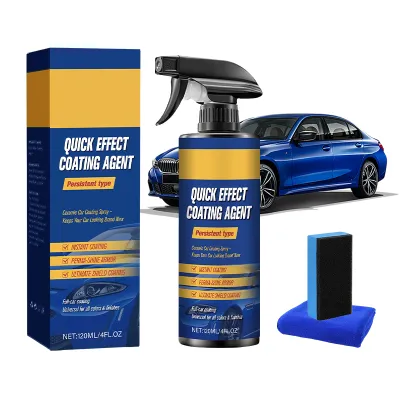
![[SG Stock]🇺🇸NO.1 Car Coating Spray Nano✅Ceramic Coating Spray Paint / Automotive Care Scratch Remover Repair Polish Wax Waterless Wash Waterproof Hydrophobic Spray汽车抛光镀膜剂](https://img.lazcdn.com/g/p/2bba12901b2bb2d755549c6a6f6bd75f.jpg_400x400q80.jpg_.webp)
![[SG In Stock]Car Ceramic Coating Automotive Coating Nano Car Care Polish 500ML Nano Ceramic Coating Spray/Automotive Care](https://img.lazcdn.com/g/p/83567248d0f46fa4511871a48952c5d4.jpg_400x400q80.jpg_.webp)

Prices are valid at publication and may change. Please refer to the product page for the latest price.
Traditional car wax is typically formulated from natural bases, such as carnauba palm wax, or synthetic polymers. When applied, it sits on top of the clear coat as a physical, sacrificial layer. This layer fills microscopic imperfections to create a smooth surface, which enhances the paint’s natural gloss and causes water to bead up and roll off. However, because wax merely sits on the surface without forming a chemical bond, it is highly susceptible to heat, environmental acids, and detergent degradation.
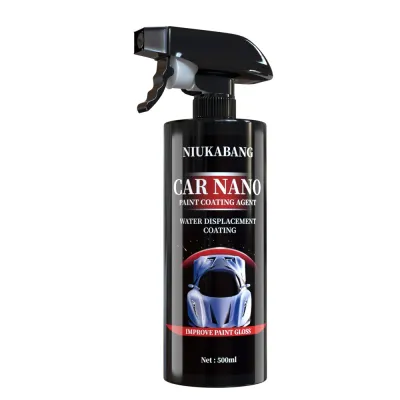
Nano car polish represents a modern evolution in surface refinement, utilizing engineered particles at the nanometer scale. These incredibly small particles are designed to penetrate and fill the micro-marring, fine swirl marks, and pores of the clear coat far more effectively than traditional wax molecules. It is crucial to check the product label before purchase, as some nano polishes are strictly abrasive compounds meant to refine the paint, while others are “all-in-one” formulations that combine mild abrasives with synthetic sealants to leave behind a temporary protective layer.
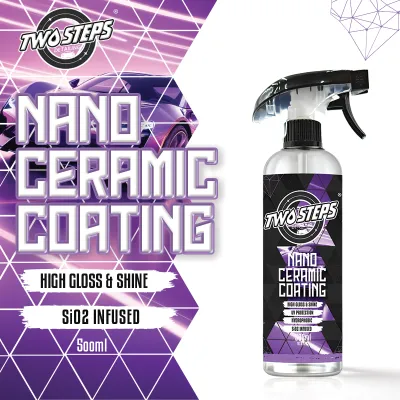
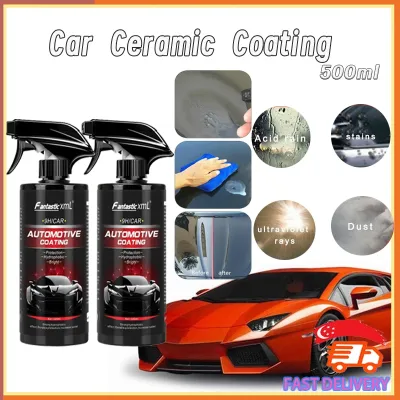
Ceramic coating is a liquid polymer typically formulated with silicon dioxide (SiO2) or silicon carbide (SiC). Unlike wax or polish, ceramic coatings do not simply sit on the paint or fill pores temporarily; they chemically bond with the vehicle’s factory clear coat at a molecular level. Once cured, this liquid transforms into a hard, glass-like semi-permanent barrier. This chemical bond creates an incredibly slick, hydrophobic surface that repels water, dirt, and road grime, making the vehicle significantly easier to clean.
Comparing Durability, Application, and Maintenance
The practical differences between these three methods become most apparent when you evaluate how long they last, how difficult they are to apply, and what is required to maintain them over time.

Longevity expectations vary dramatically across the three categories. Traditional waxes generally offer the shortest lifespan, typically lasting from a few weeks to a couple of months before the sacrificial layer degrades under the hot sun and regular washing. Nano car polishes, if they contain protective sealants, often have a similarly short protective window, requiring frequent top-ups to maintain their gloss-enhancing properties. In contrast, a properly applied ceramic coating can last from twelve months to several years, depending entirely on the manufacturer’s specifications, application quality, and maintenance.
Application difficulty is a major deciding factor for DIY enthusiasts. Traditional wax and nano polishes are highly forgiving and can be easily applied by hand or with a dual-action polisher in a shaded driveway or multi-storey car park. If you make a mistake, it can usually be buffed off with a microfiber towel and quick detailer. Ceramic coating, however, demands a meticulous, controlled environment. The paint must be completely decontaminated, clayed, and polished to remove defects before application, as any remaining swirl marks will be locked beneath the cured glass layer. Furthermore, applying ceramic coating requires careful monitoring of flashing times to avoid leaving permanent, unsightly dark patches known as high spots on the paint.
Maintenance requirements also differ, debunking the myth that ceramic coatings are completely maintenance-free. While a ceramic-coated car is much easier to wash because dirt struggles to cling to the hydrophobic surface, it still requires regular washing using pH-neutral shampoos to prevent water spotting. You must also avoid automatic drive-through car washes, as their harsh brushes can scratch the coating. Waxed and polished vehicles require more frequent physical effort, as you will need to reapply the protective layers every few weeks to maintain the same level of gloss and environmental protection.
Evaluating Cost and Value for Your Vehicle
When deciding on paint protection, you must weigh the immediate material costs against the long-term value and the time investment required to keep the protection active.
Material costs for DIY applications favor traditional waxes and nano polishes. A high-quality tin of carnauba wax or a bottle of nano polish typically costs between S$20 and S$60. Because a single container can last for dozens of applications, the cost per application is incredibly low, making it an exceptionally budget-friendly route. Consumer-grade ceramic coating kits are more expensive, generally ranging from S$80 to S$200, and they often require additional prep products like iron removers, clay bars, and isopropyl alcohol panel wipes, which can add another S$50 to S$100 to the initial DIY bill.
Professional application fees represent a significant financial step up, particularly for ceramic coatings. If you choose to have a professional detailing studio apply a ceramic coating in Singapore, prices can range from S$300 to well over S$1,000 depending on the size of your vehicle and the level of paint correction required. You are not just paying for the liquid coating itself; the vast majority of this cost covers the intensive labor required to wash, decontaminate, and machine-polish the paint to near-perfection before application.
To determine the long-term value, you must look at the amortized cost over your vehicle’s ownership cycle. If you plan to keep your car for several years, a one-time investment in a professional ceramic coating can be highly cost-effective when compared to the cumulative cost of buying premium waxes, polishes, and detailing accessories over the same period. Furthermore, the hours saved on weekly washing and monthly waxing can make ceramic coating a highly valuable option for busy car owners who prefer a low-maintenance lifestyle.
How to Choose the Right Protection for Your Car
To select the paint protection method that best fits your lifestyle, vehicle condition, and budget, consider the following conditional guidelines.
Choose traditional wax if you genuinely enjoy the hands-on process of weekend car detailing and find satisfaction in manually buffing your vehicle to a high shine. This option is ideal if you are working with a limited budget, have a safe, shaded area to work in, and your vehicle’s paint is already in relatively good condition without severe swirl marks or oxidation.
Choose nano car polish if your primary goal is a quick, dramatic boost in gloss and the temporary concealment of minor wash marring, perhaps in preparation for a car meet or a special event. Keep in mind that you must carefully read the product label to verify whether the polish contains protective sealants; if it does not, you will need to apply a dedicated wax or sealant over the polished surface to lock in the shine and protect the paint.
Choose ceramic coating if you prioritize maximum, long-term hydrophobic performance and want to make your weekly car washing routine as quick and effortless as possible. This path is best if you are willing to invest either the significant DIY time required for meticulous paint preparation or the financial capital for a professional application, and if you can commit to washing the car using proper, scratch-free techniques.
Before making any purchase, always verify the physical condition of your vehicle’s paintwork. If your car has heavy oxidation, deep scratches that catch your fingernail, or a failing clear coat that is peeling away, none of these protective products will resolve the issue. In these scenarios, you must seek professional paint restoration or a complete respray before any form of wax, polish, or ceramic coating can be applied effectively.
Frequently Asked Questions (FAQ)
Can I apply ceramic coating over traditional wax or nano polish?
No, you should never apply a ceramic coating directly over a layer of traditional wax or a nano polish that contains fillers or sealants. Ceramic coatings require a completely bare, chemically clean clear coat to establish a proper molecular bond. If you attempt to apply a coating over wax or polish residues, the coating will bond to those temporary layers instead of the paint, causing it to wash off and fail within a matter of weeks. To ensure a successful bond, you must thoroughly wash, clay, and use an isopropyl alcohol-based panel prep spray to strip away all existing waxes, oils, and polishing residues before applying the ceramic coating.
Does nano car polish remove scratches like a cutting compound?
Most nano polishes are not designed to remove deep scratches and should not be confused with heavy-cut abrasive compounds. Instead, nano polishes typically rely on extremely fine, micro-abrasives to gently refine the surface gloss, alongside specialized nano-fillers that temporarily fill and mask minor swirl marks and micro-marring. If your vehicle has deep scratches that have penetrated the clear coat, a mild nano polish will not be strong enough to level the surrounding paint. Always check the manufacturer’s label to determine the specific abrasive grade of the product, and use a dedicated cutting compound if your paint requires significant defect removal.
How do I know when it is time to reapply my paint protection?
You can determine when your paint protection has degraded by observing how water behaves on the surface of your clean vehicle. When a protective layer of wax, polish, or ceramic coating is active, water will bead into tight, round droplets or sheet off the panels rapidly. If you notice water pooling in flat, lazy sheets or clinging to the paint, the protective barrier has worn away. Additionally, you can perform a tactile check by gently sliding a clean microfiber towel or your hand (inside a clean plastic sandwich bag) across the freshly washed paint; a rough, drag-heavy texture indicates that environmental contaminants have bonded to the surface and your protective layer needs to be stripped and reapplied.

Community discussion
Share your experience or ask a question. Comments are reviewed before publication.