
Decoding the specifications on Motul transmission oil labels is the only reliable way to ensure a fluid is safe and compatible with your vehicle’s gearbox. The various numbers, acronyms, and manufacturer codes printed on the packaging indicate the fluid’s viscosity, chemical composition, and specific OEM approvals. To protect your drivetrain, you must match these parameters directly to the requirements detailed in your vehicle owner’s manual.
Why Reading the Label Matters for Your Transmission
Transmission fluid performs several critical functions, including lubricating gears, cooling internal components, and maintaining the hydraulic pressure needed for smooth shifting. In automatic and dual-clutch systems, the fluid also provides the exact friction characteristics required for proper clutch engagement. Using a fluid with incorrect specifications can disrupt these operations and lead to severe mechanical damage.
The risks of using an incorrect fluid include accelerated gear wear, clutch slippage, harsh shifting, and potentially voiding your vehicle’s powertrain warranty. These issues can culminate in complete transmission failure, resulting in expensive repairs.
Products mentioned in this guide
![MOTUL MULTI CVTF [1L]](https://img.lazcdn.com/g/ff/kf/S1320b20ee6cc4ef3b111b270be62acbaU.jpg_400x400q80.jpg_.webp)
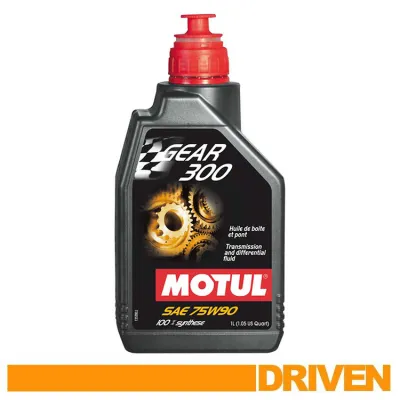
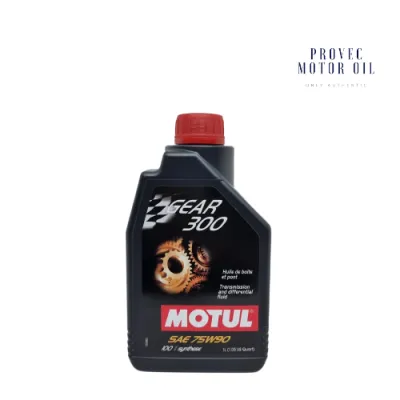
Prices are valid at publication and may change. Please refer to the product page for the latest price.
Because of these risks, your vehicle owner’s manual is the ultimate authority on fluid selection. Marketing claims on the front of a Motul bottle, such as “high performance” or “synthetic,” do not guarantee compatibility. You must rely strictly on the technical specifications printed on the back label to verify that the fluid meets your vehicle manufacturer’s precise requirements.
Understanding Viscosity Grades on Motul Labels
Viscosity represents a fluid’s resistance to flow. On Motul gear oils, manual transmission viscosity is typically classified using the SAE J306 standard, which appears as a dual-grade number like 75W-90. The number preceding the “W” indicates cold-flow performance, with lower numbers representing better fluid flow at low temperatures. The second number indicates the kinematic viscosity at an operating temperature of 100 degrees Celsius, with higher numbers representing a thicker, more resilient oil film under load.

Viscosity directly affects manual transmission shift feel and automatic transmission hydraulic response times. A fluid that is too thick can cause stiff shifting, while a fluid that is too thin may fail to cushion gear teeth, leading to increased wear and noise.
In tropical climates like Singapore, where ambient temperatures remain high year-round, low-temperature flow is rarely a concern. Instead, the high-temperature viscosity rating is critical. The combination of high ambient heat and stop-and-go urban traffic subjects the transmission to elevated thermal stress, making a shear-resistant fluid essential for preventing metal-to-metal contact.
Modern automotive engineering has shifted toward lower-viscosity fluids to improve fuel efficiency by reducing drag. However, a lower viscosity number does not mean less protection, provided the transmission was specifically engineered and toleranced for that thinner fluid specification.
Deciphering API and Performance Classifications
The American Petroleum Institute (API) gear lubricant categories, primarily API GL-4 and API GL-5, indicate different chemical formulations designed for specific gear types and loading conditions. A higher numerical rating does not mean superior protection for all gearboxes; rather, these ratings represent distinct performance profiles.
API GL-5 fluids are formulated with high levels of sulfur and phosphorus extreme pressure (EP) additives to protect high-load hypoid gears. API GL-4 fluids contain roughly half the concentration of these additives and are designed for moderate-load applications, such as synchronized manual transmissions.
Using a standard API GL-5 fluid in a gearbox that requires API GL-4 can cause chemical corrosion to yellow metals, such as brass or bronze synchronizer rings. The aggressive EP additives in GL-5 fluid chemically react with and wear down these soft metals, leading to rough shifting and synchronizer failure.
Some modern Motul formulations are engineered to meet both API GL-4 and API GL-5 specifications. These specialized products use non-aggressive buffered additives to protect gear teeth without damaging yellow metals. However, you must verify this explicit dual-compatibility claim on the product label before use.
Navigating OEM Approvals and Manufacturer Specifications
When reading a Motul label, it is important to distinguish between marketing terms and formal certifications. Phrases such as “meets the requirements of” or “recommended for” indicate Motul’s internal testing alignment. In contrast, terms like “officially approved” or “licensed” mean the fluid has been formally tested and certified by the vehicle manufacturer or transmission builder.
For automatic, dual-clutch, and continuously variable transmissions (ATFs, DCTs, and CVTs), exact OEM specifications are far more critical than generic API ratings. These complex systems rely on highly specific friction modifiers and anti-shudder properties to operate correctly. Using an unapproved fluid can lead to clutch slippage, shifting delays, or shuddering.
To ensure compatibility, cross-reference the alphanumeric standard codes printed on the back of the Motul bottle with the exact codes listed in your vehicle’s owner’s manual. These codes, such as “MB-Approval 236.14” or “ZF TE-ML 02D,” must match perfectly.
If the label codes are ambiguous, incomplete, or do not perfectly match your manual, do not guess. Use the official Motul lubricant advisor tool or consult a qualified automotive professional to identify the correct fluid.
How to Match Motul Specs to Your Vehicle's Requirements
To verify fluid compatibility and ensure a safe service, follow this step-by-step checklist before purchasing and performing a fluid change.
- Step 1: Locate the specifications. Check the "Capacities and Specifications" or "Maintenance" section of your vehicle owner's manual to find the exact fluid specification, viscosity grade, and required capacity.
- Step 2: Read the back label. Examine the technical data panel on the back of the Motul product. Focus strictly on the OEM approval list rather than the marketing text on the front.
- Step 3: Consider service conditions. Adjust your service intervals based on your driving environment. Severe driving conditions, such as the frequent stop-and-go traffic and high humidity of Singapore, accelerate fluid degradation and may require more frequent changes than standard service intervals.
- Safety Boundary: If the Motul label does not explicitly list your required OEM specification, if your vehicle is still under powertrain warranty, or if the correct fluid type is unclear, stop the process. Consult the vehicle manufacturer or a certified workshop. Do not rely on visual inspection, color, or texture to determine compatibility.
Frequently Asked Questions (FAQ)
Can I mix different Motul transmission fluids?
Mixing different transmission fluids is highly discouraged. Every formulation is engineered with a precise balance of base oils and additives to meet specific mechanical requirements. Mixing different fluids, such as synthetic and mineral bases or different ATF specifications, can alter viscosity, degrade additive packages, and cause shifting issues. If you are switching to a different fluid specification, a complete system flush is the recommended procedure.
Does a higher API GL rating always mean better protection?
No, a higher API GL rating does not equate to better protection for all gearboxes. The high concentration of extreme pressure additives in API GL-5 fluids can chemically corrode the brass and bronze synchronizers used in manual gearboxes requiring API GL-4. Always match the exact API or OEM specification required by your vehicle manufacturer to prevent internal drivetrain damage.
Community discussion
Share your experience or ask a question. Comments are reviewed before publication.