
Selecting the right motor oil for your vehicle involves looking far beyond the viscosity numbers printed on the front of the bottle. While both Motul Specific 0W-20 and Motul 8100 Eco-nergy 0W-20 share the same cold-flow and operating viscosity rating, they are engineered under entirely different design philosophies. Choosing between them is not a matter of finding a superior oil, but rather identifying which formulation aligns with your engine’s factory-engineered tolerances, emissions systems, and warranty mandates.
Using the wrong oil formulation can lead to accelerated engine wear, compromised fuel efficiency, or even voided manufacturer warranties. To make an informed decision, you must understand how your vehicle manufacturer defines its lubricant requirements. By comparing the targeted engineering of the Motul Specific line against the broad-spectrum versatility of the 8100 Eco-nergy line, you can confidently select the exact fluid your engine needs.
Understanding the Core Difference: OEM Approvals vs. Industry Standards
The fundamental difference between these two product lines lies in how they are formulated and certified. The Motul Specific line is designed to meet the precise, proprietary demands of individual vehicle manufacturers. These oils are custom-tailored to secure formal, manufacturer-specific approvals (such as those from BMW, Volkswagen, or Jaguar Land Rover) for modern engine families. Each product within the Specific range is formulated around a dedicated chemical recipe that matches the metallurgy, seal materials, and emissions hardware of a particular manufacturer’s engine.
Products mentioned in this guide
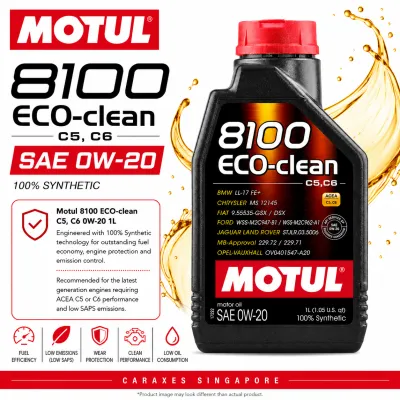
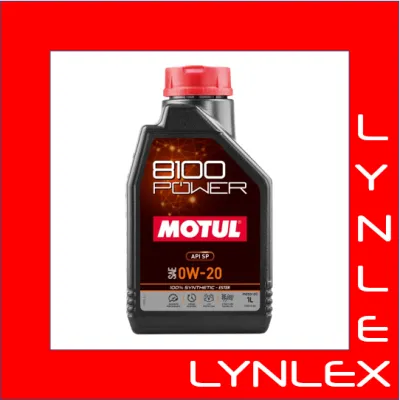
Prices are valid at publication and may change. Please refer to the product page for the latest price.
In contrast, the Motul 8100 Eco-nergy line is engineered to meet broad, globally recognized industry standards. These standards, established by organizations like the American Petroleum Institute (API), the European Automobile Manufacturers’ Association (ACEA), and the International Lubricant Standardization and Approval Committee (ILSAC), define baseline performance criteria for a wide range of vehicles. The 8100 Eco-nergy formulation focuses on maximizing fuel economy and providing robust wear protection across multiple vehicle brands that do not require proprietary OEM-specific oil formulations.
Matching the viscosity grade of 0W-20 alone is insufficient to guarantee engine compatibility or protect your vehicle’s warranty status. Viscosity only dictates how easily the oil flows at low temperatures and how thick it remains at operating temperatures. It does not account for critical chemical properties, such as the level of sulfated ash, phosphorus, and sulfur (SAPS), or the specific anti-wear additives required to protect complex valve trains and turbocharger bearings. Using an industry-standard oil in an engine that strictly requires a proprietary OEM-approved formulation can lead to premature component degradation.
When to Choose Motul Specific 0W20
You should choose a Motul Specific 0W-20 formulation if your vehicle’s owner’s manual explicitly mandates a proprietary manufacturer approval code. Modern European vehicles, in particular, frequently require these specialized oils to protect sensitive exhaust aftertreatment systems, such as gasoline particulate filters (GPF) and catalytic converters. For example, if your manual specifies a requirement like VW 508 00 / 509 00 or Porsche C20, a general-purpose industry-standard oil will not provide the exact chemical balance required to keep these systems functioning correctly over time.

Using a non-approved oil in an engine with strict warranty conditions carries significant mechanical and financial risks. Modern engines are designed with incredibly tight tolerances, and their variable valve timing systems and turbochargers rely on specific oil pressures and additive behaviors to operate without failure. A non-approved formulation may lack the specific friction modifiers or shear stability required by the OEM, potentially leading to increased internal friction, oil consumption, or the formation of harmful deposits.
Before purchasing any oil from the Motul Specific line, you must physically verify the exact approval codes printed on the product’s back label. Because the Specific line contains several distinct formulations—each tailored to a different manufacturer’s specification—you cannot assume that any Motul Specific 0W-20 bottle is safe for your car. Always cross-reference the exact alphanumeric code listed in your owner’s manual with the corresponding code on the back of the bottle to ensure a perfect match.
When to Choose Motul 8100 Eco-nergy 0W-20
Motul 8100 Eco-nergy 0W-20 is the correct choice when your vehicle’s owner’s manual specifies general industry performance standards rather than proprietary OEM codes. This is highly common for Japanese, Korean, and American vehicles, which typically design their engines around API or ILSAC specifications. If your manual requests an API SP or ILSAC GF-6A certified 0W-20 lubricant, the 8100 Eco-nergy formulation is engineered to meet and exceed these exact standards, offering excellent fuel economy and robust thermal stability.
This formulation is also highly suitable for out-of-warranty vehicles, older models, or engines that do not feature niche, highly sensitive emissions hardware. The 8100 Eco-nergy line utilizes a high-quality synthetic base stock combined with a versatile additive package designed to protect engines operating under diverse driving conditions. It provides reliable everyday protection against low-speed pre-ignition (LSPI) in turbocharged direct-injection engines, making it an excellent multi-car solution for households with different vehicle brands that share general lubricant requirements.
Even when choosing a versatile industry-standard oil, you must remain diligent. Always check the back of the Motul 8100 Eco-nergy bottle to confirm that its current API, ILSAC, or ACEA ratings meet or exceed the minimum requirements specified by your vehicle’s manufacturer. If your vehicle requires a specialized low-SAPS formulation to protect advanced emissions systems, verify that the industry specifications listed on the bottle align with those needs before proceeding with an oil change.
Step-by-Step Selection Checklist for Your Vehicle
To ensure you select the correct 0W-20 formulation without relying on guesswork or unverified online advice, follow this structured decision framework:
- Step 1: Locate the exact oil specification in your owner's manual. Open your vehicle's manual and navigate to the technical specifications or maintenance section. Look for the recommended engine oil viscosity (which should state 0W-20) and write down any accompanying codes, such as API SP, ILSAC GF-6A, ACEA C5, or proprietary OEM codes like BMW LL-17 FE+.
- Step 2: Read the back label of the Motul bottle. Inspect the physical bottle of the oil you intend to purchase. Locate the section labeled "Specifications" or "Approvals" and verify that the exact alphanumeric codes from your owner's manual are printed on the label. Do not rely solely on the marketing text on the front of the bottle.
- Step 3: Evaluate your vehicle's warranty status. Understand the distinction between an oil that "meets the requirements" of a specification versus one that is "officially approved" by the manufacturer. If your vehicle is under a factory warranty, using an oil that carries the official OEM approval code is critical for safeguarding your coverage against potential engine-related claims.
- Step 4: Consult a professional when in doubt. If your owner's manual is missing, if the listed requirements are ambiguous, or if the labels on the available oil bottles do not clearly match your vehicle's specifications, stop immediately. Consult an authorized dealership or a qualified automotive technician to verify the correct fluid specification before pouring any oil into your engine.
Frequently Asked Questions (FAQ)
Can I mix Motul Specific and 8100 Eco-nergy if I need to top up?
Mixing different motor oil formulations, even if they share the same 0W-20 viscosity rating, is generally not recommended unless it is an absolute emergency. The Motul Specific and 8100 Eco-nergy lines utilize different chemical base stocks and highly specialized additive packages designed for distinct operating environments. Mixing them can disrupt the balance of these additives, potentially reducing the oil’s overall wear protection, shear stability, and anti-foaming properties.
If you must top up your oil level and the exact product currently in your engine is unavailable, consult your vehicle’s manual for approved alternative fluids. It is always safest to use the exact same formulation for top-ups to maintain the integrity of the lubricant. If you are forced to mix formulations to resolve a critically low oil level, plan to perform a complete oil and filter change as soon as possible to restore proper engine protection.
Will using the wrong 0W-20 oil void my car's warranty in Singapore?
In Singapore, vehicle warranties typically require vehicle owners to service their cars using fluids that meet or exceed the exact technical specifications defined by the manufacturer. If an engine failure occurs and the manufacturer determines that the damage was caused by using an oil that lacks the required OEM approvals or industry standards, your warranty claim for that repair can be legally denied. Simply matching the 0W-20 viscosity is not sufficient proof of proper maintenance.
To protect your warranty coverage, always keep detailed service records, including itemized invoices that clearly state the exact brand, product line, and specification of the oil used during servicing. If you purchase your own Motul oil for a service, retain the retail receipts showing the exact product name. This documentation provides clear evidence that you have adhered to the manufacturer’s maintenance guidelines in the event of a warranty dispute.
Community discussion
Share your experience or ask a question. Comments are reviewed before publication.