
Choosing the right engine oil is a critical maintenance decision that directly affects engine longevity and emission control system health. Within the popular Motul 8100 series, the X-cess, X-clean, and X-max variants represent distinct formulations tailored to different automotive engineering requirements. The correct choice depends entirely on your engine’s emission system hardware, such as Diesel Particulate Filters (DPF) or Gasoline Particulate Filters (GPF), required original equipment manufacturer (OEM) approvals, and viscosity needs. Selecting the wrong variant can lead to premature clogging of sensitive exhaust components or insufficient wear protection.
Understanding the Core Design Focus of Each Motul 8100 Variant
The Motul 8100 series consists of fully synthetic engine oils designed to meet various manufacturer specifications, but each sub-family targets a different mechanical philosophy. Understanding these core design differences is the first step in identifying which fluid aligns with your vehicle’s engineering requirements.
The Motul 8100 X-cess line is generally formulated for robust wear protection in engines that do not utilize highly sensitive modern particulate filters. This variant typically features a traditional high-SAPS (Sulfated Ash, Phosphorus, and Sulfur) additive package. These elements are highly effective at reducing friction and preventing metal-on-metal wear under high thermal loads. However, because high-SAPS formulations produce more combustion byproducts, they are primarily suited for older vehicles or high-performance engines that lack complex exhaust aftertreatment systems.
Products mentioned in this guide
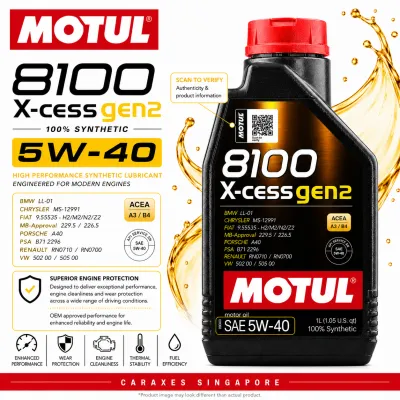
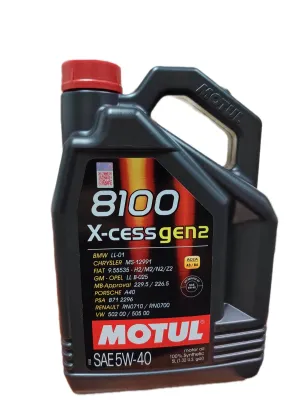
3 Lazada user ratings
Seller responsive, packs fast and ships fast. Product arrived in good condition. Looks genuine with QR sticker and good quality packaging. H…Read full reviewShow less
Seller responsive, packs fast and ships fast. Product arrived in good condition. Looks genuine with QR sticker and good quality packaging. Have not used oil yet
Been on Motul for over a decade, no complaints. Quick to confirm order and pack, delivery took just a day.
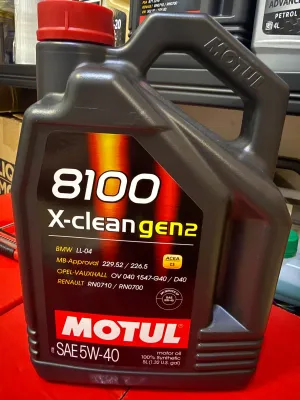
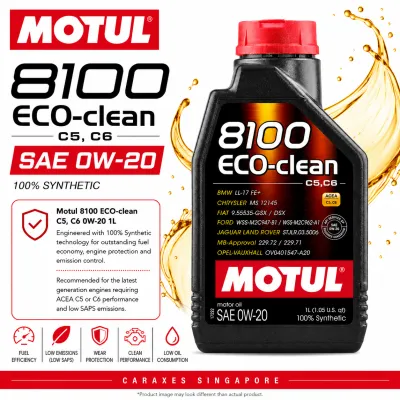
1 Lazada user ratings
Good catch during the promotion. Good buy.
Prices are valid at publication and may change. Please refer to the product page for the latest price.
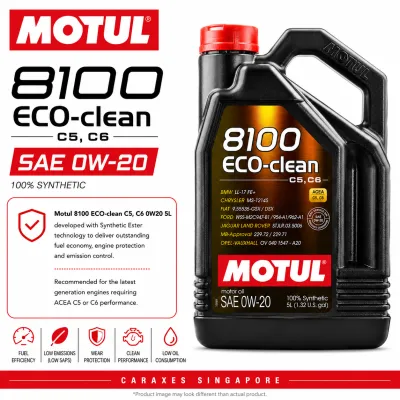
In contrast, the Motul 8100 X-clean line is specifically engineered with mid-to-low SAPS formulations to protect modern emission control systems. Vehicles equipped with Diesel Particulate Filters (DPF) or Gasoline Particulate Filters (GPF) require oils that produce minimal ash when burned. High levels of sulfated ash can physically block the microscopic pores of these filters, leading to increased exhaust backpressure, reduced fuel efficiency, and eventual component failure. The X-clean formulation balances the need for engine lubrication with the chemical limitations required to keep modern exhaust systems functioning correctly.
The Motul 8100 X-max line is targeted at specialized, high-performance, or specific OEM-mandated applications that require distinct additive packages and viscosity profiles. Often formulated to address the demanding requirements of specific European manufacturers, X-max variants focus on maintaining oil film stability under extreme shear stress while meeting precise manufacturer-specific standards. This variant is less common than X-cess or X-clean but remains critical for vehicles whose manuals explicitly call for its unique approval profile.
It is crucial to remember that exact specifications, chemical compositions, and OEM approvals vary significantly by viscosity grade and geographic region. A Motul 8100 variant sold in one market may carry different manufacturer approvals than the same named variant in another, or the formulation may be updated over time. Vehicle owners must always verify the specific product label and the official Technical Data Sheet (TDS) provided by Motul to confirm that the specific bottle in hand matches their vehicle’s requirements.
Emission System Compatibility and Technical Differences
To understand why these three variants cannot be used interchangeably, it is necessary to examine how their chemical compositions interact with modern vehicle hardware. The primary technical dividing line among these oils is their SAPS level, which dictates their compatibility with exhaust aftertreatment systems.

SAPS stands for Sulfated Ash, Phosphorus, and Sulfur. These elements have traditionally formed the backbone of anti-wear, detergent, and antioxidant additives in motor oils. While these chemicals are highly effective at protecting internal engine components, they pose a significant threat to modern emission control devices. When oil is consumed during normal engine operation, the combustion products of these additives enter the exhaust stream.
In a diesel vehicle equipped with a Diesel Particulate Filter (DPF) or a gasoline vehicle with a Gasoline Particulate Filter (GPF), these combustion byproducts accumulate over time. Sulfated ash is particularly problematic because, unlike soot, it cannot be burned off during the filter’s automatic regeneration cycle. The ash permanently plugs the filter channels, eventually requiring expensive professional cleaning or complete replacement of the emission hardware. Phosphorus and sulfur can also poison the precious metals used in catalytic converters, reducing their efficiency and causing the vehicle to fail emissions standards.
This is where the distinction between X-clean and X-cess becomes critical. The X-clean family utilizes a mid-to-low SAPS profile, restricting the concentrations of these elements to safe levels defined by international standards. This chemical profile ensures that the exhaust byproducts do not prematurely degrade the particulate filters or catalytic converters. On the other hand, the traditional X-cess variants often utilize a high-SAPS formulation, prioritizing maximum additive concentration for wear protection in engines where particulate filters are not present. Using a high-SAPS oil like X-cess in a vehicle that requires a low-SAPS oil can cause rapid degradation of the emission control systems.
The X-max variant occupies a specialized niche, often bridging the gap for high-performance engines that require specific manufacturer approvals. Depending on the exact viscosity and formulation, X-max may feature a high-SAPS or mid-SAPS profile tailored to the specific OEM standards it is designed to meet. It is engineered to withstand high thermal stress and resist mechanical shearing, making it suitable for engines that operate under demanding conditions but still require precise chemical compatibility.
To navigate these differences, vehicle owners must refer to the European Automobile Manufacturers’ Association (ACEA) standards listed in their owner’s manual. The ACEA C-series (such as C2, C3, or C4) designates oils with lower SAPS levels designed specifically for vehicles with modern exhaust aftertreatment systems. The ACEA A/B-series (such as A3/B4) designates high-SAPS oils intended for passenger cars without particulate filters. Checking these standards serves as the primary filtering metric when deciding between the X-clean and X-cess lines.
Which Motul 8100 Variant Does Your Car Need? (Decision Framework)
Selecting the correct motor oil requires a systematic approach based on observable vehicle characteristics and the manufacturer’s explicit instructions. Because using the incorrect oil can lead to mechanical damage or emission system failure, owners should follow a strict decision framework rather than relying on general assumptions.
You should choose a Motul 8100 X-clean variant if your vehicle is a modern diesel or direct-injection gasoline engine equipped with a DPF or GPF, and your owner’s manual explicitly requires an ACEA C-class oil or specific low-SAPS OEM approvals. Common examples of these requirements include BMW Longlife-04, Mercedes-Benz MB-Approval 229.51 or 229.52, and Porsche C30. If your vehicle operates with these sensitive filtration systems, the mid-to-low SAPS formulation of X-clean is necessary to prevent filter blockage while maintaining appropriate engine lubrication.
You should choose a Motul 8100 X-cess variant if your vehicle has an older emission system without particulate filters, requires a high-SAPS ACEA A/B-class oil, or prioritizes traditional wear protection over filter longevity. Typical manufacturer specifications that align with X-cess include BMW Longlife-01, Mercedes-Benz MB-Approval 229.5, Porsche A40, and Volkswagen VW 502 00 / 505 00. If your vehicle’s manual explicitly calls for these high-SAPS standards, using X-cess provides a robust additive package designed to protect the valvetrain and cylinder walls under various driving conditions.
You should choose a Motul 8100 X-max variant if your vehicle’s manufacturer explicitly mandates the specific OEM approval code tied to the X-max formulation in your region. X-max is often formulated for specific high-performance applications where the manufacturer requires a highly stable viscosity index alongside a particular additive package. Because X-max is highly specialized, it should only be selected when the exact approval code on the bottle matches the code printed in your vehicle’s documentation.
It is important to recognize that neither variant may fit your vehicle if your required viscosity grade or specific OEM approval code is not explicitly listed on the product’s official Technical Data Sheet (TDS). Motor oil is not a one-size-fits-all product, and even within the Motul 8100 series, there are many viscosity grades (such as 0W-20, 5W-30, 5W-40) that carry entirely different sets of approvals. If your vehicle requires a modern ultra-low viscosity oil like 0W-16 or a highly specific manufacturer standard not covered by X-cess, X-clean, or X-max, you must look to other specialized Motul product lines or alternative brands that carry the correct certification.
How to Verify OEM Approvals and Viscosity Before Buying
To prevent costly engine damage or voiding your vehicle’s warranty, you must verify the compatibility of any motor oil before purchasing or pouring it into your engine. This verification process relies on objective documentation rather than marketing claims or retail descriptions found on online marketplaces.
The first step is to locate the exact required viscosity grade and specific OEM approval codes in your vehicle’s owner’s manual. The viscosity grade, such as 5W-30 or 5W-40, indicates how the oil flows at low and high temperatures. However, viscosity alone is not enough to guarantee compatibility. You must also find the specific alphanumeric approval code designated by your vehicle’s manufacturer, such as “VW 504 00” or “MB 229.51”. These codes represent the exact testing protocols and chemical limits the manufacturer has established for that specific engine design.
Once you have identified your vehicle’s requirements, the second step is to cross-reference these exact codes with the official Motul Technical Data Sheet (TDS) for the specific 8100 variant you are considering. The TDS is a highly detailed document available on Motul’s official website that lists the exact specifications, physical properties, and manufacturer approvals for each specific oil formulation. Do not rely solely on the marketing claims printed on the front label of the bottle, as these labels can sometimes be generic or represent older formulations that have since been updated.
When reviewing the TDS, it is critical to understand the legal and technical difference between an oil that “meets the requirements of” a standard versus one that is “officially approved by” the manufacturer. An official approval means the vehicle manufacturer has physically tested the oil formulation in their laboratories and officially certified that it meets their standards. A claim that an oil “meets the requirements” or is “suitable for” a specification is often a self-declaration by the oil manufacturer without formal OEM certification. For vehicles under warranty, using an oil that lacks official OEM approval when explicitly required can lead to warranty claim denials.
Finally, establish a hard stop condition for your maintenance process. If the specifications in your owner’s manual conflict with the product label, if the required approval code is missing from the official Technical Data Sheet, or if you are unsure about your vehicle’s emission system hardware, do not proceed with the oil change. Stop immediately and consult a qualified professional mechanic or contact the vehicle manufacturer directly to obtain verified compatibility information.
Frequently Asked Questions (FAQ)
Can I mix Motul 8100 X-cess and X-clean in an emergency?
Mixing Motul 8100 X-cess and X-clean should be avoided under normal circumstances because their chemical formulations are fundamentally different. X-cess is typically a high-SAPS oil, while X-clean is a mid-to-low SAPS oil. Mixing them dilutes the specialized additive packages of both, reducing the effectiveness of the wear protection and compromising the low-ash properties required to protect sensitive emission control systems like Diesel Particulate Filters (DPF) or Gasoline Particulate Filters (GPF). If you mix a high-SAPS oil into a system requiring low-SAPS, you risk accelerating the clogging of your particulate filter, which can lead to expensive repairs and potentially void your vehicle’s warranty.
In a genuine emergency, such as when your engine’s oil level is critically low and running the engine dry would cause immediate catastrophic failure, you may top up with whatever clean motor oil is available to reach a safe operating level. However, this should only be done as a temporary measure to transport the vehicle to a service facility. Once you have reached a safe location, you should perform a complete engine oil and filter change as soon as possible. This ensures that the engine is refilled with a single, homogeneous oil formulation that fully complies with your vehicle’s required OEM specifications.
Does a higher price mean X-max is better for my daily driver?
A higher retail price or a more premium marketing position does not make Motul 8100 X-max superior or safer for your specific vehicle. In the automotive industry, motor oil quality is not measured by price, but by precise chemical and mechanical compatibility with your engine’s design. Using an expensive, high-performance oil that does not carry the correct OEM approvals for your vehicle can cause severe, long-term damage to both the engine internals and the exhaust aftertreatment systems.
For a standard daily driver, the best oil is always the one that matches the exact viscosity grade and OEM approval codes specified in your owner’s manual. If your manual calls for a standard covered by the X-clean or X-cess lines, using those variants will provide the optimal balance of wear protection and emission system compatibility. Paying a premium for X-max when your engine does not require its specific formulation offers no performance benefit and may even result in using an oil with an incompatible SAPS level or viscosity index. Always prioritize the manufacturer’s technical specifications over price tags or performance branding.
Community discussion
Share your experience or ask a question. Comments are reviewed before publication.