
Selecting the right motorcycle engine oil is one of the most critical decisions you can make to preserve your engine’s performance, clutch response, and overall longevity. With premium synthetic options like Motul 7100 15W50, Shell Advance Ultra 15W50, and Castrol Power1 15W50 available, choosing the best fit for your specific machine requires looking beyond the brand label to understand how their formulations perform under real-world riding conditions.
Quick Answer: Which 15W50 Synthetic Oil Fits Your Riding Style?
To help you make an immediate decision, your choice should align with your specific motorcycle type, riding habits, and performance expectations.
- Choose Motul 7100 15W50 if: You ride a high-performance, high-revving, or air-cooled motorcycle that experiences intense thermal stress. This oil is ideal if you prioritize maximum film strength at extreme temperatures, value ester-based chemical adhesion to engine internals, and want top-tier track and street protection.
- Choose Shell Advance Ultra 15W50 if: You want a highly balanced, clean-running, and widely accessible fully synthetic oil. It is perfect for daily commuters and long-distance tourers who want to minimize engine deposits, keep internal components clean via gas-to-liquid technology, and maintain consistent performance over standard drain intervals.
- Choose Castrol Power1 15W50 if: You seek crisp throttle response, fast acceleration, and a highly tactile, smooth gear-shifting experience. This is the go-to option if your motorcycle's wet clutch requires a specific balance of friction modifiers to prevent slippage while optimizing power transfer during rapid acceleration.
Before finalizing your purchase, always verify your motorcycle manufacturer’s viscosity and specification requirements in your owner’s manual. Using a 15W50 oil in an engine designed strictly for 10W30 or 10W40 can lead to poor cold-start lubrication, increased internal drag, and potential warranty complications.
Products mentioned in this guide
![🇸🇬 MOTUL 300V FL ROAD RACING 10W40 / 10W50 / 15W50 Ester Core Fully Synthetic Motorcycle Engine Oil [1L]](https://img.lazcdn.com/g/p/fef3206ec872e3e2c007b493448a51ef.png_400x400q80.png_.webp)
![🇸🇬 MOTUL 300V POWER/COMPETITION 2 LITRES - 0W20 0W30 0W40 5W30 5W40 5W50 10W40 15W50 [QR CODE AUTHENTIC]](https://img.lazcdn.com/g/p/71249b4bdb61f98535f13b1a686ec5dd.png_400x400q80.png_.webp)
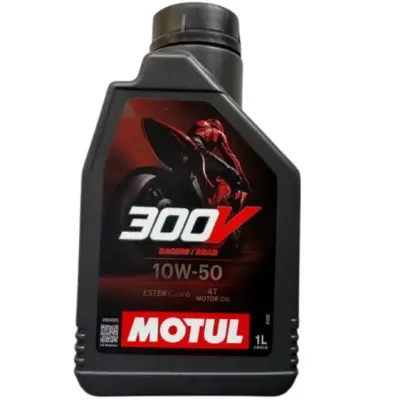
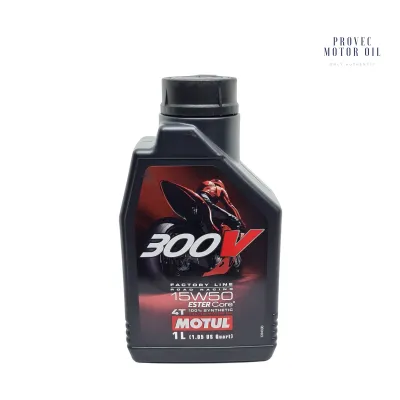
Prices are valid at publication and may change. Please refer to the product page for the latest price.
Why Choose 15W50? Viscosity and Synthetic Base Differences
Understanding the 15W50 viscosity grade is essential before comparing individual brands. The ’15W’ (Winter) rating indicates the oil’s flow characteristics at lower temperatures. While Singapore does not experience freezing winter conditions, a 15W rating still ensures adequate pumpability during cooler tropical mornings or after the bike has sat idle overnight.

The ’50’ represents the high-temperature kinematic viscosity, measured at 100°C. This thicker operating viscosity is crucial for engines that run hot, such as large-displacement multi-cylinder bikes, single-cylinder ‘thumpers,’ or traditional air-cooled engines. In warm climates like Singapore, where ambient temperatures regularly hover above 30°C and stop-and-go traffic prevents natural air cooling, a 50-weight oil provides a robust cushion against mechanical wear.
The performance of these three oils is heavily influenced by how their synthetic base stocks are manufactured. Motul 7100 is famous for its 100% synthetic formulation utilizing Ester technology. Esters are highly polar molecules that naturally bond to metal surfaces, creating a persistent protective film that remains on critical engine components even after the engine is shut down, offering immediate protection upon the next startup.
Shell Advance Ultra leverages Shell’s proprietary PurePlus Technology. This process converts natural gas into a highly pure base oil via Gas-to-Liquid (GTL) technology. Because it starts with gas rather than crude oil, it contains almost none of the impurities typical of traditional base stocks, resulting in superior resistance to oxidation and excellent piston cleanliness.
Castrol Power1 (specifically its premium fully synthetic variants like Power1 Ultimate or Racing) utilizes high-quality synthetic base stocks combined with advanced additive packages. Castrol focuses heavily on optimizing the fluid dynamics within the engine, reducing internal friction to maximize power delivery and throttle responsiveness.
While these conceptual differences are well-established, exact chemical compositions and base oil percentages are proprietary. Always read the product data sheets (PDS) and the physical labels on the bottles to confirm the specific synthetic classifications and certifications for the exact batch you are buying.
Head-to-Head Comparison: Protection, Clutch Feel, and Longevity
Evaluating how these oils perform across key operational dimensions will help you determine which formulation best serves your motorcycle’s mechanical needs.
Engine Protection and Thermal Stability
Under high thermal loads, motor oil can experience shear-down, where the polymer chains break apart, causing the oil to thin out and lose its protective film. High-Temperature High-Shear (HTHS) viscosity is the key metric that dictates how well an oil protects bearings and pistons under extreme stress.
Motul 7100’s ester base provides exceptional thermal stability. The chemical structure of esters is highly resistant to heat, making it a preferred choice for riders who push their engines to high RPMs or ride in heavy urban traffic where engine temperatures spike. This high-temperature performance helps prevent metal-to-metal contact when the engine is running at its absolute hottest.
Shell Advance Ultra relies on the high viscosity index of its GTL base oil to maintain its structural integrity. The purity of the GTL base means it experiences very low volatility, reducing oil consumption through evaporation when the engine operates under heavy loads.
Castrol Power1 utilizes robust anti-wear additives that form a sacrificial barrier on high-load components. This protection is designed to prevent micro-welding and scuffing on gear teeth and piston rings during sudden acceleration or heavy load shifts.
To verify the baseline protection levels of these oils, check the API (American Petroleum Institute) ratings on the bottle. Look for standards like API SN or SP, which certify that the oil has passed rigorous industry tests for high-temperature deposit control, wear protection, and sludge prevention.
Wet Clutch Grip and Gear Shift Smoothness
Unlike passenger cars, most motorcycles feature a wet clutch system where the engine, transmission, and clutch all share the same oil. This requires the oil to have specific frictional properties: it must lubricate the engine and gears while providing enough friction to prevent the clutch plates from slipping.
The Japanese Automotive Standards Organization (JASO) sets the benchmark for this with the JASO MA and MA2 standards. All three oils compared here are typically certified to the JASO MA2 standard, which represents the highest friction level, ensuring maximum grip for high-torque applications.
Motul 7100 is widely praised by riders for its positive clutch engagement. The ester-based formula provides a highly predictable, tactile clutch feel, making it popular among performance-oriented riders who want direct feedback through the clutch lever.
Castrol Power1 emphasizes rapid power transfer and smooth gear shifts. Its additive package is engineered to optimize the friction coefficient between the clutch plates, minimizing slip during rapid acceleration and reducing the effort required to click through the gears.
Shell Advance Ultra focuses on consistent power delivery and vibration dampening. Many riders report that Shell provides a very smooth, quiet engine note and highly consistent clutch behavior across a wide range of operating temperatures.
Keep in mind that individual clutch feel is highly subjective. The actual performance will depend heavily on your specific motorcycle’s clutch spring tension, the wear state of your friction plates, and your riding style.
Oil Life and Drain Interval Potential
Oil life is determined by how well the lubricant resists oxidation and mechanical shear over time. When oil oxidizes, it thickens, forms sludge, and becomes acidic, losing its ability to protect the engine.
Fully synthetic oils, including those from Motul, Shell, and Castrol, offer significantly better oxidation resistance than mineral or semi-synthetic alternatives. Their uniform molecular structure and advanced antioxidant additives allow them to maintain their viscosity and protective qualities over longer periods.
Shell Advance Ultra places a strong emphasis on long-term engine cleanliness. By keeping the engine free of soot and lacquer deposits, the oil remains effective for longer, maintaining its flow characteristics and protective properties throughout its service life.
Motul 7100 focuses on maintaining high performance up to the very end of the service interval. While it is capable of extended drain intervals, its high-performance formulation is often chosen by riders who prefer to change their oil more frequently to ensure their engines are always running on fresh, peak-performing lubricant.
Regardless of marketing claims regarding ‘long-life’ oils, the motorcycle manufacturer’s recommended drain interval in your owner’s manual must always take precedence. If you ride frequently in severe conditions—such as the stop-and-go traffic of Singapore’s peak hours or short trips where the engine does not reach full operating temperature—you should consider shortening your oil change intervals to prevent premature wear.
Evaluating Value and Sourcing Authentic Oil in Singapore
When comparing these premium synthetic oils, evaluating value goes beyond looking at the price tag of a single bottle. You must consider the price per liter and align it with your motorcycle’s specific oil capacity and your typical annual mileage.
For example, if your bike requires 1.2 liters of oil for a change, you will need to purchase two bottles, leaving you with leftover oil for the next service. Calculating the overall cost over a year of servicing helps put the premium price of oils like Motul 7100 into a clearer financial perspective relative to the highly competitive pricing often found on Shell Advance Ultra.
A major concern for motorcyclists in Singapore is the prevalence of counterfeit engine oils. Because premium brands like Motul, Shell, and Castrol are highly sought after, unscrupulous sellers sometimes distribute counterfeit products packaged in replica bottles filled with low-grade mineral oil. Using counterfeit oil can lead to rapid engine wear, clutch slippage, and catastrophic engine failure.
To ensure you are buying genuine oil, always source your products from authorized distributors, official brand stores on reputable online marketplaces, or established, well-known local motorcycle workshops. Avoid purchasing from unknown online sellers offering prices that seem too good to be true.
Additionally, make use of the anti-counterfeit features provided by the manufacturers. Many modern oil bottles feature unique QR codes on the back label that you can scan to verify authenticity, holographic seals over the cap, or specific batch numbers printed on the bottle that can be verified with the distributor. Inspect these physical details closely before pouring any oil into your engine.
Final Checklist: Verifying Compatibility Before You Buy
Before purchasing your chosen 15W50 synthetic oil, go through this step-by-step checklist to ensure complete compatibility with your motorcycle:
- Consult Your Owner's Manual: Verify that 15W50 is an approved viscosity grade for your specific motorcycle model. While Singapore's warm climate makes high-temperature viscosity highly desirable, some modern liquid-cooled engines are engineered with tight tolerances that strictly require a thinner oil, such as 10W30 or 10W40. Using a thicker 15W50 oil in these engines can cause excessive internal drag, sluggish performance, and potentially void your manufacturer's warranty.
- Check the API and JASO Specifications: Look at the back of the bottle and confirm that the oil meets or exceeds the exact specifications required by your bike's manufacturer. If your manual specifies a JASO MA2 oil, do not use an oil that only carries a JASO MB rating, as MB oils contain friction modifiers that will cause your wet clutch to slip.
- Verify the Specific Product Line: Ensure you are buying the correct sub-model of the oil. For instance, make sure you are selecting the fully synthetic Castrol Power1 Racing or Ultimate, rather than a semi-synthetic version of Power1, as the performance and longevity characteristics differ significantly.
- Inspect the Physical Packaging: Once you receive the oil, check that the bottle's tamper-evident seal is intact. Look for the manufacturer's holographic stickers, clear batch number printing, and scan any verification QR codes to confirm authenticity before opening the bottle.
Always remember that switching to a heavier 15W50 oil should be a deliberate decision based on your manufacturer’s recommendations, your riding conditions, or the specific needs of a high-mileage engine, rather than purely on brand marketing.
Frequently Asked Questions (FAQ)
Can I mix Motul 7100 with Shell or Castrol oils?
While mixing fully synthetic oils of the same viscosity and specification (such as two 15W50 JASO MA2 oils) will not typically cause immediate mechanical failure in an emergency, it is highly discouraged. Each brand utilizes a unique, carefully balanced recipe of base oils and additive packages. Mixing them can dilute the specific performance benefits of each oil—such as Motul’s ester-based film strength or Shell’s GTL-based cleanliness—and could unpredictably alter the oil’s overall thermal stability and anti-wear properties. For optimal engine protection and performance, it is always best to perform a complete drain and refill when switching from one brand of motor oil to another.
Is 15W50 too thick for stop-and-go traffic in Singapore?
No, 15W50 is not inherently too thick, provided your motorcycle manufacturer approves this viscosity grade. While Singapore’s ambient temperatures do not require the cold-start protection of a thinner ’10W’ or ‘5W’ oil, the constant stop-and-go traffic on congested roads like the CTE or local urban streets causes engine temperatures to rise rapidly due to the lack of continuous airflow. In these high-heat scenarios, the ’50’ hot viscosity rating provides a critical extra layer of film strength that prevents the oil from thinning out excessively, protecting your engine’s vital components from wear. However, you must always refer to your owner’s manual; if your engine is specifically engineered for a lighter oil, stick to the manufacturer’s recommended viscosity.
Community discussion
Share your experience or ask a question. Comments are reviewed before publication.