
Motul 7100 is a premium, fully synthetic 4-stroke motorcycle engine oil formulated with advanced ester technology. Renowned for its distinctive red color and high thermal stability, this oil is engineered to meet the demanding requirements of modern motorcycle engines. However, selecting the correct viscosity grade is essential to unlock the full protective benefits of this lubricant. Viscosity represents an oil’s resistance to flow, which directly dictates how effectively it circulates through the engine, cushions moving parts, and manages internal operating temperatures.
The Society of Automotive Engineers (SAE) establishes the standard viscosity grading system used globally. This system ensures that riders can identify how an oil will behave under both cold-start conditions and extreme operating temperatures. Choosing the correct viscosity is critical for maintaining optimal oil pressure, reducing mechanical wear, and ensuring smooth wet clutch operation. Using an incorrect grade can lead to inadequate lubrication, increased friction, or even oil starvation, which can permanently damage internal engine components.
Decoding Motul 7100 Viscosity Grades: What the Numbers Mean
The Motul 7100 product line is available in several multi-grade formulations, such as 10W-30, 10W-40, 10W-50, 15W-50, and 20W-50. These multi-grade oils are designed to perform reliably across a wide range of temperatures. To make an informed decision for your motorcycle, you must understand how to read these dual-number ratings and translate them into real-world engine protection.
Products mentioned in this guide
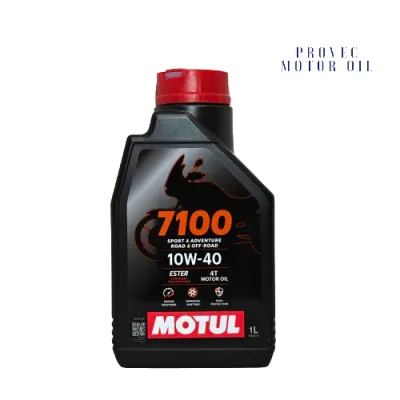
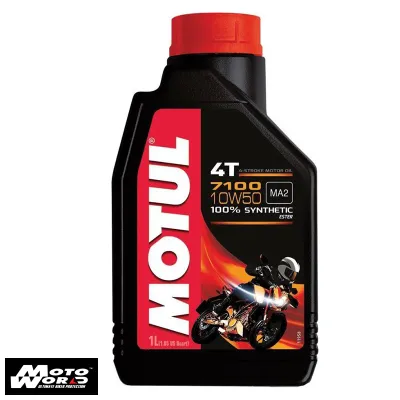
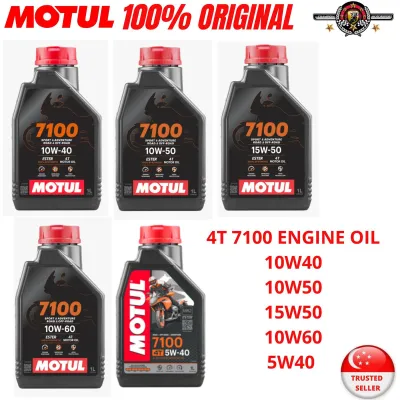
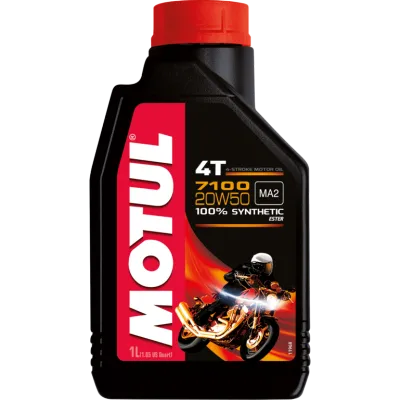
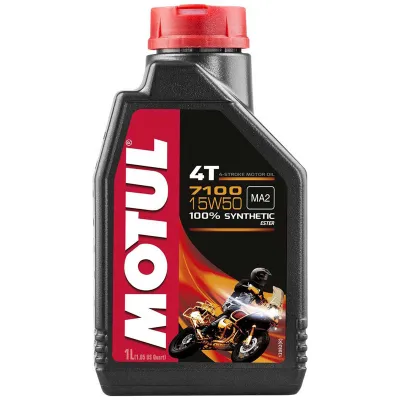
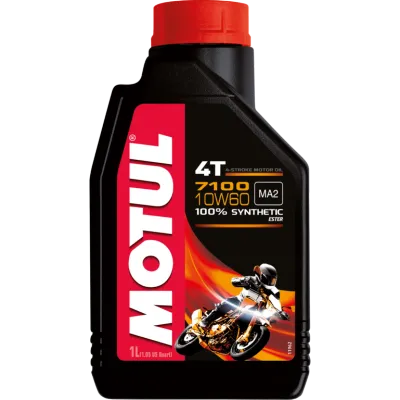
Prices are valid at publication and may change. Please refer to the product page for the latest price.
The Cold-Start Rating (The "W" Number)
The first number in a multi-grade oil rating, followed by the letter “W”, represents the oil’s cold-flow characteristics. The “W” stands for Winter, indicating how easily the oil flows when the engine is cold or has been sitting idle for an extended period. A lower cold-start rating, such as 10W, means the oil remains highly fluid at low temperatures, allowing it to pump rapidly through the engine block during startup to minimize metal-on-metal contact.
In a tropical climate like Singapore, where ambient temperatures remain consistently warm and rarely dip below 20 degrees Celsius, the extreme low-temperature performance of a 10W versus a 20W oil is less critical than it would be in freezing regions. However, you must still adhere to the manufacturer’s baseline requirements. Modern motorcycle engines are built with precise internal tolerances, meaning that even in warm climates, the oil pump and bearing clearances are calibrated for a specific initial flow rate to establish immediate oil pressure.
The High-Temperature Protection Rating (The Second Number)
The second number in the viscosity rating, such as 30, 40, or 50, indicates the oil’s kinematic viscosity at 100 degrees Celsius, which is the standard operating temperature of a motorcycle engine. This rating measures the oil’s thickness and film strength when subjected to intense heat and mechanical stress. A higher second number means the oil maintains a thicker, more robust protective barrier under extreme thermal loads.
A 40-grade oil, such as Motul 7100 10W-40, offers an excellent balance of fluid dynamics for daily commuting and moderate engine speeds, minimizing internal drag while providing reliable wear protection. Conversely, a 50-grade oil, like 10W-50 or 15W-50, provides a heavier protective film that is highly beneficial for air-cooled engines, high-RPM riding, or long-distance touring. However, you should avoid the misconception that a thicker oil is always superior. If your engine is designed specifically for a thinner 30-grade oil, running a 50-grade oil can increase internal fluid friction, reduce cooling efficiency, and cause sluggish clutch engagement because the oil pump and internal clearances are not optimized for the heavier fluid.
How to Choose the Right Viscosity for Your Motorcycle
Selecting the appropriate Motul 7100 viscosity grade requires a structured approach that balances manufacturer specifications with your specific riding environment and the condition of your motorcycle.

Step 1: Consult the Owner’s Manual. Your primary reference must always be the motorcycle manufacturer’s official documentation. Original Equipment Manufacturers (OEMs) design their engine components, oil pumps, and cooling systems to operate within specific viscosity parameters. Deviating from these recommendations can void your warranty and risk severe engine damage.
Step 2: Evaluate Ambient Climate and Riding Style. If your owner’s manual approves multiple viscosity grades for different temperature ranges, use your local environment and riding habits to make the final choice. For instance, riders navigating the dense, stop-and-go traffic of Singapore experience rapid engine heat buildup due to limited airflow. If your manual permits both 10W-40 and 10W-50, opting for 10W-50 can provide enhanced thermal stability and shear resistance during hot, low-speed idling or spirited weekend rides.
Step 3: Consider Engine Mileage and Wear. As a motorcycle accumulates high mileage, the constant friction can slightly widen the clearances between internal components like piston rings and bearings. If permitted by your owner’s manual, switching to a slightly higher viscosity grade within the approved range can help seal these wider clearances, maintain optimal oil pressure, and reduce minor oil consumption.
Safety Boundary: Always prioritize the motorcycle manufacturer’s instructions and the physical product label on the Motul 7100 bottle before making any changes to your engine oil. If the instructions in your manual conflict with a specific product specification, or if your vehicle is heavily modified, stop and consult a qualified professional mechanic to ensure compatibility and safety.
Beyond Viscosity: JASO and API Standards You Must Verify
While viscosity is a critical factor, it is only one part of the overall oil specification. To ensure complete compatibility and optimal performance, you must also verify that the oil meets the necessary international standards for wet clutch compatibility and engine cleanliness.
JASO MA2 Standard: Most motorcycles feature a wet clutch system where the engine, gearbox, and clutch are lubricated by the same oil pool. Passenger car oils contain friction modifiers that can cause a motorcycle’s clutch to slip under acceleration. Motul 7100 is formulated to meet the stringent JASO MA2 standard, which guarantees the precise friction coefficient required for smooth clutch engagement and maximum power transfer. Always check the physical product label to confirm the JASO MA2 certification mark is present before pouring the oil into your crankcase.
API Standards: The American Petroleum Institute (API) rating, such as SN or SM, indicates the oil’s ability to prevent sludge formation, manage high-temperature deposits, and protect against wear. Motul 7100 typically meets high API standards like SN, which offers superior oxidation control, improved deposit protection, and excellent compatibility with exhaust emission control systems compared to older standards. Always verify that the API rating on the bottle meets or exceeds the minimum standard specified in your motorcycle’s manual.
Frequently Asked Questions (FAQ)
Can I mix different viscosity grades of Motul 7100 in an emergency?
If you experience a low oil level while riding, topping up your engine with a different viscosity grade of Motul 7100 (such as adding 10W-50 to 10W-40) is acceptable in a genuine emergency to prevent oil starvation. However, mixing different grades alters the overall viscosity profile and can compromise the balanced additive package of the oil. You should perform a complete oil and filter change using a single, uniform viscosity grade as soon as possible after the emergency.
Is a thicker oil always better for engine protection in hot weather?
No, a thicker oil is not universally better, even in consistently hot climates. While a higher viscosity grade provides a thicker oil film, using an oil that exceeds your manufacturer’s recommendations can restrict oil flow through narrow passages, reduce heat dissipation, and increase mechanical drag, which lowers fuel efficiency. Always stay within the viscosity range specified by your motorcycle’s OEM, as these recommendations are already designed to protect the engine across its entire operating temperature spectrum.
Community discussion
Share your experience or ask a question. Comments are reviewed before publication.