
The 10W-40 designation on a bottle of motorcycle oil indicates its flow characteristics during cold starts and its protective film thickness at normal operating temperatures. Choosing the correct oil is vital for maintaining engine health, reducing wear, and ensuring smooth gear shifts. However, whether Motul 10W-40 is the right choice for your specific motorcycle depends entirely on the manufacturer’s recommended viscosity range and clutch compatibility standards detailed in your owner’s manual.
Using the wrong viscosity or oil type can lead to accelerated engine wear, clutch slippage, or reduced fuel efficiency. Understanding how these ratings work allows you to make informed decisions when purchasing maintenance supplies. By verifying your motorcycle’s specific requirements, you can ensure that the oil you select provides optimal protection under all riding conditions.
Decoding the 10W-40 Viscosity Rating
The numbers and letters in a 10W-40 rating represent a multi-grade oil system designed to perform across a wide temperature range. The “10W” portion of the rating refers to the oil’s low-temperature viscosity, with the “W” standing for winter. This rating indicates how easily the oil flows when the engine is cold, such as during an early morning start. A lower number before the “W” means the oil remains more fluid at low temperatures, allowing it to circulate rapidly and lubricate critical engine components immediately upon ignition.
Products mentioned in this guide
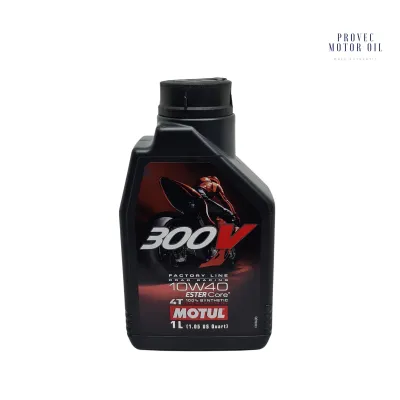
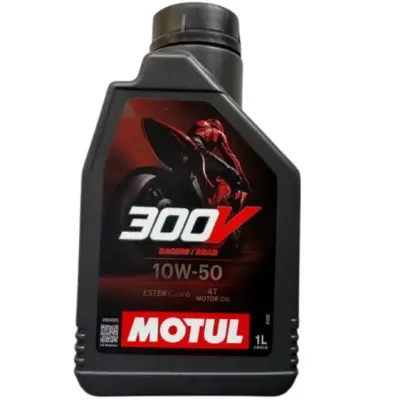
![🇸🇬 MOTUL 300V FL ROAD RACING 10W40 / 10W50 / 15W50 Ester Core Fully Synthetic Motorcycle Engine Oil [1L]](https://img.lazcdn.com/g/p/fef3206ec872e3e2c007b493448a51ef.png_400x400q80.png_.webp)
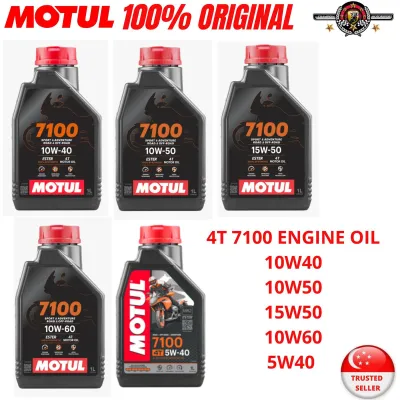
![🇸🇬 MOTUL 7100 4T 10W40 10W50 15W50 100% Synthetic Ester Engine Oil Motorcycle Oil [1L]](https://img.lazcdn.com/g/p/00450279a13a350708397ff343c39c19.png_400x400q80.png_.webp)
Prices are valid at publication and may change. Please refer to the product page for the latest price.
The second number, “40,” represents the oil’s viscosity at normal engine operating temperatures, typically measured at 100°C. This rating indicates the oil’s ability to maintain a protective film and resist thinning under high heat and shear forces. A higher second number means the oil remains thicker at elevated temperatures, providing a robust barrier between moving metal parts when the engine is running hot.
Multi-grade oils like 10W-40 offer the practical benefit of maintaining consistent protection across varying thermal conditions. In the past, riders had to change their engine oil seasonally to match changing ambient temperatures. Modern multi-grade formulations eliminate this requirement by utilizing viscosity index improvers, which allow the oil to flow like a thinner oil when cold and protect like a thicker oil when hot. This ensures reliable lubrication from the moment you start your motorcycle until you reach your destination.
Is 10W-40 Right for Your Motorcycle?
Determining if 10W-40 is suitable for your motorcycle requires consulting your owner’s manual. Manufacturers design engines with specific clearances between moving parts, and they specify the viscosity range that matches these tolerances. The manual will typically feature a temperature chart showing which viscosity grades are approved for your local climate. Always prioritize the manufacturer’s recommendations over general advice, as using an unapproved viscosity can compromise engine protection.

In addition to viscosity, you must verify the oil’s performance classifications, particularly regarding wet-clutch compatibility. Most motorcycles share a single oil reservoir for the engine, transmission, and clutch assembly. These systems require oils that meet specific standards, such as the Japanese Automotive Standards Organization (JASO) MA or MA2 specifications. These standards ensure the oil has the correct frictional properties to prevent clutch slippage while still providing excellent wear protection for the gears and engine.
Riding conditions also play a significant role in oil selection. In consistently warm climates, such as Singapore, or under heavy loads like touring and carrying luggage, a 10W-40 oil provides a stable protective barrier that resists thermal breakdown. However, even in hot environments, you must ensure that 10W-40 falls within the approved range specified by your motorcycle’s manufacturer. Never assume a thicker oil is automatically better for warm weather without verifying compatibility first.
Comparing 10W-40 with Other Common Viscosity Grades
Understanding how 10W-40 compares to other common grades helps clarify its role in engine protection. When comparing 10W-30 to 10W-40, the primary difference lies in high-temperature film strength. A 10W-30 oil is thinner at operating temperatures, which can reduce internal drag and slightly improve fuel economy. However, a 10W-40 oil offers a thicker protective film at high temperatures, providing greater mechanical protection under high-load or high-heat conditions.
Comparing 10W-40 to 20W-50 highlights differences in both cold-start flow and high-temperature thickness. A 20W-50 oil is significantly thicker at both low and high temperatures. While 20W-50 is often specified for older, air-cooled engines with wider tolerances or for motorcycles operating in extreme heat, it flows much slower during cold starts than a 10W-40 oil. Using 20W-50 in a modern engine designed for thinner oils can cause inadequate lubrication during startup and increase internal drag.
Choosing an oil grade outside the manufacturer’s approved tolerance range for perceived “better protection” is a common mistake. Using an oil that is too thick can cause inadequate lubrication in tight clearances, increase operating temperatures, and reduce fuel efficiency. Conversely, using an oil that is too thin can lead to oil film breakdown under load, resulting in metal-on-metal contact and premature engine wear. Stick to the approved ranges to ensure balanced performance.
How to Verify Oil Specifications and Authenticity
To ensure your motorcycle receives the protection it needs, always read the product label carefully before purchasing. Look for the API (American Petroleum Institute) service category and the JASO classification to confirm they match the exact requirements listed in your owner’s manual. For example, if your manual specifies JASO MA2, ensure the bottle explicitly displays this rating. Checking these specifications guarantees that the oil’s additive package is compatible with your motorcycle’s engine and clutch.
Due to the popularity of premium brands like Motul, counterfeit products can occasionally appear in the market. To protect your engine, identify key authenticity markers when buying oil. Purchase exclusively from authorized distributors or reputable local motorcycle shops. Inspect the bottle for tamper-evident seals, high-quality label printing, and clear batch codes or holographic stickers. If the packaging looks poorly printed or the seal is broken, do not use the product.
Finally, always follow your motorcycle manufacturer’s maintenance schedule for oil change intervals. While some oil bottles may advertise extended drain intervals, these generic claims do not account for your specific engine design, riding habits, or environmental conditions. Regularly checking your oil level and replacing the oil and filter at the recommended intervals is the most effective way to maintain engine longevity and performance.
Frequently Asked Questions (FAQ)
Can I mix Motul 10W-40 with another brand or viscosity?
You should avoid mixing different brands, viscosities, or base oil types, such as semi-synthetic and fully synthetic oils. Different manufacturers use unique additive packages that may not be chemically compatible, potentially reducing the oil’s effectiveness or causing deposits. If you must mix oils in an emergency to prevent the engine from running dry, use a similar viscosity if possible, and plan a complete oil and filter change as soon as you reach a safe location.
Does 10W-40 oil improve motorcycle acceleration or top speed?
Engine oil does not directly increase acceleration or top speed. Its primary functions are to reduce friction, dissipate heat, and protect internal components from wear. Using the correct viscosity specified by your manufacturer ensures the engine operates with the intended level of internal resistance. Using an incorrect viscosity—whether too thick or too thin—will actually degrade performance, increase operating temperatures, and potentially cause severe mechanical damage over time.
Community discussion
Share your experience or ask a question. Comments are reviewed before publication.