
When choosing a motorcycle riding jacket, understanding safety certifications is the most reliable way to evaluate how well the gear will protect you in a slide or impact. Motowolf jackets feature various protection levels, often combining textile or mesh shells with removable impact armor. To compare these jackets accurately, you must look at two distinct European Conformity (CE) standards: the overall garment rating for abrasion resistance and the specific level rating of the protective armor inserts.
Understanding CE Standards for Motorcycle Jackets
Motorcycle garments are certified under the EN 17092 standard, which classifies the entire jacket based on its structural strength and abrasion resistance. These classes range from AAA (highest protection, typically reserved for heavy leather racing suits) down to AA, A, B, and C. Class AA jackets are designed for highway touring, while Class A jackets offer a lighter, more flexible option suitable for lower-speed urban riding.
Impact protectors, such as the shoulder, elbow, and back pads inserted into the jacket, are certified separately under the EN 1621-1 standard. These inserts are rated as either Level 1 or Level 2. Level 2 protectors absorb more impact energy and transmit less force to your body during a crash, making them highly desirable for high-speed riding.
Products mentioned in this guide
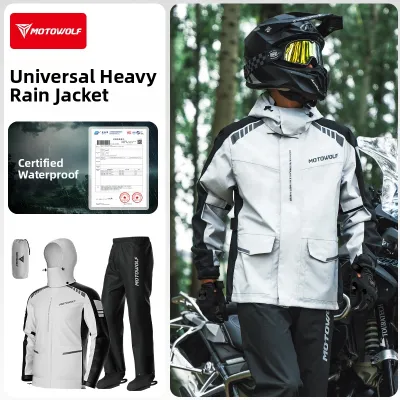
Prices are valid at publication and may change. Please refer to the product page for the latest price.
While higher certification classes provide superior protection thresholds in laboratory tests, they often introduce practical trade-offs. Heavy-duty materials that achieve Class AA or AAA ratings tend to be thicker, heavier, and less breathable. For riders in warm climates, balancing these safety ratings with ventilation is essential to prevent heat fatigue, which itself can compromise riding safety.
How to Verify Protection Levels on Motowolf Jackets
To confirm the safety credentials of a Motowolf jacket, you should inspect the physical labels sewn into the interior lining or armor pockets. Official CE-certified gear features a distinct booklet label or pictogram showing a motorcycle rider, alongside the specific standard number (such as EN 17092 or EN 1621-1) and the achieved classification letter or level.

It is critical to verify whether the CE rating applies to the entire jacket or solely to the removable armor inserts. Many entry-level riding jackets include CE-certified elbow and shoulder pads, but the outer textile shell itself may not carry an official EN 17092 garment certification. Always cross-reference the physical labels with the manufacturer’s official product specifications or listings from authorized distributors.
When purchasing from online marketplaces or local gear shops, be cautious of vague product descriptions that claim “CE approved” without specifying the exact class or standard. Genuine protective gear will always have the corresponding certification codes printed directly on the armor pieces and stitched into the garment’s interior seams.
Matching CE Ratings to Your Riding Needs
Selecting the right protection level depends heavily on your typical riding environment and local climate. For daily urban commuting at moderate speeds, a Class A textile jacket equipped with Level 1 shoulder and elbow armor offers a practical balance of lightweight comfort and basic slide protection.
If your routes frequently involve high-speed expressways or long-distance touring, upgrading to a Class AA jacket with Level 2 armor is highly recommended. The increased abrasion resistance of Class AA materials provides a crucial safety margin during high-velocity slides on asphalt.
In tropical regions like Singapore, managing heat and humidity is a major consideration. Full textile jackets can quickly become uncomfortable, leading some riders to opt for mesh hybrid jackets. When choosing a mesh jacket, look for models that place high-abrasion-resistant fabrics on key impact zones—like the shoulders and elbows—while utilizing breathable mesh panels on the chest and back to maintain airflow without completely sacrificing safety.
Evaluating Safety Features Beyond CE Certifications
While CE ratings provide an excellent baseline, overall safety also depends on structural details that standard tests might not fully capture. Examine the seam construction in high-impact areas; high-quality jackets utilize double or triple stitching with heavy-duty nylon thread to prevent the seams from bursting open during a slide.
Visibility and secure fitment are equally vital safety components. Look for integrated reflective panels or piping that enhance your visibility to other motorists during night rides or heavy downpours. Additionally, adjustable straps on the sleeves and waist help keep the protective armor firmly in place, preventing the pads from shifting away from your joints during an accident.
Finally, ensure the jacket fits snugly but comfortably over your typical riding attire. An ill-fitting jacket—whether too loose or too tight—can cause the armor inserts to misalign, significantly reducing their effectiveness when you need them most.
Frequently Asked Questions (FAQ)
Can I upgrade the armor in my Motowolf jacket to a higher CE level?
Yes, you can typically upgrade the impact protectors if the jacket features removable armor pockets. Before purchasing aftermarket Level 2 armor, measure the internal dimensions of the jacket’s armor pockets and check the manufacturer’s guidelines. Forcing oversized or overly thick protectors into small pockets can distort the shape of the jacket, restrict your movement, and compromise the overall safety and fit of the gear.
Does a CE-rated Motowolf jacket guarantee injury prevention?
No safety gear can guarantee absolute protection or prevent all injuries in every accident scenario. CE ratings indicate that the materials and armor have met specific performance thresholds under controlled laboratory testing conditions. Real-world safety ultimately relies on defensive riding practices, maintaining a proper fit, and regularly inspecting your gear for signs of wear, UV damage, or seam degradation.
Community discussion
Share your experience or ask a question. Comments are reviewed before publication.