
Selecting the right motorcycle rain jacket requires looking beyond basic styling to understand the technical specifications printed on product tags. These details indicate how well a jacket will protect you during an unexpected slide and how dry it will keep you during a sudden tropical downpours. By decoding these ratings, you can choose gear that matches your riding style, local climate, and safety requirements.
Understanding the balance between impact protection and weatherproofing ensures you do not compromise on safety when the weather turns bad. Whether you are navigating daily stop-and-go traffic or embarking on long-distance highway tours, knowing what these standards mean allows you to make an informed investment in your riding gear.
Understanding CE Protection Ratings for Riding Gear
CE (Conformité Européenne) markings on motorcycle gear indicate that the product meets specific European safety standards for mechanical impact and abrasion resistance. When evaluating a motorcycle rain jacket, it is important to distinguish between garment-level certifications and individual armor certifications. The overall garment is tested under the EN 17092 standard, which classifies the entire jacket’s resistance to abrasion, tearing, and seam bursting. These classifications range from Class AAA (highest protection, typically reserved for heavy leather track suits) down to Class A (lightweight protection suitable for urban riding) and Class B (which offers abrasion protection only, without impact armor).
Products mentioned in this guide
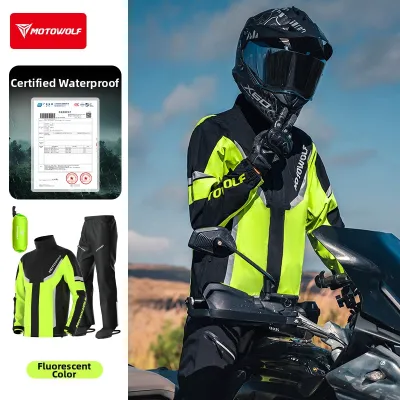
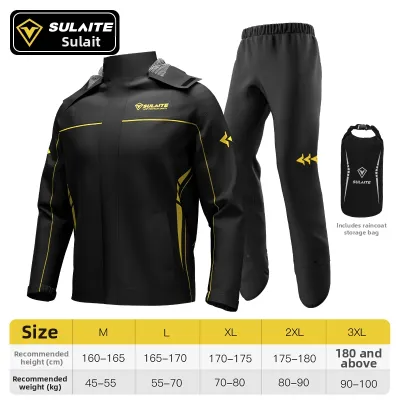
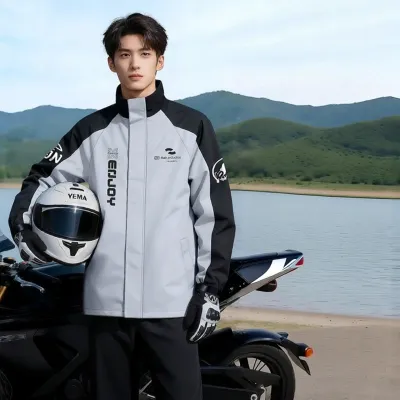
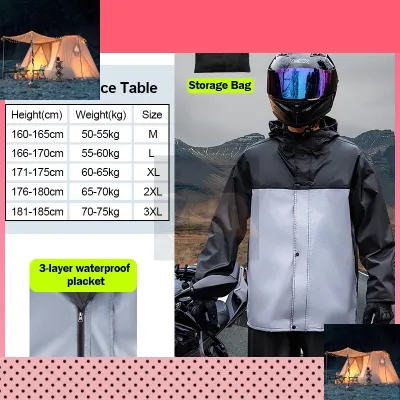
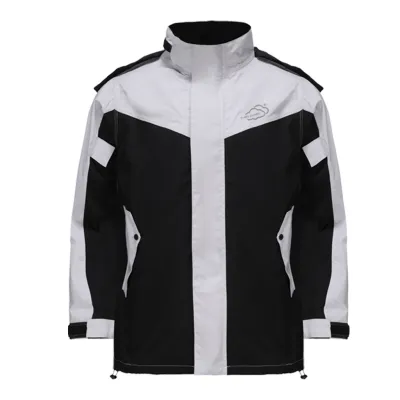
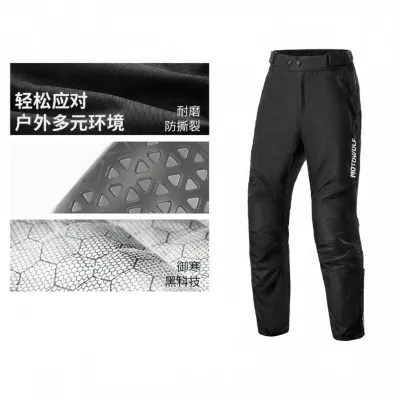
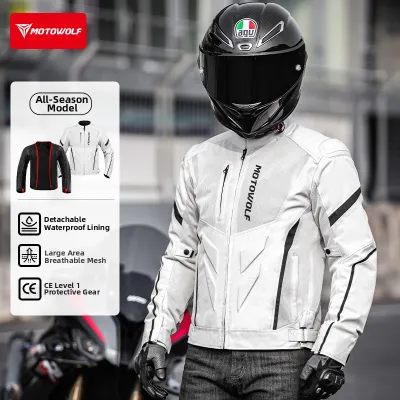
Prices are valid at publication and may change. Please refer to the product page for the latest price.
For impact protection, look for individual armor inserts certified under the EN 1621 series. Shoulder and elbow protectors are tested under EN 1621-1, while back protectors must meet the EN 1621-2 standard. Within these standards, armor is rated as either Level 1 or Level 2. Level 2 protectors absorb more energy during an impact, transmitting less force to your body, making them highly recommended for high-speed highway riding.
To verify these ratings, locate the white booklet icon printed on the jacket’s inner care label or on the armor inserts themselves. This label will display the specific EN standard number, the protection level, and a pictogram showing which part of the body the armor protects.
When shopping, check whether the motorcycle rain jacket is designed as an integrated riding jacket or a dedicated outer shell. Integrated jackets feature built-in armor pockets and often come with pre-installed Level 1 or Level 2 protectors. Dedicated rain shells, on the other hand, are designed without armor pockets and must be sized generously to fit comfortably over your existing armored riding jacket.
Decoding Waterproof Ratings: Millimeters vs. IPX Scales
Waterproof fabric performance is typically measured using a hydrostatic head test, which is expressed in millimeters (mm). This rating represents the height of a water column that a fabric can support before moisture begins to penetrate the fibers. For example, a jacket rated at 10,000mm can withstand a 10-meter column of water pressure before leaking.

For short city commutes in light to moderate rain, a rating between 5,000mm and 10,000mm is generally sufficient to keep you dry. However, riding at highway speeds increases the pressure of wind-driven rain against your chest and shoulders. If you frequently ride in heavy downpours or cover long distances, look for a rating of 15,000mm to 20,000mm or higher to prevent water from forcing its way through the fabric.
While hydrostatic head ratings apply to the fabric itself, IPX (Ingress Protection) ratings are occasionally used for fully sealed gear, integrated electronic components, or waterproof pockets. An IPX6 rating indicates protection against high-pressure water streams from any angle, which is highly relevant for external storage compartments holding mobile phones or documents. Unlike textile millimeter ratings, IPX scales evaluate the entire sealed enclosure rather than just the raw material.
Even the highest fabric rating will fail to keep you dry if the jacket’s construction is weak. Water easily penetrates through stitching holes, standard zippers, and collar openings. Always check product specifications for fully taped or sealed seams, storm flaps that cover the main zipper, and water-resistant zippers to ensure comprehensive wet-weather protection.
Balancing Protection, Waterproofing, and Breathability
Heavy, highly abrasion-resistant materials combined with thick waterproof membranes can significantly restrict airflow, trapping body heat and sweat inside the jacket. In warm, humid climates, this lack of breathability can cause you to become just as wet from perspiration as you would have been from the rain. To prevent this, look for jackets that utilize breathable waterproof membranes, which feature microscopic pores large enough to let sweat vapor escape but small enough to block liquid water droplets.
Physical ventilation features are essential for managing internal condensation during stop-and-go city riding. Look for jackets equipped with water-resistant pit zips, chest vents, or rear exhaust panels. These vents can be opened to allow fresh air circulation when the rain stops or when riding at lower speeds, and then zipped shut when the downpour resumes.
Modular designs offer the greatest versatility for year-round riding. A three-layer system—consisting of a highly ventilated outer mesh jacket, a removable waterproof liner, and a removable thermal liner—allows you to adapt your gear to changing weather conditions. This setup ensures you remain cool and protected during dry, hot days, while remaining completely dry when the weather turns wet.
Frequently Asked Questions (FAQ)
Can I wear CE armor over a standard waterproof raincoat?
No, impact armor must always be worn close to your body to function correctly. Standard waterproof raincoats are typically loose-fitting and lack the structural design to hold armor in place. If you wear armor over a loose raincoat, the protectors are highly likely to shift or slide away from your elbows, shoulders, or back during a fall, leaving you unprotected. Always wear your armored jacket underneath a dedicated waterproof outer shell, or use a motorcycle rain jacket with integrated internal armor pockets.
Does a higher waterproof millimeter rating always mean a better jacket?
Not necessarily, as extremely high waterproof ratings often come with trade-offs in comfort and usability. Fabrics with exceptionally high ratings (such as 20,000mm and above) tend to be stiffer, heavier, and less breathable, which can make them uncomfortable for short, casual rides in warm weather. For daily urban commuting, a moderate rating of 10,000mm offers an excellent balance of water resistance, flexibility, and breathability. Reserve ultra-high ratings for long-distance touring where you expect prolonged exposure to severe, wind-driven highway rain.
Community discussion
Share your experience or ask a question. Comments are reviewed before publication.