
To ride safely in wet weather, a motorcycle rain coat must offer more than just water resistance; it requires certified mechanical protection to safeguard you during a fall. For genuine safety, look for a rain coat certified under the European standard EN 17092 for abrasion resistance, alongside integrated or insertable impact armor certified under EN 1621. While many riders purchase lightweight rain shells to keep dry, these garments often lack the structural integrity to survive a slide on asphalt unless they carry these specific safety ratings.
Essential Protection Ratings for Motorcycle Rain Gear
Riding in the rain introduces dual hazards: reduced traction on the road and decreased visibility. While keeping dry is essential for comfort and concentration, your primary defense during an accident remains the physical barrier between your body and the road. Standard rain jackets only shield you from water, whereas dedicated motorcycle rain gear is engineered to withstand high-velocity friction and impact.
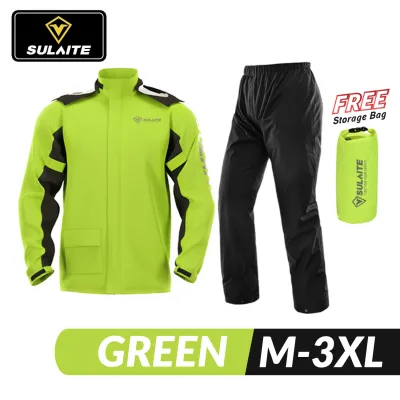
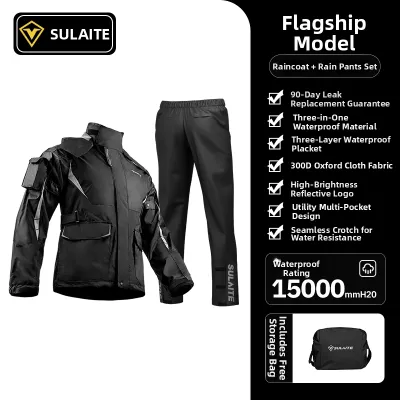
When evaluating protective apparel, such as a Sulaite rain coat or similar riding gear, you must look beyond marketing terms like “heavy-duty” or “ripstop.” True protective gear undergoes rigorous standardized testing to earn European Conformity (CE) markings. The two primary standards that govern this gear are EN 17092, which assesses the entire garment’s structural integrity, and EN 1621, which certifies the impact-absorbing armor inserts.
Products mentioned in this guide
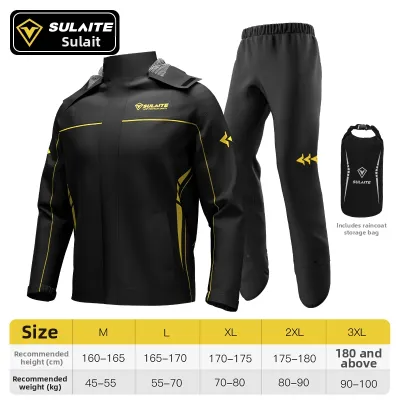
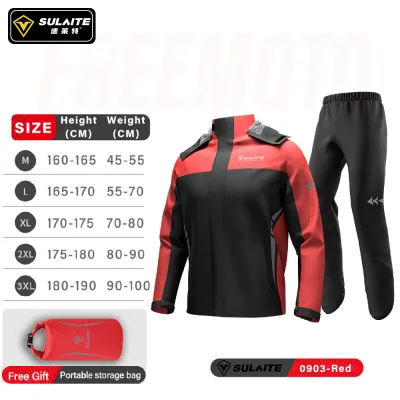
![[SG] SULAITE Motorcycle Raincoat Bicycle Raincoat Reflective Waterproof Jacket Split 3 Layer PVC Riding Outdoor](https://img.lazcdn.com/g/p/956cc5e27c6ef1826143cbe583740f1d.jpg_400x400q80.jpg_.webp)
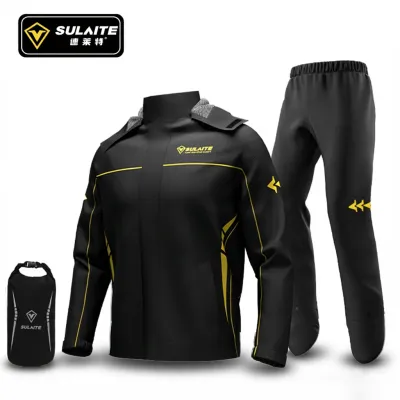
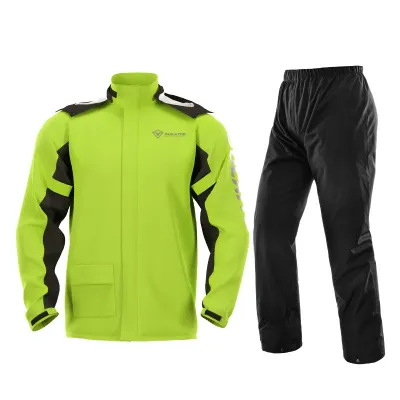
Prices are valid at publication and may change. Please refer to the product page for the latest price.
Relying solely on product descriptions on online marketplaces can be risky, as terms like “protective” are often used loosely to describe weather resistance rather than crash safety. Before purchasing, always verify that the garment features official CE labels detailing these exact standards. If a rain coat lacks these certified markings, it should only be used as an outer waterproof layer over a fully certified, abrasion-resistant riding jacket.
Decoding Abrasion and Tear Resistance (EN 17092)
The EN 17092 standard classifies motorcycle garments into different categories based on their ability to resist abrasion, tearing, and seam burst during a slide. These classes range from AAA, which offers the highest level of protection for high-speed track environments, down to Class C, which is designed only to hold armor in place without providing slide protection.

For typical road riding, Class AA and Class A are the most common standards you will encounter in protective jackets. Class AA garments are suitable for touring and highway speeds, offering a balanced mix of durability and flexibility. Class A garments are lighter and designed for lower-speed urban commuting, providing basic slide protection while maximizing rider comfort in warm or humid climates. Class B garments offer slide protection similar to Class A but do not include impact protectors.
To verify these ratings, locate the white booklet-style label stitched into the interior lining of the rain coat. This label features a distinct motorcycle rider pictogram alongside the EN 17092 designation and the specific class letter. If this pictogram and class letter are missing, the garment has not been officially certified to protect you during a slide.
Choosing the right class involves a direct trade-off between physical protection and packability. Heavy-duty, abrasion-resistant materials like high-denier Cordura or reinforced textiles are bulky and difficult to fold into a small under-seat compartment. Conversely, ultra-lightweight rain gear that packs down to the size of a water bottle rarely offers any slide resistance, meaning it must be worn over existing protective armor to keep you safe.
Checking Impact Armor Standards (EN 1621)
While abrasion resistance prevents the road from wearing through your clothing, impact armor protects your bones and joints from sudden, hard contact. The EN 1621 standard governs these protective inserts, dividing them into separate categories based on the body part they protect.
When inspecting a protective rain coat, look for armor certified under EN 1621-1 for limbs, which covers the shoulders and elbows, and EN 1621-2 for back protectors. These protectors are tested to measure how much force they transmit to the body during an impact, with lower transmitted force indicating superior protection.
The armor pieces themselves are rated as either Level 1 or Level 2. Level 1 protectors offer standard protection suitable for daily commuting, while Level 2 protectors absorb significantly more impact energy, making them ideal for high-speed riding or harsh weather conditions. You can identify these ratings by looking at the molded markings directly on the rubber or foam armor inserts inside the jacket.
If you are purchasing a rain coat designed as a protective shell, ensure it features dedicated, secure internal pockets to hold this armor. These pockets must keep the protectors firmly positioned over your elbows and shoulders without shifting. Loose-fitting armor can slide away from your joints during a fall, leaving you vulnerable to severe impact injuries.
Separating Waterproof Ratings from Crash Protection
A common misconception among riders is that a highly waterproof jacket is inherently tough enough to handle a motorcycle crash. Waterproofing is measured by hydrostatic head ratings, which indicate how much water pressure a fabric can withstand before leaking. While a high rating keeps you dry during a heavy downpour, it has no bearing on how the fabric behaves when sliding across asphalt.
Thin polyurethane or nylon membranes designed to block water have almost zero resistance to friction. During a slide, the heat generated by road contact can melt these synthetic materials instantly, potentially causing severe burns as the fabric fuses to your skin. Mechanical safety requires heavy-weight textiles, reinforced stitching, and specialized synthetic fibers.
To identify a rain coat that offers genuine protection, look for physical reinforcements in high-impact zones like the shoulders and elbows. These areas should feature double-layered fabrics or heavy-duty panels that sit over the waterproof membrane. Standard waterproof taping along the seams prevents leaks but does not add structural strength to prevent the seams from bursting during a fall.
When deciding on your wet-weather setup, consider whether an all-in-one protective rain jacket or a lightweight over-suit fits your needs. An all-in-one jacket combines a waterproof membrane, abrasion-resistant outer shell, and impact armor into a single garment, which is highly convenient but can be warm in tropical climates. A lightweight, non-protective over-suit is designed solely to keep water off your primary, fully armored leather or textile riding gear.
How to Verify Safety Labels on Your Rain Coat
Before setting off on a wet ride, take a few minutes to physically inspect your rain gear to confirm its safety credentials. Legitimate protective motorcycle gear must feature a permanent CE label stitched into the garment, usually near the collar or inner pocket. This label must display the CE logo, the specific standard number (such as EN 17092-4 for Class A), and the details of the notified body that performed the certification.
Be cautious of labels that simply state “CE Approved” or “Tested to CE Standards” without listing a specific EN number or classification. These vague claims often indicate that only the raw materials, or perhaps just the armor inserts, were tested, rather than the fully constructed garment. A certified jacket must have its seams, zippers, and fabric tested together as a complete unit.
If you find that the internal labels are missing, faded, or lack clear certification details, do not rely on the garment as your primary source of crash protection. In such cases, treat the rain coat strictly as a wind and water barrier. Wear it exclusively over a certified riding jacket that you know contains verified abrasion resistance and impact armor, or contact the manufacturer directly to request the official Declaration of Conformity.
Frequently Asked Questions (FAQ)
Can I wear a standard waterproof rain coat over my protective motorcycle jacket?
Yes, wearing a standard, non-protective waterproof rain coat over a certified motorcycle jacket is a common and practical solution. However, you must ensure the outer rain coat fits loosely enough that it does not compress or displace the armor inserts in your underlying jacket. If the outer layer is too tight, it can restrict your movement and pull the shoulder or elbow protectors out of their correct safety positions. Additionally, be aware that non-motorcycle rain coats made of cheap PVC or thin nylon can melt rapidly from friction heat during a slide, so a dedicated motorcycle-specific over-suit is always a safer choice.
Does a higher waterproof rating mean better crash protection?
No, there is no correlation between a garment’s waterproof rating and its ability to protect you in a crash. Waterproof ratings measure a fabric’s resistance to water penetration under static pressure, whereas crash protection standards measure resistance to tearing, seam bursting, and high-speed abrasion. A thin plastic poncho can be completely waterproof but will disintegrate the moment it touches the road. Always look for separate CE certification marks, such as EN 17092, to verify that the garment has been mechanically tested to survive a fall.
Community discussion
Share your experience or ask a question. Comments are reviewed before publication.