
Selecting an appropriate exhaust guard is essential for protecting your motorcycle’s exhaust pipe from physical damage, preventing accidental rider burns, and shielding nearby components from extreme radiant heat. The exhaust system operates at exceptionally high temperatures, often exceeding 600°C at the header pipes. Without adequate protection, a brief contact with an exposed pipe can cause severe burns, melt expensive riding gear, or damage soft luggage.
When evaluating aftermarket motorcycle guards covers, several factors come into play. The ideal guard must balance thermal insulation, physical impact resistance, and secure mounting. The selection process depends on your primary protection goal:
- Rider and Passenger Protection: Preventing high-temperature contact burns on legs and ankles.
- Component and Gear Protection: Shielding soft saddlebags, plastic fairings, or electrical routing from melting.
- Cosmetic Preservation: Deflecting road debris, gravel, and tip-over scratches to keep the exhaust looking pristine.
Before purchasing any motorcycle guards covers, you must verify your bike’s exhaust routing, outer pipe dimensions, clearance from adjacent components, and existing mounting points. A guard that lacks a proper air gap or uses incompatible materials can transfer heat directly to sensitive areas or cause severe galvanic corrosion, particularly in humid climates.
Products mentioned in this guide
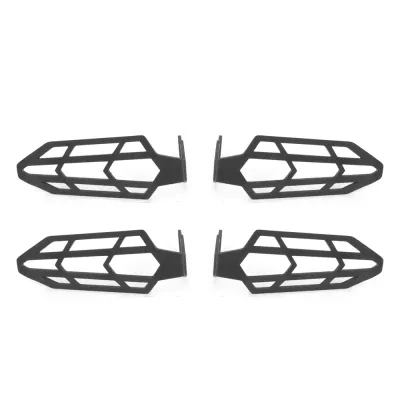
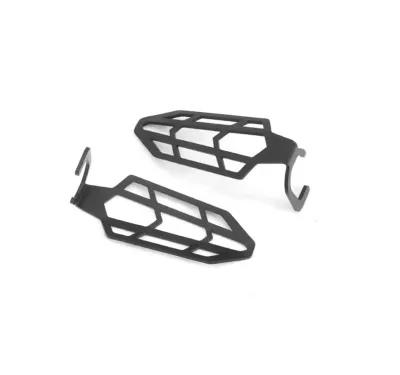
Prices are valid at publication and may change. Please refer to the product page for the latest price.
Types of Exhaust Heat Shields and Guards
Understanding the structural designs of available exhaust guards helps you identify which form factor suits your specific exhaust layout and protection needs. Different riding environments and exhaust configurations require distinct coverage levels.
Clamp-On and Slip-On Shields
Clamp-on and slip-on shields provide localized protection and are highly popular for their modularity. These guards typically attach directly to the exhaust pipe using adjustable stainless steel worm-gear clamps or dedicated mounting brackets. They are designed to sit slightly elevated off the pipe surface, creating a crucial air gap that acts as a natural thermal barrier.
These shields are ideal for protecting specific high-contact zones, such as where the rider’s calf or the passenger’s foot rests near the exhaust. Because they do not cover the entire length of the pipe, they are lightweight, cost-effective, and easy to install without dismantling the exhaust system. The primary trade-off is that they leave the rest of the exhaust tract exposed to road debris, water spots, and potential scratches.
Wrap-Around and Full Exhaust Covers
Wrap-around and full exhaust covers offer comprehensive protection by enclosing a significant portion of the exhaust system. These are commonly used on cruiser motorcycles to cover the entire length of the header pipes and mufflers, often serving a dual purpose of concealing the natural blueing or discoloration of the underlying metal.
By fully enclosing the pipe, these covers provide maximum protection against deep scratches, road debris, and direct contact. However, they add substantial weight to the exhaust assembly, which can place additional stress on the exhaust hangers and mounting brackets over time. Proper fitment is critical; even a minor misalignment can result in persistent rattling or buzzing at specific engine RPMs. Additionally, if not tightly sealed, full covers can trap road grime, moisture, and salt, accelerating corrosion on the underlying pipe.
Exhaust Heat Wraps and Tapes
Exhaust heat wraps and tapes are flexible, non-rigid thermal barriers woven from fiberglass, volcanic rock (basalt) fibers, or titanium-infused ceramic fibers. Unlike rigid shields, wraps are applied directly to the surface of the header pipes and secured tightly with stainless steel locking ties. This method is highly effective for custom builds, tight engine bays, or configurations where bodywork sits dangerously close to the exhaust.
Wraps excel at retaining thermal energy within the exhaust pipe, which can improve exhaust scavenging efficiency while drastically reducing radiant heat in the surrounding area. However, they require careful maintenance. Because the material is porous, it naturally absorbs water, oil, and road grime. In humid environments, a wet wrap resting against a mild steel pipe can accelerate rust and structural rot. There is also a potential fire hazard if engine oil or fuel leaks onto a saturated wrap, making regular inspections mandatory.
Material Comparison: Choosing the Right Cover for Heat and Impact
Evaluating materials based on thermal properties, weight, and durability ensures you select a guard that performs reliably under extreme conditions without relying on unverified marketing claims.

Stainless Steel and Aluminum
Stainless steel and aluminum are the most common metals used in exhaust guard construction, each offering a distinct set of physical properties.
- Aluminum: Highly valued for its low density and excellent thermal conductivity, which allows it to dissipate heat rapidly into the passing air. It is highly malleable, making it easy to form into custom shapes, and is generally budget-friendly. However, aluminum has a lower melting point than steel and can soften, warp, or discolor when subjected to the extreme temperatures of a header pipe.
- Stainless Steel: Typically grade 304 or 316, stainless steel offers superior structural strength and impact resistance. It can withstand extreme thermal cycling without warping or losing its structural integrity. It maintains its polished, brushed, or matte finish exceptionally well and is highly resistant to rust. The primary trade-off is weight; stainless steel is significantly heavier than aluminum, meaning long-term engine vibrations will put more stress on the mounting hardware.
Carbon Fiber and Titanium
For performance-oriented riders, premium materials offer an exceptional strength-to-weight ratio and advanced thermal characteristics.
- Carbon Fiber: Carbon fiber reinforced polymer (CFRP) features exceptionally low thermal conductivity, meaning it does not transfer heat quickly. You can often touch a carbon fiber shield shortly after a ride without sustaining burns. It adds virtually no weight to the motorcycle and provides a modern, high-tech aesthetic. However, carbon fiber is brittle; a sharp impact from a kicked-up rock or a hard tip-over can crack or shatter the composite matrix.
- Titanium: Combines the lightweight properties of aluminum with the strength and thermal tolerance of stainless steel. Titanium guards can withstand extreme temperatures without degrading, and they naturally develop a unique blue-purple oxide patina when heated. They are incredibly durable and highly resistant to chemical corrosion. The primary drawback is cost, as titanium is difficult to machine and weld, making these guards a premium investment.
Fiberglass and High-Temp Silicone
Fiberglass and high-temperature silicone are flexible, non-metallic materials primarily used for specialized thermal insulation rather than structural protection.
- Fiberglass: Commonly used as the primary material in heat wraps and as an insulating backing layer inside metal shields. It offers excellent thermal insulation, keeping outer surface temperatures safe to touch, but provides zero structural protection against heavy impacts.
- High-Temp Silicone: Often molded into flexible guards that wrap around the outer body of a muffler to protect it during low-speed drops. It can withstand continuous operating temperatures up to 250°C. While excellent for preventing scuffs on the muffler canister, silicone guards lack the rigid impact resistance of metals and can tear if scraped against sharp obstacles.
Matching the Guard to Your Motorcycle Style and Riding Needs
Your choice of exhaust guard should align with your motorcycle’s category, typical riding environment, and specific safety priorities.
Cruisers and Touring Motorcycles
Cruisers and touring motorcycles typically feature long, exposed exhaust runs that pass close to the rider’s legs and passenger footboards. Passenger protection is a major priority here, as passengers may lack the thick riding gear or spatial awareness of the rider, making them highly susceptible to accidental contact burns.
For these bikes, full-length chrome or polished stainless steel covers are highly favored. They match the classic aesthetic while providing robust physical protection. When riding long distances with loaded panniers, ensuring that these shields prevent soft luggage from sagging onto the hot muffler is a critical safety consideration. The guards must be strong enough to support or deflect the weight of shifting bags without bending into direct contact with the pipe.
Sportbikes and Naked Bikes
Performance, weight saving, and lean clearance are the driving factors for sportbikes and naked bikes. Heavy steel guards are unsuitable for these applications. Instead, riders should look for compact, lightweight carbon fiber or titanium slip-on shields.
These guards must be carefully positioned to ensure they do not interfere with the rider’s boots during aggressive cornering, nor should they reduce the bike’s maximum lean angle. Because sportbike exhausts run extremely hot due to high-RPM engine configurations, the guard must feature highly efficient standoffs to maintain a clear air gap, preventing radiant heat from melting nearby plastic fairings or rear shock reservoirs.
Scooters and Urban Commuters
Urban commuting in a tropical, high-traffic environment like Singapore presents unique challenges. Stop-and-go traffic on congested city roads means there is minimal airflow to cool the engine and exhaust, leading to extreme localized heat buildup. Scooters and small-capacity commuters have low-slung, exposed exhausts that sit right where a rider puts their foot down at traffic lights.
A practical, low-cost, highly durable plastic or aluminum guard with a thick inner insulating layer is essential to protect the rider’s right leg. Because these bikes are ridden daily in heavy rain and high humidity, the mounting hardware must be made of high-grade stainless steel to prevent rust and rattling. Easy-to-clean designs are preferred, as road grime and oil splash are common in wet urban environments.
Installation, Safety, and Maintenance Boundaries
Proper installation and regular maintenance are critical to ensure your exhaust guard performs safely without causing damage to your motorcycle.
- Safety First: Never attempt to install, adjust, or touch an exhaust guard until the motorcycle has been switched off and the exhaust system has cooled completely to ambient temperature. Exhaust pipes can reach temperatures exceeding 600°C during operation, which can cause severe, third-degree burns instantly.
- Clearance and Fitment: Ensure there is a consistent air gap—typically at least 5mm to 10mm—between the guard and the exhaust pipe. Direct contact will allow heat to transfer via conduction, rendering the shield useless and potentially damaging the guard itself. Use the manufacturer-provided high-temperature silicone spacers, standoffs, or specialized brackets to maintain this clearance.
- Torque and Hardware: Refer to your motorcycle's factory service manual and the guard manufacturer's instructions for exact torque specifications. Over-tightening mounting clamps or bolts can strip threads, deform the exhaust pipe, or crack fragile engine casings if mounting directly to engine studs. Use a medium-strength, high-temperature thread locker on all mounting bolts to prevent them from backing out due to engine vibrations.
- Professional Installation: If the installation requires welding mounting tabs, removing major structural exhaust components, or modifying the frame, seek assistance from a qualified motorcycle mechanic. Incorrectly mounted guards can interfere with suspension travel, rear brake operation, or swingarm movement, posing a severe safety risk.
- Maintenance: Regularly inspect your exhaust guards as part of your routine pre-ride checks. Look for loose bolts, cracks in the material, or signs of rattling. Check for trapped debris such as dry leaves, plastic bags, or road grime between the shield and the pipe. Trapped organic material can easily ignite under high exhaust temperatures, creating a serious fire hazard. If you notice any unusual rattling, structural cracking, or deep corrosion on the underlying pipe, stop riding immediately and consult a professional technician.
Frequently Asked Questions (FAQ)
Do exhaust heat shields actually reduce engine temperature?
No, exhaust heat shields do not reduce the operating temperature of the engine itself. Their primary function is to manage radiant heat, redirecting it away from the rider, passenger, and heat-sensitive motorcycle components (such as the battery, wiring harness, or plastic fairings). While enclosing the exhaust pipe with a full cover or wrap can slightly retain heat within the exhaust gases—which can actually improve exhaust scavenging and gas velocity—this heat retention is localized to the exhaust tract and does not negatively affect a healthy engine’s cooling system.
Can I install an aftermarket exhaust guard on a stock slip-on muffler?
Yes, but compatibility must be verified before purchase. You must measure the exact outer diameter of your stock muffler and check for any pre-existing mounting brackets or heat shield bosses. While universal clamp-on guards are widely available and can fit a range of pipe diameters, they require a clean, cylindrical surface to mount securely. If your stock muffler has an irregular, non-cylindrical shape or features integrated cosmetic plastic covers, a universal clamp-on may not sit flush, potentially scratching the muffler’s finish or failing to secure tightly. Always check the manufacturer’s compatibility list or consult a professional installer for model-specific fitment.
Community discussion
Share your experience or ask a question. Comments are reviewed before publication.