
Motorcycle engine oil viscosity measures how easily the oil flows at specific temperatures. Choosing the right grade requires matching the exact Society of Automotive Engineers (SAE) rating, API classification, and JASO specification detailed in your motorcycle’s owner’s manual. Using the correct viscosity ensures proper lubrication, protects internal components from wear, and maintains optimal clutch performance.
What Motorcycle Engine Oil Viscosity Ratings Actually Mean
When looking at a bottle of motorcycle engine oil, you will see a rating such as 10W-40 or 15W-50. These numbers are established by the Society of Automotive Engineers (SAE) to define how the oil behaves under different temperature conditions. Understanding these numbers helps you make informed decisions when purchasing oil for your machine.
The first number, followed by the letter “W,” represents the oil’s low-temperature viscosity. The “W” stands for winter, indicating how easily the oil flows when the engine is cold, such as during a morning startup. A lower number before the “W” means the oil remains more fluid at lower temperatures, allowing it to circulate quickly through the engine block to protect vital components immediately after ignition.
Products mentioned in this guide
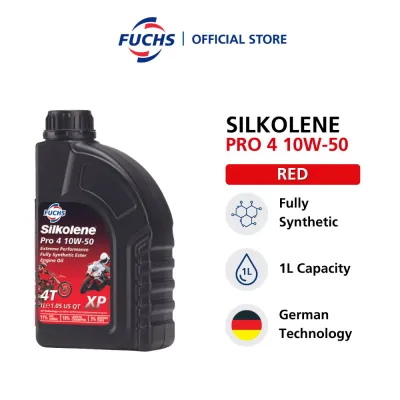
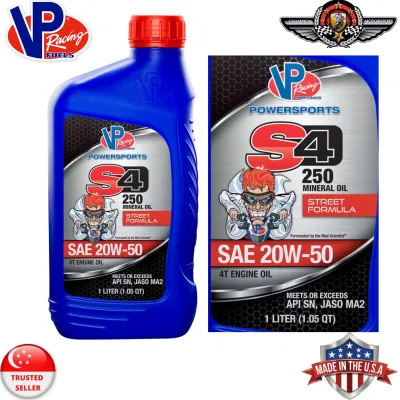
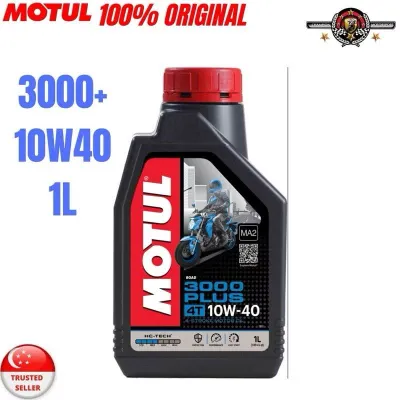
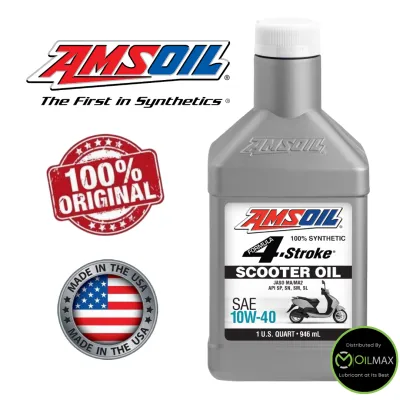
![🇸🇬 MOTUL 8100 X-CLEAN EFE 5W30 100% Synthetic Engine Oil [1L]](https://img.lazcdn.com/g/p/68c24628dbbe73b289e455a992af13b0.png_400x400q80.png_.webp)
![🇸🇬 MOTUL 8100 X-CESS GEN2 5W40 100% Synthetic Engine Oil [1L]](https://img.lazcdn.com/g/p/38d932ca737e976b89c864ad67179646.png_400x400q80.png_.webp)
Prices are valid at publication and may change. Please refer to the product page for the latest price.
The second number indicates the oil’s viscosity at high operating temperatures, typically measured at 100 degrees Celsius. A higher second number means the oil retains more thickness and resistance to flow when the engine reaches its standard running temperature. This thickness is crucial for maintaining a protective film between moving metal parts under extreme heat and pressure.
These viscosity numbers are standardized flow measurements rather than direct indicators of oil quality or base stock type. A 10W-40 oil can be mineral-based, semi-synthetic, or fully synthetic. The rating simply tells you how the fluid flows, not how long it lasts or what chemical additives are blended into the formula.
How to Find the Correct Oil Grade for Your Motorcycle
To find the correct oil grade for your motorcycle, always consult the owner’s manual provided by the manufacturer. This document contains the precise engineering specifications designed for your specific engine model. In many cases, manufacturers also print the recommended viscosity grade directly on or near the engine oil filler cap for quick reference during maintenance.

Deviating from the manufacturer’s specified viscosity can lead to serious mechanical issues. Modern motorcycle engines are built with incredibly tight clearances between moving parts, such as the pistons, bearings, and camshafts. If you use an oil that is too thick, it may not flow into these tight spaces quickly enough, leading to increased friction and heat. Conversely, an oil that is too thin may fail to maintain a sufficient protective barrier, causing premature wear and potentially voiding your vehicle’s warranty.
In addition to the viscosity grade, you must check for specific industry certifications. For motorcycles, the Japanese Automotive Standards Organization (JASO) and the American Petroleum Institute (API) ratings are critical. Most modern motorcycles with wet clutches require oil meeting the JASO MA or JASO MA2 standard, which ensures the oil has the correct frictional properties to prevent clutch slippage. Always verify these certifications on the product label before making a purchase.
Adjusting Viscosity for Singapore's Tropical Climate
In a consistently hot and humid environment like Singapore, the ambient temperature rarely drops below 24 degrees Celsius. Because of this tropical climate, ultra-low winter ratings such as 0W or 5W are generally unnecessary for daily riding. These extremely low cold-start ratings are designed for freezing climates where oil can thicken to a gel-like consistency overnight.
For daily commuting or highway riding in Singapore, a standard cold-start rating like 10W or 15W is perfectly adequate. However, the high-temperature rating remains highly relevant. In heavy stop-and-go traffic, motorcycle engines can run exceptionally hot. Some riders consider moving to a slightly higher high-temperature grade, such as from a 10W-40 to a 15W-50, to provide extra protection under extreme heat.
Before making any adjustment, you must verify that the alternative grade is explicitly permitted within the manufacturer’s guidelines. Never assume that a thicker oil automatically provides better protection in hot weather. If the oil is thicker than what the engine clearances were designed to handle, it can restrict oil flow, increase operating temperatures, and reduce fuel efficiency. Always stay within the approved ranges listed in your owner’s manual.
Common Viscosity Myths That Can Harm Your Engine
One of the most persistent myths among riders is that “thicker is always better” for protecting an engine. While a thicker oil film can withstand high pressures, an excessively thick oil increases internal drag and reduces the speed at which the oil circulates. This slower circulation can actually cause the engine to run hotter because the oil cannot carry heat away from critical components quickly enough.
Another common misconception is confusing the viscosity grade with the base oil type. Some riders believe that fully synthetic oils are naturally thinner than conventional mineral oils of the same grade. In reality, a fully synthetic 10W-40 oil and a conventional 10W-40 oil have the exact same flow characteristics at both low and high temperatures. The difference lies in the synthetic oil’s ability to resist chemical breakdown and maintain its viscosity over a longer period.
Finally, mixing different viscosity grades or brands is highly discouraged. While mixing oils in an emergency is better than running an engine low on oil, it can disrupt the carefully balanced additive packages of each product. This can lead to reduced lubrication efficiency, accelerated oil degradation, or even clutch slippage in wet-clutch systems. For routine top-ups and oil changes, stick to a single consistent brand and viscosity grade.
Frequently Asked Questions (FAQ)
Can I use car engine oil in my motorcycle if the viscosity matches?
No, you should not use automotive engine oil in a motorcycle, even if the viscosity ratings are identical. Most modern motorcycles utilize a wet clutch system, where the engine, transmission, and clutch share the same oil reservoir. Car engine oils often contain friction modifiers designed to improve fuel economy, which can cause a motorcycle’s wet clutch to slip, leading to poor power transfer and accelerated clutch wear. Always look for oils certified under the JASO MA or JASO MA2 standard specifically formulated for motorcycles.
Is it safe to switch between 10W-40 and 15W-50?
Switching between these grades is only safe if your motorcycle manufacturer explicitly lists both options in the owner’s manual for your operating temperature range. If the manual permits both grades, switching to 15W-50 can be beneficial for long-distance touring or heavy traffic in hot climates. However, if your manual only specifies 10W-40, switching to a heavier 15W-50 could restrict oil flow through tight engine clearances, increase operating temperatures, and potentially void your warranty. Always prioritize the manufacturer’s primary recommendation.
Community discussion
Share your experience or ask a question. Comments are reviewed before publication.