
Washing your car at home is a rewarding way to maintain its appearance, but choosing the wrong tool can quickly lead to unsightly paint damage. When comparing a microfiber wash mitt and a traditional car washing sponge, the microfiber wash mitt is generally the safer and more effective choice for protecting your vehicle’s clear coat. Microfiber mitts feature a deep, plush pile that actively lifts and traps abrasive dirt particles away from the paint surface, whereas traditional sponges have flat surfaces that can trap grit against the paint, leading to micro-scratches and swirl marks. However, traditional sponges still find a place in budget-conscious setups or for cleaning less sensitive areas like wheels, lower plastic trim, and glass. Understanding how these tools interact with your car’s finish is the first step toward achieving a professional-grade, scratch-free wash at home.
How Wash Tools Affect Your Car's Paint Finish
Every time you wipe a tool across your car’s paint, you introduce physical friction. If there is loose dirt, dust, or road grime on the surface, this friction can turn those tiny particles into abrasive sandpaper. The clear coat—the protective top layer of your car’s paint—is highly susceptible to micro-scratches, which eventually accumulate to form dulling swirl marks. These swirl marks are particularly visible under direct sunlight or bright streetlights, reducing the overall gloss and depth of your vehicle’s finish.
The physical structure of your washing tool determines how it handles these abrasive particles. A tool with a flat, non-porous surface will simply push the dirt along the paint, dragging the sharp edges of grit across the clear coat. Conversely, a tool with depth and open spaces can absorb or encapsulate the dirt, pulling it away from the contact zone.
Products mentioned in this guide
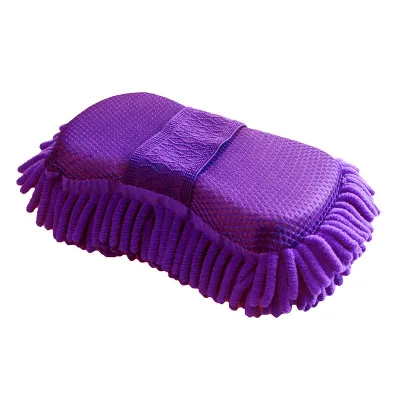
![[RANDOM COLOR] Car Wash Sponge Extra Large Coral Sponge Chenille Car Wash Absorbent Sponge Car Wash Gloves Car](https://img.lazcdn.com/g/p/1802223f9e5369685f31acf2ee98399b.jpg_400x400q80.jpg_.webp)
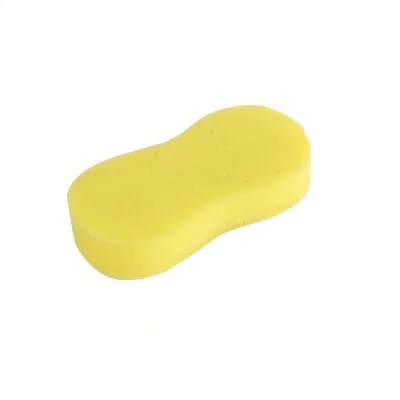
![[ONLY PURCHASE AS ADD ON] 3M Car Wash Sponge - Durable and Effective with Wave Design Texture](https://img.lazcdn.com/g/p/2048fec0614bd2abffa51d61d94074b4.png_400x400q80.png_.webp)
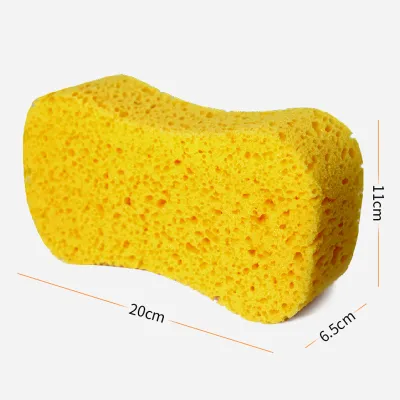
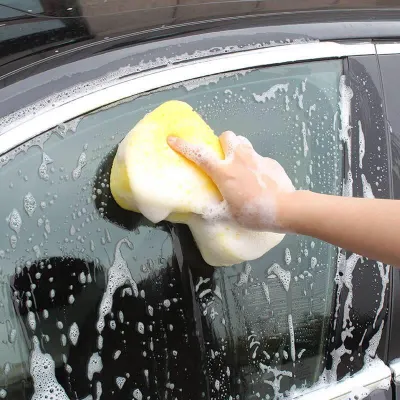
Prices are valid at publication and may change. Please refer to the product page for the latest price.
Lubrication is the other critical factor in preventing paint damage. Car wash soap acts as a barrier, reducing friction between the tool and the paint while helping to suspend dirt particles. However, even the most premium car wash shampoo cannot fully protect your paint if the physical tool you are using continuously presses grit back onto the surface. Therefore, the interaction between your wash tool’s material structure and the lubricated paint surface is what ultimately decides whether your wash routine preserves or degrades your car’s finish.
Microfiber Wash Mitts: Structure, Benefits, and Care
Microfiber wash mitts are engineered specifically to address the vulnerabilities of automotive paint. These mitts are typically made from a blend of polyester and polyamide fibers, which are split to create microscopic hooks and channels. This unique structure gives microfiber its characteristic softness and its ability to grab onto contaminants. The long, plush strands—often referred to as a deep pile—create a thick cushion between your hand and the car’s paint, ensuring that pressure is distributed evenly during the wash.

The primary benefit of this deep pile structure is dirt encapsulation. When a microfiber mitt glides over a dirty panel, the loose particles are pulled deep into the recesses of the fibers, away from the outer surface that contacts the paint. This significantly reduces the risk of dragging grit across the clear coat. Additionally, microfiber is highly absorbent, capable of holding a substantial volume of soapy water. This high water retention ensures a continuous flow of lubrication as you move the mitt across the vehicle, further minimizing friction.
To maintain these protective qualities, microfiber wash mitts require specific care. After each wash, they must be thoroughly rinsed to remove trapped dirt and soap residue. When laundering them, always use a dedicated microfiber wash detergent or a mild liquid detergent without dyes or perfumes. Never use fabric softeners or bleach, as these chemicals coat the fibers, clogging the microscopic channels and causing them to lose their absorbency and softness. Air drying or tumble drying on a low, no-heat setting is recommended to prevent the synthetic fibers from melting or hardening, which could otherwise lead to scratching during the next wash.
Traditional Car Washing Sponges: Limitations and Practical Uses
Traditional car washing sponges have been a staple of home garages for decades, primarily due to their low cost and widespread availability. These sponges are typically made from polyurethane foam and are categorized into open-cell and closed-cell structures. Open-cell sponges have interconnected pores that allow water and air to flow through, while closed-cell sponges have sealed pores, making them denser and less absorbent. While open-cell sponges can hold a decent amount of soapy water, their overall structure poses inherent risks to automotive paint.
The fundamental limitation of a traditional sponge is its flat, uniform contact surface. Unlike the long fibers of a microfiber mitt, a sponge does not have a deep pile to pull dirt away from the paint. Instead, dirt particles tend to get trapped directly between the flat surface of the sponge and the clear coat. As you wipe the sponge across the panel, these trapped contaminants are dragged along, acting as an abrasive agent that creates fine scratches. Even if you rinse the sponge frequently, grit can remain lodged in the shallow pores near the surface, ready to scratch the next panel you touch.
Despite these limitations, traditional sponges are not entirely obsolete. Their low cost and durable, rigid shape make them highly practical for cleaning areas of the vehicle that are less sensitive to scratching. For example, they are excellent for scrubbing heavy road grime off plastic wheel arches, cleaning glass windows, or washing non-painted utility surfaces like metal truck beds. Using a cheap sponge for these high-grime areas also helps preserve your premium microfiber mitts for the delicate painted panels, preventing cross-contamination.
Comparing Dirt Trapping, Lather, and Durability
When deciding between these two tools, comparing their physical performance across key categories can help clarify which option fits your needs. The table below outlines how microfiber wash mitts and traditional sponges compare based on observable material characteristics and practical usage.
| Performance Dimension | Microfiber Wash Mitt | Traditional Car Washing Sponge |
|---|---|---|
| Dirt Encapsulation | High; pulls grit deep into the fiber pile away from paint | Low; traps grit on the flat surface, increasing scratch risk |
| Lather & Water Retention | Excellent; holds a large volume of soapy water for lubrication | Moderate; holds water but releases it quickly under pressure |
| Paint Safety | High; minimizes swirl marks and micro-scratches | Low to Moderate; high risk of scratching delicate clear coats |
| Durability & Lifespan | High; reusable for dozens of washes with proper laundering | Moderate; prone to tearing, crumbling, and retaining odors |
| Maintenance Effort | Moderate; requires specific washing and drying procedures | Low; simple rinse and air dry, though prone to mold if damp |
| Best Use Case | Delicate painted surfaces, clear coats, and gloss trims | Wheels, glass, lower plastic trim, and utility vehicles |
While microfiber mitts offer clear advantages in paint safety and water retention, they do require a higher level of maintenance to keep the fibers soft and clean. Sponges, on the other hand, are incredibly simple to maintain but demand extreme caution if used on painted surfaces. Over time, a sponge will begin to crumble, tear, or develop permanent discoloration, indicating it is time for a replacement. A microfiber mitt will also show signs of wear, such as matted fibers or a loss of softness, but proper care can extend its useful life significantly beyond that of a standard foam sponge.
How to Choose the Right Tool for Your Wash Routine
Selecting the right tool depends on your vehicle’s condition, your budget, and how much time you are willing to invest in maintenance. If your primary goal is to maintain a flawless, swirl-free finish on a daily driver or an enthusiast vehicle, a microfiber wash mitt is the clear choice. The investment in a high-quality mitt and the extra effort required to wash it properly are well worth the peace of mind that comes with superior paint protection. This is especially true for vehicles with dark paint finishes, where swirl marks and fine scratches are highly visible.
On the other hand, a traditional car washing sponge may be suitable if you are washing a utility vehicle, an older car with already weathered paint, or if you are working within a strict budget. Sponges are also highly convenient for quick spot-cleaning tasks where you do not want to dirty a premium microfiber mitt. If you choose to use a sponge, ensure that the product label explicitly states it is designed for automotive use. Generic household or industrial sponges often contain denser foam or even mild abrasives that can severely damage automotive clear coats.
It is also important to recognize when neither tool is sufficient on its own. If your vehicle is covered in heavy mud, thick road salt, or caked-on grime, wiping either a mitt or a sponge directly over the surface will cause scratching. In these scenarios, a thorough pre-wash is essential. Using a pressure washer or a foam cannon to loosen and rinse away the bulk of the heavy dirt before touching the paint with a wash tool is the only way to guarantee a safe wash.
Essential Washing Techniques to Prevent Paint Damage
Regardless of whether you choose a microfiber mitt or a traditional sponge, your washing technique plays a massive role in preventing paint damage. The most effective way to minimize scratch risks is to implement the two-bucket wash method. This technique uses one bucket filled with soapy water and a second bucket filled with clean water for rinsing. Both buckets should be equipped with grit guards—radial plastic screens that sit at the bottom of the bucket. The grit guard traps dirt at the bottom, preventing it from settling back onto your wash tool when you dunk it.
Before you touch the car with any wash tool, always perform a thorough pre-wash. Rinse the vehicle from top to bottom with a hose or pressure washer to remove loose dirt, dust, and debris. This simple step removes the largest and most abrasive particles, leaving only a fine layer of road film for your wash tool to clean. When you begin washing, always work from the top of the vehicle downward. The lower panels of a car accumulate the heaviest road grime, tar, and brake dust; washing these areas last prevents you from transferring this heavy contamination to the cleaner upper panels.
As you wash, move your tool in straight, overlapping lines rather than circular motions. Circular wiping motions tend to create circular micro-scratches, which catch the light from all angles and are highly visible as swirl marks. Straight-line scratches are much less noticeable and easier to correct. Finally, pay close attention to the condition of your wash tool as you work. If you notice the mitt or sponge has become visibly dirty, stop immediately and rinse it thoroughly in your rinse bucket before loading it with fresh soapy water.
Frequently Asked Questions (FAQ)
Can I use a regular kitchen sponge to wash my car?
No, you should never use a regular kitchen sponge to wash your car’s painted surfaces. Kitchen sponges are designed for scrubbing dishes and often feature a highly abrasive backing or are made from dense, rigid materials that can easily strip wax and gouge your car’s clear coat. Even the softer side of a kitchen sponge lacks the pore structure and depth required to safely encapsulate automotive dirt, meaning it will drag grit across your paint and leave severe swirl marks.
How often should I replace my microfiber mitt or car sponge?
You should replace your wash tool as soon as you notice visual or tactile signs of degradation. For a microfiber wash mitt, look for matted or flattened fibers that no longer fluff up after washing, lingering musty odors, or a rough texture. For a traditional sponge, replace it if you see tearing, crumbling foam, or if it has become permanently stained with grease or brake dust. Using a worn-out tool compromises paint safety, so replacing them regularly is key to maintaining a scratch-free finish.
Should I use different tools for the wheels and the painted body?
Yes, you should always use separate, dedicated tools for your wheels and your car’s painted body. Wheels accumulate highly abrasive brake dust, road salt, and heavy grime that can easily become permanently embedded in your wash tool. If you use the same tool on your paint, you will transfer these sharp metallic particles directly onto your clear coat, causing severe scratching. A great practice is to use a dedicated wheel brush or an older sponge for the wheels, and keep your premium microfiber mitt strictly for the painted panels.
Community discussion
Share your experience or ask a question. Comments are reviewed before publication.