
Washing a vehicle without inflicting fine swirl marks or deep scratches requires a careful balance of lubrication, technique, and the right equipment. Among the various tools available, the choice of a car wash mop plays a pivotal role in protecting your vehicle’s clear coat. While traditional sponges have long been a staple in garage cabinets, modern detailing practices heavily favor microfiber and chenille alternatives. The fundamental difference lies in how each material interacts with abrasive road grime. Rather than pushing dirt across the paint, the ideal wash tool must lift, encapsulate, and suspend particles safely away from the surface. Understanding the physical characteristics of microfiber, chenille, and sponge mops allows you to select the safest option for your specific vehicle and washing environment.
How Mop Material and Structure Affect Paint Scratches
To understand why certain materials are safer for automotive paint, one must look at the microscopic level of dirt interaction. When a vehicle accumulates road grime, dust, and environmental fallout, these contaminants act like tiny abrasive sheets. If a wash tool has a flat, non-porous surface, it presses these particles directly against the clear coat. As you glide the tool across the panel, the trapped grit is dragged along, creating microscopic scratches known as swirl marks. Over time, these micro-scratches dull the paint’s reflection and reduce its gloss.
Preventing this damage requires a material capable of dirt encapsulation. This process involves drawing abrasive particles deep into the structure of the wash tool, away from the contact point with the paint. The depth of the material’s fibers, known as the pile height, determines how much debris can be safely stored before the tool becomes a hazard itself. A deeper pile provides a physical buffer zone, keeping the captured grit isolated from the delicate clear coat.
Products mentioned in this guide
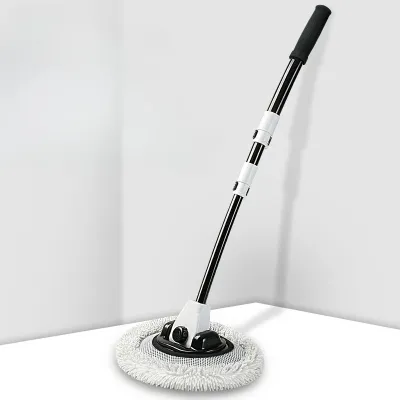
![[SG SELLER] Car wash mop chenille three-section telescopic special brush soft hair cleaning car washing tool Extendable Pole](https://img.lazcdn.com/g/p/152fda19162c3ab77eddec33adb083ca.png_400x400q80.png_.webp)
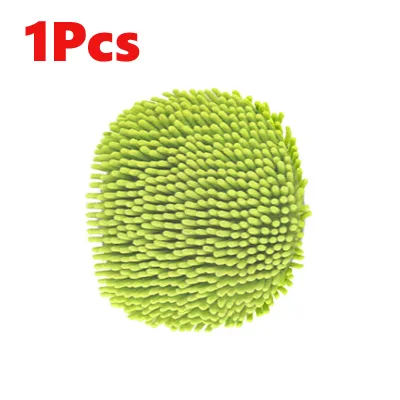
![[SG] Car Wash Mop ✨ Car Shampoo Window Cleaner Car Cloth Car Brush Car Mop](https://img.lazcdn.com/g/p/32f40ca9edbe236ae444a08011af58d0.png_400x400q80.png_.webp)
Prices are valid at publication and may change. Please refer to the product page for the latest price.
In addition to dirt encapsulation, lubrication retention is critical for scratch prevention. A wash tool must hold a substantial volume of water and car wash shampoo to create a slick barrier. This lubrication reduces friction between the tool and the paint, allowing the mop to glide effortlessly. High soap suds capacity also helps to suspend loose dirt particles, making them easier to rinse away. Without adequate lubrication, even the softest fibers can cause friction-induced marring on soft clear coats.
Evaluating Microfiber Car Wash Mops for Scratch Prevention
Microfiber car wash mops are highly regarded in the detailing community for their exceptional cleaning efficiency and safety. These mops are constructed from synthetic fibers, typically a blend of polyester and polyamide, that have been split to create microscopic hooks. This split-fiber structure dramatically increases the surface area of the mop, allowing it to grab and hold fine dust, pollen, and light road film that standard fibers might leave behind.

The pile height of a microfiber mop is a key factor in its scratch-prevention capabilities. Short-pile microfiber is excellent for applying polish or wiping away wax, but for washing, a medium-to-long pile is necessary. The longer fibers provide the necessary depth to pull grit away from the paint surface. When paired with a high-quality, pH-neutral car shampoo, a long-pile microfiber mop glides smoothly over panels, lifting contaminants with minimal downward pressure.
However, the very trait that makes microfiber effective—its ability to trap and hold debris—also presents a maintenance challenge. Fine grit can become deeply embedded within the split fibers and may not release easily during a simple rinse. If these particles remain in the mop, they will act as sandpaper during the next wash. To prevent this, microfiber mops require meticulous care. They should be washed separately from other fabrics using a dedicated microfiber detergent, avoiding fabric softeners and high heat in the dryer, which can melt the delicate synthetic tips and cause the fibers to harden.
Evaluating Chenille Car Wash Mops for Scratch Prevention
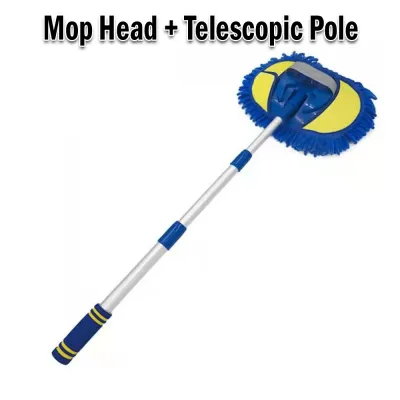
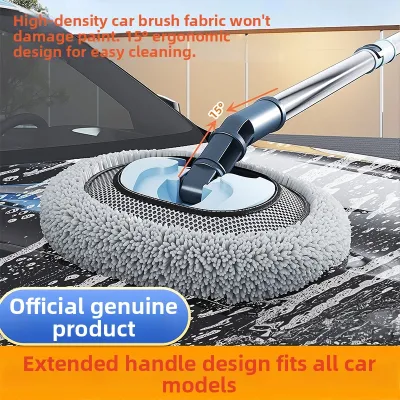
Chenille car wash mops, often referred to as “noodle” mops, feature a distinct design consisting of thick, woven strands of microfiber. This unique structure is specifically engineered to handle heavier road grime and larger dirt particles safely. Each individual noodle acts as an independent cleaning finger, wrapping around contaminants and pulling them into the deep recesses between the strands.
This deep-pile design provides an exceptional safety margin against scratches. Because the gaps between the chenille noodles are relatively large, coarse grit and sand particles are easily suspended far away from the paint surface. This makes chenille mops particularly suitable for washing lower vehicle panels, wheel arches, and rocker panels, which typically accumulate the heaviest and most abrasive road debris.
Furthermore, chenille mops excel at water and suds retention. The thick microfiber noodles absorb a massive amount of wash solution, ensuring a continuous flow of lubricating suds as you move across the vehicle. This high level of lubrication is crucial for minimizing surface tension. The primary drawback of this high absorption capacity is weight; a wet chenille mop can become quite heavy, which may cause fatigue during extended use. Additionally, because the noodles can trap larger debris, they must be rinsed frequently in a clean water bucket to ensure that trapped grit is released before the mop is placed back on the paint.
Evaluating Sponge Car Wash Mops for Scratch Prevention
Traditional sponge car wash mops have a flat, dense surface with small, closed pores. While they are highly absorbent and inexpensive, their structural design poses a significant risk to automotive paint. Unlike microfiber or chenille, a standard sponge cannot encapsulate dirt. When a sponge encounters grit on a vehicle’s surface, the particles remain trapped on the flat outer face of the sponge, directly between the foam and the clear coat.
As the sponge is pushed across the panel, these trapped particles are dragged under pressure, inevitably creating swirl marks and scratches. This risk is particularly high on modern clear coats, which can be relatively soft and easily marred. For this reason, professional detailers generally advise against using traditional yellow bone sponges or flat foam mops for standard washing routines.
If a sponge mop must be used, minimizing the risk of scratches requires strict adherence to specific conditions. The vehicle must undergo a thorough pre-wash process, such as a snow foam application and pressure rinse, to remove as much loose dirt as possible before the sponge touches the paint. Additionally, the wash process must utilize an extremely high-lubrication car shampoo, and the sponge must be rinsed constantly—ideally after every single pass. Some specialized, high-grade polyurethane detailing sponges feature deep laser-cut grooves designed to channel dirt away from the face, but standard household or budget utility sponges should be avoided entirely on automotive paint.
Choosing the Right Mop: A Decision Framework
Selecting the ideal car wash mop requires evaluating your vehicle’s typical exposure to dirt, your washing environment, and your commitment to tool maintenance. For car owners who wash their vehicles frequently and primarily deal with light dust, pollen, or rain spots, a microfiber car wash mop is the most precise tool. Its split-fiber structure excels at removing fine film without leaving residue, provided you maintain a strict washing routine for the mop head itself.
If your vehicle is frequently exposed to heavy road grime, mud, or salt, a chenille “noodle” mop is the safer choice. The deep gaps between the thick strands provide the necessary space to isolate larger, abrasive particles, reducing the risk of dragging grit across the paint. Chenille is also highly forgiving for those washing vehicles in warm climates, such as under the tropical sun where wash solutions can dry quickly, as its superior water retention ensures a constantly lubricated surface.
Sponges should generally be restricted to non-painted surfaces, such as glass, plastic trim, or heavily soiled wheels, unless you are using a specialized detailing foam with a rigorous pre-wash protocol. Before purchasing any car wash mop, always verify the manufacturer’s specifications to ensure the materials are labeled as paint-safe and clear-coat safe. Before every wash, perform a physical inspection: run your fingers through the mop fibers to check for any trapped twigs, small stones, or hardened debris from previous uses, and replace the mop head immediately if the fibers feel stiff or matted.
Critical Washing Techniques That Matter More Than the Mop
Even the highest-quality microfiber or chenille car wash mop cannot prevent scratches if your washing technique is flawed. The most critical step in scratch prevention occurs before any tool touches the paint. A thorough pre-wash is essential; using a pressure washer or a hose with a high-pressure nozzle to rinse away loose dirt, mud, and grit significantly reduces the workload and risk for your wash mop.
When you begin the contact wash, always employ the two-bucket method. One bucket should contain your soapy wash solution, while the second bucket contains clean water for rinsing the mop. Both buckets should be equipped with grit guards—radial grids placed at the bottom that trap dirt particles at the base, preventing them from re-contaminating your wash tool. After cleaning a single panel, rinse the mop thoroughly in the rinse bucket, rubbing the fibers against the grit guard to release trapped debris, before reloading it with fresh soapy water.
Finally, let the weight of the mop do the work. Avoid applying downward pressure on the mop handle, as forcing the fibers against the paint increases friction and the likelihood of scratching. Work in straight, overlapping lines rather than circular motions, which helps to minimize the visibility of any accidental marring.
Frequently Asked Questions (FAQ)
Can any car wash mop guarantee zero scratches?
No car wash mop can offer an absolute guarantee of zero scratches, as scratch prevention is a result of the entire washing system rather than a single tool. Even the softest microfiber or chenille fibers can cause scratches if they are dragged over a dry, unwashed surface, or if abrasive grit becomes trapped between the mop and the paint. Minimizing the risk of swirl marks requires a combination of a high-quality, clean wash tool, a thoroughly pre-rinsed vehicle, high-lubrication car shampoo, and gentle, straight-line washing techniques.
How often should I clean or replace my car wash mop?
You should clean your car wash mop head after every single use to prevent dirt from drying and hardening inside the fibers. Perform a visual and tactile inspection before each wash; if the fibers feel stiff, rough, or matted even after washing, or if you can see embedded grit that cannot be removed, it is time to replace the mop head. For regular use, replacing the mop head every six to twelve months is a good practice to ensure the synthetic fibers retain their softness and dirt-trapping capabilities.

Community discussion
Share your experience or ask a question. Comments are reviewed before publication.