
Quick Answer: Is the Michelin Premium Justified for City Riding?
Choosing the right motorcycle rubber is one of the most critical safety and performance decisions a daily commuter can make. When selecting new motorcycle rubber, investing in premium Michelin tyres can significantly impact your daily ride quality, safety, and long-term operating costs. The premium price of Michelin is generally justified if you frequently ride in wet weather, prioritize maximum wet-grip safety, and value a highly refined, comfortable ride. Michelin utilizes advanced silica-rich compounds and sophisticated casing designs that excel at keeping you upright during sudden tropical downpours on major expressways and arterial city roads.
On the other hand, Maxxis offers a highly competitive alternative for budget-conscious commuters who primarily ride in dry conditions or moderate weather. Maxxis tyres deliver reliable standard performance, solid dry grip, and commendable tread life at a much lower upfront cost. The decision ultimately depends on your personal safety priorities, your daily exposure to wet roads, and your immediate maintenance budget. While Michelin represents a premium investment in safety and refinement, Maxxis remains a highly practical, cost-effective choice for straightforward daily utility.
Key Performance Dimensions for Daily Commuting
Urban commuting presents a unique set of challenges that differ wildly from weekend touring or track riding. City roads demand constant readiness for sudden stops, navigating painted lane markings, crossing metal construction plates, and handling unpredictable weather patterns. To determine whether a premium tire justifies its higher price tag, you must evaluate how these brands perform across specific real-world urban variables.
Products mentioned in this guide
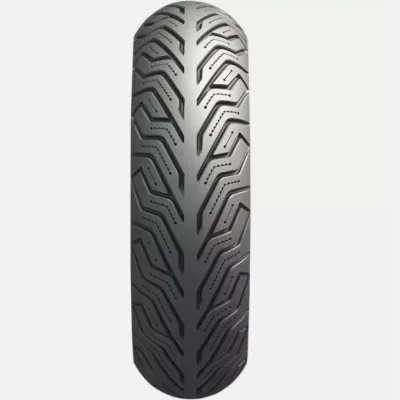
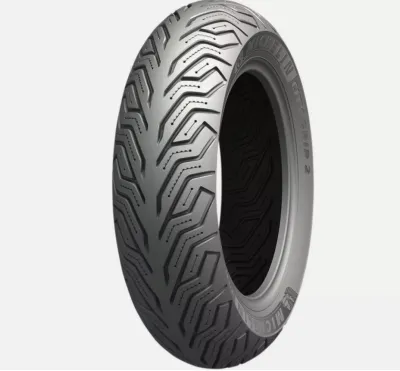
Prices are valid at publication and may change. Please refer to the product page for the latest price.

Wet Weather Grip and Braking Safety
Commuting in tropical climates like Singapore means you will inevitably encounter sudden, heavy downpours that turn dry asphalt into slick, hazardous surfaces. Premium brands like Michelin invest heavily in research and development to create advanced silica-rich compounds. Silica allows the tread rubber to remain highly pliable at lower temperatures and on wet surfaces, maintaining a secure mechanical grip on the road. Additionally, specialized tread patterns with deep water-channeling sipes work like miniature squeegees to evacuate water from the contact patch, reducing the risk of aquaplaning. This technology is particularly valuable when navigating slippery zebra crossings, yellow box junctions, and metal drain covers during a sudden storm.
In contrast, mid-tier tires like Maxxis typically utilize standard rubber formulations that offer reliable dry traction but may deliver more conservative wet performance. While Maxxis tires are perfectly capable of safe daily operation, they generally require longer braking distances and more upright lean angles during heavy rain. The compound in a standard Maxxis tire may feel slightly harder, which helps with wear but reduces the micro-level mechanical keying into wet asphalt. Before making a purchase, always check the specific wet-grip ratings on the product label and read the manufacturer’s technical specifications to understand the tire’s limits.
Tread Life and Durability in Stop-and-Go Traffic
The constant acceleration and braking characteristic of city traffic accelerates tire wear, particularly in the center of the tread. To combat this uneven wear, premium Michelin tires often incorporate dual-compound technology. This design features a harder, more wear-resistant rubber compound along the center strip to maximize mileage, paired with softer, high-grip compounds on the shoulders for stable cornering. This engineering helps maintain the tire’s profile and performance over thousands of kilometers, preventing the tire from “squaring off” prematurely.
Maxxis tires frequently utilize single-compound designs that are uniform across the entire tread area. While these compounds are often formulated to be quite hard and durable—providing highly competitive tread life for their price point—they may not offer the same balanced wear profile over time. A single-compound tire that is hard enough to last long in the center may sacrifice cornering grip, whereas a softer one will wear out quickly under heavy commuting. To gauge potential longevity, consult local user reviews from riders with similar commuting habits and check the manufacturer’s mileage guidelines for your specific motorcycle model.
Ride Comfort and Vibration Damping
A tire’s internal casing construction plays a massive role in how it absorbs road imperfections, potholes, and speed bumps. Premium tires typically employ highly sophisticated casing structures that flex dynamically to damp high-frequency road vibrations, resulting in a smoother ride and reduced rider fatigue during long commutes. This refined construction helps cushion the impact when riding over expansion joints on flyovers or uneven utility covers in residential estates.
Mid-tier tires, by comparison, often feature stiffer carcass constructions that transmit more direct road feedback to your handlebars and seat. While some riders prefer this stiffer feel for the direct feedback it provides, it can lead to increased physical fatigue over a long daily commute. It is important to remember that ride comfort is highly subjective and heavily influenced by external factors. Even the most advanced tire cannot compensate for incorrect inflation or a poorly tuned suspension system. Always ensure your motorcycle’s suspension is properly adjusted and that your tires are inflated to the exact pressures recommended by the vehicle manufacturer.
Price vs. Value: Evaluating the True Cost of Michelin Tyres
When comparing tire brands, focusing solely on the upfront retail price can lead to a misleading financial conclusion. In Singapore, a set of budget or mid-tier commuter tires might cost between S$100 and S$180, whereas premium Michelin tyres often range from S$220 to S$400 or more, depending on the specific model and dimensions. To understand the true cost of ownership, you must calculate the cost-per-kilometer rather than the initial transaction cost.
If a premium tire costs S$250 but safely delivers 15,000 kilometers of service, its running cost is approximately S$0.017 per kilometer. Conversely, if a budget tire costing S$130 needs replacement after only 8,000 kilometers, the running cost is nearly identical, but you will incur double the installation, wheel balancing, and workshop service fees over the same total distance. Additionally, premium tires designed with optimized rolling resistance can contribute to marginal improvements in fuel efficiency, further narrowing the lifetime cost gap. There is also the unquantifiable value of safety; avoiding a single low-side slide on a wet road can save you thousands of dollars in bodywork repairs and medical bills.
For riders on a strict immediate budget, Maxxis remains a strong champion of upfront savings, allowing you to keep your vehicle road-legal and safe without a significant financial hurdle. However, if you have the financial flexibility to absorb the higher initial cost, the extended tread life, reduced workshop visits, and superior wet-weather safety of Michelin often represent better long-term value. To find the best deal, compare current pricing and package offers at authorized local dealers, official brand stores, or reputable motorcycle workshops.
Safety Checks and Compatibility Verification Before Purchase
Selecting a tire brand is secondary to ensuring that the product is fully compatible with your specific motorcycle. Riding on tires with incorrect specifications can severely compromise your safety, alter handling characteristics, and void your vehicle warranty or insurance coverage. Before finalizing any purchase, verify the exact tire dimensions, load index, and speed rating required by your motorcycle manufacturer. This critical information is located in your owner’s manual or on the tire information sticker affixed to the swingarm.
Never mix different tire brands, models, or construction types on your motorcycle. For example, pairing a radial front tire with a bias-ply rear tire can cause unpredictable chassis instability, especially during high-speed cornering or emergency braking maneuvers. Both tires should feature matching tread profiles and construction characteristics designed to work in harmony. If you are replacing only one tire, ensure it matches the existing tire’s brand, model, and wear characteristics, or replace them as a complete set to ensure balanced handling.
Because tires are your motorcycle’s sole contact point with the road, professional installation is non-negotiable. Always have your tires mounted and balanced at a qualified workshop equipped with professional tire-changing machinery. Incorrect mounting can damage the tire bead, leading to slow air leaks or sudden bead failure. Ensure the technician performs precise wheel balancing to eliminate high-speed vibrations, and always check or replace the valve stems during installation to prevent sudden pressure loss.
Final Decision Framework: Which Brand Should You Choose?
To simplify your purchasing decision, evaluate your riding habits, budget constraints, and safety requirements against the following structured framework:
- Choose Michelin if: You frequently commute in unpredictable tropical weather, prioritize maximum wet-weather braking safety, value a highly refined and comfortable ride, and have the upfront budget to invest in premium long-term value.
- Choose Maxxis if: You are working with a tight immediate budget, primarily ride in dry or light rain conditions, seek reliable everyday performance, and prefer lower upfront replacement costs.
- Verify first if: Your motorcycle requires a highly specific original equipment manufacturer (OEM) tire size, or if you are unsure about the correct load and speed ratings required for your specific riding style and vehicle weight.
Frequently Asked Questions (FAQ)
Can I mix a Michelin front tire with a Maxxis rear tire?
You should strongly avoid mixing different tire brands, models, or carcass constructions on the same motorcycle. Tires are engineered to work as a matched set, with complementary front and rear tread patterns, water-evacuation profiles, and carcass flex characteristics. Mixing a Michelin tire with a Maxxis tire can lead to unpredictable handling, uneven grip limits, and compromised stability during emergency braking or cornering. Always replace your tires in matched pairs or consult your motorcycle manufacturer’s guidelines for approved combinations.
How often should I check tire pressure for daily city commuting?
For daily city commuting, you should check your tire pressure at least once a week using a reliable, high-quality pressure gauge when the tires are cold. Urban riding involves frequent acceleration, heavy braking, and navigating road debris, which can increase the risk of slow punctures or gradual pressure loss. Proper inflation is critical for both Michelin and Maxxis tires to achieve their engineered grip levels, optimal fuel efficiency, and maximum tread life. Under-inflated tires will wear out prematurely, increase fuel consumption, and compromise handling safety.
Community discussion
Share your experience or ask a question. Comments are reviewed before publication.