
Selecting the right motorcycle tire is one of the most critical decisions you can make for your ride, directly influencing safety, cornering confidence, and long-term running costs. For riders navigating both daily commutes and spirited weekend rides, the sport-touring category offers the ultimate balance of longevity and grip. Three premium tires dominate this segment: the Michelin Pilot Road 6, the Metzeler Roadtec 016, and the Pirelli Angel GT II. Each tire represents a distinct engineering philosophy, tailored to specific riding styles and road conditions.
Your ideal tire depends on your primary riding environment, load requirements, and handling preferences. The Michelin Pilot Road 6 stands out as the premier option for riders seeking maximum wet-weather confidence and consistent, long-term mileage throughout the tire’s lifespan. If you prioritize sportier, more agile handling with sharp cornering feedback and a dynamic steering profile, the Metzeler Roadtec 016 is engineered to deliver a more aggressive feel. For high-mileage touring enthusiasts who frequently ride with a passenger or heavy luggage, the Pirelli Angel GT II provides superior carcass stability and consistent performance under heavy loads.
Wet Weather Grip and Tread Design
Wet-weather performance is a primary safety consideration, especially when navigating sudden tropical downpours and ponded asphalt. The tread design of a sport-touring tire must efficiently evacuate standing water to prevent hydroplaning while maintaining a stable contact patch. Each of these three manufacturers approaches water displacement with unique, highly specialized tread geometry and siping technologies.
Products mentioned in this guide
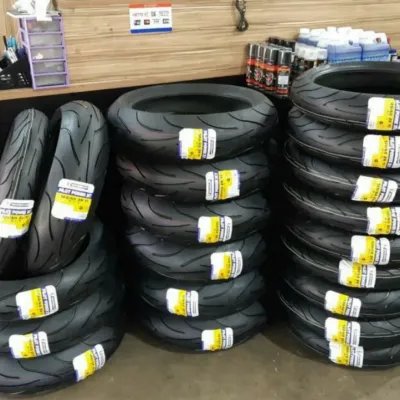
Prices are valid at publication and may change. Please refer to the product page for the latest price.
The Michelin Pilot Road 6 utilizes a high void ratio and patented progressive siping technology. These sipes are engineered to widen as the tread wears down over time, ensuring that the tire maintains its water-evacuation capacity even late in its service life. This design helps prevent the drop in wet-grip performance that often plagues older tires. By utilizing a 100% silica compound in both the center and shoulder sections, the tire remains flexible at lower operating temperatures, allowing the rubber to conform to microscopic road irregularities even on slick, wet asphalt.
Metzeler takes a different approach with the Roadtec 016, employing a tread pattern characterized by drop-shaped sipes and longitudinal grooves. The drop-shaped sipes act as miniature reservoirs, momentarily trapping water and directing it away from the contact patch, while the longitudinal grooves break the surface tension of the water on the road. This layout is designed to maximize mechanical grip during moderate lean angles in the wet, providing progressive feedback so you can feel exactly how much traction is available.
The Pirelli Angel GT II draws inspiration from racing rain tires, featuring a twin longitudinal center groove design. This tread layout is highly focused on wet stability and straight-line water evacuation, making it highly effective at tracking straight through deep puddles or running water on the highway. The tread grooves are oriented to match the wear forces of the tire, reducing the likelihood of cupping or uneven wear patterns that can compromise wet-weather stability over time.
Dual-compound technology plays a vital role in maintaining wet cornering confidence across all three options. These tires feature a harder, more wear-resistant compound in the center tread band to handle straight-line commuting, flanked by softer, high-grip compounds on the shoulders for cornering. To ensure optimal water channeling and safety, you must regularly check the Tread Wear Indicators (TWI) located inside the grooves. Operating a tire below the legal tread depth dramatically reduces its ability to clear water, regardless of the advanced siping technology built into the carcass.
Dry Handling, Warm-Up, and Ride Comfort
While wet grip is essential for safety, dry handling and ride comfort dictate how a tire feels during your daily commute or weekend cornering sessions. The shape of a tire’s profile and the stiffness of its internal carcass determine how quickly the motorcycle leans into a turn, how stable it feels at mid-corner, and how well it absorbs road vibrations.

The Metzeler Roadtec 016 is engineered with a distinctly sporty profile, offering quick, agile turn-in characteristics. When you initiate a turn, the tire transitions onto its side quickly, giving the motorcycle a light, nimble feel. This makes it highly popular for riders who enjoy active, dynamic steering feedback on winding roads. The internal carcass stiffness is tuned to provide clear feedback from the road surface, allowing you to feel the limits of traction clearly.
In contrast, the Pirelli Angel GT II focuses heavily on high-speed stability and a plush, touring-oriented ride quality. The carcass construction utilizes high-tension rayon cords that absorb sharp bumps, expansion joints, and road imperfections smoothly. This design reduces rider fatigue over long distances, making it an excellent option for long-distance touring or daily commutes on uneven road surfaces. The steering feel is progressive and deliberate, prioritizing predictable tracking over rapid transitions.
The Michelin Pilot Road 6 offers a balanced, neutral steering profile. It does not fall into corners as quickly as the Metzeler, nor does it require as much physical effort to initiate a turn as the Pirelli. Instead, it provides a highly intuitive, linear response to handlebar inputs. The carcass features a specialized ply layout designed to minimize high-speed flexing, ensuring a stable and comfortable ride across a wide range of motorcycle chassis designs.
Regardless of the tire you choose, understanding warm-up characteristics is crucial for safety. Sport-touring tires are formulated with high-silica compounds that reach their optimal operating temperature much faster than pure track or hypersport tires. However, they still require a brief warm-up period. You should ride moderately for the first few kilometers of your journey, allowing the carcass to flex and generate internal heat before pushing cornering limits, particularly during cooler morning rides or immediately after a rainstorm has cooled the asphalt.
Tread Life, Compound Technology, and Value
For most riders, the total cost of ownership is defined by how many kilometers a tire can cover before reaching its wear limits. Achieving high mileage requires advanced compound chemistry that resists abrasive wear in the center of the tire while preventing uneven wear patterns on the shoulders.
The dual-compound rear layouts of these tires are engineered to balance center-line durability with shoulder grip. Michelin’s Pilot Road 6 utilizes a reinforced center compound designed specifically to resist flat-spotting during long stretches of upright highway riding. This is particularly beneficial for riders who commute daily on major expressways. Metzeler and Pirelli employ similar dual-compound configurations, but they tune their shoulder compounds to transition more progressively, minimizing the step-feel that can develop as the tire wears unevenly.
Several external factors can accelerate tire wear and cause premature degradation. Aggressive acceleration, heavy braking, carrying heavy loads, and improper inflation pressures are the primary causes of rapid tire wear. Under-inflation causes the tire carcass to flex excessively, generating excessive heat that accelerates rubber degradation and leads to cupping. Over-inflation reduces the contact patch, leading to accelerated wear in the center of the tread.
When evaluating the overall value of these premium tires, it is important to look beyond the initial purchase price. Value should be calculated as the cost per kilometer relative to the safety and grip performance retained over the tire’s entire lifespan. To get an accurate estimate, check current pricing and specific size availability at authorized local dealers in Singapore. Prices typically range from S$400 to S$650 per set depending on the required dimensions, workshop installation fees, and current stock levels. Opting for a slightly more expensive tire that maintains its wet-grip characteristics and profile shape throughout its lifespan often provides better long-term value than a cheaper option that degrades rapidly.
Fitment Verification and Safety Checklist
Before purchasing any sport-touring tire, you must verify that the tire specifications match your motorcycle manufacturer’s requirements. Using incorrect tire sizes, load ratings, or speed ratings can compromise handling, void warranties, and pose severe safety risks.
Always consult your motorcycle’s owner’s manual or the swingarm tire information label to verify the exact rim width, load index, and speed rating. Exceeding the load index is highly dangerous, especially when carrying a passenger or heavy luggage, as it can cause the tire to overheat and suffer structural failure. Additionally, modern motorcycles equipped with advanced electronic rider aids—such as cornering ABS, traction control, and electronic suspension—rely on specific tire profiles to calculate slip rates. Fitting a tire with an incorrect profile can disrupt these calibrations, leading to intrusive or delayed electronic intervention.
| Position | Common Sport-Touring Sizes | Typical Load Index | Speed Rating | Common Compatible Motorcycles |
|---|---|---|---|---|
| Front | 120/70 ZR17 | 58 (236 kg) | W (Up to 270 km/h) | Sport-tourers, naked bikes, adventure-sport models |
| Rear | 180/55 ZR17 | 73 (365 kg) | W (Up to 270 km/h) | Mid-to-large displacement street motorcycles |
| Rear | 190/50 ZR17 | 73 (365 kg) | W (Up to 270 km/h) | High-horsepower sport-touring and liter-class bikes |
| Rear | 190/55 ZR17 | 75 (387 kg) | W (Up to 270 km/h) | Heavy sport-touring models and modern super-nakeds |
Because tire installation directly impacts safety, professional installation at a qualified workshop is strongly recommended. Proper installation ensures that the tire beads are seated correctly, the wheels are statically or dynamically balanced, and the valve stems are checked for leaks. If your motorcycle requires OEM-homologated tires—often designated by specific letter codes on the sidewall—ensure you purchase the correct variant to maintain optimal chassis balance and electronic compatibility.
Final Decision: Match the Tire to Your Ride
To choose the right sport-touring tire, match the engineering strengths of each model to your specific riding habits, typical weather exposure, and performance expectations.
- Choose Michelin Pilot Road 6 if: You commute daily in unpredictable weather conditions, prioritize maximum wet-weather braking confidence, and want a tire that retains its water-evacuation performance consistently as it wears over high mileages.
- Choose Metzeler Roadtec 016 if: You prefer a highly dynamic, sporty riding style, value rapid and agile steering transitions, and want a tire that provides sharp cornering feedback during weekend rides.
- Choose Pirelli Angel GT II if: You frequently ride long distances, travel with a passenger or heavy luggage, and require maximum carcass stability, load-carrying capacity, and high-speed tracking comfort.
- Verify first if: Your motorcycle features advanced electronic rider aids or requires specific OEM-homologated tire versions, as you must confirm compatibility with your vehicle's electronic calibrations before purchasing.
Frequently Asked Questions (FAQ)
Do I need to replace both motorcycle tires at the same time?
While it is not strictly mandatory to replace both front and rear tires simultaneously if one still has safe tread depth, it is highly recommended. Mixing different tire brands, tread patterns, or wear stages can alter the motorcycle’s handling dynamics, steering neutrality, and wet-weather balance. Additionally, mismatched tire profiles can disrupt the calibration of advanced electronic rider aids like traction control and ABS.
How does tropical heat affect sport-touring tire compounds?
Consistently high ambient temperatures and hot asphalt cause the air inside your tires to expand, leading to higher operating pressures during a ride. To prevent overheating and uneven tread wear, always check and adjust your tire pressures when the tires are cold, using the manufacturer’s recommended specifications for your specific load. High heat can also accelerate the aging process of the rubber compound, making regular visual inspections for cracking or hardening essential.
Community discussion
Share your experience or ask a question. Comments are reviewed before publication.