
Finding the correct Mercedes wheel cap size requires looking beyond your vehicle’s model name and year. While many modern Mercedes-Benz factory alloy wheels utilize a standard 75mm outer diameter center cap, variations exist across different model lines, AMG performance wheels, and older generations. To ensure a secure fit that will not detach while driving, you must verify the physical dimensions of your wheel’s center bore and match the specific retention clip design of your wheels.
Why Mercedes Wheel Cap Sizes Vary
Mercedes-Benz designs wheels to match the specific performance and aesthetic requirements of each vehicle class. A standard luxury sedan, an AMG performance coupe, and a rugged off-road SUV do not share the same hub architecture. Consequently, the center bore—the opening in the middle of the wheel that fits over the vehicle’s hub—varies in diameter and depth.
Trim levels and optional packages introduce further complexity. A base-model vehicle might feature standard factory wheels, while an upgraded trim with an AMG Line sports package utilizes entirely different alloy wheels with distinct center bore profiles. Even within the same model year, a vehicle could require different caps depending on whether it sits on standard 17-inch wheels or upgraded 19-inch multi-spoke options.
Products mentioned in this guide
![[Aurora Parts] 4pcs 75mm for-Benz W202 W203 W204 W211 E350 C250 Car Tire Replacement Sport Cap Wheel Center Rim Hub Caps Benz Hubcaps Emblem](https://img.lazcdn.com/g/p/59aae4b72d0e1ffcbaa7259132142167.jpg_webp_400x400q80.jpg_.webp)
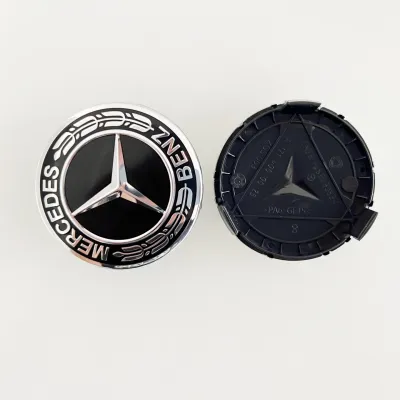
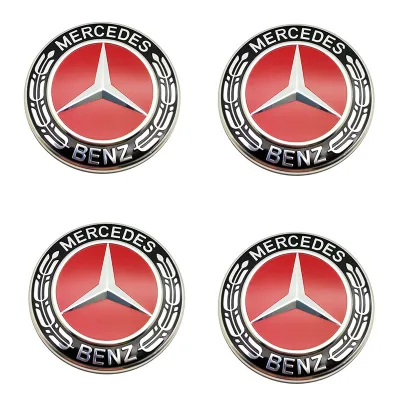
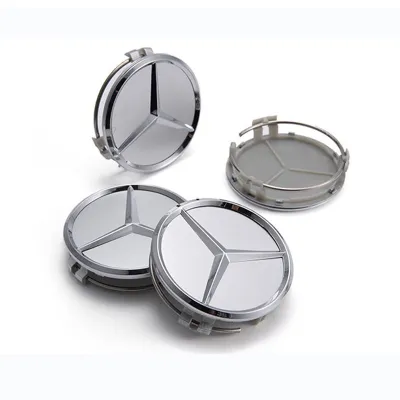

Prices are valid at publication and may change. Please refer to the product page for the latest price.
Relying purely on the vehicle’s badge or model name often leads to purchasing the wrong accessory. Because wheels are frequently swapped by previous owners or upgraded at the dealership, the only reliable way to determine compatibility is to inspect the physical wheel currently mounted on your vehicle.
How to Measure Your Existing Wheel Cap
If you still have at least one original, undamaged center cap, measuring it directly is the most straightforward path to finding a replacement. However, you must distinguish between two critical dimensions: the visible outer face diameter and the inner clip-to-clip tension diameter. The outer face determines how the cap sits flush against the wheel face, while the inner clips secure it inside the bore.

To obtain accurate measurements, use a digital caliper set to millimeters rather than a standard tape measure. Standard tape measures lack the precision needed to distinguish between closely sized caps, such as a 74mm aftermarket cap and a genuine 75mm OEM cap. Measure the widest point of the outer face first, then flip the cap over to measure the outer edges of the retention clips.
While measuring, take note of the rear retention mechanism. Count the number of plastic clips and observe if there is a circular spring-steel expansion ring running along the inside of the tabs. Documenting this clip configuration is essential, as two caps with identical diameters may feature different clip depths or spacing that prevent them from locking into your specific wheel.
How to Identify the Size Without the Original Cap
When all center caps are missing, you can determine the required size by measuring the wheel’s center bore directly. Insert the internal jaws of your digital caliper into the center opening of the clean, bare rim. Ensure the caliper is perfectly centered and flat against the inner bore wall to get an accurate reading of the inner diameter.
Another highly reliable method is using your Vehicle Identification Number (VIN). An authorized Mercedes-Benz dealership parts counter or an official OEM parts database can use your VIN to retrieve the exact build sheet of your vehicle. This sheet lists the original wheel option codes, allowing parts specialists to identify the precise original equipment manufacturer (OEM) part number for your center caps.
Keep in mind that if a previous owner installed aftermarket wheels, the VIN lookup will only point to the original factory specifications, which will no longer match. Always inspect the wheel face for any non-OEM branding or logos before relying on database lookups.
Checking Fitment and Clip Compatibility
A wheel cap must do more than just fill the center hole; it must lock securely to withstand centrifugal forces and road vibrations. Before attempting installation, align the cap’s rear clips with the internal recesses and notches machined into the wheel’s center bore. Forcing a cap with mismatched alignment tabs will bend or snap the plastic retention clips.
Pay close attention to the construction of the retention mechanism. Genuine Mercedes-Benz caps typically feature high-quality molded plastic tabs reinforced by a spring-steel tension ring that exerts outward pressure against the bore. Lower-quality aftermarket alternatives often rely solely on thin plastic tabs, which can become brittle over time due to brake heat and road debris, leading to premature failure.
When installing the cap, apply gentle, even pressure with the palm of your hand directly in the center of the cap. Avoid using hammers, mallets, or heavy tools, as these can easily crack the plastic housing or scratch the protective clear coat on your alloy wheels. If the cap does not snap into place smoothly, remove it and inspect the bore for dirt, corrosion, or clip misalignment. Always consult your vehicle’s original documentation before performing any work on your wheels, and ensure the caps are fully locked to prevent them from detaching at high speeds.
Sourcing the Correct Replacement Caps
To guarantee a perfect fit and long-lasting finish, sourcing your replacement caps directly from an authorized Mercedes-Benz dealership is the safest option. While genuine OEM caps may cost a few extra S$ compared to generic alternatives, they offer superior resistance to UV yellowing, road salt, and brake dust.
If you choose to shop on online automotive marketplaces, avoid purchasing based on visual matches alone. Always cross-reference the seller’s listing with your verified OEM part number, which is often stamped on the back of original caps. Ensure the seller explicitly lists compatibility with your specific wheel part number rather than just a generic list of vehicle models.
When purchasing from third-party parts distributors, verify their return and exchange policies. Because minor design variations exist across different wheel styles, having a flexible return option ensures you are not left with unusable parts if a fitment discrepancy arises.
Frequently Asked Questions (FAQ)
Can I use a universal wheel cap on my Mercedes-Benz?
Using universal, unbranded center caps on factory Mercedes-Benz wheels is generally not recommended. Universal caps lack the precise clip patterns and tension-ring designs engineered for OEM wheels, creating a high risk of the cap detaching at highway speeds. Additionally, poor fitment can allow moisture and road grime to accumulate inside the wheel hub, potentially accelerating corrosion on the wheel bearings and axle nut.
Do aftermarket wheels use the same center cap size as factory Mercedes wheels?
Aftermarket wheels rarely share the same center cap dimensions or clip configurations as factory Mercedes-Benz wheels. Even if an aftermarket wheel is designed to fit a Mercedes-Benz vehicle, the wheel manufacturer typically uses its own proprietary center bore design. To replace a cap on aftermarket rims, you must identify the specific wheel brand and model, then source replacements directly from that manufacturer or use specialized adapter rings if compatible.
Community discussion
Share your experience or ask a question. Comments are reviewed before publication.