
Selecting the right paint care product for your vehicle requires understanding what each formulation actually does to your clear coat. Applying a polish when your car needs protection, or expecting a wax to remove deep swirl marks, leads to wasted effort and disappointing results. Polish is strictly designed for paint correction and defect removal, wax acts as a temporary physical barrier that enhances gloss, and ceramic coating provides a long-lasting chemical shield against environmental hazards. Choosing the correct option depends on your vehicle’s current paint condition, its exposure to the elements, and the amount of time you can dedicate to maintenance.
Understanding the Core Functions: Polish, Wax, and Ceramic
To maintain a pristine finish, you must distinguish between products that correct paint and those that protect it. Polish is an abrasive treatment designed to level the microscopic top layer of your clear coat. By using fine abrasives and chemical cleaners, polish physically removes light scratches, swirl marks, oxidation, and water spots. Because its primary job is to subtract damaged paint to reveal a flat, reflective surface, polish offers absolutely zero environmental protection. Leaving a freshly polished vehicle unprotected will expose the raw clear coat to rapid oxidation and UV damage.
Wax serves as a traditional, physical sacrificial barrier applied over the clear coat. Whether formulated from natural carnauba or synthetic polymers, wax fills in minor microscopic imperfections to create a smooth surface that repels water and dirt. It provides a warm, deep gloss that enthusiasts highly value, but it sits loosely on top of the paint rather than bonding with it. Consequently, traditional waxes gradually wear away from exposure to heat, rain, and routine washing, requiring regular reapplication to maintain their protective qualities.
Products mentioned in this guide
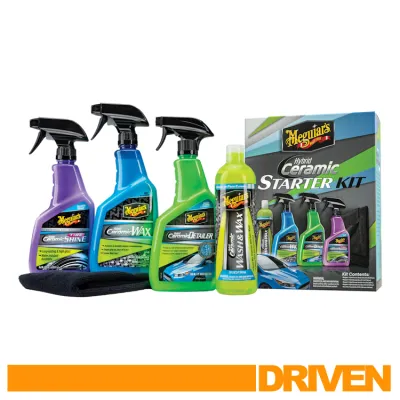
Prices are valid at publication and may change. Please refer to the product page for the latest price.
Ceramic coating represents a more advanced level of paint protection utilizing silicon dioxide (SiO2) or ceramic resins. Unlike wax, a ceramic coating forms a semi-permanent chemical bond with your vehicle’s clear coat, curing into a hard, glass-like layer. This chemical shield offers superior resistance to UV rays, acidic bird droppings, road grime, and chemical stains. It creates an extremely hydrophobic surface that sheds water and dirt effortlessly, making routine maintenance significantly easier.
When shopping for car care supplies, always verify product labels carefully before purchase. Modern detailing lines frequently blend these distinct categories into “hybrid” formulations, such as ceramic-infused spray waxes or all-in-one polish-and-wax compounds. Reading the manufacturer’s instructions is essential to determine whether a product is designed to correct defects, apply protection, or perform both tasks simultaneously. Additionally, check the label to ensure compatibility with non-painted surfaces like matte wraps, plastic trim, rubber seals, or chrome accents, as some traditional polishes and waxes can leave stubborn white residues or damage unpainted materials.
Comparing Protection, Durability, and Application Effort
The practical differences between polish, wax, and ceramic coatings become most apparent when comparing their longevity, preparation requirements, and maintenance needs. Traditional waxes generally offer short-term protection, whereas ceramic coatings are engineered for extended durability. However, because longevity varies widely based on formulation and environmental exposure, you should always check the specific product packaging for the manufacturer’s exact durability claims rather than relying on broad category assumptions.

Application prerequisites also differ significantly between these product types. Applying a ceramic coating is a meticulous, multi-step process that demands a flawless, fully decontaminated surface. Any swirl marks, dust, or oils left on the paint will be locked beneath the cured ceramic layer, making professional-grade prep work mandatory. In contrast, traditional waxes are far more forgiving; while they perform best on clean paint, they can be applied directly over minor paint imperfections without causing long-term issues.
Post-application maintenance is another critical factor to consider. Ceramic-coated vehicles require specific care to preserve the integrity of the chemical bond. You must use pH-neutral car shampoos and avoid abrasive compounds, harsh automatic car washes, or aggressive scrubbing, which can degrade the hydrophobic top layer. Waxes are simpler to maintain but require frequent top-ups to keep the protective barrier intact, especially in harsh climates.
| Product Type | Primary Function | Expected Durability (Check Label) | Paint Prep Required | Ongoing Maintenance Effort |
|---|---|---|---|---|
| Polish | Paint correction and defect removal | None (requires immediate protection) | Thorough wash and clay bar decontamination | High (must be sealed immediately) |
| Wax | Sacrificial protection and deep gloss | Short-term (verify on product packaging) | Basic wash and optional decontamination | Low to moderate (requires regular reapplication) |
| Ceramic Coating | Long-term chemical and UV protection | Multi-month to multi-year (check label) | Full decontamination, polishing, and panel prep | Low (easy to wash, but requires pH-neutral soap) |
Assessing Your Car's Current Paint Condition
Before purchasing any detailing products, you must conduct a thorough evaluation of your vehicle’s paint state. Start by washing and drying the car completely, then park it under direct sunlight or use a bright detailing light to inspect the surface. Look closely for swirl marks, spiderweb scratches, water spots, and dull patches of oxidation. Next, perform a tactile inspection using the plastic bag test: place your hand inside a clean plastic sandwich bag and gently slide it across the paint. If the surface feels rough, gritty, or bumpy, there are embedded contaminants that a standard wash cannot remove.
Identifying these conditions helps you determine whether your paint requires correction or simply needs protection. If your inspection reveals visible scratches, heavy swirls, or oxidation, you must use a polish to correct these defects before applying any protective layer. Applying a wax or ceramic coating directly over damaged paint will only highlight the imperfections rather than hiding them. If the paint is already smooth, glossy, and free of defects, you can skip the polishing step entirely and proceed directly to applying a protective wax or ceramic coating.
Your local environment and parking conditions also play a major role in deciding which protection tier is necessary. For example, in tropical climates like Singapore, vehicles are subjected to intense UV radiation, high humidity, and sudden, heavy downpours. If your car is parked daily in an open-air surface lot, it faces much harsher conditions than a vehicle kept in a sheltered multi-storey carpark. Cars exposed to constant outdoor elements benefit significantly from the robust, chemical-resistant shield of a ceramic coating, while garage-kept vehicles can easily maintain a high gloss with regular waxing.
However, you must recognize when a paint issue is beyond DIY correction. If you observe clear coat failure—characterized by peeling, flaking, or white, chalky patches—or if you find deep scratches that catch your fingernail, stop immediately. Abrasive polishing cannot restore missing clear coat or repair deep paint damage. In these scenarios, halt your DIY attempts and consult a professional detailer or body shop for paint correction or respray services.
Decision Framework: Which Meguiar's Product Type Fits Your Needs?
To select the right product type for your detailing routine, use this conditional framework based on your vehicle’s condition, budget, and maintenance preferences.
Choose Polish if your primary goal is to restore clarity, remove swirl marks, or eliminate light oxidation from dull paint. Polish is the essential first step for older or neglected vehicles before any protective coating is applied. Keep in mind that polishing is a corrective process, so you must always follow it up with a dedicated wax, sealant, or ceramic coating to lock in the gloss and protect the freshly exposed clear coat.
Choose Wax if you are looking for a budget-friendly, straightforward way to protect your paint and achieve a deep, warm shine. Wax is ideal for car enthusiasts who enjoy the hands-on process of detailing their vehicles every few weeks or months. It is also highly suitable for well-maintained or garage-kept cars that do not face extreme daily environmental abuse, allowing you to maintain a beautiful finish with minimal upfront preparation.
Choose Ceramic Coating if you prioritize long-term durability, drive your vehicle daily in harsh environments, and want to minimize the effort required during routine washes. While the initial application requires meticulous paint preparation and a higher upfront investment of time or money, a ceramic coating provides superior resistance to environmental contaminants and keeps your car cleaner for longer.
Verify first if you are considering hybrid spray waxes or ceramic-infused quick detailers. These modern products offer excellent convenience, but you must check their labels to understand their specific requirements. Some hybrid products require precise curing times away from moisture to bond correctly, while others are formulated with mild cleaning agents or are designed strictly as maintenance toppers to boost an existing coating rather than serving as a standalone protective layer.
Frequently Asked Questions (FAQ)
Can I apply wax over a ceramic coating?
While it is physically possible to apply a traditional carnauba or synthetic wax over a ceramic coating, doing so is generally not recommended. Traditional waxes can mask the advanced hydrophobic and self-cleaning properties of the underlying ceramic layer, causing water to bead less effectively and allowing dirt to stick more easily. If you want to boost the gloss or protection of your ceramic coating, check the manufacturer’s instructions and use a dedicated, SiO2-infused ceramic booster or detail spray designed specifically to maintain ceramic surfaces.
Do I need to polish my car before applying wax or ceramic?
You do not always need to polish your car before applying protection, but the paint must be completely clean and decontaminated. Polishing is an abrasive process that physically removes a microscopic layer of clear coat to eliminate defects. If your paint is already smooth, glossy, and free of swirl marks, polishing is unnecessary and will thin your clear coat prematurely. Always perform a visual and tactile inspection first; only use a polish if there are visible defects you want to correct before sealing the paint.
Are Meguiar's hybrid products a good substitute for pure wax or ceramic?
Hybrid products, such as ceramic-infused spray waxes, offer an excellent middle ground for car owners seeking a balance between convenience and performance. They are much easier to apply than pure ceramic coatings and typically offer better durability and water-beading than traditional waxes. However, they do not provide the multi-year longevity of a dedicated, professional-grade pure ceramic coating, nor do they deliver the specific, warm depth of a pure carnauba paste wax. They are best used as highly efficient maintenance products for routine car care.

Community discussion
Share your experience or ask a question. Comments are reviewed before publication.