
Quick Answer: Choosing Between Meguiar's Polish, Wax, and Ceramic
To keep your car looking its best, you must first clear up the single most common misconception in automotive detailing: polish is not a protective sealant. Many car owners mistakenly purchase a polish thinking it will shield their paint from the elements, only to leave their clear coat completely bare and vulnerable. In the Meguiar’s ecosystem, polishing is a corrective step designed to remove defects, while waxing and ceramic coating are protective steps designed to seal the paint.
Choosing the right protective method depends on your lifestyle, detailing experience, and how much effort you want to invest. You should choose a traditional car wax if you enjoy the classic, hands-on process of weekend detailing, prefer a warm, deep, organic gloss, and want a highly forgiving application process. On the other hand, you should choose a ceramic coating if you want long-lasting hydrophobic performance, robust chemical resistance against environmental contaminants, and are prepared to complete the intensive surface preparation required for proper bonding.
Before applying any protectant, you must evaluate the current state of your vehicle’s paint. If your car has visible swirl marks, light scratches, or oxidation, applying a wax or ceramic coating will not hide these imperfections; instead, it will seal them in and potentially make them more noticeable. In these scenarios, a dedicated paint correction step using a Meguiar’s polish is highly recommended to restore paint clarity before you apply your final layer of protection.
Products mentioned in this guide
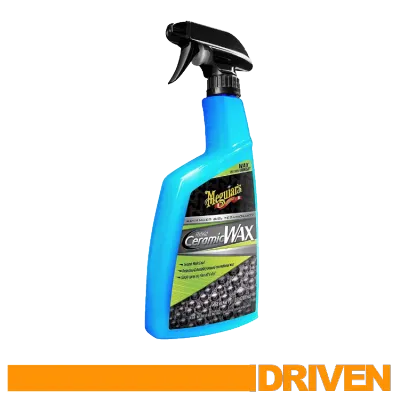
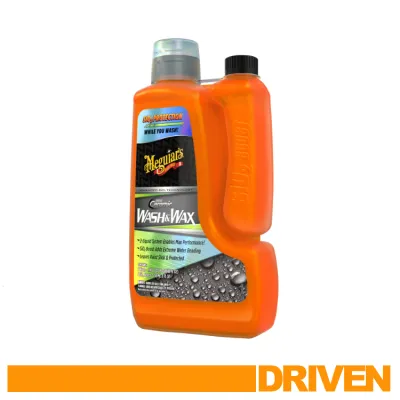
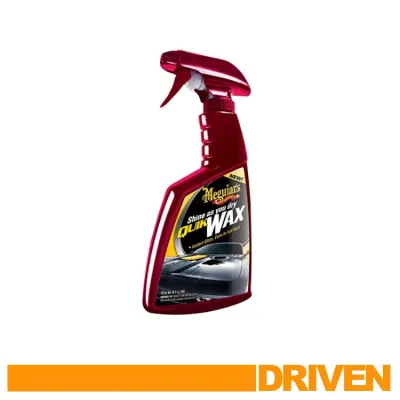
Prices are valid at publication and may change. Please refer to the product page for the latest price.
The Fundamental Differences: Correction vs. Protection
To achieve professional-grade results at home, it is vital to understand how these three categories of products interact with your vehicle’s clear coat. Each serves a distinct purpose in the detailing workflow, moving from paint correction to sacrificial protection, and finally to semi-permanent bonding.

Paint Polish: Correction and Preparation
A paint polish is formulated with specialized micro-abrasives or chemical cleaning agents designed to gently level the microscopic top layer of your vehicle’s clear coat. When you glide a dual-action polisher or an applicator pad across the paint with a Meguiar’s polish, these abrasives shave down the sharp edges of swirl marks, light scratches, and water spots, allowing light to reflect evenly off the surface. This leveling process is what eliminates the “hazy” look on older paint and restores deep, optical clarity.
However, because a polish is strictly a corrective medium, it contains no protective resins, waxes, or polymers. Once you wipe away the polish residue, you are left with a perfectly clean but completely exposed clear coat. If left unprotected, this bare surface will rapidly degrade when exposed to sunlight, moisture, and road grime. Therefore, you must always follow a polishing session with a dedicated protective sealant, wax, or ceramic coating to lock in the corrected finish.
Car Wax: Traditional Gloss and Sacrificial Protection
Car wax represents the traditional approach to paint protection, utilizing either natural carnauba wax harvested from palm trees or synthetic polymers engineered to mimic natural waxes. When applied to a vehicle’s surface, wax does not bond on a molecular level; instead, it fills in the microscopic pores of the clear coat and sits as a physical, sacrificial barrier on top of the paint. This barrier absorbs the daily abuse of ultraviolet rays, industrial fallout, and light road grime, preventing these contaminants from directly contacting and etching the clear coat.
The defining characteristic of a high-quality wax is its unique aesthetic finish. Waxes are famous for producing a warm, deep, and wet-look gloss that makes dark paint colors appear incredibly rich. Additionally, traditional waxes are exceptionally user-friendly, allowing you to easily apply the product by hand or machine, let it haze over, and buff it off with a microfiber towel with minimal risk of leaving permanent streaks or uneven spots.
Ceramic Coating: Long-Term Hydrophobic Shield
Ceramic coatings represent a significant technological leap in paint protection, utilizing silicon dioxide (SiO2) or ceramic-polymer matrices. Unlike waxes that simply rest on top of the paint, a liquid ceramic coating undergoes a chemical reaction to cross-link and bond directly with your factory clear coat. This creates a semi-permanent, glass-like shield that is substantially harder and more durable than any traditional wax or synthetic sealant.
This molecular bond results in an ultra-smooth, high-surface-tension barrier that is highly hydrophobic. Water cannot easily cling to a ceramic-coated surface; instead, it beads up into tight spheres and sheets off rapidly, carrying loose dirt and dust along with it. Furthermore, the cured ceramic layer provides superior resistance against chemical etching from highly acidic contaminants like bird droppings, tree sap, and acid rain, while making routine maintenance washes incredibly fast and effortless.
Comparing Meguiar's Durability, Effort, and Finish in Singapore's Climate
Selecting the ideal protection method requires analyzing how these products perform under real-world conditions. In Singapore, vehicles face a highly demanding tropical climate characterized by intense ultraviolet radiation, high relative humidity, frequent heavy downpours, and exposure to industrial fallout.
Durability and Longevity Expectations
The lifespan of your paint protection is heavily influenced by environmental exposure and how your vehicle is stored. Traditional paste or liquid waxes generally offer a relatively short operational window, typically requiring reapplication every few weeks to a few months. In Singapore’s intense heat and frequent rain, a standard carnauba wax can degrade rapidly, especially if the vehicle is parked daily in open-air HDB or condominium car parks where it is subjected to direct sunlight and high ambient temperatures.
In contrast, ceramic coatings offer vastly superior longevity. A properly applied and cured ceramic coating can protect your paint for one to several years, depending on the specific product formulation. However, you must check the specific Meguiar’s product label for exact manufacturer durability claims, as actual performance relies on maintenance. To maximize this lifespan, you must avoid automated drive-through car washes that use harsh, high-pH detergents and abrasive brushes. Instead, perform regular maintenance washes using a pH-neutral car shampoo designed to clean without stripping the underlying protective layer.
Application Effort and Skill Requirements
The physical effort and technical expertise required for these methods vary dramatically. Applying a Meguiar’s wax is a straightforward, low-risk process that is highly forgiving for beginners. If you apply too much wax or leave it on the paint slightly too long, the worst-case scenario is a slightly stubborn buffing process that can be easily resolved with a quick mist of detailer spray. This makes waxing an accessible and therapeutic weekend activity for car enthusiasts of all skill levels.
Applying a ceramic coating, however, is a meticulous and demanding process that requires strict environmental control and thorough surface preparation. Before the ceramic can be applied, the paint must be completely decontaminated using a clay bar, polished to remove defects, and wiped down with an isopropyl alcohol (IPA) panel prep spray to remove all polishing oils. During application, the high humidity levels common in Singapore can accelerate the flashing process of the liquid ceramic. If you fail to level the coating properly before it cures, you may be left with unsightly “high spots”—dark, cloudy streaks that can only be removed by physically polishing the cured coating off and starting over.
Visual Finish and Water Beading Performance
The visual outcome of your detailing work is a matter of personal preference, as waxes and ceramics produce distinctly different optical effects. Traditional carnauba-based waxes deliver a deep, warm, and highly reflective glow that accentuates the curves of classic cars and dark paint finishes. The finish feels incredibly slick to the touch, and while it exhibits good water-beading characteristics, these properties will gradually decline as the wax layer naturally weathers away under heavy tropical downpours.
Ceramic coatings produce a sharp, highly reflective, glass-like gloss that gives the vehicle a modern, clinical-mirror finish. The water behavior of a cured ceramic coating is exceptional, creating incredibly tight, high-angle water beads that sheet off the paintwork at low speeds. This self-cleaning effect is highly beneficial in Singapore’s rainy climate, as it prevents dirty rainwater from pooling on flat panels and drying into stubborn mineral deposits or water spots.
Navigating the Meguiar's Lineup: What to Look For on the Label
Meguiar’s offers an extensive catalog of car care products designed for both retail consumers and professional detailers. Because product names, packaging designs, and formulations can evolve over time, you should learn to identify the correct product category by looking for specific key terms and descriptions on the product labels.
When searching for a corrective polish, look for packaging that features words such as “Swirl Remover,” “ScratchX,” “Ultimate Polish,” “Cleaner,” or “Compound.” These terms indicate that the product contains engineered abrasives designed to cut into the clear coat to fix defects. Products labeled as “Compounds” (such as Ultimate Compound) have a higher level of abrasiveness for severe oxidation and deep scratches, whereas “Polishes” (such as Ultimate Polish) use ultra-fine abrasives to refine the paint to a mirror-like finish.
For traditional or synthetic protection, search for labels containing “Gold Class,” “Carnauba,” “Synthetic Sealant,” “Ultimate Wax,” or “Paste/Liquid Wax.” Meguiar’s Gold Class line is highly regarded for its rich carnauba blend, making it ideal for deep reflections on dark paint. If you prefer longer-lasting synthetic protection with easier application, look for synthetic polymer sealants, which are often labeled as “Ultimate Liquid Wax” or “Paint Sealant.”
If you want the advanced hydrophobic benefits of ceramic technology, look for terms like “Hybrid Ceramic,” “SiO2,” “Ceramic Spray,” or “Graphene.” Within this category, it is important to differentiate between consumer-friendly hybrid ceramic sprays and professional-grade liquid coatings. Meguiar’s Hybrid Ceramic Spray Wax, for example, is designed for rapid application during the rinsing or drying phase of a wash, offering an easy entry point to SiO2 technology. Conversely, dedicated liquid ceramic coatings require precise application, leveling, and curing times, but they reward you with a much thicker and more durable protective barrier.
Before purchasing or applying any product, always read the manufacturer’s instructions on the back label to verify surface compatibility. While most Meguiar’s waxes and polishes are safe for standard glossy clear coats, they may not be compatible with matte paint finishes, vinyl wraps, or textured plastic trim. Applying a gloss-enhancing polish or wax to a matte surface can permanently ruin its flat appearance, while applying certain products to unpainted plastic trim can leave unsightly white chalky residues that are difficult to remove.
Final Decision Guide: Match the Protection to Your Routine
To make your final decision, look beyond the marketing claims and honestly evaluate your actual vehicle maintenance habits, parking conditions, and budget. Matching the product to your lifestyle ensures you get the best possible results without taking on more maintenance than you can manage.
Consider the scenario of “The Weekend Enthusiast.” If you find genuine relaxation in spending your Saturday mornings washing, claying, and detailing your car in a shaded garage, a traditional Meguiar’s paste or liquid wax is an excellent fit. This approach allows you to regularly refresh your vehicle’s protective layer, experiment with different gloss profiles, and enjoy a highly forgiving application process that does not require professional-grade paint correction or climate-controlled curing environments.
Alternatively, consider the scenario of “The Busy Commuter.” If your car is parked outdoors, exposed to daily tropical rain, industrial fallout, and bird droppings from roadside trees, and you prefer a quick, low-maintenance wash routine, a ceramic-based product is the superior investment. For those who want professional-grade durability without the complex application process, a Meguiar’s hybrid ceramic spray offers a practical middle ground, allowing you to easily boost your paint’s hydrophobic properties during your routine washes. If you want maximum, multi-year protection, investing the time or budget into a full liquid ceramic coating will keep your car cleaner for longer and make routine washing incredibly simple.
It is crucial to remember that ceramic coatings are not a magical shield; they are not entirely scratch-proof or maintenance-free. A ceramic-coated car can still develop swirl marks if you wash it using dirty wash mitts or improper techniques. To protect your investment, always practice safe washing methods, such as the two-bucket wash method with grit guards and high-quality microfiber drying towels.
Ultimately, the golden rule of car detailing is simple: always use a Meguiar’s polish first to correct and perfect the paint surface, removing any swirl marks or oxidation that would otherwise be sealed in. Once the paint is smooth and clear, select your protectant—whether a rich carnauba wax, a durable synthetic sealant, or an advanced ceramic coating—based on how much time and effort you want to dedicate to maintaining your car’s finish in the future.
Frequently Asked Questions (FAQ)
Can I apply a ceramic coating over existing wax?
No, you should never apply a ceramic coating directly over an existing layer of wax or paint sealant. Ceramic coatings require a completely bare, clean clear coat to chemically bond with the paint surface. If you apply a ceramic product over wax, it will only bond to the temporary wax layer rather than the paint itself, leading to poor adhesion, significantly reduced durability, and potential streaking. Before applying any ceramic coating, you must completely strip away old waxes and sealants using a dedicated wax-stripping car shampoo, a clay bar, or a light polish, followed by an isopropyl alcohol (IPA) panel wipe.
Must I polish the paint before applying a ceramic coating?
While it is not chemically mandatory for a ceramic coating to bond to the paint, polishing is highly recommended before application. Ceramic coatings are highly reflective and act like a magnifying glass over your paintwork, permanently sealing in and highlighting any existing swirl marks, light scratches, or oxidation. If you skip the polishing step, those imperfections will remain visible beneath the hard ceramic layer for years. Polishing the paint beforehand ensures that you are sealing a flawless, high-gloss surface, yielding the best possible visual results.
How do hybrid ceramic sprays compare to traditional liquid coatings?
Hybrid ceramic sprays and traditional liquid ceramic coatings serve different detailing needs. Hybrid ceramic sprays are consumer-focused products designed for quick, easy application, often sprayed onto a wet vehicle during the rinse phase or used as a drying aid. They provide excellent water-beading and a high-gloss finish with minimal effort, but they require reapplication every few months. Traditional liquid ceramic coatings offer far greater longevity and chemical resistance, but they demand a rigorous paint preparation process, precise application techniques, and controlled curing conditions to prevent high spots and ensure a proper bond.
Community discussion
Share your experience or ask a question. Comments are reviewed before publication.