
Selecting the correct automatic transmission fluid (ATF) is one of the most critical decisions you can make to preserve the health and shifting performance of your Mazda vehicle. Mazda utilizes two primary, non-interchangeable transmission fluid specifications: Mazda ATF M-V and Mazda ATF FZ. These codes represent distinct engineering standards tailored to entirely different generations of gearbox technology, and using the wrong fluid can lead to severe mechanical issues.
While both fluids serve to lubricate, cool, and transmit hydraulic power within the transmission, they feature contrasting viscosity profiles and chemical additives. Mazda ATF M-V is a higher-viscosity fluid designed for older, conventional automatic gearboxes, whereas Mazda ATF FZ is a modern, low-viscosity fluid engineered specifically for Skyactiv-Drive transmissions. Understanding these differences is essential for maintaining your vehicle’s warranty, fuel efficiency, and long-term reliability.
Understanding Mazda ATF FZ and M-V: The Core Differences
Automatic transmissions rely on fluid not just for lubrication, but as a hydraulic medium to actuate gear changes and a cooling agent to dissipate heat. Mazda’s proprietary specifications, ATF M-V and ATF FZ, represent two distinct eras of transmission engineering. They are precise chemical formulations designed to match the internal clearances, clutch materials, and operating pressures of specific gearbox designs.
Products mentioned in this guide
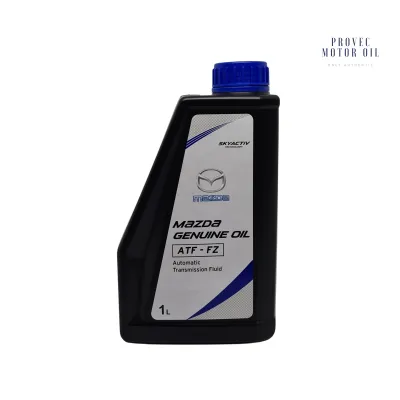

Prices are valid at publication and may change. Please refer to the product page for the latest price.
Mazda ATF M-V (often referred to as Type M5) is formulated for conventional four-speed and five-speed automatic transmissions. These older gearboxes operate under different hydraulic pressures and require a fluid with a relatively higher viscosity to maintain a robust protective film over moving parts. The friction modifiers in M-V are tailored to the specific clutch plates used in these classic transmission designs, ensuring smooth shifting without slipping under load.
Mazda ATF FZ represents a major shift in engineering, introduced alongside the Skyactiv-Drive six-speed automatic transmissions. To meet modern fuel economy standards and reduce parasitic energy loss, Mazda designed a highly fluid, low-viscosity lubricant. This lower viscosity reduces internal drag within the torque converter and gear sets, allowing the engine to transfer power more efficiently to the wheels while maintaining rapid, precise clutch lock-up.
It is vital to understand that these codes are not interchangeable marketing labels or simple product tiers. They represent strict Original Equipment Manufacturer (OEM) engineering standards. Each specification dictates precise limits for shear stability, thermal resistance, anti-foaming properties, and friction coefficients. Placing a high-viscosity fluid in a system designed for low-viscosity operation, or vice versa, disrupts the delicate hydraulic balance of the transmission.
Why Using the Correct Mazda ATF Specification Matters
The viscosity of your transmission fluid directly dictates how quickly hydraulic pressure builds within the valve body. In modern Skyactiv transmissions, the electronic control unit (ECU) calculates clutch engagement times down to milliseconds, assuming the fluid behaves exactly like Mazda ATF FZ. If a thicker fluid like M-V is introduced, the hydraulic response slows down, delaying clutch application and causing erratic, delayed, or harsh shift timing.

Friction modifiers are chemical additives that control how clutch plates grip each other during a gear change. Mazda ATF FZ and M-V contain highly specialized friction modifier packages tailored to their respective clutch materials. The correct chemical balance prevents torque converter shudder—a distinct, unpleasant vibration felt during acceleration—and guarantees seamless power delivery under various driving conditions.
In Singapore’s hot, tropical climate and dense, stop-and-go traffic, transmissions experience elevated operating temperatures. This makes fluid thermal stability even more critical. Using the incorrect specification introduces severe mechanical risks that can permanently damage your gearbox under these demanding conditions. If a low-viscosity FZ fluid is put into an older transmission requiring M-V, the fluid film may be too thin to protect the gears, leading to accelerated wear, internal slipping, and excessive heat generation.
Conversely, putting M-V into a Skyactiv transmission can cause harsh shifts, increased fuel consumption, and premature wear on the lock-up clutch. A common automotive misconception is that thicker, higher-viscosity fluid always offers superior protection against wear. While this may hold true for certain heavy-duty mechanical gears, it is entirely false for modern, highly integrated automatic transmissions. A Skyactiv-Drive gearbox requires the rapid flow and low drag of FZ fluid to operate its multi-plate clutch packs and torque converter lock-up clutch correctly; a heavier fluid will only restrict flow and cause localized overheating.
How to Identify the Right ATF for Your Mazda Vehicle
Determining the exact fluid your vehicle requires is a straightforward process that prevents costly maintenance mistakes. Following a systematic verification process ensures you never put your transmission at risk.
Step 1: Consult the Owner’s Manual Always treat your vehicle’s official owner’s manual as the ultimate authority for fluid specifications, service intervals, and capacities. The technical specifications section at the back of the manual will explicitly list whether your vehicle requires Mazda ATF FZ, ATF M-V, or another fluid type.
Step 2: Inspect the Transmission Dipstick or Filler Cap Many Mazda vehicles feature physical markings directly on the transmission components. Locate the transmission dipstick under the hood (if equipped) or inspect the filler plug/cap. Mazda frequently stamps or prints the required fluid specification—such as ‘FZ’ or ‘M-V’—directly onto the dipstick handle or the surrounding metal casing to prevent technician error during servicing.
Step 3: Verify Vehicle Year, Model, and Transmission Type Mazda transitioned from conventional automatic transmissions to Skyactiv-Drive technology during the early 2010s. For example, older generations of the Mazda 3, Mazda 6, and CX-9 rely on M-V, while newer models equipped with Skyactiv engines require FZ. Always cross-reference your vehicle’s exact manufacturing year and engine type, as mid-generation updates can sometimes feature different transmission designs.
Evaluating Aftermarket Fluids If you choose to use third-party aftermarket fluids instead of genuine Mazda OEM fluids, exercise extreme caution. Carefully read the back label of any aftermarket product to ensure it explicitly states compliance with ‘Mazda ATF FZ’ or ‘Mazda ATF M-V.’ Avoid products that rely on vague marketing terms like ‘suitable for most Asian vehicles’ or ‘universal multi-vehicle formula’ without listing your specific Mazda specification on their officially approved application list.
Common Mistakes to Avoid When Changing Mazda Transmission Fluid
Performing a transmission fluid service requires strict adherence to manufacturer guidelines to avoid introducing new mechanical issues. Even a minor error in fluid handling can lead to poor driveability or transmission failure.
One of the most critical mistakes is mixing different fluid types or topping up a low system with an unverified, generic ATF. Mixing Mazda ATF FZ and M-V alters the viscosity and chemical composition of the fluid, compromising hydraulic pressure and friction characteristics. If you suspect your transmission fluid is low, always top it up with the exact specification currently in the system, or perform a complete fluid exchange.
Many quick-lube shops recommend high-pressure transmission flush machines to replace the fluid. However, using high-pressure flushes on high-mileage Mazda transmissions can dislodge accumulated debris and force it into the delicate passages of the valve body, leading to shifting failures. A safer, manufacturer-aligned drain-and-fill procedure is generally recommended, as it gradually refreshes the fluid without subjecting the internal seals to excessive pressure.
Checking the transmission fluid level must always be done under the correct operating conditions. Mazda service procedures typically dictate that the fluid level should be inspected when the transmission is at its normal operating temperature, with the vehicle parked on a perfectly level surface. Checking the fluid cold or on an incline will give an inaccurate reading, potentially leading to underfilling or overfilling, both of which cause fluid aeration and shifting issues.
Safety and Diagnostic Boundary Before proceeding with any DIY transmission service, establish a clear safety and diagnostic boundary. If you drain the fluid and find that it smells severely burnt, has turned an unusually dark black color, or contains visible metal shavings, stop immediately. Do not refill the transmission or attempt to drive the vehicle; instead, consult a qualified automotive professional in Singapore to diagnose potential internal clutch wear or mechanical failure before further damage occurs.
Frequently Asked Questions (FAQ)
Can I mix Mazda ATF FZ and M-V?
No, you must never mix Mazda ATF FZ and ATF M-V. These fluids possess vastly different viscosity profiles and chemical friction modifier packages designed for distinct transmission architectures. Mixing them will compromise the hydraulic pressure, disrupt clutch engagement timing, and degrade shift quality, which can ultimately lead to severe internal transmission damage.
Is it safe to use a generic multi-vehicle ATF in my Mazda?
You should exercise extreme caution when considering generic multi-vehicle ATFs. A third-party fluid is only safe to use if its product label explicitly lists ‘Mazda ATF FZ’ or ‘Mazda ATF M-V’ (matching your vehicle’s requirement) as an approved or met specification. If the specification is not explicitly listed, avoid the fluid entirely to prevent shift degradation, torque converter shudder, and potential transmission wear.
Community discussion
Share your experience or ask a question. Comments are reviewed before publication.