
Maintaining correct tire pressure is one of the most straightforward yet critical aspects of vehicle maintenance. Using a portable car pump allows you to manage this task from the comfort of your driveway or during roadside emergencies, ensuring your tires remain at their optimal inflation levels. To achieve this, you must first identify the manufacturer’s recommended pressure for your specific vehicle, understand how environmental factors affect these readings, and operate the pump safely according to its mechanical limits.
Proper inflation directly influences your vehicle’s handling, braking distance, fuel economy, and tire lifespan. Under-inflated tires increase rolling resistance, which accelerates tread wear on the shoulders and raises fuel consumption. Conversely, over-inflated tires reduce the contact patch with the road surface, leading to a harsh ride and uneven wear along the center of the tread. By integrating a portable car pump into your routine, you can easily prevent these issues before they compromise your safety on the road.
Locating the Exact Tire Pressure for Your Vehicle
Before connecting your portable car pump, you must determine the precise target pressure specified by your vehicle’s manufacturer. This information is never generic and varies significantly based on the vehicle’s weight distribution and chassis design. The official recommendations are typically printed on a durable placard located on the driver’s side door jamb, inside the fuel filler flap, or detailed within the owner’s manual. Always refer to these official sources rather than relying on general advice or matching the pressure of a different vehicle model.
Products mentioned in this guide
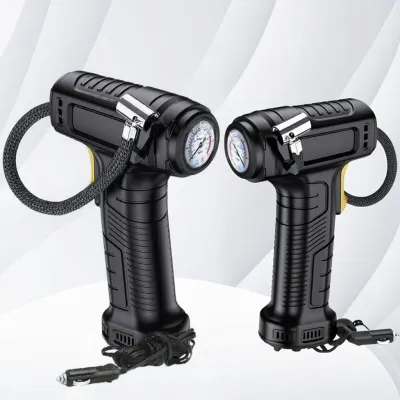
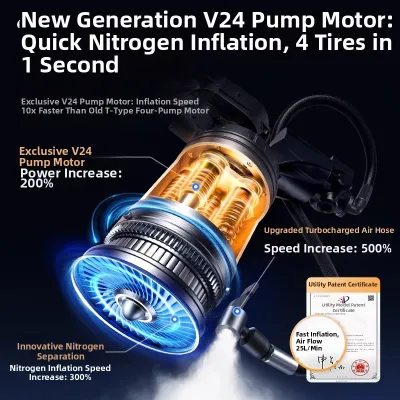
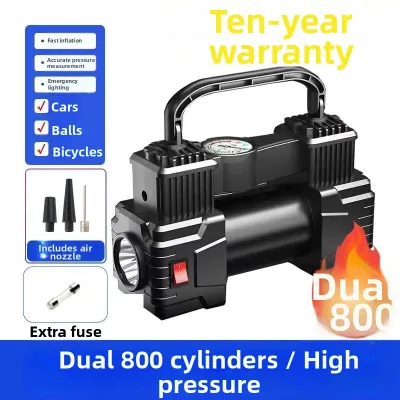
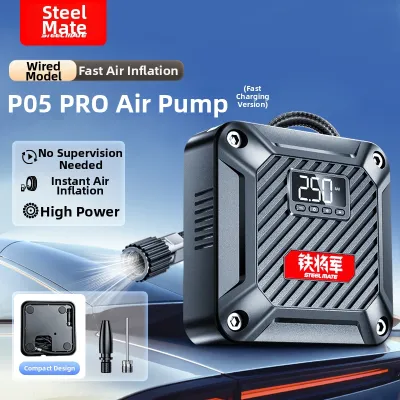
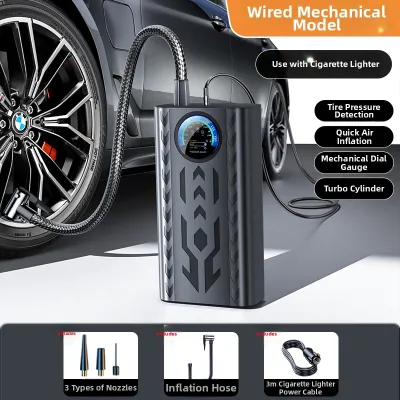
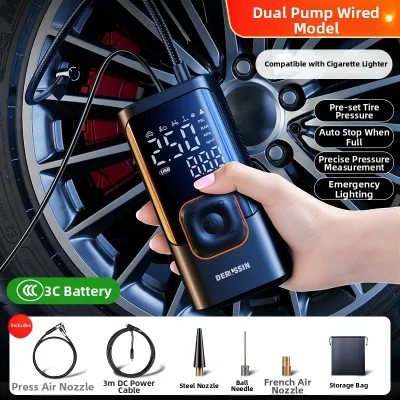
![[SG Seller]Portable Car Electric Inflator portable air pump car electric pump wireless air pump car electric pump](https://img.lazcdn.com/g/p/d677663d51cb85f8e14ed010b0fcde74.jpg_400x400q80.jpg_.webp)
![[SG Stock] Air Pump Car Inflator Compressor Portable Ball Bike Bicycle Rechargeable Basketball Soccer Volleyball Tyre Wheel Tire 12V LED Fast Auto Shut-off Emergency](https://img.lazcdn.com/g/p/cc7d92c566c3860fbbfa1d535cc6f3bb.jpg_400x400q80.jpg_.webp)
Prices are valid at publication and may change. Please refer to the product page for the latest price.
A common point of confusion for many drivers is the pressure rating molded directly onto the tire sidewall. This number represents the absolute maximum inflation pressure the tire can safely hold under maximum load, not the daily operating pressure recommended for your vehicle. Inflating your tires to this maximum limit can result in an incredibly stiff ride, reduced traction, and a higher risk of tire damage from road debris or potholes. Always stick to the vehicle manufacturer’s placard values, which are engineered to balance comfort, grip, and tire longevity.
Temperature plays a significant role in pressure fluctuations, especially in Singapore’s consistently warm tropical climate. Tire pressure should ideally be measured when the tires are “cold”—meaning the vehicle has been parked for at least three hours or driven less than 1.6 kilometers. Ambient heat and the friction generated during driving cause the air inside the tire to expand, raising the pressure reading. If you must inflate your tires when they are hot, consult your owner’s manual; many manufacturers recommend adding a temporary buffer of approximately 20 to 30 kPa (3 to 4 psi) above the cold specification, followed by a verification check once the tires have cooled down completely.
Step-by-Step Guide to Using Your Portable Car Pump
Operating a portable car pump safely requires a systematic approach to protect both your vehicle’s electrical system and the pump itself. Begin by performing a quick pre-check of your equipment. Ensure the power source—whether it is a 12V auxiliary power outlet, a direct battery connection, or an internal rechargeable battery—is fully functional and clean. Inspect the pump’s air hose and valve connector for any dirt, grit, or physical damage that could obstruct the airflow or damage your tire’s valve stem.

Next, remove the dust cap from your tire’s valve stem and store it in a secure place. Align the pump’s chuck with the valve stem and press it on firmly. If your pump uses a thumb-lock chuck, flip the lever down to secure the connection; if it uses a screw-on connector, thread it clockwise until it is snug. You may hear a brief hiss of escaping air during this connection process, which should stop immediately once the chuck is fully locked in place. A loose connection will cause inaccurate pressure readings and slow down the inflation process.
If your portable car pump features a digital display with an automatic shutoff function, program your target pressure before starting the motor. For pumps equipped with manual analog dials, you will need to monitor the needle closely throughout the process. Turn on the pump and observe the gauge. It is normal for the pressure reading on the display to appear slightly higher while the pump is actively running due to the backpressure in the hose; to get an accurate reading, briefly switch the pump off to let the pressure stabilize.
Keep a close eye on the pump’s operating limits during use. Portable pumps are compact devices that generate substantial heat during operation, and they are subject to strict duty cycles. Most consumer-grade pumps should not be run continuously for more than 10 to 15 minutes without a cooling-off period. If you notice a sudden drop in performance, an unusual burning smell, or if the pump housing feels excessively hot to the touch, turn the unit off immediately and allow it to cool for at least 20 minutes before resuming.
Adapting Inflation for Different Vehicle Types and Loads
Different vehicle classes require distinct approaches when using a portable car pump. For standard passenger cars and compact SUVs, routine maintenance typically involves minor top-ups to maintain a baseline of 210 to 240 kPa (30 to 35 psi). Because these vehicles have moderate air volumes, a standard portable pump can easily handle monthly adjustments without straining its motor or battery.
Heavier vehicles, such as large three-row SUVs, light commercial vans, or pickup trucks, demand both higher operating pressures and a significantly larger volume of air. When inflating these tires, ensure your portable car pump is rated to reach these higher pressures safely. If you are servicing a vehicle with dual rear wheels, accessing the inner tire’s valve stem can be challenging; you may need a specialized dual-foot chuck extension to reach the valve without damaging the outer wheel assembly or bending the stem.
Motorcycles and scooters present the opposite challenge: their tires hold a very small volume of air, making them highly sensitive to even minor adjustments. A portable pump can increase pressure in a motorcycle tire incredibly quickly, raising the risk of accidental overinflation. To prevent this, use a pump with precise digital controls or manually pulse the inflation in short bursts, checking the gauge frequently. Additionally, tight clearances around motorcycle brake discs and sprockets often require a flexible hose or a right-angle valve adapter to secure a clean connection.
Your target tire pressure is not always static and should be adjusted based on vehicle load and driving conditions. If you plan to carry heavy cargo, transport a full load of passengers, or embark on sustained highway driving, consult your owner’s manual for load-specific inflation recommendations. Manufacturers often advise increasing the rear tire pressure under heavy loads to prevent excessive sidewall flexing, which generates dangerous heat and compromises vehicle stability. Remember to return the tires to their standard cold pressure levels once the heavy cargo is removed.
Safety Limits and When to Visit a Professional Workshop
While a portable car pump is an invaluable tool for routine maintenance and emergencies, it cannot resolve underlying structural tire damage. If you find yourself inflating a specific tire far more frequently than the others, this is a clear sign of a slow leak, a puncture from a nail or screw, or a failing valve stem. Continually refilling a damaged tire is highly dangerous, as the structural integrity of the tire can degrade rapidly under driving stresses.
It is also crucial to recognize the physical limitations of portable equipment. A portable car pump is designed to add air to an already seated tire; it does not have the high-volume flow rate required to seat a tire bead that has completely separated from the wheel rim. Attempting to inflate a tire with an unseated bead will only result in air escaping around the rim, potentially overheating your pump and damaging the tire’s internal structure.
For your safety, always establish a clear boundary for when to stop DIY inflation and seek professional help. If you observe any visible bulging on the tire sidewall, deep cracks, exposed steel cords, or if the tire has been driven on while completely flat, do not attempt to inflate it. These conditions indicate severe internal damage that could lead to a sudden blowout. In these situations, mount your spare tire if safe to do so, or contact a professional mobile tire service or a qualified workshop in Singapore to inspect, repair, or replace the tire safely.
Frequently Asked Questions (FAQ)
How often should I check my tire pressure with a portable pump?
You should check your tire pressure at least once a month using your portable car pump, as tires naturally lose air over time through microscopic pores in the rubber. Additionally, perform a check before any long-distance trips, when carrying heavy loads, or if you notice a sudden change in ambient temperatures. Regular monitoring ensures you catch slow leaks early and maintain optimal driving safety.
Can I use a portable car pump to inflate a completely flat tire?
Yes, you can use a portable car pump to inflate a completely flat tire, provided the tire bead is still securely seated on the wheel rim and there is no structural damage. However, because inflating a tire from zero requires a large volume of air, you must monitor the pump closely to avoid exceeding its duty cycle. If the pump runs continuously for too long, it can overheat; pause the process to let the pump cool down if necessary.
Community discussion
Share your experience or ask a question. Comments are reviewed before publication.