
Choosing between a MagSafe wireless car phone holder and a USB-C wired mount comes down to a direct trade-off between raw charging speed and daily convenience. A wired USB-C connection consistently delivers faster, more efficient power transfer and remains unaffected by physical road vibrations or thermal throttling. On the other hand, a MagSafe-compatible magnetic mount offers an effortless, one-handed mounting experience that is highly convenient for short, frequent trips where you constantly get in and out of your vehicle. To make the right choice for your dashboard, you must evaluate your device’s native compatibility, your typical driving duration, and how your vehicle’s cabin environment handles heat.
Core Differences in Charging Speed and Power Delivery
To understand why these two systems perform differently, it helps to look at how electricity travels from your car’s electrical system to your phone’s battery. A wired USB-C connection utilizes physical copper pins to transfer current directly. This direct contact allows the system to support advanced Power Delivery (PD) protocols, which can dynamically adjust voltage and current to supply substantial wattage safely. Because there is no physical gap or medium to cross, energy transfer is highly efficient, meaning almost all the power drawn from your car’s adapter reaches your device.
In contrast, MagSafe wireless charging relies on electromagnetic induction. A transmitter coil inside the car mount creates an alternating electromagnetic field, which a receiver coil inside your phone converts back into electrical energy. This process is inherently less efficient than a direct wire. A notable portion of the electrical energy is lost as ambient heat during the induction process. Even under ideal conditions, wireless charging limits are generally lower than wired standards, meaning a wireless mount will take significantly longer to replenish a low battery during a standard commute.
Products mentioned in this guide
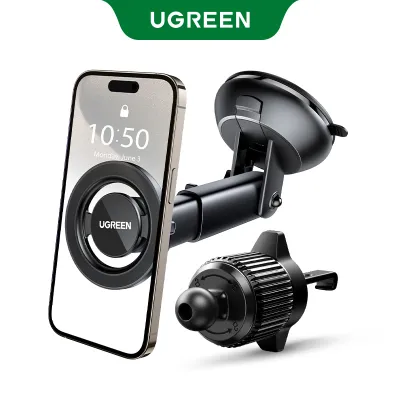
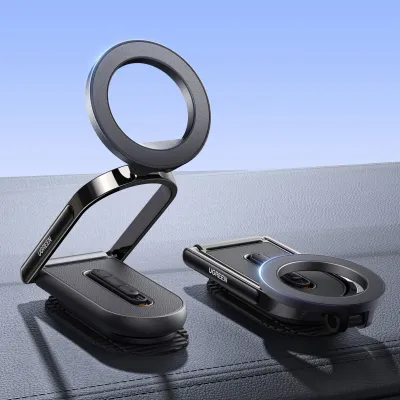
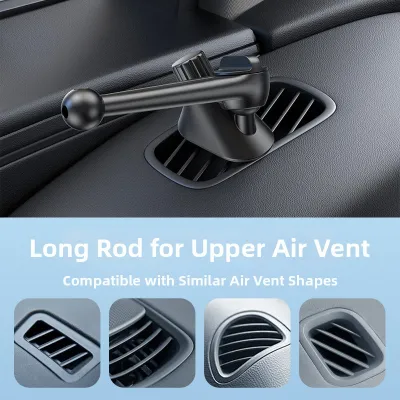
![🇸🇬[Ready Stock] New 360 Rotation Vacuum Suction Cup Phone Holder Foldable Magnetic Magsafe Car Phone Mount for Gym/Mirror/Smooth Surface](https://img.lazcdn.com/g/p/8209a6499e644df04a911de525ca3b30.jpg_400x400q80.jpg_.webp)
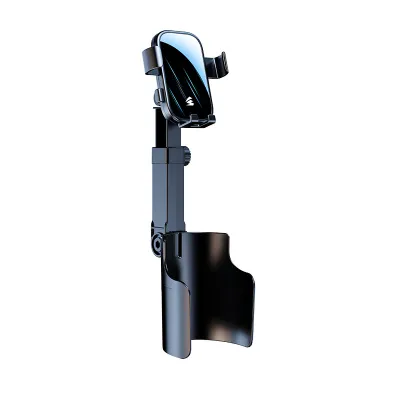
Prices are valid at publication and may change. Please refer to the product page for the latest price.
The actual power delivered to your phone also depends heavily on the power source inside your vehicle. Many built-in USB ports integrated into car dashboards or center consoles are designed for data transfer rather than high-speed charging, often outputting very low wattage. To achieve optimal speeds for either a USB-C wired setup or a MagSafe wireless mount, you typically need a high-quality 12V cigarette lighter adapter that supports fast-charging protocols. Furthermore, using a sub-standard or damaged cable to connect your 12V adapter to your mount or phone can bottleneck the power delivery, rendering even the most advanced charging systems slow and inefficient.
Reliability and Connection Stability While Driving
A car’s cabin is a dynamic environment subject to sudden stops, sharp turns, speed bumps, and uneven road surfaces. Under these conditions, physical connection stability is crucial for uninterrupted charging. A USB-C wired connection excels in physical reliability because the cable snaps securely into the device’s charging port. Even if the phone vibrates or shifts slightly within its mechanical cradle, the physical connection remains intact, ensuring a continuous flow of power without interruption.

MagSafe mounts rely on magnetic alignment to keep the charging coils positioned correctly. While high-quality magnetic mounts feature strong neodymium magnets that hold the phone securely under normal driving conditions, severe road vibrations or sudden jolts can cause the phone to shift. If the phone slides even slightly out of alignment, the inductive charging efficiency drops dramatically, or the charging cycle may stop entirely. For drivers who frequently navigate poorly maintained roads or off-road terrain, this susceptibility to misalignment can make wireless charging highly inconsistent.
The overall stability of your setup also depends on how the mount itself attaches to your vehicle. Vent clips, dashboard suction cups, and CD slot mounts each offer different levels of stability. A heavy phone mounted on a weak vent clip may sag or bounce, compounding the risk of magnetic misalignment for MagSafe users. When choosing a mount, it is essential to verify that the attachment mechanism is compatible with your car’s interior layout and robust enough to minimize vibrations, thereby preserving both the physical hold and the charging connection.
Heat Management and Battery Health Impact
Heat is the primary enemy of lithium-ion battery health and charging efficiency. Because wireless charging relies on electromagnetic induction, it naturally generates more heat than wired charging. When you place a phone on a MagSafe mount, the heat generated by the coils is transferred directly to the back of the phone. In tropical climates like Singapore, where cabin temperatures can rise rapidly under direct sunlight, this localized heat generation is significantly amplified.
When a smartphone’s internal temperature exceeds safe operating thresholds, its battery management system initiates thermal throttling. To protect the battery from permanent degradation, the phone will automatically reduce its power intake, slowing the charging speed to a crawl or halting it entirely until the device cools down. If you are running demanding applications simultaneously—such as GPS navigation with high screen brightness—the processor generates additional heat, making thermal throttling almost inevitable during daytime drives.
Wired USB-C charging generates far less heat at the device itself because the power conversion occurs primarily within the 12V adapter rather than inside the phone’s chassis. To mitigate heat issues with wireless mounts, some manufacturers integrate active cooling features, such as built-in fans or semiconductor cooling chips, into the mount’s design. Alternatively, mounting your phone directly in front of an active air conditioning vent can help dissipate heat, keeping the device cool enough to maintain its optimal charging speed.
Installation, Compatibility, and Daily Convenience
Daily convenience and ease of use are where MagSafe mounts hold a distinct advantage. Mounting a phone on a MagSafe holder is a seamless, one-handed action: you simply place the phone near the magnetic pad, and it snaps into the correct charging position instantly. Dismounting is just as effortless, requiring no buttons to release mechanical arms and no cables to unplug. This makes magnetic mounts highly appealing for drivers who make frequent stops and need to grab their phones quickly.
However, this convenience requires specific hardware compatibility. Native MagSafe support is built into newer smartphone models, while older devices or non-compatible brands require specialized magnetic cases or adhesive metal ring adapters to align with the mount. If you use a thick, rugged, or non-magnetic case, the magnetic attraction will be severely weakened, posing a risk of the phone falling off the mount while driving.
Wired USB-C setups, while less elegant, offer universal compatibility. Any device with a USB-C port can be charged directly, regardless of the case material or brand. The trade-off is the physical clutter of cables running across your dashboard or center console. Managing these cables is essential not only for a clean aesthetic but also for safety, as loose wires can interfere with gear shifters, steering wheels, or other critical vehicle controls.
How to Choose the Right Car Phone Holder for Your Needs
To select the ideal car phone holder, you must weigh your daily driving habits against your charging priorities. A wired USB-C setup is the superior choice if you prioritize maximum charging speed, frequently embark on long journeys, or heavily rely on power-hungry GPS navigation apps. It is also the most reliable option if your phone lacks native magnetic charging capabilities or if you prefer using heavy-duty protective cases that block wireless signals.
Conversely, a MagSafe wireless mount is highly suited for drivers who value a clean, cable-free dashboard and prioritize convenience over rapid charging. If your daily commute consists of short trips around the city, the ease of snapping your phone onto a magnetic mount outweighs the slower charging speeds. This setup keeps your battery topped up without the wear and tear of constantly plugging and unplugging a cable.
Before making a purchase, always verify your vehicle’s specific layout and electrical capabilities. Check if your car’s built-in USB ports provide sufficient wattage, or invest in a compatible 12V fast-charging adapter. Ensure that the mount’s installation position—whether on the windshield, dashboard, or air vent—does not obstruct your view of the road, block deployment paths for airbags, or hinder access to essential vehicle controls.
Frequently Asked Questions (FAQ)
Does a thick phone case affect MagSafe charging speed in the car?
Yes, a thick or non-compatible phone case significantly reduces MagSafe charging efficiency and magnetic hold. Wireless charging relies on close physical proximity between the transmitter and receiver coils. A thick case increases this distance, which weakens the magnetic connection and causes more energy to be lost as heat, triggering thermal throttling. To ensure reliable mounting and optimal power transfer, always use a case specifically certified for magnetic wireless charging.
Can I use a USB-C car charger for both my phone and other devices?
Yes, a wired USB-C setup offers excellent versatility compared to dedicated wireless mounts. Many high-quality 12V car adapters feature multiple ports, allowing you to run a USB-C cable to your phone holder while simultaneously powering a dashcam, a passenger’s device, or a portable air purifier. Because a wired connection is not fixed to a specific magnetic mount, you can easily swap the cable to charge different devices, such as tablets or wireless earbuds, making it a highly flexible power solution for your vehicle.

Community discussion
Share your experience or ask a question. Comments are reviewed before publication.